
Translated material
Not a state plan, but a collective farm
How new projects of the Ministry of Industry and Trade for the appointment of “growth leaders” can affect your salary
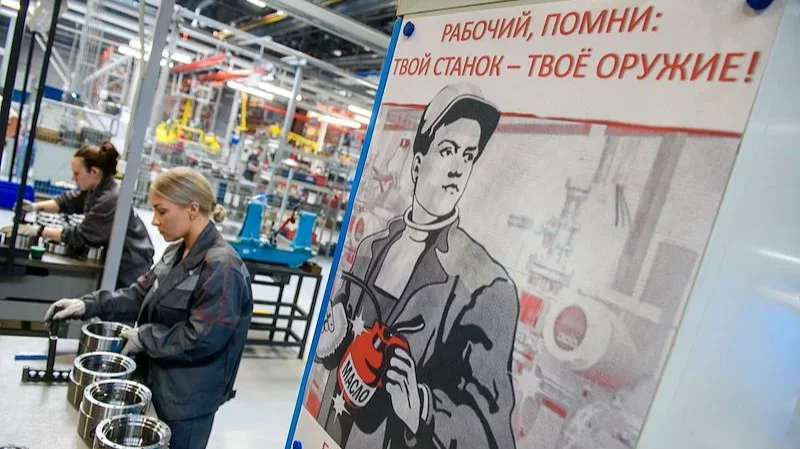
The Ministry of Industry and Trade in the fall plans to launch a new model of import substitution in industry, which provides for the transfer of a number of sectors into a “quasi -albus” regime. How can this be reflected in the Russian labor market.
As the federal official told RBC and confirmed the informed source, the initiators of the project suggest that the new generation of import substitution will be based on the implementation of large “Mayaki projects” (strategic initiatives to create high-tech products), a modified mechanism of special investment contracts (SPIC) and interregional contracts with oncoming investment obligations. According to the source, we are not talking about any “state plan”.
The idea, in general, is understandable (they are trying to realize it for the first time). If it is quite simple to express its essence - we take budget money, create an “industrial cluster”, buy everything you need for it and guarantee that the manufactured products will be paid by budget money. What is our interest? In indirect effects. Due to the implementation of this plan, we:
We will do what the economy lacks;
The growth of government expenses within the framework of such a project will result in an increase in the income of its participants, and they, in turn, will spend their money on other goods and services produced within the country.
It is somewhat similar to the realization of the ideas of the great economist John Meinard Keynes, who 90 years ago proposed stimulating demand through an increase in the money supply in the economy.
Indeed, the signs of the “Soviet state plan”, in the framework of which the “plan” is a comprehensive and maximum detailed budget of the entire national economy, is not visible in the idea of the Ministry of Industry and Trade.
Modern economists identify two basic approaches to the government planning of the development of the national economy.
According to the first approach, the “plan” is a qualitative expression of a long -term economic policy, and a certain central body responsible for the general management of the activities of ministries and departments is engaged in the development of this plan. Something similar from the point of view of “expression of economic policy” in Russia is created by the Ministry of Economic Development, but it does not have guidelines for other ministries.
The second approach involves program-targeted planning, and within the framework of this approach, the “plan” is a series of projects containing specific and detailed proposals on the conduct of a certain amount of work in a particular field and in a certain period. This approach seems close to the current proposal of the Ministry of Industry and Trade.
But here the nuances begin.
“The modified mechanism of special investment contracts (SPIC) and interregional contracts with counter -investment obligations” are the so -called offset contracts. Unlike Russia, offset contracts abroad are almost exclusively aimed at concluding agreements with foreign suppliers. In exchange for long-term state contracts, such a supplier undertakes to carry out certain investments in the economy of the buyer country, to develop or modernize the technologies necessary for the state.
The Ministry of Industry and Trade assumes that legal and aircraft industry, elements of the pharmaceutical industry and equipment production will work in the format of the modernized state plan. These industries as a whole follow the world practice of “offseats”, where they are in the field of pharmaceutical, light, food industry, automotive and railway transport.
But the problem is that the Ministry of Industry and Trade, starting his “quasiflas”, obviously knows something that the participants in the public procurement does not know.
The mechanism of "offset", experts emphasize, remains still quite raw and little -studied. It has extremely few law enforcement experience (with the exception of Moscow).
Among experts, it was said that it was necessary to create understandable and publicly accessible methodological materials that expand the circle of enterprises that could reach offset contracting and step by step would use this tool (such a plan arose at the April Forum-Exhibition “Gosakaz”). However, instead of open discussion of what the competitive selection of projects for long -term contracting should be and how to minimize the anti -competitive fears of market participants, we received a situation when the Ministry of Industry and Trade already knows how, with whom and what it will conclude contracts.
If the discussion of future long-term state contracts was carried out in a curric regime with a narrow circle of the participants admitted, then this carries at least information and communication risks. Do not hide behind the high interests of the economy or the main character of the proposed projects: the practice of moving away from trading and agreements with business entities, creating advantages in the market have always been considered the main antimonopoly risks. For example, with the adoption of the fifth antimonopoly package, the initiative of the FAS Russia will be the procurement of state -owned companies and state corporations on a closed pool of electronic sites: to determine the circle of subjects in everything regarding the state order.
Why is it important? This whole story has a complex macroeconomic aspect - how the implementation of such a “super -thrust” will affect the price of labor and, accordingly, people's income. The fact is that
This story “with growth leaders” is very similar to the one that the USSR economic authorities tried to realize a hundred years ago (and which eventually turned into “Stalinist collective farms”).
The key question here is what level of salaries the authorities plan to maintain at such enterprises (and, accordingly, as it will be at the fitting enterprises). It was this problem that the Bolsheviks faced during the second industrialization - technology and equipment were expensive, and the USSR export income was limited. That is, everything could be bought, but the problem was that I had to pay not only for “capital”, but also for “labor”. Comrade Stalin resolved this issue with his characteristic genius of simple decisions: the creation of collective farms with almost free labor forced huge masses of people to rush into the cities and get to work on the giants of the five -year plan on any conditions.
What can be in this case as an “analogue” of the Stalinist mechanism to reduce labor price? Well, the government does not hide this: the existing restrictions on consumer imports will mean a reduction in commodity filling of the salary - money will be, but you can buy for this money less things than you can in the conditions of open boundaries and commodity abundance.
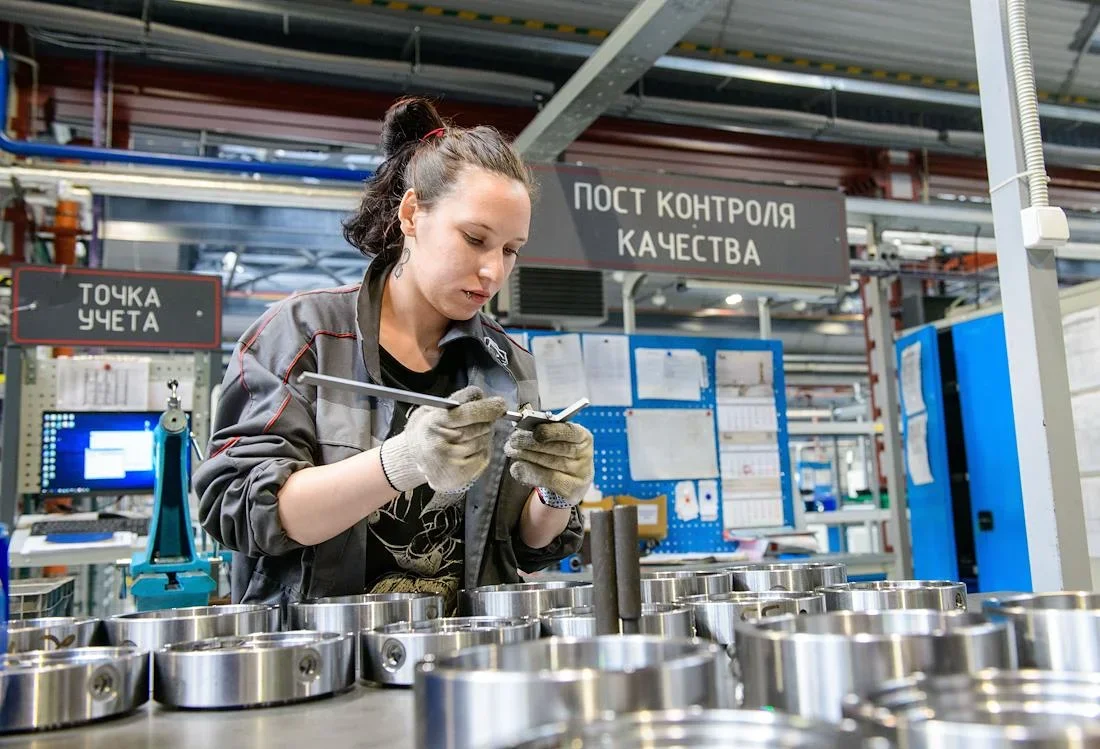
Why will it be so? Because under existing conditions, industrial equipment for such “growth locomotives” will have to buy exorbitant prices, and in the conditions of the fall of budget and export revenues, operators of these projects will have to save. It will not work to save on the “capital”. So, you will have to “underpay” for work.
Is it possible to avoid such risks? To do this, at least it is necessary to recognize their availability and analyze all mechanisms for reducing costs as part of the implementation of projects of this kind. The FAS Russia has been promoting the theme of antitrust compliance in the authorities for the past few years. This is the internal act of the department and at the same time - a competently built system, which allows you to comply with self -competitive norms and prevent conspiracy in the distribution of state contracts. The FAS Russia and relevant sites (the State Duma and CCI of the Russian Federation) should carefully analyze the management of risk of violations of antimonopoly legislation in the Ministry of Industry and Trade Strategy and in the contracts proposed by the department - naturally, with the widest representation of experts and the public.