
Translated material
Apogee of anti -Semitism
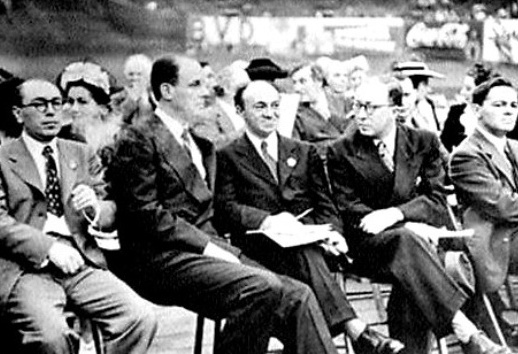
On August 12, 1952, members of the EAC were executed in Moscow. What led Stalin to electoral aggression? Thinks the writer and historian of public life Natalya Gromova

How to get around the lock?
Read>Ivan Tolstoy: 70 years ago, on August 12, 1952, members of the Jewish anti -fascist committee of the USSR were shot.
The list of the accused included:
Lozovsky Solomon Abramovich - former Deputy People's Commissar of Foreign Affairs of the USSR, head of the Soviet Information Bureau;
Fefer Isaac Solomonovich - poet, secretary of the EAK;
Bregman Solomon Leontyevich - Deputy Minister of State Control of the RSFSR;
Yuzefovich Joseph Sigismundovich - employee of the SOVENformburo;
Shimeliovich Boris Abramovich - chief physician of the Central Clinical Hospital named after Botkin;
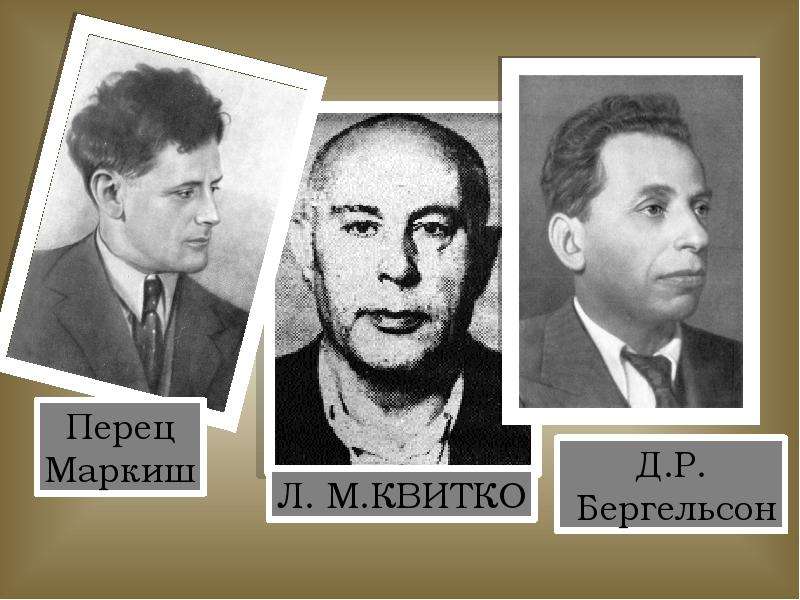
Kvitko Lev Moiseevich - poet;
Markish Perets Davidovich - poet, secretary of the revision commission of the Union of Writers of the USSR;
Bergelson David Rafailovich - writer;
Gofstein David Naumovich - poet;
Zuskin Veniamin Lvovich - actor, artistic director of the Moscow State Jewish Theater;
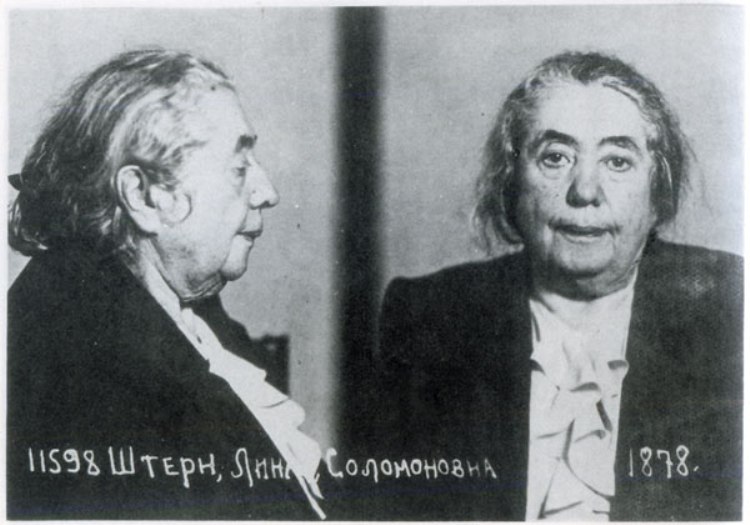
Stern Lina Solomonovna-Academician of the Academy of Sciences of the USSR and the Academy of Medical Sciences of the USSR, director of the Institute of Physiology of the Academy of Medical Sciences of the USSR and the head of the Department of Physiology of the 2nd Medical Institute;
Talmi Leon Yakovlevich-journalist-translator of the Swinformburo;
Vatenberg Ilya Semenovich - senior control editor of the state publishing house of fiction in foreign languages;
Teumin Emilia Isaakovna - editor of the International Department of the Swinformburo;
Vatenberg-Ostrovskaya Chaika Semenovna-translator.
Only academician Lina Stern survived.
We are talking about the roots and reasons for Stalin’s attack on the Jewish Anti -Fascist Committee with the historian of literature and Soviet society, writer Natalya Gromova.
There was good preparation, and it was not random
Ivan Tolstoy: Natalya Alexandrovna, do you look at some meaning of Stalin’s actions in relation to the Jewish Anti-Fascist Committee? After all, for a long time, reprisal was prepared that it could not be that it was some kind of paranoid affect-suddenly take and shoot. It is felt that there was good preparation and it was not accidental. What do you see in all this?
Natalya Gromova: Absolutely correct questions. When there were now the days of memory in Jerusalem and in Tel Aviv, it was said precisely that without context, without the history of that time, this story cannot be considered. And there is one main killing paradox when we look at these events: Jews, including Soviet Jews who went through the Holocaust, through the most monstrous atrocities that opened the whole world, suddenly fall into the second stage of destruction, already Soviet. The Soviet government positioned itself as a country of struggle against fascism, but what unfolded was unusual. Therefore, here it is necessary to start here in 1945, with how amazingly the situation in the USSR was formed among the intelligentsia, first of all. I wanted to remind you that one of the main “trends” then for the intelligentsia was expressed by Vasily Semenovich Grossman, who said that now that we have experienced so many horrors and nightmares, looking back, we have no right not to tell the truth about what happened, this is our duty to the dead. I am now taking precisely the Jewish component, although he wrote about everything, about the life of the Soviet country after the war.
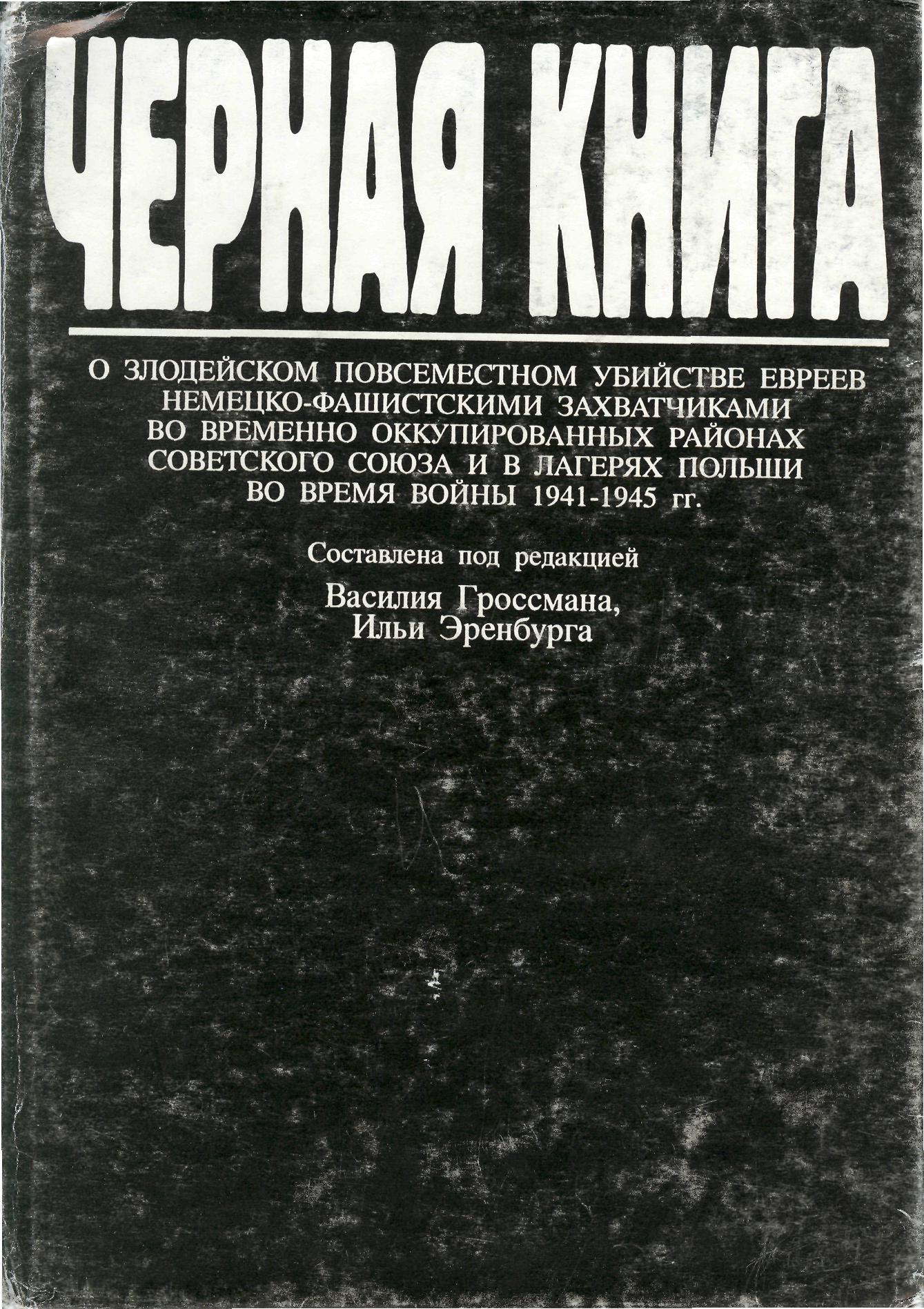
And he, who survived the monstrous death of his mother in execution in Berdichev, begins to create a "black book" of the Soviet Holocaust along with Ehrenburg, in which he is trying to collect all kinds of evidence of the murders of Jews on the Soviet land. It is amazing that the theme of the Holocaust for the Soviet regime will become forbidden very quickly. Already in 1946, the book will actually be collected by Solomon Mikhoels, who headed the anti -fascist committee, will send a letter to the Soviet elite that it is urgent to issue this book that tells about all the horrors of that time. But this will be given a monstrous answer that the authors want to show that only the Jews survived the misfortunes, and the rest of the Soviet people did not worry. The book will be prohibited from printing. It will be printed in the USA in the 1940s, and in the USSR the "Black Book" of Grossman and Ehrenburg will be published only in the 1990s. But here it is very important that the phrase "Soviet people were destroyed here" will be reproduced at all monuments. I am a witness, in childhood, passing with excursions, I saw these terrible monuments all the time, especially when you float along the Volga, and there was always the same text.
I had no idea then, at 15 years that Jews were shot there. There was no such word, it must be understood that this topic left in the 1940s.
The words "Holocaust" will not be in Soviet textbooks
This is that for the Soviet regime it was very painful, they did not want to accept this element of fascism-the destruction of the Jews-therefore it will leave our history for a while, the word "Holocaust" will not be in Soviet textbooks. It is also important here that in 1945 there was a very short moment of sighs, the possibility of writing the truth, and then in a few months in the magazine the banner came out in the trenches of Stalingrad Nekrasov, and the “satellites” of Panova, and the “star” of Kazakevich, a huge number of poems came out, there was already conversations with Akhmatova about the publication. The Leningrad group of writers came with Akhmatova, Pasternak also participated in this evening in the column hall, which led to the famous joke when everyone stood at Akhmatova’s exit. "Who organized the stood?" - According to legend, Stalin said. When Akhmatova performed after the war with her verses, for everyone it was a feeling of complete novelty, and this continued until August 1946, until the decision on the magazines "Zvezda" and "Leningrad".
But here we should not forget that on March 5, 1946, the Fulton speech of Churchill sounded, which meant the construction of a new iron curtain. Why new? Because the post -war structure has not yet developed, allies still existed, but when the USSR’s aggressive attempts to share the world became quite obvious, this speech of Churchill sounded and the absolute freezing of the country from the inside with the prohibition of the entire Western begins. The decision was not just an attack on Akhmatov and Zoshchenko or the magazines "Star" and "Leningrad", it is naive to think that it was about it. This, of course, is a blow to the intelligentsia and her attempts to live on a new wave, already on this truth of the post -war period. This was followed by the decisions on the second series of the film "Ivan the Terrible", on the film "Big Life", against Shostakovich. And along the way, work with cosmopolitans went. They were not yet called "rootless", they were just literary critics, historians, philosophers, all who admitted that there was a Western thought that influenced Russian history, literature, and so on. This terrible meeting in Leningrad is known, where from philologists, from Azadovsky, from Zhirmunsky they demanded a renunciation of thoughts about some Western influence on Russian literature. All this seems absurd, but these were terrible meetings at which they fainted, on which people had a heart attack.
The main cosmopolitans, conductors of Western influence are Jews
It went throughout 1947 and 1948, it is described in great detail in the memoirs of the wonderful philologist Olga Freidenberg, who was also persecuted. Then the idea that the main cosmopolitans, the conductors of Western influence were Jews are already into circulation. This was not said, but, of course, the Jews who possessed some kinship in general with the whole world were the most suspicious, they had already begun to pay special attention to them and gradually began to choose people of Jewish nationality in all areas of science. This will only then lead to a rampant anti -Semitism.
Here I must say that very serious processes took place, because at the end of 1947 the murder of Solomon Mikhoels, the head of the anti -fascist committee, began to prepare. And not just the leader, he also headed the wonderful Goset Theater, a very authoritative person.
It was not he who came up with the anti-fascist Jewish committee, but in 1941 two antifacist Jews from Poland to the Soviet Union arrived, who proposed uniting Jews of the world into such an anti-fascist committee. They were immediately imprisoned, one of them was tortured during the investigation, the second committed suicide in Lubyanka. But Comrade Stalin immediately used the idea remarkably: it was necessary to collect money from world Jewry to support the Soviet army. They gathered prominent Jews of the country, headed this at first by Mikhoels, and Lozovsky was the deputy, who headed the Swinformburo in 1942. The idea is anti -war, but there should have been a lot of money behind this.
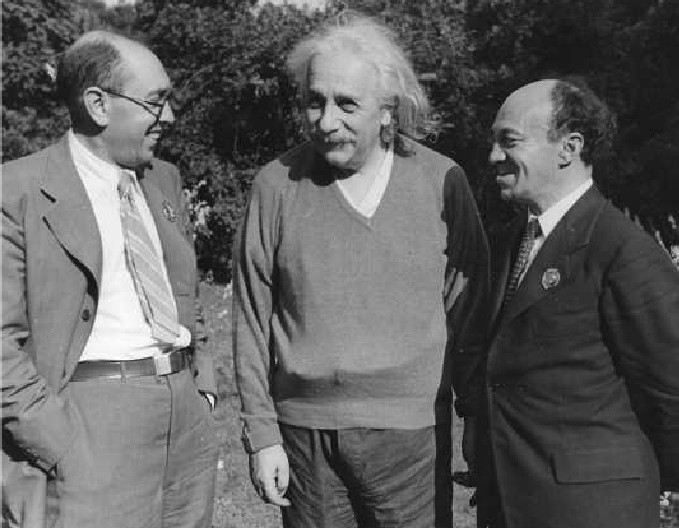
The poet Isaac Fefer, who, unfortunately, had already managed to recruit, he was always a very Soviet poet and it was easy to take him, he had to follow Mikhoels in America. Mikholes left and very successfully became the actual representative of the USSR abroad. He met with Einstein, with a huge number of people who sacrificed the money with pleasure, thinking that they save Soviet Jews too. The committee played this role during the war, the famous Jews of that time entered, not everyone shot, Samuel Marshak, Ehrenburg did not fall under this. The Committee was not alone, there was a Slavic committee, a women's committee, but they were more formal, and the Jewish anti -war committee had a kind of authority and power.
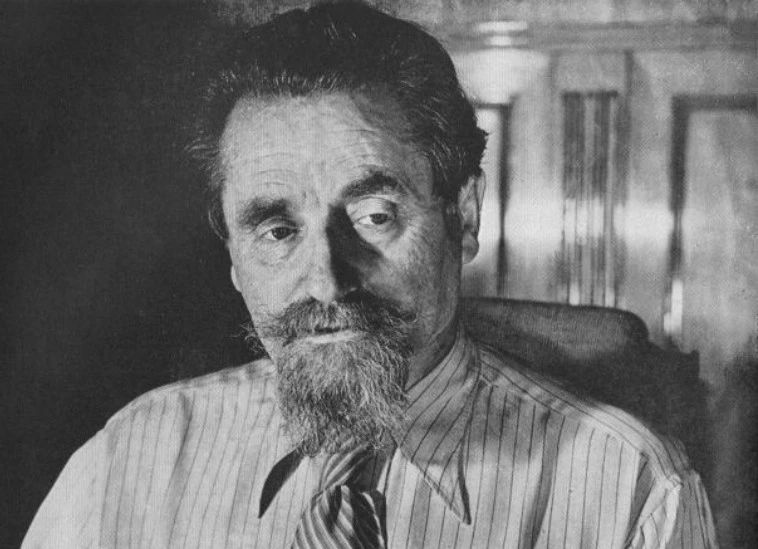
Therefore, a strange question always arises: why was it necessary to kill Mikhoels? There was a very detailed and long development of a plan for its destruction at the very top. It would seem that it was possible to arrest him, but, firstly, he was really in sight and it was just difficult to arrest him, and secondly, some other strange trace stretched behind Mikhoels. At that moment, Stalin had his own insanity about the fact that someone knew about his personal life, about Svetlana’s life, and one of the arrested people from Stalin’s entourage called Mikhoels, who seemed to knew something about Svetlana Alliluyeva. All tyrants always have similar plots. Before that, Stalin planted all Alleilueva's relatives, and also evidence of Mikhoels was knocked out, who was suspected of saying something in the West or told about the Stalinist family. At the beginning of 1948, they organized him with one literary and theater critic, a trip to Minsk, where he could not simply destroy him, because he was all the time surrounded by people. In the end, he was invited to some non-existent wedding, killed along with this person who was a informer, and they were thrown in Minsk under the wheels of a truck.
Mikhoels was still "lucky", he organized magnificent funerals in his theater
This murder is known in sufficient detail, because Beria in 1953 organized a trial of its participants. Mikhoels was still “lucky”, he organized magnificent funerals in his theater, there are chronicles and fantastic photographs with the performing Fadeev. It is amazing that by the end of 1948, Mikhoels will already be declared a spy of all possible intelligence, the anti -fascist committee will be dispersed. But at this time, Mikhoels still has a hero who accidentally fell under the wheels. All 1948, a sluggish struggle against cosmopolitanism is going on and the newspaper very important for Stalin is created: “Culture and Life” (it was then called “Culture and Death” and “Alexander Central” because it was headed by the campaign of Alexandrov), it was a dead newspaper in which they were constantly explained how they should walk, what they should write, think. This is one of the worst newspapers, I read a whole binder, it is impossible to read, because it is written in a dead language. And the second newspaper is the "literary", it seems to us known, but Stalin decided to restart it, to make it different. This is all described in detail by Simonov in the memoirs "through the eyes of the man of my generation." And he said that you should print such editorials there, you should not pay attention to the Ministry of Foreign Affairs, you must write about Western influence the way you imagine this and as contemporaries write.
The day after this conversation, the article "Harry Truman in short pants" appeared "
The day after this conversation, the article "Harry Truman in short pants" appeared. And then there were just the cartoons and insults to the West, a huge number of writers and poets, which were brought down to this wonderful job, practiced this. But this, one might say, is such a background.
The turning point was, oddly enough, the formation of the state of Israel in May 1948. Stalin made a huge bet that this state played on his side, so that it was its outpost in the Middle East. But everything went wrong. Everything that began to happen in this state was extremely unpleasant for Stalin. Moreover, when she was invited in the fall of Golda Meir, she decided to meet right in front of the Moscow Central Synagogue on Arkhipov Street with Soviet Jews, a huge number of people who greeted her gathered, and this meeting caused the leader’s rabies because the Soviet Jews somehow turned to him wrong, they rejoice at someone else. This caused unpleasant emotions of such a force that after its departure, a real attack begins. For example, a letter of a woman named Begichev from the archives of the Literary Newspaper, who wrote: Comrade Stalin, the enemies, all theatrical critics that our Soviet beautiful plays Sofronov, Surov and Korneychuk, dug here and hide behind Russian surnames, rise and hide behind Russian surnames.
The case of theatrical critics will begin with this letter. All this campaign will be absolutely disgusting, because Fadeev will participate in it, who will not participate. Most importantly, it was a campaign of persecution of so many Jews-fontists, there were just the dirty stories, for which everyone was ashamed, but it was necessary to go to the meetings.
But it was a screen, because at that moment the arrests of members of the anti -fascist committee are being arrested. I once found the manuscripts of Natalia Sokolova, nieces of Lydia Yakovlevna Ginzburg and the first wife of Simonov. She had a manuscript called "Anticosmopolitanism", where she collected the testimonies of her contemporaries, what was inside, which people were talking about. There are very few of these evidence, although the time was close, but it was very gloomy and disgusting, and people did not want to remember it. She tells an amazing story there - which preceded the arrest of Lev Kvitko, a wonderful children's poet who wrote to Yiddish. He is known to everyone, he was translated by Marshak, Chukovsky, these famous verses: "Anna van, our detachment wants to see piglets!". A lot of wonderful verses that everyone knew, everyone loved him very much.
Fadeev with one hand participated in terrible pogrom campaigns, and he tried to pull out some people, in particular, tried to save Kvitko. Natalya Sokolova describes how he arranged a jubilee evening in the Central House of Artists on the eve of his arrest, everything was already clear, already burst into his house, turned things over, and Fadeev said that if there was such a big evening, they would be afraid, they would not take him. The evening was boldly led by Leo Cassil, who said that he was happy, that he belongs to the Jewish family as Lev Kvitko. Telegrams were read at the evening all the time, they gathered on the table with such a pack, but at the end of the evening all these telegrams disappeared. The people who sent them also then partially suffered from all this.
Frankly, the arrest touched the members of the anti -war committee, mainly writing in Yiddish, it was a continuation of the defeat of the language that Hitler did not finish, because he, in fact destroying European Jewry, destroyed the language in which they spoke. And in the Soviet country there were still newspapers, theaters, people wrote poetry for Yiddish. And when this story of the anti -war committee covered this story, the people who were taken and destroyed, these were those who wrote or spoke Yiddish. Three newspapers were closed, which wrote to Yiddish, theaters were closed. It was only amazing that in no newspapers it was reported about these arrests, and the committee itself was destroyed quietly.
I wanted to tell what Maria Iosifovna Belkin told me. She was in Maleevka, came to her sick husband on the day when Kvitko was arrested, it was winter 1949. She was told that since the poet Samuel Galkin had a very sick heart so that she would not tell him about the arrest of Kvitko. Because everyone was reported to each other only in the ear, they didn’t even say this on the phone, but, as she says, instantly in some fantastic way everything recognized everything. She asks what to do if he asks. They answer her: hide from him. And so she walks along the corridors in Maleevka, tries not to meet Galkin. Late in the evening enters the common showers at the end of the corridor, and Galkin stands right in front of it. He says only one word:
- Who?
- Kvitko.
And he replies:
- The next I am.
- Why are you?
- Why Kvitko?
And they diverge into their numbers. The next morning, the car arrives behind Galkin directly to Maleevka. Despite the fact that it was known that he is with a sick heart.
Almost all the consequence was based on the testimony of Fefer, who was the victim himself
This business was amazing in its own way, because these people, mostly elderly, was the director of the Institute Shimeliovich, Lina Stern, the only survivor who also fell under this shot article, but she was released at the last moment. She was engaged in gerontology and the possibilities of prolonging life. They say that this is why she was preserved by life - Stalin was very hoping for these developments. There were many different people - poets, artists, people of various professions, but very prominent people, and almost all the consequence was based on the testimony of Fefer, who himself was a victim, he was tormented, but all investigative actions were built on his testimony. And when they reached this process until 1952, in some incredible way, on this closed nightmare court, everyone abandoned their testimonies. This is a rare case, they went through one case, and Fefer, on the basis of which was the case, was also forced to refuse. And the court was forced to stop there, the judge was in difficulty, he could not bear the sentence, endless negotiations began. Even for the Soviet protocol, at least some grounds were needed. They changed the main prosecutor, and then Malenkov intervened, who knocked down, shouted that it was Stalin’s personal order, that they had to be destroyed, that we had already decided to the Politburo and you must fulfill the will of the Politburo. And already the next judge sentenced them to death, which was executed on August 12, 1952.