
Translated material
Personal power regime as a disease
Political scientist Grigory Golosov - about why authoritarian rulers are doomed to make fatal mistakes
The personalist dictatorship that has developed in Russia is a disease that affects the state. It has its own symptoms, complications, but also treatment methods. What leads to infection? How does the disease flow? And most importantly, how to win it? These questions in a cycle of articles for the "cold" are answered by a political scientist, professor of the European University in St. Petersburg, Grigory Golosov. This is the first article from the cycle.
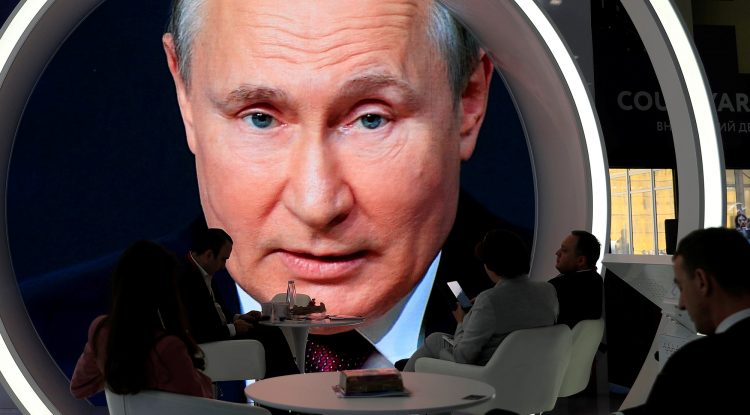
The Russian political regime is the regime of personal power or, as scientists express, personalist dictatorship. This means that all important strategic decisions on behalf of the state are made by one person who is at the top of the “vertical of power”, and that any decisions of other politicians that this person, Vladimir Putin, are considering as important, can be blocked by him. Of course, Putin does not rule alone - this is impossible. Other Russian politicians and officials also have power. However, its limits are exclusively set by the desires of the supreme ruler.
In world political thought, it is customary to criticize personal power from the point of view of morality. More precisely, this is formulated in the well-known formula of John Dalberg Acton, "the power corrupts, absolute power corrupts absolutely." The impressive compensation of vices generated by absolute power can be found in the book of the ancient Roman writer Suetonius “The Life of the Twelve Caesars”. Among the Roman emperors were bloody eccentrics like Caligula and Nero, and paranoid killers like Tiberius. However, some vices of Caesari still did not reach: they, for example, were not cannibals, unlike some African dictators of the 1970s.
It was in the ancient tradition that the idea of personalist dictatorship as a disease that affects the state organism was formed.
This disease has extensive symptoms, and one of the symptoms is the tendency of unlimited rulers to make fatal, irreparable mistakes. Long before Suetonius, Aeschylus wrote the tragedy of the Persians, denouncing the king of Xerxes, who threw his people to the sacrificial altar of war, but was defeated due to the inability to correctly evaluate the will and the ability to resist the enemy, the free people of Greece.
Why do dictators make mistakes? Firstly, the possession of absolute power itself pushes its carrier to the idea that he did not get it by chance, but due to special giftedness, the ability to make the right decisions that other people do not have. At the end of 2014, Putin, to the question of whether he made mistakes, replied that during the years of work at the head of the state he had no mistakes, but there were “roughness”. In truth, these words alone were enough to predict: the mistakes would be - and very serious. In February 2022, we were convinced of this.
Secondly-and this is more important-because dictators do not hear objections. On the one hand, an exaggerated belief in themselves pushes them to the idea that they are always right. On the other hand, no one objects to them. Not only politicians and officials, but even by the experts close to power are well aware of how unenviable the fate of the messengers bringing bad news in a system, where their position is determined only by the will of the supreme ruler. As a result, the dictator only learns about what he wants to know, and he forms a distorted picture of reality. Say, starting the war, he believes in what he wants to believe: that the enemy is weak, will not have resistance and that he will not have reliable allies. Such faith often fails.
It must be admitted that this symptom of attention was paid much less than the corrupting aspects of absolute power. It is understandable: dictators do not have a monopoly on errors. They are committed by all rulers by virtue of their human nature. But you can introduce rules that will limit the possibility of making incorrect decisions. In political science, such rules are called institutions, and sets of the most important institutions - namely those that determine the methods of acquiring, loss and use of power - political regimes.
Political regimes are divided into authoritarian and democratic. The basic difference between them is that in conditions of democracy, the main way to acquire and loss of power is free elections. Not all authoritarian regimes are personal authorities. The monarchy - even absolute - can function according to the rules that actually reduce to zero, at least, the possibility of arbitrariness in relation to members of the narrow ruling class, surrounding the throne. History of history is known for autocrats who did not rule out of their own arbitrariness, and sometimes even not even ruled at all-such as the founder of the Romanov dynasty, the melancholy Tsar Mikhail Fedorovich, for whom his mother first made all decisions, and then Patriarch Filaret. Military dictators are often forced to rule, listening to the opinion of other members of the junta, and in party regime there is almost always something like an influential Politburo, in which the Secretary General is only the first among equals.
However, it is also true that authoritarian regimes have the potential for rebirth into personalist dictatorships, that is, a tendency to mistakes, so to speak, in the blood. The suicidal internal and foreign policy of Nicholas II led the Russian Empire to the disaster. Trying to capture the Falkland Islands, the Argentine dictator Leopoldo Galteri suffered a humiliating defeat that put an end to the military rule in the country. There is no need to spread about how the power of the Nazi party in Germany is.
Democracy is the smallest degree subject to errors of this kind, and this is precisely because it puts the ruler before the need to periodically submit his decisions on the court of the people. This applies even to such rulers who, by the character warehouse, are highly prone to an exaggerated faith in themselves and are not very competent. Take, for example, Donald Trump, who evaluated himself as a “very stable genius” and, as you know, was far from always listening to other politicians and experts. This brought some harm to the United States. However, some Trump's decisions were blocked by Congress or a court . Through the institutional filter, mainly harmless or even useful measures for the country, and for his mistakes, Trump paid a loss in the elections. Mature democracy has, if not immunity, then the increased resistance of the disease of personal power.
Unfortunately, Russian democracy, which was at the very least, but existed in the country in the 1990s, did not manage to acquire such resistance. Vladimir Putin, although he was declared the successor of Boris Yeltsin, came to power democratically and, throughout his reign, enjoyed the support of a significant part of Russian citizens. He did not immediately become a dictator. Firstly, at the beginning of the reign, his power was seriously restrained by the fact that Putin’s environment was largely consisted of people-both politicians and businessmen-who carried out their resources from the previous decade and were not obligated to the new president by and large. The presence of these resources dictated the need for some rules that are mandatory for all players, including the most important thing. Secondly, in the early 2000s, Putin had every reason to fear the disappointment of citizens, which could manifest itself in deplorable elections for it. The election manipulations began even then, but there was no question of completely excluding the opposition from the electoral process.
All this has changed over time. Now, surrounded by Putin remained only those politicians and businessmen who either completely owe him their position, or clearly understand that all their achievements can be zeroed at any moment with one stroke of the Putin's pen. The opposition is defeated, and the elections simply stopped functioning as a mechanism for competition for power. The constitutional amendments of the 2020, which created the legal framework to preserve the regime of personal power for more than a decade ahead, became a sign that the disease developed to a truly dangerous phase.
Diseases can be fought in different ways. The most radical way is to resort to euthanasia, that is, simply put, kill the patient. Dead is, of course, not healthy, but definitely not sick. It is to this opinion that many in the consultation come now, after February 2022, who has settled mainly outside of Russia. They believe that our country must be “canceled” in the literal sense, that is, deleted it from the lists of living or figuratively, by complete isolation, or even literally, bringing the matter to the collapse and termination of national-state existence.
Fortunately for us, doctors, as a rule, are alien to such radical therapy. Usually they are looking for treatment paths that do not kill the patient - despite the fact that, as is known to any medical professional, the more dangerous the disease, the stronger the side effects of therapy. I believe that the “cancellation” of Russia is not in the interests of the peoples inhabiting it and not even in the interests of the international community and its neighbors, including Ukraine.
The removal of a malignant tumor, which can be likened to the personalist dictatorship, can lead to a Russian state body to complete recovery. But other options are possible. For example, the disease can only be cured partially, so its development will slow down, and the most dangerous symptoms are eliminated, but with the prospect of renewal and deterioration. I am going to talk about the possible directions for the transformation of the Russian political regime with the readers of the “cold” in a cycle of articles that, if circumstances do not prevent, will be released regularly.
The author’s opinion may not coincide with the opinion of the editorial office.