
Translated material
Battle of software codes
Events in the world of advanced technologies amid what is happening in Russia. August review
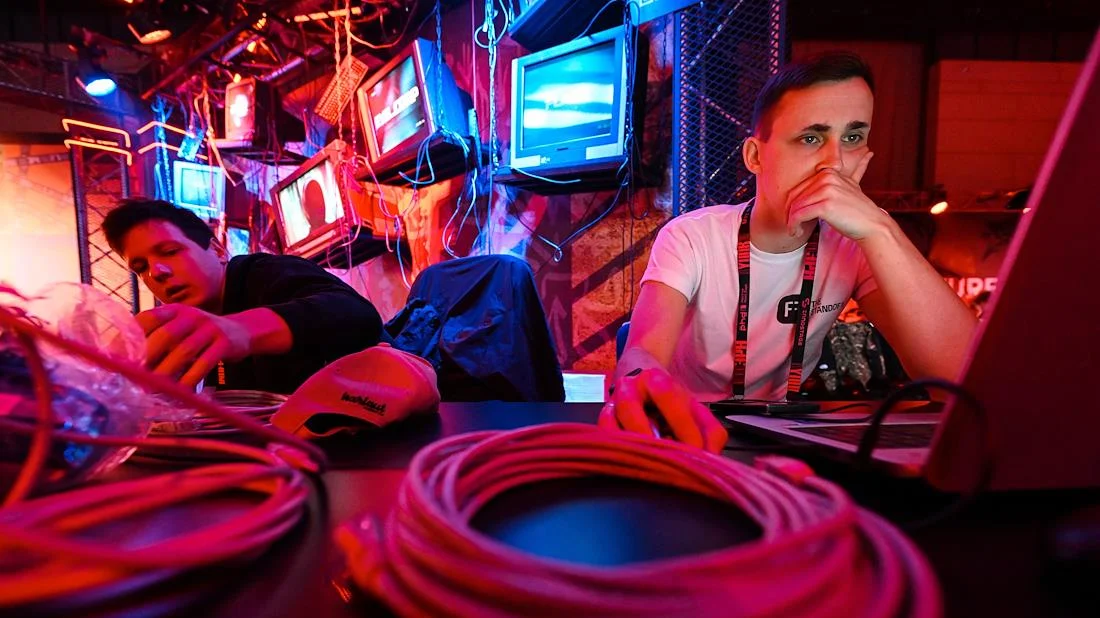
In August, domestic science did not spoil us with interesting news. But in the field of IT and high technologies there were a lot of things, especially in what is connected with the sanctions and voluntary restrictions imposed on us world concerns.
The outflow from Russia of highly qualified employees (not only programmers) in the field of IT did not stop completely. Some of the companies continue to withdraw their teams abroad, although it is already about tens, and not thousands. Last important news: Intel announced the export of 500 employees of its office in Nizhny Novgorod to Germany and other European countries. Another 930 Nizhny Novgorod programmers fired in April. At the same time, the corporation itself is in dire need of specialized personnel, as it loses on the world market the closest competitor - AMD.
It should be noted that, in the course of the polemic, to ban tourist visas to the Russians, it turned out that the removal of experts from the Russian Federation to Europe struck a much stronger blow to the country than the ban on their entry.
In case of serious flows of technical emigration, the economy can cause a strategic blow. Therefore, Sberbank and Rosata entered the battle with Intel.
These concerns, who have very powerful IT units, are ready to immediately employ all specialists of the Nizhny Novgorod branch of Intel, if only they would not leave Russia. This was reported to reporters by the governor of the region Gleb Nikitin. The fate of the Moscow office of the concern is still unknown.
Autodesk (9% of CAD sales - automatic design systems) also inflicted a serious blow: the Russian branch is closing. And although there were few employees there, Autodesk operates 30% of Russian design engineers. The transition to domestic counterparts has already begun (for example, in the MSTU named after AD Bauman), but in the next year or two, the majority will work without licenses.
Mincifers also participate in the confrontation. It extremely simplifies a loan at a rate of 1% per annum. Any IT company will be able to get it, even if it is not the current recipient of tax benefits.
The introduction of Russian operating systems based on Linux to schools and universities since the beginning of the special operation has grown six times. And this is not a lot at all. To fully replace Microsoft, you have to do a truly titanic work.
Domestic companies, in turn, are trying to capture the market shares that remain free after the departure of foreigners. The world giant, which produces the software for managing business and accounting, - German SAP - leaves the Russian market gradually, fulfilling obligations to clients. But it will go whole, and at 40% of the cost of the Russian market automation of production management that the Germans occupied, their direct competitor has the Russian company - the Russian company 1C. She has already created a joint company with top managers of the Russian branch of SAP.
It does not yawn in conditions of the closure of European (and generally Western) markets and electronic trade. Russian relatively young competitors of the Chinese Ali Baba Ozon and Wildberries, after the entry into force of trade sanctions, sharply strengthened their IT units.
Trade quickly adapts to prohibitions, learns to purchase goods and services through intermediaries. Deliveries began with non -traditional markets.
Since the beginning of the special operation of the Business of Belarus, Kazakhstan, Armenia, Kyrgyzstan and Uzbekistan, 5.1 billion rubles have increased the sales of products through Wildberrisna. - 441% year.
After Europe stopped supplying capsules for coffee machines, I myself switched to a regular coffee maker. The great impression on me was made by dozens of new companies selling Armenian coffee on Ozon. However, the varieties presented by them should also gain consumer trust. On the heels of Armenian coffee on electronic venues in the last weeks, Kazakh has come.
The entire financial sector, together with the Central Bank and the Ministry of Finance, is trying to correct the situation after the departure of Visa and MasterCard. The system of quick payments is developing. New tools appear to her.
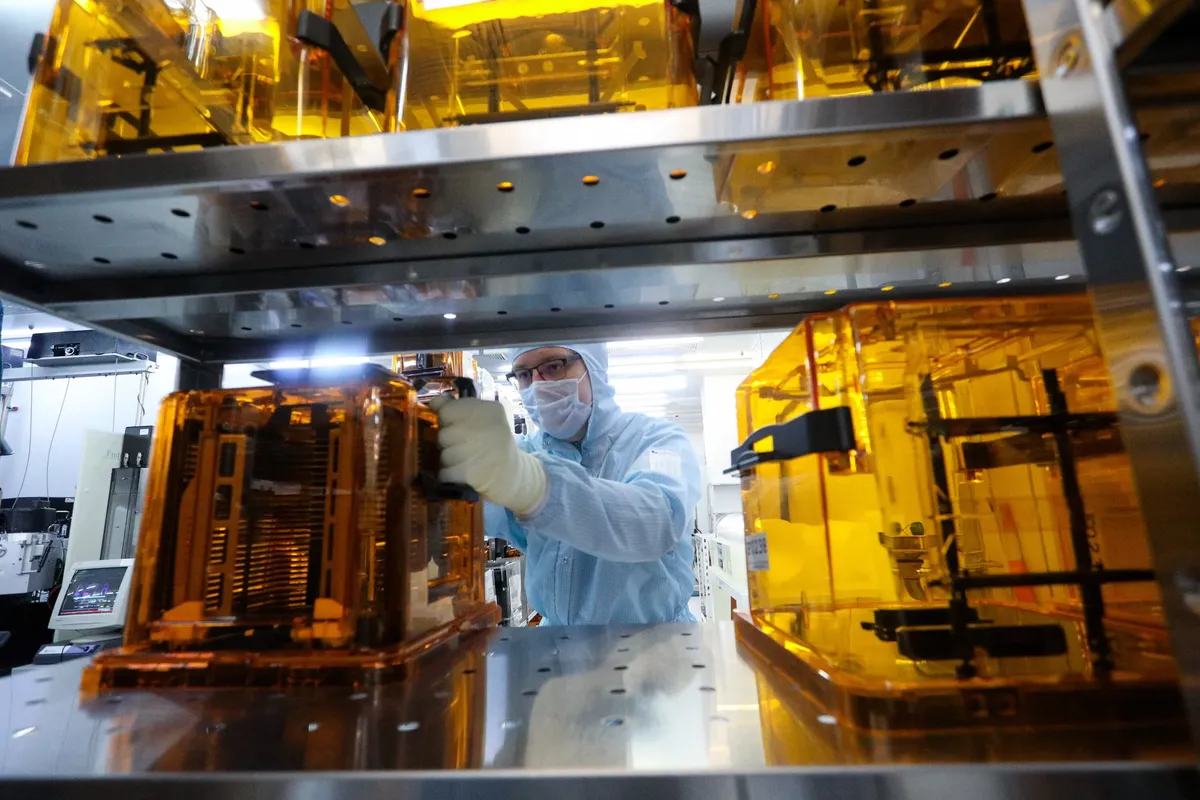
The micron group from Zelenograd has mastered the production of NFC tags-a special chip in the form of a sticker .
It is glued in any catalogs, menu, customs of retail chains, restaurants, cafes, gas stations, etc. The event itself is not a sensation, but it is really modern technologies: for instant payment, it is enough to bring a smartphone to the mark.
Of course, today payment is possible only in Russia and some neighboring countries. But if financial life enters a relatively calm channel, Micron marks will begin to accept international payments without a pause.
The agency of Elvira Nabiullina maintains a number of very ambitious projects in the field of money circulation, which should facilitate the position of the economy in conditions of total sanctions, disconnecting the main banks from SWIFT and the ban on payments. First of all, we are talking about digital ruble .
The project is in a rather high degree of readiness, test payments in the largest banks have passed. They will begin to connect everyone to a digital ruble in a year and a half.
The essence of the idea that is developed in the most developed countries is in the use of cryptocurrency tools for non -cash currency. Each digital ruble is a unique digital code in the blockchain. An important quality of digital currency is a direct way to translate without additional transaction encryption - it does not need systems such as SWIFT at all.
The regulatory authorities will be able to trace the path of literally each ruble to the final point of payments, even if you use hundreds of sub -accounts and intermediaries.
Exactly the same business will be able to see where his investments go, and ask about them unscrupulous partners.
It is best to show itself where there are no state monopolies. For example, in large municipalities. By the New Year in the Mitino and Novokosino electric bus parks in Moscow, a charging infrastructure for the super -construction of 270 electric buses will be created. Charging will be reduced to 18 minutes.
A few years ago, electric buses seemed exotic on our streets.
And today Moscow has become a city with the largest park of electric buses in Europe, there are already more than a thousand.
The KAMAZ and GAM electric buses involved in the project and management are building. The main argument against electric vehicles on batteries in high latitudes is frosts that disconnect the batteries. Swedish and Finnish firms with their original and very interesting projects participated in the competition with KamAZ and GAZ. They have already produced electric buses for the northern latitudes. But Moscow stopped at domestic factories. Electric buses began to be tested in Kazan, St. Petersburg, Belgorod. Manufacturers refused diesel heating of batteries in frost.
Planning tests of electric buses in Arab countries. In Moscow, tests of three -axle "accordions" of large capacity begin. In Kaliningrad, on August 25, the construction of a giant factory of traction batteries starts.
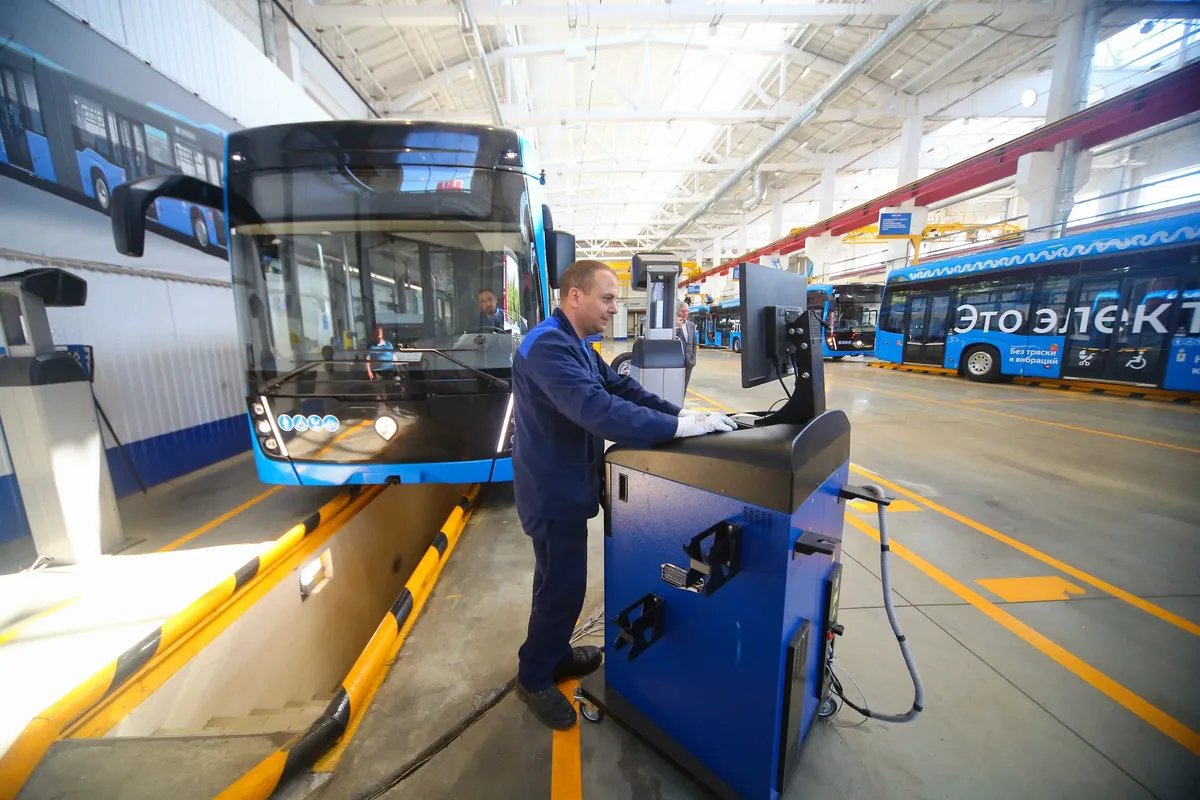
Since 70 km, KAMAZ and GAZ have developed electric buses on one charge for hydrogen buses for suburban messages with a mileage of 250 km (today there is only one hydrogen charger - in Chernogolovka in Russia).
It is assumed that by 2030 there will be no buses with internal combustion engines in the capital.
There is nothing of this in this experience in European cities.
Of course, the processes in the IT industry are also accompanied by ideological clashes. Natalia Kasperskaya, the former wife of the legendary Evgeny Kaspersky, finding her niche in servicing state companies, acquired additional patriotism.
On the Zvezda television channel, Natalya said : “Not only iPhones can be turned off, we can turn off everything that works on Android. All smartphones in the territory of the Russian Federation can hypothetically turn off. ”
But it will be impossible to destroy the infrastructure in the Russian Federation - citizens will switch to button phones or, in extreme cases, “Russian Post”. Here is such an optimism in difficult Godin.
On the mentioned television channel, news about high technologies is increasingly creating. Although it was required to class up all the information about Russian iron developers for computers at the Law level at the Army-2022 military-technical forum representatives of the computing technique consortium (created as part of import substitution policy).
It is important for them that partners and suppliers do not fall under sanctions: we only begin to create a domestic element base, and for many years Russian computers will greatly depend on imports.
After all, it is quite obvious that the Probit company, which presented the completely domestic Bitblaze Titan laptop with the arrogant novel “MacBook killer” last week, cannot do anything else until the plants in Taiwan get out of the sanctions regime. It is built on the domestic processor "Baikal-M", which is produced by Taiwan TSMC. On February 27, 2022, production was stopped.
The first batch of 1000 copies will be released at the end of the year. Why a thousand? Because there are so many Baikal-M processors in reserve. VPK
For decades, Russia has been built in such a way that it should produce electronics for missiles and other smart weapons on its own. But the rest of the electronics is imported.
Even incompetently more powerful China, realizing that US sanctions on advanced technologies have turned into a natural war, expects to get rid of this dependence in only 15 years.
What are we observing in the news from the world of technology? It seems to me that so far, the sporadic episodes of resistance to sanctions and examples of independent development (necessary for each country) are more likely to be the embodiment of a large agreed plan. Projects that have long been developing on the Russian base (like electric buses) are a product of private or regional initiative. But the change in the entire industry (theoretically possible) in the conditions of endless sanctions, maybe only the grandchildren of those who started all this will see.