
Translated material
The executioner of Ukraine
The mysterious fate of the Nazi criminal Erich Koch. 18+
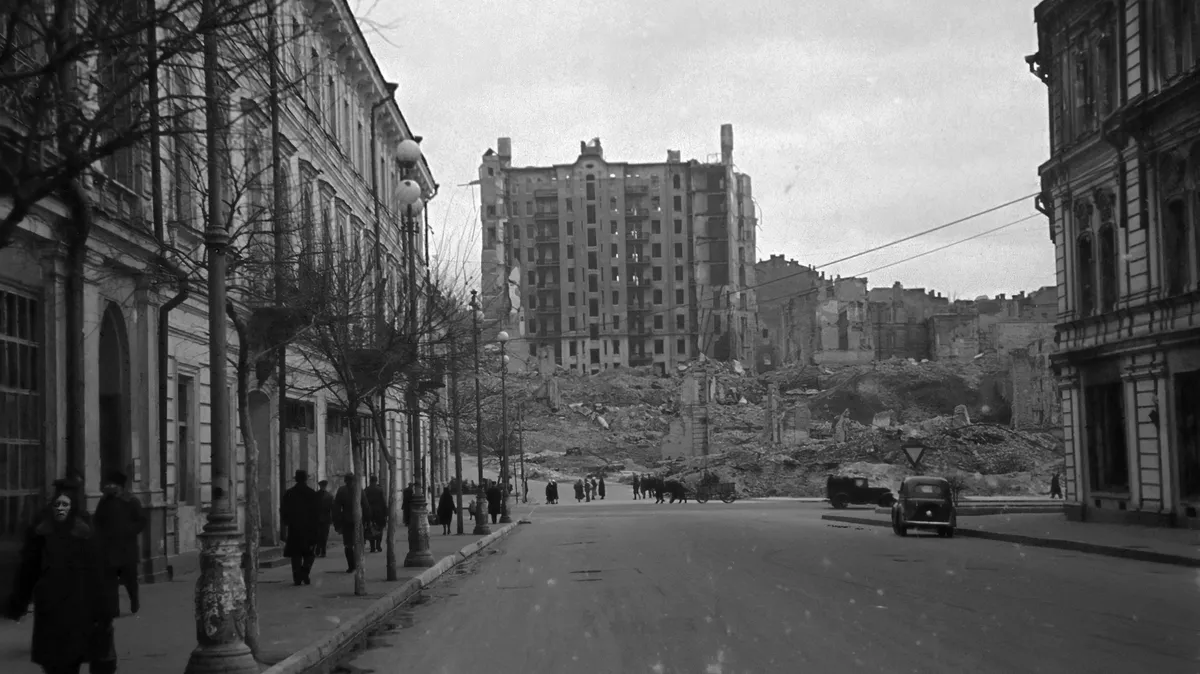
“... The Reich is in no way interested in preserving this useless people. The Führer is right - let them die out like the natives of Madagascar, or will remain in a small number in remote forests, as an object for studying anthropologists. The right to live our slaves must also be earned - loyalty, honesty, diligence ... "
This was said by the owner of Ukraine, the Hitler governor, at the same time Gauleiter and chief president of East Prussia Erich Koch, one of the main war criminals of the twentieth century. In 1945, he fled from Koenigsberg on an icebreaker, and in Denmark he passed himself as Major Rolf Berger. Successfully hid from the allies. But in 1948 he lost his vigilance, performed at a meeting of refugees and attracted attention. The British arrested him, transferred him to the Soviet Union. And that suddenly - Poland ... Why, why? Secret.
The trial of Koch was preparing for almost ten (!) Years, a detailed book about the process written by journalists Slavomir Orlovsky and Radoslav Ostrosovich, in Russian was published in 1961.
The accused was sentenced to death, but "for health reasons" - inexplicably! - pardoned. At the trial, he behaved disgustingly. Lag, Julil, dodging.
Only a few pages are devoted to the Tolstoy Book on the process of Ukraine.
What did Koch talked about?
This quote from Erich Koch walks in all respects about him, for all books.
“I need the Pole to kill a Ukrainian when meeting with a Ukrainian, and, conversely, that the Ukrainian kills the Pole. If before that, on the way, they shoot a Jew, it will be exactly what I need ... Some extremely naively imagine Germanization.
They think that we need Russians, Ukrainians and Poles, whom we would make us speak German. But we do not need neither Russians, nor Ukrainians, nor Poles. We need fertile lands. ”
Even in Wikipedia the phrase fell! Where? And from the books (practically artistic) of the Hero of the Soviet Union, Chekist Dmitry Medvedev “It was under the Rivne” (1948) and “Strong Spirit” (1951). The author in them recalls how he retold his conversation with Gauleiter intelligence officer Nikolai Kuznetsov, who tried to make an attempt on Koch, is also a Hero of the Soviet Union.
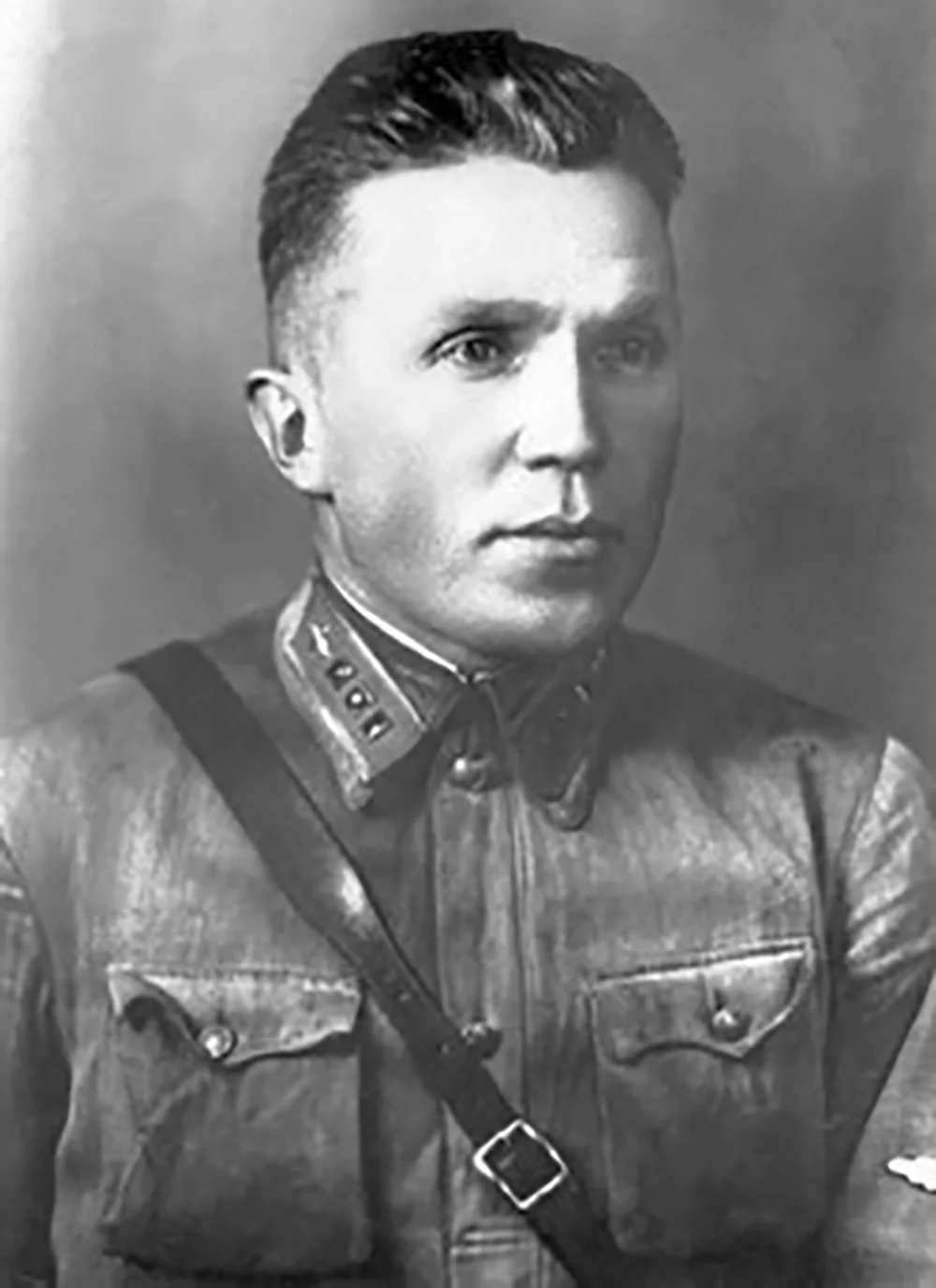
Photo: Wikipedia
You have to be more careful, quoting. Although for sure Kochu was neither the Ukrainians, nor the Poles, and all the more Jews really needed, he could even say something like this even to Kuznetsov, who appeared to him for a legendary reception for the purpose of attempt. Yes, and Koch acted - practice shows - in accordance with what was said.
Here is what a certain Breytigs, who was sent with the Inspectorate, writes with the Inspectorate, Rosenberg (should only take into account that Rosenberg and Koch could not stand each other and harmed mutually in every possible way).
** General policy
Berlin, 01/15/1944.
P/56/44G **
The main task of the civil administration in the rear of the fighting troops was the establishment of order, ensuring the safety of supply routes and, if possible, the maximum use of the country's economic forces. The Reich Commissioner of Ukraine justifies its strongly criticism policy of oppression by the fact that it is caused by the need for the most effective economic use.
The head of the special headquarters of the agricultural order, which these days returned from Ukraine through Galicia, told me the following:
Volyn and Galicia were before the start of this war under Polish domination and were occupied by advice. The economic structure of both areas is generally the same. After the departure of the Red Army, Galicia went into the administrative department of the Governor General, Volyn-to the Reichsky Commissioner of Ukraine. The work began under the same conditions. The results were as follows.
In Galicia in 1943, 470,000 tons of grain were collected, 7000 tons on Volyn. Galicia is a completely sophisticated area in which some completely military partisan groups have become noticeable due to the approach of the front. On Volyn, on the contrary, a universal popular uprising dominates. The difference in management consequences is manifested exactly on the border of both areas.
While even now you can just drive through Galicia, travel along Volyn roads is possible only under protection. About the popular uprising in Volyn, emissar Schöne general reported this summer.
Therefore, the conclusions are as follows:
The goal - peace and order in the rear of the fighting troops and ensuring the safety of supply - has been achieved in Galicia, at Volyn was not achieved at all.
The economic use of Galicia completely and completely succeeded, the economic use of Volyn failed.
The assertion that in the Reich Commissariat of Ukraine, the conducted policy is successful for the implementation of economic tasks is incorrect. This was also emphasized in the recently appeared article by the head of the department of the Military Administration of Dr. Shtok in the National Socialist [Bulletin] “Landpost”, where it is printed that it is necessary to “coordinate the requirements of general policy and agrarian policy”. If the politician, which is defended by the Reich Commissioner of Ukraine, served the interests of the economy, a high -ranking official of our agricultural administration could not make these claims.
** at this,
Mr. Reichsinist [Alfred Rosenberg]
Mr. to the permanent representative of the Reich Minister
Mr. to the chief of the department of the political headquarters, the second main department, the main department of the press and propaganda
For text [of the belief] acquaintance.
Brutigami (by hand) **
And here is another document extracted from the archives by modern researcher A. Gogun. Shortly before the appearance of the above note of Breitigam, an influential collaborational structure in Galicia - the Ukrainian Central Committee (UTSC), led by Vladimir Kubiovich, expressed fears that an interethnic conflict could spread to Galicia. The Ukrainians who collaborated with the Germans openly indicated the reason why Galicia gradually “wularized”, the raid partisan Sidor Kovpak, held in the summer of 1943. This operation, for which Kovpak received his second golden star of the Hero of the Soviet Union, largely untied the hands of the Bandera, who had already fought in Volyn at that moment.
“... Galicia, which until now has been a model of order and peace, entered a critical period a few weeks ago. There is a threat that our land can slide into the abyss of anarchy and mess. (...)
The raid of the Bolshevik partisans shocked the calm life of Galicia, the lack of a Bolshevik gang scattered around the region and turned different criminal elements ...
The planned retreat of German troops on the Eastern Front created a panic among a part of our society, and this significantly facilitated the enemies of their decomposing work.
The formation of the Galician division put on one front against the creative work of the positive camp of Ukrainians of all its enemies - the Bolsheviks, Poles and the Ukrainian destructive camp of destruction and anarchy ( P.G. G. ). All these forces in their own way led the frantic agitation against the division and its volunteers. To confront the division, the Ukrainian destructive camp began to call Ukrainian youth in the forest - as if for military training.
As a result of all this, mass desertion from the Ukrainian service has occurred (an organization that carried out strategically important works), about 30,000 Ukrainian youths are lacking in labor camps, which led to significant complications in the construction of military facilities in the territory of Galicia. Mass desertion entailed a sharp exacerbation of administrative relations in this region.
More and more often there are murders of both Ukrainians and Poles. Some dark forces and discharges of society are fattening on base instincts and incite people to the interethnic war and massacre.
Under the influence of the ongoing campaigning of enemy agents, there are more and more cases when peasant bottoms lose a healthy attitude to the necessary duties of wartime ... "
Until the end of 1940, in Western Ukraine (already including Bukovina and part of Bessarabia, which was annexed in July 1940)
It was arrested and attracted without arrest under various articles, including criminal, 69,517 people (of which 15,518 Poles, 15,024 Ukrainians, 10,924 Jews), of which a little more than 300 were sentenced to VMN.
At least 198,536 people were sent from the western regions of the Ukrainian SSR.
In connection with the rapid advance of German troops in prisons of Western Ukraine, the NKVD and the NKGB were shot more than 7 thousand “counter-revolutionary, criminal-political element”-primarily arrested and convicted under the articles of the Criminal Code of the Ukrainian SSR, 2, 11.
After all this, it was really necessary to try so that in a year and a half, the whole land occupied by the Germans would rebel.
During the process above Koch, several photocopies of the so -called Berichte were read out (Fuhrer’s work notes of “table conversations”). Here are the excerpts of 1941, where Hitler's lunch was described: “Talk at the table went on the topic of“ free Ukraine ”. Fuhrer and Reich Commissioner Koch reject this project. Slavs are like rabbit families who never go beyond related ties, except that the owners will lead them. Decorganization is characteristic of their nature. The knowledge instructed by him at best is a half -digest that turns them into dissatisfied and anarchists. Even for these reasons, you should refuse to open the university in Kyiv. In addition, little will remain from Kyiv. The intention of the Fuhrer, who believes that the destruction of large Russian cities is a prerequisite for the strength of German domination in Russia, was supported by the Reich Commissioner ( Koch. - P. G. ), who wants to destroy the Ukrainian industry in order to move the proletariat to the village.
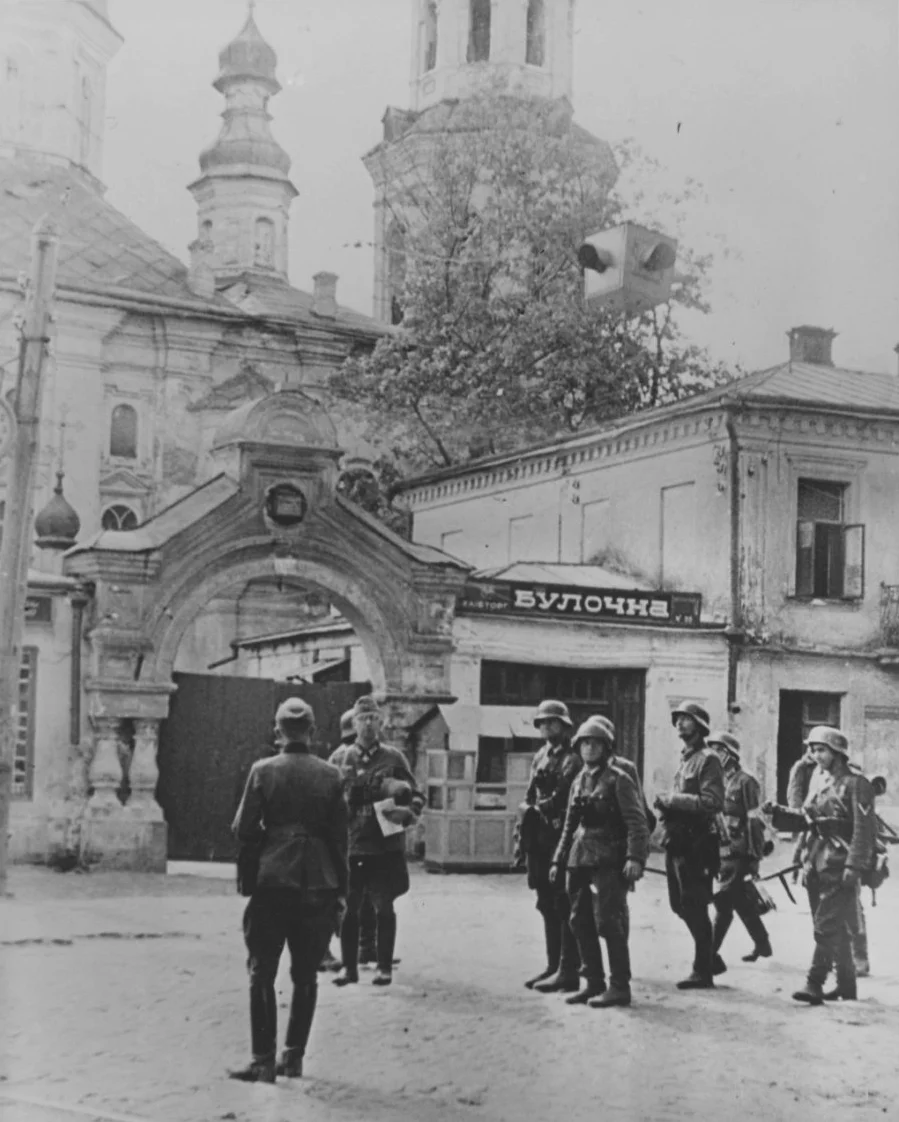
Koch emphasized that from the very beginning it is necessary to be solid and rude. If, in addition, to establish a monopoly on alcohol and tobacco, then the population of the occupied territories will be entirely in our hands ... "
“... A few days ago, a very sharp collision occurred between Koch and Field Marshal Keitel, as Koch accused the military authorities of unreasonable encouragement of Ukrainians and incorrect handling them, which does not correspond to the ideas of the Fuhrer. Assuming that Ukrainians will not agree with his policy, the Reich Commissioner demanded from the Fuhrer 20 thousand police and gendarmerie ... "
“The mood in the main headquarters of the Fuhrer is favorable for Koch. Everyone believes that he ( Koch. - P. G. ) is an appropriate person who best fulfills his task. ”
Koch or Rosenberg?
In the lengthy work of the American researcher Alexander Dallin "German rule in Russia in 1941-1945." One of the sections is dedicated to the personality of Erich Koch, and the author pays special attention to just his activities as the Reich Commissioner of Ukraine. The head dedicated to Ukraine begins with two epigraphs - Rosenberg’s statements: “Our goal is a free Ukrainian state” - and Kokha: “Ukraine does not exist. We must not forget that we are the people of the Lord. ” Dallin considers both these epigraphs to be characteristic of political concepts of both Rosenberg and Koch in relation to Ukraine.
The backstage side of the appointment of Koch by the Reich Commissioner of Ukraine says, in particular, the following: “The struggle for power between individual Nazi leaders led to an open split at the time when the Reich Commissioner of Ukraine was to appoint. Rosenberg wanted to appoint Koch in the Moscow District, and for Ukraine he intended Arno Shikedan or Herbert Buck. However, at the meeting on July 16, 1941, Goering crossed out Rosenberg's plans, deciding to appoint Koch as the commissar of the Baltic Territory or Ukraine, since it was Koch who considered it more initiative and better prepared. The nomination of the candidacy of Koch was a significant contribution of Goering to Eastern politics. Rosenberg knew that Koch was a “Goering’s favorite”. He rightly feared that Koch would not reckon with his instructions. Goering defended Koch. In the end, Hitler intervened, who ordered the appointment of Koch by the commissar to Ukraine. "
As a commissar of Ukraine, Koch, thanks to friendship with Bormann, was able to strengthen his situation independent of Rosenberg. Bormann, being nominally the head of Koch (Koch - first of all, the party functionary - as the Gauleiter of Prussia answered to the head of the party office by Bormann), was actually an intermediary between Koch and Hitler.
Thus, a situation arose in which Koch as a Reich Commissioner of Ukraine practically had the opportunity to resolve all issues directly with Hitler through the head of his minister, Rosenberg, with the help of Bormann.
In March 1942, Rosenberg introduced Hitler a Memorandum, in which, not mentioning Koch's surname, he sharply condemned his policy. Here is what Rosenberg wrote about Koch: “... some personalities made ( from the policies of the Fuhrer. - P. G. ) The conclusion that everywhere is possible to use sharp statements of such a kind as“ a colonial people who should be treated with blacks, with the help of a whip ... ”,“ ... the Slavic people who should be kept in as much as possible darkness ... ”, etc. It was this that emphasized the dismissive attitude that often had a will ( population. - P.G. ) to work more negatively than all other orders. ” Rosenberg believed that "the task of German representatives ( in Ukraine. - P. G. ) is not to issue orders and sentences that can bring to absolute despair the subordinate population ...". Without going into an assessment of Rosenberg’s position, Dallin states that he was right, accusing Koch of that he had contributed to the growth of anti -German sentiments among the Ukrainian population.
Koch did not think for a minute to concede the Ukrainian concepts of Rosenberg. The defeat of Germany near Stalingrad only increased his rage. Under the influence of this defeat, he sent a circular to the various administrative bodies of the territory subordinate to him, in which, in particular, it was said: “I demand that the principle of management of Ukrainians be a solid arm and justice. Do not believe that the conditions that have currently developed ( the Germans retreat on the Eastern Front. - P. G. ) force you to be less solid ...
Many events of recent days convinced me that where the Germans thought that in view of the situation at the front, Ukrainians should make concessions in the form of improving nutrition and political freedom, the natives almost always paid treason for this. ”
Outraged by the behavior of Koch, Rosenberg on March 13, 1943, sent all institutions to the general commissars (who were supposed to receive Circular Coha) a telegram demanding to destroy the copies of this circular and report to him about the implementation of this order.
Koch could not cancel the order of the minister, to whom he was subordinate, but he managed to shake Rosenberg's authority. On March 16, he sent a letter to his officials demanding to remove a quoted paragraph from the circular and return it to him. “The instructions of my circular are in force,” he added.
At the same time, Koch sent a memorandum for 52 pages to Rosenberg, listing in it all the differences in views with his minister.
In response to the long -standing accusation of Rosenberg, that Koch beats the Ukrainians, the latter gave the “classic answer” in the quoted memorandum: “Indeed, in 1941, 20 Ukrainians were beaten in Kyiv. The police beat them because they sabotaged important work on the construction of the bridge. I did not know anything about this order. If he knew, then, in all likelihood, he would approve him. However, if I knew how many reproaches in the beating would cause this fact, I probably would have ordered Ukrainians to shoot for sabotage ... ”
In the memorandum, Koch repeatedly emphasized the correspondence of his views by Hitler's views. Rosenberg, abandoning the direct struggle with Koch, turned to the head of the imperial office of Lammers for help. He sent a letter on 17 pages, in which he wrote: “To an increaser extent, the name of Koch becomes a symbol of a consciously neglect of the people. Currently, the phenomenon from which I warned him (...), an increasingly strong sense of hopelessness and the associated growth of hatred that covers the whole country, begins to make himself felt.
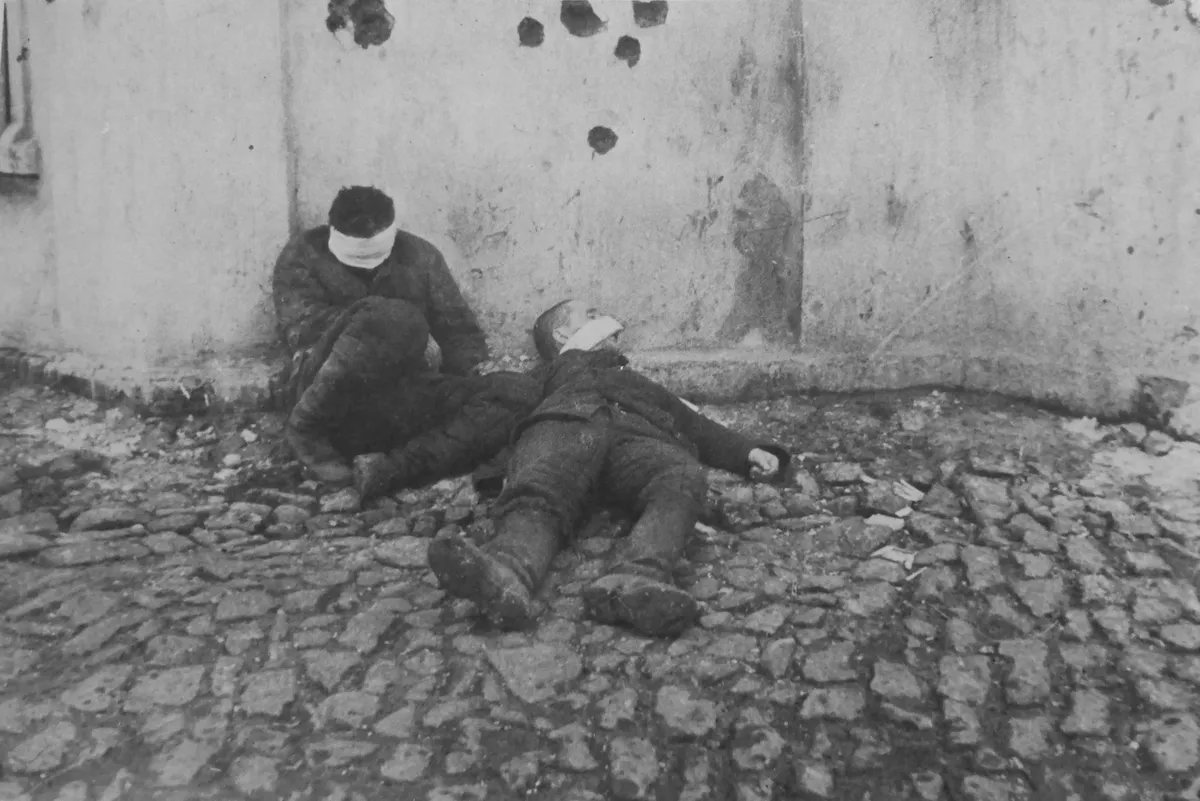
The gangs of partisans, standing outside of any policy and constantly threatening security, become a magnet attracting the disappointed natives. If Ukrainians turn against the Germans, this will be the result of the political activity of the Reich Commissioner Koch ... "
Through Lammers, Rosenberg tried to achieve permission from Hitler to withdraw Koch from the post of Reich Commissioner of Ukraine. To this end, he wrote to Hitler: “... I consider him ( Kokha . - P.G. ) absolutely unacceptable as a representative of the empire in this situation ... Due to the urgency of the issue, I ask you to give me the authority to grant the commissioner Kochu.”
However, before Rosenberg’s letter reached Hitler, Koch appeared at Bormann, who assured him in his support. 19 марта 1943 г. Гитлер принял в своей главной ставке Розенберга и Коха, взял сторону Коха и отверг политические концепции Розенберга в отношении Украины. Ввиду такой позиции Гитлера Кох на практике оказался полностью независимым от Розенберга «сам себе министром».
«…Вполне понятно, — с издевкой писал Кох Розенбергу, — что вывезти 1,5 миллиона человек из моего рейхскомиссариата в Германию невозможно без применения германской администрацией определенной суровости. Вербовка происходит при помощи средств, предусмотренных законами. В случае нарушений я действовал официально. Следовательно, нет необходимости, чтобы Ваше министерство в многократных распоряжениях и по телефону продолжало подчеркивать, что следует избегать всякого принуждения при вербовке на работы.
В своем распоряжении от 20 мая 1942 г. я предложил, чтобы на лесистых территориях северной Волыни, где дело дошло до открытого сопротивления вербовочной комиссии, были использованы для поддержания германского авторитета средства принуждения вплоть до сожжения хозяйств.
Как старый гауляйтер, я привык идти с заботами и пожеланиями к моему фюреру, и это мое право никогда не ставилось под вопрос министром, которому я подчиняюсь как оберпрезидент. Я должен подчеркнуть, что фюрер неоднократно передавал мне, как старому гауляйтеру, свои политические инструкции и что в некоторых случаях он уточнял перед моими подчиненными свои взгляды на украинскую политику… В беседах с фюрером я не раз имел возможность определить свою линию восточной политики. Многочисленные инструкции относительно восточной политики были переданы мне из его ближайшего окружения в последний раз в декабре 1942 года… Я всегда старался проводить свою политику в соответствии с директивами фюрера».
В очередном письме Гитлеру Кох доносит: «Мой фюрер. Поскольку прошло два года с момента завоевания Украины, я полагаю, что могу доставить Вам удовольствие, доложив, что за это время в империю вывезены продукты сельского хозяйства, горнодобывающей и другой промышленности стоимостью в несколько миллиардов марок. Кроме того, продолжающаяся с успехом вербовка на работы в империю уже давно превысила один миллион человек…»
Из меморандума Коха Розенбергу. «В своем декрете от 20 мая 1942 г. я указал, что на территории североволынских лесистых районов, где в одном из уездов дело дошло до открытого сопротивления вербовочной комиссии ( речь идет о вербовке рабочих на принудительные работы в Германию. — П. Г. ), в целях поддержания германского авторитета не следует останавливаться перед сожжением хозяйств. Вы устно и по телефону протестовали против этого декрета. Высказывались опасения, что я «сожгу обширные поля Украины». То, что Украина в основном пока существует и еще не сожжена, явствует из моих поставок хлеба и других продуктов.
В стране, где мои приказы, которые я отдаю по указанию высших властей империи, встречают сопротивление, я не могу поступать иначе, я должен применять суровые и поучительные наказания…»
Альфред Розенберг был повешен в Нюрнберге согласно приговору Международного трибунала в качестве одного из главных военных преступников.
Со времени, когда Кох стал рейхскомиссаром в Украине, отношения между ним и другими сановниками ухудшились до предела. Об этом пишет биограф Геббельса, называя Коха «демоном диктатуры»; Геббельс, как и Розенберг, пришел к выводу, что правление Коха на Украине наносит ущерб «Третьей империи». Его обвиняли в ненужной жестокости. Гудериан в своих «Воспоминаниях солдата» также пишет,
что деятельность Коха на Украине усилила движение Сопротивления и что даже та часть населения, которая, по мнению Гудериана, сочувствовала немцам, отвернулась от них.
Из книги мемуаров министра вооружений Альберта Шпеера: «…На месте одной из самых знаменитых церквей Киева я обнаружил груду развалин. Мне рассказали, что при Советах здесь находился склад боеприпасов, который затем по неизвестной причине взлетел на воздух. Позднее Геббельс рассказал мне, что на самом деле рейхскомиссар Украины Эрих Кох решил уничтожить символ ее национальной гордости и приказал взорвать церковь. Уже через полгода чинимые чиновниками германской администрации произвол и насилие привели к тому, что там повсюду появились партизаны…»
Кох просится в канцлеры
Немецкий журналист Ганс Иоахим Кауш, который беседовал с Кохом в его резиденции в Ровно, так описывает эту беседу: «Нелепо, — говорил Кох, — применять в отношении украинцев понятие «национальность» и включать их в семью европейских наций. Украина никогда не принадлежала к Европе… Если германский солдат завоевал Украину, то не для того, чтобы осчастливить украинский народ, а для того, чтобы подчинить его немецкому господству, создать для фронтовых солдат возможность переселения, а для Европы — рынок сбыта первостепенного значения».
Партия и собственная ловкость высоко вознесли Коха. Сын скромного рабочего стал наместником восточных рубежей «Третьей империи», а позднее, уже после начала войны, — «удельным князем» одной трети Польши и всей Украины.
Прибыв в 1928 году в Восточную Пруссию без единого пфеннига в кармане, через 15 лет он сколотил состояние в 400 миллионов марок.
Вопрос польского судьи на процессе над Кохом: «Подсудимый несомненно слышал и знает, что у него было партийное удостоверение НСДАП № 90. Была ли это порядковая нумерация?»
Ответ: «После взятия партией власти партийные удостоверения с золотым значком выдавались от 1-го до 100-тысячного номера. Партийные удостоверения от 1-го до 100-го номера были оставлены в распоряжении фюрера. Мне ставится в вину 90-й номер удостоверения. В то же время в империи было 20 рейхсляйтеров и 40 гауляйтеров. Вместе они имели номера удостоверений от 1-го до 60-го, меня среди них не было. Зато раньше меня стояли 89 обладателей партийных удостоверений, которые в настоящее время находятся на свободе в Западной Германии».
Среди многих тысяч документов, содержащихся в судебном деле Эриха Коха, находится и письмо, написанное им в 1950 году президенту Польской Республики.
Он пишет, что в связи с «надвигающейся войной» было бы хорошо, чтобы социалистические страны имели Германию на своей стороне. А как это можно сделать и кто это сделает? Разумеется, он, Кох.
Он разъясняет далее, что в Германии широкие слои населения держатся вдали от политики. Он утверждает, что в 20-х годах нашего века три четверти населения рейнского промышленного округа принадлежали к коммунистической партии. После ее запрета, когда Гитлер пришел к власти, эти люди дожидались поражения нацистов. Теперь они держатся в стороне. Следовательно, их надо вновь привлечь.
Кох хотел бы заняться и бывшими рядовыми членами НСДАП, «которые так же, как и он, боролись за социализм и стремились к нему». Наконец, он упоминает о немецких протестантах. Кох предлагает объединить всех этих людей и создать из них в Западной Германии одну большую партию. Она имела бы своей задачей «разбить фронт Аденауэра — Шумахера и поддерживать коммунистов Макса Реймана как в бундестаге, так и в повседневной партийной борьбе». Сам же он при этом должен остаться в тени. Временно, конечно, чтобы позднее, после проведения победоносной избирательной кампании, занять кресло канцлера ФРГ.
Кстати, Кох был единственным гауляйтером, который входил в состав немецкой правительственной делегации, прилетевшей 23 августа 1939 г. во главе с Риббентропом в Москву для заключения пакта о ненападении между Германией и СССР.
На снимке с ним чокается хрустальными бокалами с шампанским Сталин.
«Ужин был дан в соседних залах Кремлевского дворца и происходил в очень непринужденной и дружественной атмосфере, которая особенно улучшилась после того, как хозяева в ходе ужина провозгласили многочисленные, в том числе весьма забавные тосты в честь каждого из присутствовавших гостей. Первый тост был адресован г-ну министру ( Риббентропу. — П. Г. ). В нем содержалось приветствие «приносящему удачу» гостю, и он был завершен провозглашением «ура!» в честь Германии, ее фюрера и его министра…»
Умер в дачном поселке…
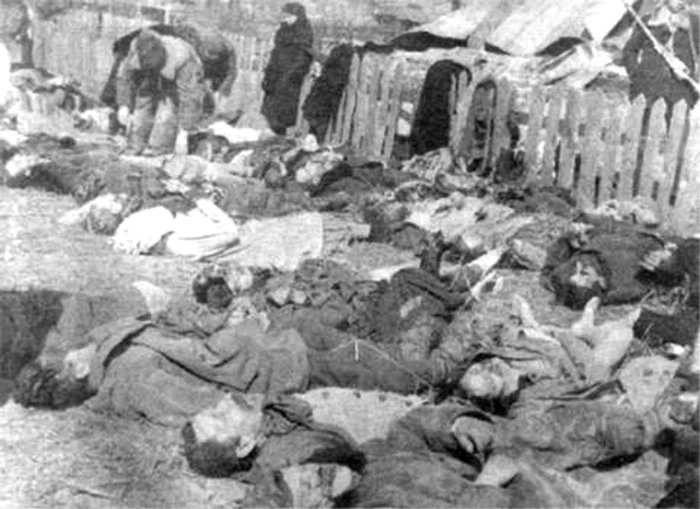
Люди Коха в Уманском районе (Волынь) истребили несколько десятков тысяч человек. Их преступления смутили даже Розенберга, который в апреле 1943 года просил Гиммлера провести специальное расследование этого дела. Заявление Розенберга Международный военный трибунал в Нюрнберге приобщил к делу в качестве доказательства.
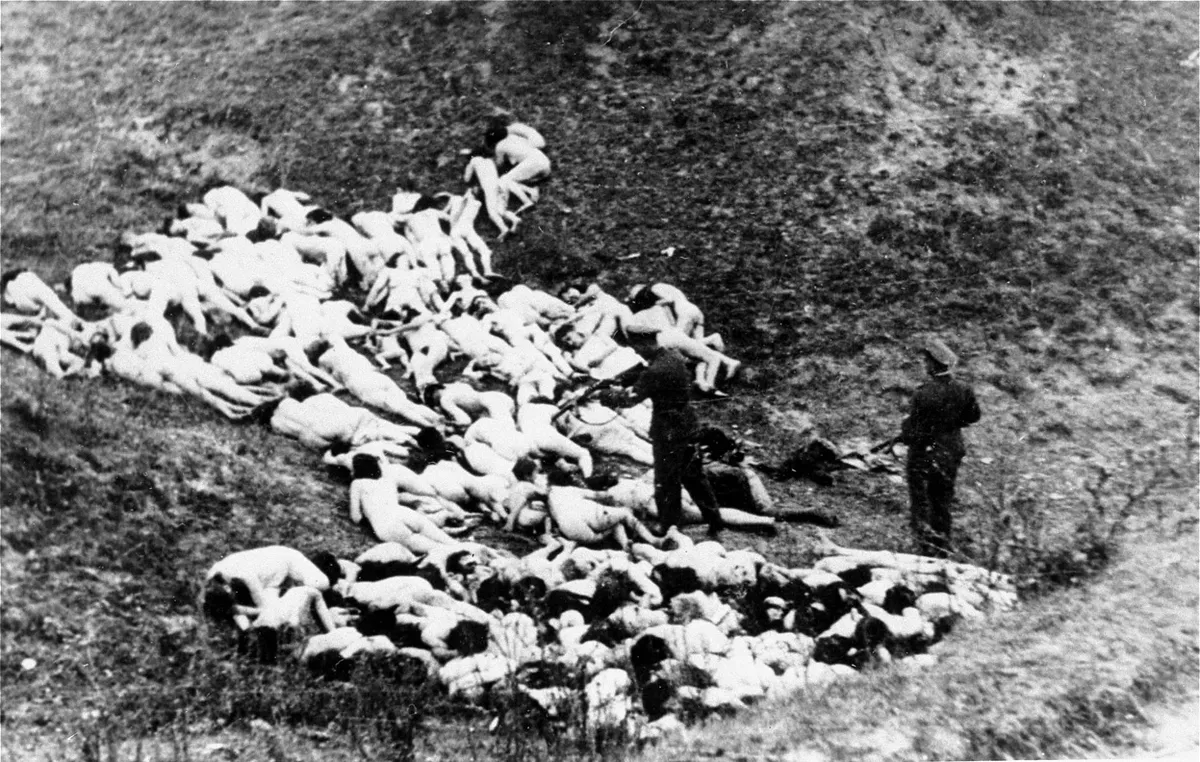
В одном только городе Ровно после бегства оккупантов было обнаружено свыше 102 тысяч трупов стариков, женщин, детей и военнопленных, расстрелянных фашистами.
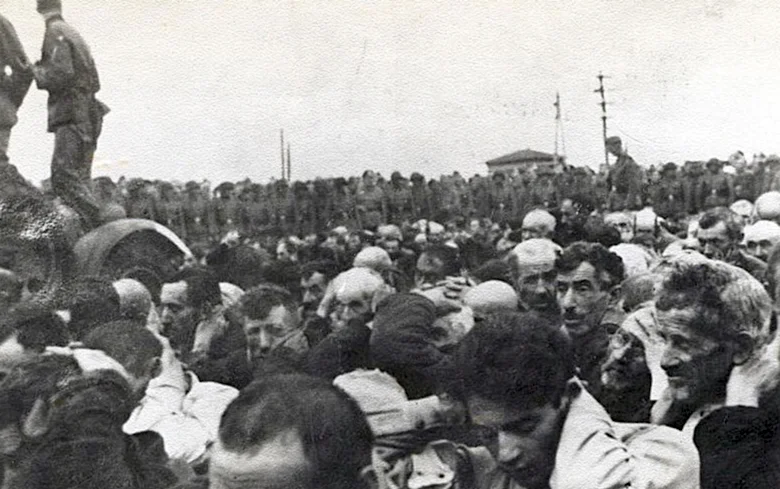
В августе или в сентябре 1941 года в Белостоке состоялось служебное совещание районных комиссаров, на котором обер-президент Кох инструктировал подчиненных: «Если вы не истребите евреев в Белостокском округе сами, то я вызову СС, и они по моему приказу справятся с этим».
В гетто евреи жили в страшных условиях. Дневная норма хлеба 150 граммов на человека позднее была урезана наполовину. В конце 1942 года, во время широко запланированной акции по ликвидации гетто было истреблено в течение двух месяцев 130 тысяч евреев. После подавления восстания в гетто было убито еще 30 тысяч человек.
В Белостокском округе было уничтожено 18 деревень. В окрестностях Грабувки немцы расстреляли 16 тысяч человек, в Гелчинском лесу — 26 тысяч, в Томкелах — 18 тысяч. Всего в Белостокском округе было убито 220 тысяч человек.
Телеграмма Коха Гиммлеру. 25 февраля 1943 года:
«Дорогой Генрих. По твоему поручению группенфюрер Томас спрашивает о причинах моего демарша перед министром по делам восточных территорий по поводу сожжения деревень в ходе борьбы с бандами. Я очень удивлен этим вопросом, так как никогда не делал полиции упреков на том основании, что на территории, находящейся под угрозой банд, эвакуировано слишком много деревень. Скорее я говорил, что она практиковала это в недостаточных размерах. Я сторонник полной эвакуации полосы шириной от 50 до 100 километров по обе стороны железной дороги Брест-Литовск — Гомель, поскольку эти территории не представляют никакой ценности. Твой Эрих Кох».
Председательствующий: «Часто ли вам приходилось произносить речи, совершенно противоречащие убеждениям?»
Кох: «Согласно принципам честного человека, я должен был говорить в соответствии с установками НСДАП. В противном случае я бы нарушил присягу. Только перед соответствующими инстанциями — у Гитлера и Гесса — я выражал свои убеждения. В противном случае я должен был бы выйти из НСДАП и создать оппозиционную партию. А это, господин председательствующий, не имело бы смысла…»
Резкую реакцию у подсудимого вызвало оглашение выдержек из книги «К горькому концу», написанной бывшим высшим чиновником РСХА Гизевиусом.
«Это был, — пишет Гизевиус о Кохе, — один из самых ловких гауляйтеров, какие только были у Гитлера».
Автор книги не жалеет крепких словечек в адрес бывшего обер-президента. Так, он называет его дьяволом во плоти, смелым авантюристом, демагогом с исключительными способностями к вымыслу и т.п.
Кох окружал себя разного рода аферистами, комбинаторами и даже неудачливыми изобретателями. Гизевиус сообщает, что Кох поселил в Кенигсберге алхимика, который должен был заняться получением золота. Гизевиус приводит также направленное министру Шахту заявление Коха о том, что многие руководители германской экономики надоедают Гитлеру неинтересными цифрами. По мнению Коха, фюрера следует потчевать чем-либо оригинальным и поражающим, чтобы получалось «нечто вроде волшебной шкатулки».
После оглашения этих выдержек подсудимый пытался ослабить их значение:
— Гизевиус был платным американским шпионом. Я прошу, чтобы выдержки из книги были зачитаны по немецкому изданию, а не по английскому.
Председательствующий: «Текст был зачитан именно по немецкому изданию».
…Помилованный по нездоровью Кох умер в 1986 году в польской тюрьме Барчево. Из осужденных военных преступников его пережил лишь заместитель Гитлера Рудольф Гесс.
Однако некролог о его смерти, напечатанный в катовицком еженедельнике «Панорама», выглядел как сообщение о смерти почтенного пенсионера: «12 ноября 1986 г. в дачном поселке Барчево Ольштынского воеводства на 91-м году жизни скончался бывший гауляйтер Восточной Пруссии и рейхскомиссар Украины Эрих Кох».