
Translated material
The executioner of Ukraine
The mysterious fate of the Nazi criminal Erich Koch. 18+
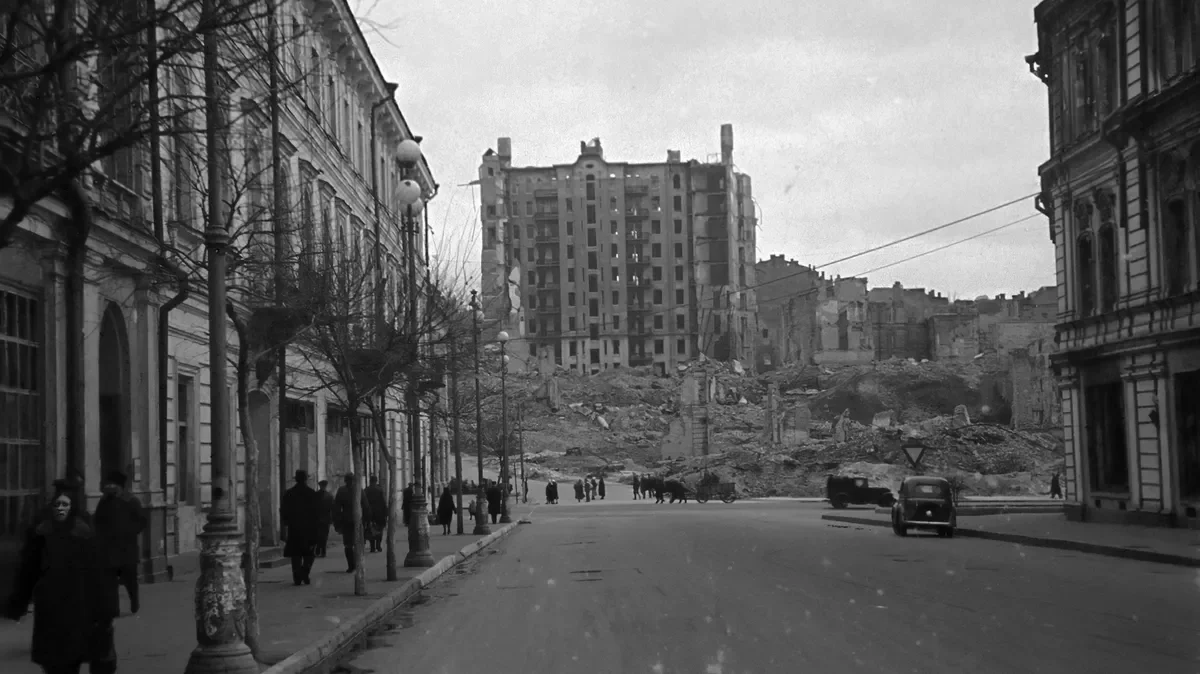
“... The Reich is in no way interested in preserving this useless people. The Führer is right - let them die out like the natives of Madagascar, or will remain in a small number in remote forests, as an object for studying anthropologists. The right to live our slaves must also be earned - loyalty, honesty, diligence ... "
This was said by the owner of Ukraine, the Hitler governor, at the same time Gauleiter and chief president of East Prussia Erich Koch, one of the main war criminals of the twentieth century. In 1945, he fled from Koenigsberg on an icebreaker, and in Denmark he passed himself as Major Rolf Berger. Successfully hid from the allies. But in 1948 he lost his vigilance, performed at a meeting of refugees and attracted attention. The British arrested him, transferred him to the Soviet Union. And that suddenly - Poland ... Why, why? Secret.
The trial of Koch was preparing for almost ten (!) Years, a detailed book about the process written by journalists Slavomir Orlovsky and Radoslav Ostrosovich, in Russian was published in 1961.
The accused was sentenced to death, but "for health reasons" - inexplicably! - pardoned. At the trial, he behaved disgustingly. Lag, Julil, dodging.
Only a few pages are devoted to the Tolstoy Book on the process of Ukraine.
What did Koch talked about?
This quote from Erich Koch walks in all respects about him, for all books.
“I need the Pole to kill a Ukrainian when meeting with a Ukrainian, and, conversely, that the Ukrainian kills the Pole. If before that, on the way, they shoot a Jew, it will be exactly what I need ... Some extremely naively imagine Germanization.
They think that we need Russians, Ukrainians and Poles, whom we would make us speak German. But we do not need neither Russians, nor Ukrainians, nor Poles. We need fertile lands. ”
Even in Wikipedia the phrase fell! Where? And from the books (practically artistic) of the Hero of the Soviet Union, Chekist Dmitry Medvedev “It was under the Rivne” (1948) and “Strong Spirit” (1951). The author in them recalls how he retold his conversation with Gauleiter intelligence officer Nikolai Kuznetsov, who tried to make an attempt on Koch, is also a Hero of the Soviet Union.
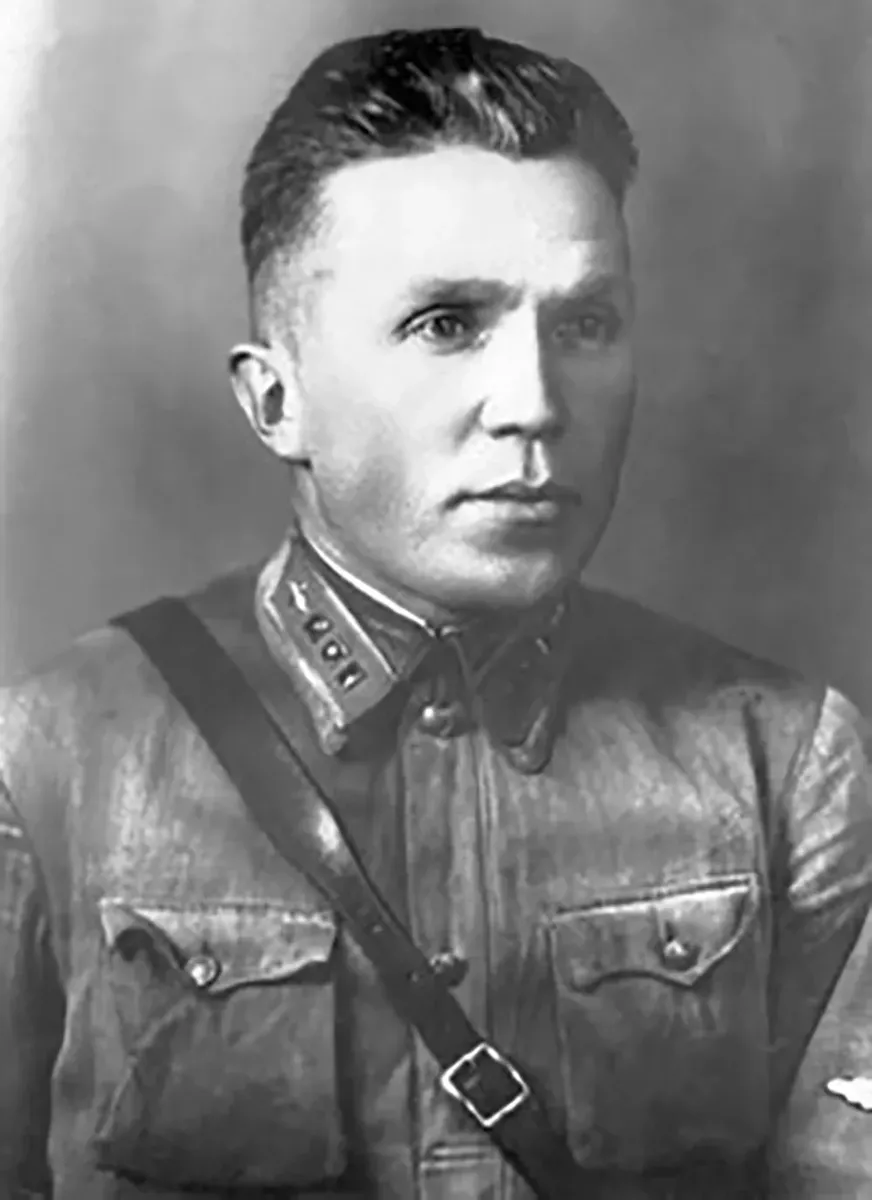
Photo: Wikipedia
You have to be more careful, quoting. Although for sure Kochu was neither the Ukrainians, nor the Poles, and all the more Jews really needed, he could even say something like this even to Kuznetsov, who appeared to him for a legendary reception for the purpose of attempt. Yes, and Koch acted - practice shows - in accordance with what was said.
Here is what a certain Breytigs, who was sent with the Inspectorate, writes with the Inspectorate, Rosenberg (should only take into account that Rosenberg and Koch could not stand each other and harmed mutually in every possible way).
** General policy
Berlin, 01/15/1944.
P/56/44G **
The main task of the civil administration in the rear of the fighting troops was the establishment of order, ensuring the safety of supply routes and, if possible, the maximum use of the country's economic forces. The Reich Commissioner of Ukraine justifies its strongly criticism policy of oppression by the fact that it is caused by the need for the most effective economic use.
The head of the special headquarters of the agricultural order, which these days returned from Ukraine through Galicia, told me the following:
Volyn and Galicia were before the start of this war under Polish domination and were occupied by advice. The economic structure of both areas is generally the same. After the departure of the Red Army, Galicia went into the administrative department of the Governor General, Volyn-to the Reichsky Commissioner of Ukraine. The work began under the same conditions. The results were as follows.
In Galicia in 1943, 470,000 tons of grain were collected, 7000 tons on Volyn. Galicia is a completely sophisticated area in which some completely military partisan groups have become noticeable due to the approach of the front. On Volyn, on the contrary, a universal popular uprising dominates. The difference in management consequences is manifested exactly on the border of both areas.
While even now you can just drive through Galicia, travel along Volyn roads is possible only under protection. About the popular uprising in Volyn, emissar Schöne general reported this summer.
Therefore, the conclusions are as follows:
The goal - peace and order in the rear of the fighting troops and ensuring the safety of supply - has been achieved in Galicia, at Volyn was not achieved at all.
The economic use of Galicia completely and completely succeeded, the economic use of Volyn failed.
The assertion that in the Reich Commissariat of Ukraine, the conducted policy is successful for the implementation of economic tasks is incorrect. This was also emphasized in the recently appeared article by the head of the department of the Military Administration of Dr. Shtok in the National Socialist [Bulletin] “Landpost”, where it is printed that it is necessary to “coordinate the requirements of general policy and agrarian policy”. If the politician, which is defended by the Reich Commissioner of Ukraine, served the interests of the economy, a high -ranking official of our agricultural administration could not make these claims.
** at this,
Mr. Reichsinist [Alfred Rosenberg]
Mr. to the permanent representative of the Reich Minister
Mr. to the chief of the department of the political headquarters, the second main department, the main department of the press and propaganda
For text [of the belief] acquaintance.
Brutigami (by hand) **
And here is another document extracted from the archives by modern researcher A. Gogun. Shortly before the appearance of the above note of Breitigam, an influential collaborational structure in Galicia - the Ukrainian Central Committee (UTSC), led by Vladimir Kubiovich, expressed fears that an interethnic conflict could spread to Galicia. The Ukrainians who collaborated with the Germans openly indicated the reason why Galicia gradually “wularized”, the raid partisan Sidor Kovpak, held in the summer of 1943. This operation, for which Kovpak received his second golden star of the Hero of the Soviet Union, largely untied the hands of the Bandera, who had already fought in Volyn at that moment.
“... Galicia, which until now has been a model of order and peace, entered a critical period a few weeks ago. There is a threat that our land can slide into the abyss of anarchy and mess. (...)
The raid of the Bolshevik partisans shocked the calm life of Galicia, the lack of a Bolshevik gang scattered around the region and turned different criminal elements ...
The planned retreat of German troops on the Eastern Front created a panic among a part of our society, and this significantly facilitated the enemies of their decomposing work.
The formation of the Galician division put on one front against the creative work of the positive camp of Ukrainians of all its enemies - the Bolsheviks, Poles and the Ukrainian destructive camp of destruction and anarchy ( P.G. G. ). All these forces in their own way led the frantic agitation against the division and its volunteers. To confront the division, the Ukrainian destructive camp began to call Ukrainian youth in the forest - as if for military training.
As a result of all this, mass desertion from the Ukrainian service has occurred (an organization that carried out strategically important works), about 30,000 Ukrainian youths are lacking in labor camps, which led to significant complications in the construction of military facilities in the territory of Galicia. Mass desertion entailed a sharp exacerbation of administrative relations in this region.
More and more often there are murders of both Ukrainians and Poles. Some dark forces and discharges of society are fattening on base instincts and incite people to the interethnic war and massacre.
Under the influence of the ongoing campaigning of enemy agents, there are more and more cases when peasant bottoms lose a healthy attitude to the necessary duties of wartime ... "
Until the end of 1940, in Western Ukraine (already including Bukovina and part of Bessarabia, which was annexed in July 1940)
It was arrested and attracted without arrest under various articles, including criminal, 69,517 people (of which 15,518 Poles, 15,024 Ukrainians, 10,924 Jews), of which a little more than 300 were sentenced to VMN.
At least 198,536 people were sent from the western regions of the Ukrainian SSR.
In connection with the rapid advance of German troops in prisons of Western Ukraine, the NKVD and the NKGB were shot more than 7 thousand “counter-revolutionary, criminal-political element”-primarily arrested and convicted under the articles of the Criminal Code of the Ukrainian SSR, 2, 11.
After all this, it was really necessary to try so that in a year and a half, the whole land occupied by the Germans would rebel.
During the process above Koch, several photocopies of the so -called Berichte were read out (Fuhrer’s work notes of “table conversations”). Here are the excerpts of 1941, where Hitler's lunch was described: “Talk at the table went on the topic of“ free Ukraine ”. Fuhrer and Reich Commissioner Koch reject this project. Slavs are like rabbit families who never go beyond related ties, except that the owners will lead them. Decorganization is characteristic of their nature. The knowledge instructed by him at best is a half -digest that turns them into dissatisfied and anarchists. Even for these reasons, you should refuse to open the university in Kyiv. In addition, little will remain from Kyiv. The intention of the Fuhrer, who believes that the destruction of large Russian cities is a prerequisite for the strength of German domination in Russia, was supported by the Reich Commissioner ( Koch. - P. G. ), who wants to destroy the Ukrainian industry in order to move the proletariat to the village.
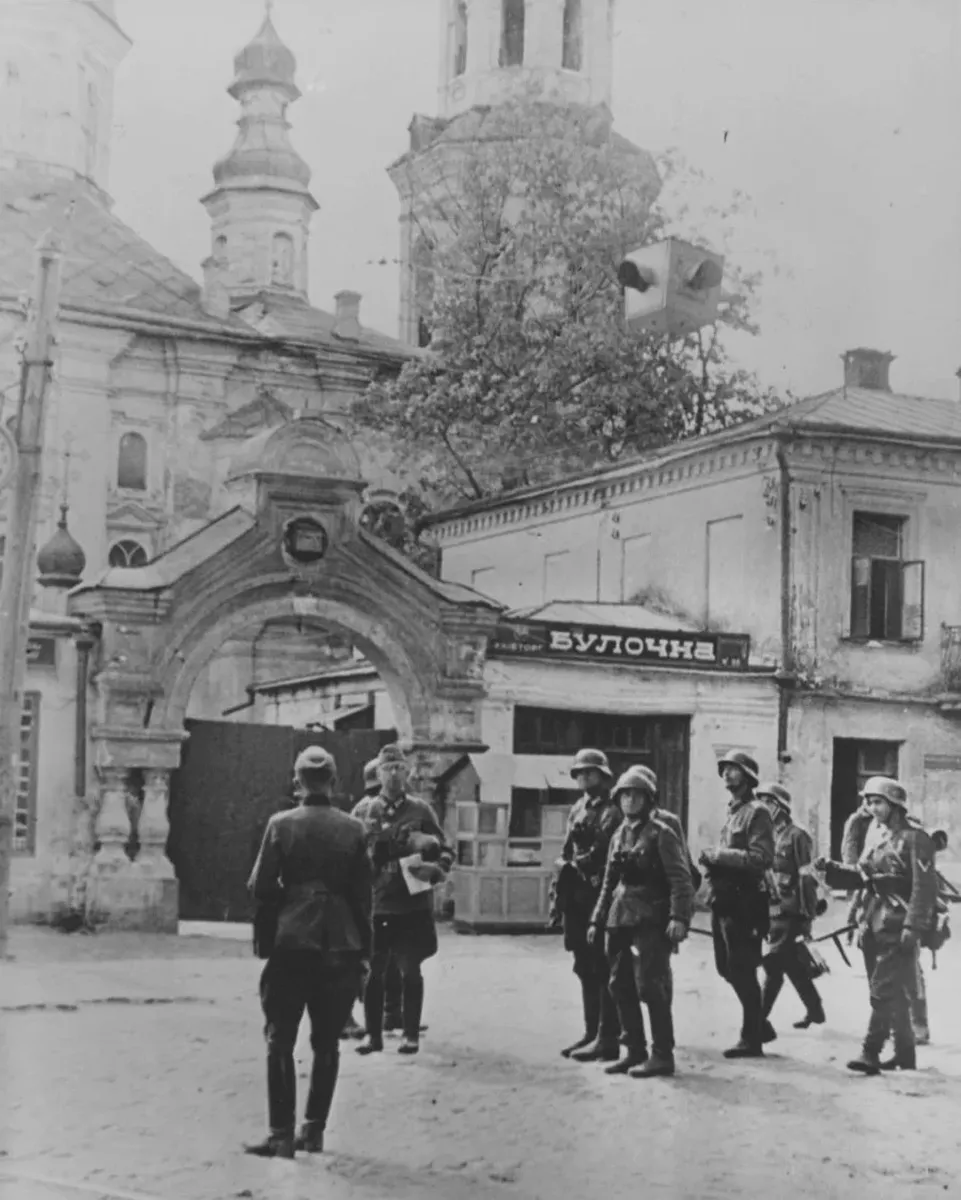
Koch emphasized that from the very beginning it is necessary to be solid and rude. If, in addition, to establish a monopoly on alcohol and tobacco, then the population of the occupied territories will be entirely in our hands ... "
“... A few days ago, a very sharp collision occurred between Koch and Field Marshal Keitel, as Koch accused the military authorities of unreasonable encouragement of Ukrainians and incorrect handling them, which does not correspond to the ideas of the Fuhrer. Assuming that Ukrainians will not agree with his policy, the Reich Commissioner demanded from the Fuhrer 20 thousand police and gendarmerie ... "
“The mood in the main headquarters of the Fuhrer is favorable for Koch. Everyone believes that he ( Koch. - P. G. ) is an appropriate person who best fulfills his task. ”
Koch or Rosenberg?
In the lengthy work of the American researcher Alexander Dallin "German rule in Russia in 1941-1945." One of the sections is dedicated to the personality of Erich Koch, and the author pays special attention to just his activities as the Reich Commissioner of Ukraine. The head dedicated to Ukraine begins with two epigraphs - Rosenberg’s statements: “Our goal is a free Ukrainian state” - and Kokha: “Ukraine does not exist. We must not forget that we are the people of the Lord. ” Dallin considers both these epigraphs to be characteristic of political concepts of both Rosenberg and Koch in relation to Ukraine.
The backstage side of the appointment of Koch by the Reich Commissioner of Ukraine says, in particular, the following: “The struggle for power between individual Nazi leaders led to an open split at the time when the Reich Commissioner of Ukraine was to appoint. Rosenberg wanted to appoint Koch in the Moscow District, and for Ukraine he intended Arno Shikedan or Herbert Buck. However, at the meeting on July 16, 1941, Goering crossed out Rosenberg's plans, deciding to appoint Koch as the commissar of the Baltic Territory or Ukraine, since it was Koch who considered it more initiative and better prepared. The nomination of the candidacy of Koch was a significant contribution of Goering to Eastern politics. Rosenberg knew that Koch was a “Goering’s favorite”. He rightly feared that Koch would not reckon with his instructions. Goering defended Koch. In the end, Hitler intervened, who ordered the appointment of Koch by the commissar to Ukraine. "
As a commissar of Ukraine, Koch, thanks to friendship with Bormann, was able to strengthen his situation independent of Rosenberg. Bormann, being nominally the head of Koch (Koch - first of all, the party functionary - as the Gauleiter of Prussia answered to the head of the party office by Bormann), was actually an intermediary between Koch and Hitler.
Thus, a situation arose in which Koch as a Reich Commissioner of Ukraine practically had the opportunity to resolve all issues directly with Hitler through the head of his minister, Rosenberg, with the help of Bormann.
In March 1942, Rosenberg introduced Hitler a Memorandum, in which, not mentioning Koch's surname, he sharply condemned his policy. Here is what Rosenberg wrote about Koch: “... some personalities made ( from the policies of the Fuhrer. - P. G. ) The conclusion that everywhere is possible to use sharp statements of such a kind as“ a colonial people who should be treated with blacks, with the help of a whip ... ”,“ ... the Slavic people who should be kept in as much as possible darkness ... ”, etc. It was this that emphasized the dismissive attitude that often had a will ( population. - P.G. ) to work more negatively than all other orders. ” Rosenberg believed that "the task of German representatives ( in Ukraine. - P. G. ) is not to issue orders and sentences that can bring to absolute despair the subordinate population ...". Without going into an assessment of Rosenberg’s position, Dallin states that he was right, accusing Koch of that he had contributed to the growth of anti -German sentiments among the Ukrainian population.
Koch did not think for a minute to concede the Ukrainian concepts of Rosenberg. The defeat of Germany near Stalingrad only increased his rage. Under the influence of this defeat, he sent a circular to the various administrative bodies of the territory subordinate to him, in which, in particular, it was said: “I demand that the principle of management of Ukrainians be a solid arm and justice. Do not believe that the conditions that have currently developed ( the Germans retreat on the Eastern Front. - P. G. ) force you to be less solid ...
Many events of recent days convinced me that where the Germans thought that in view of the situation at the front, Ukrainians should make concessions in the form of improving nutrition and political freedom, the natives almost always paid treason for this. ”
Outraged by the behavior of Koch, Rosenberg on March 13, 1943, sent all institutions to the general commissars (who were supposed to receive Circular Coha) a telegram demanding to destroy the copies of this circular and report to him about the implementation of this order.
Koch could not cancel the order of the minister, to whom he was subordinate, but he managed to shake Rosenberg's authority. On March 16, he sent a letter to his officials demanding to remove a quoted paragraph from the circular and return it to him. “The instructions of my circular are in force,” he added.
At the same time, Koch sent a memorandum for 52 pages to Rosenberg, listing in it all the differences in views with his minister.
In response to the long -standing accusation of Rosenberg, that Koch beats the Ukrainians, the latter gave the “classic answer” in the quoted memorandum: “Indeed, in 1941, 20 Ukrainians were beaten in Kyiv. The police beat them because they sabotaged important work on the construction of the bridge. I did not know anything about this order. If he knew, then, in all likelihood, he would approve him. However, if I knew how many reproaches in the beating would cause this fact, I probably would have ordered Ukrainians to shoot for sabotage ... ”
In the memorandum, Koch repeatedly emphasized the correspondence of his views by Hitler's views. Rosenberg, abandoning the direct struggle with Koch, turned to the head of the imperial office of Lammers for help. He sent a letter on 17 pages, in which he wrote: “To an increaser extent, the name of Koch becomes a symbol of a consciously neglect of the people. Currently, the phenomenon from which I warned him (...), an increasingly strong sense of hopelessness and the associated growth of hatred that covers the whole country, begins to make himself felt.
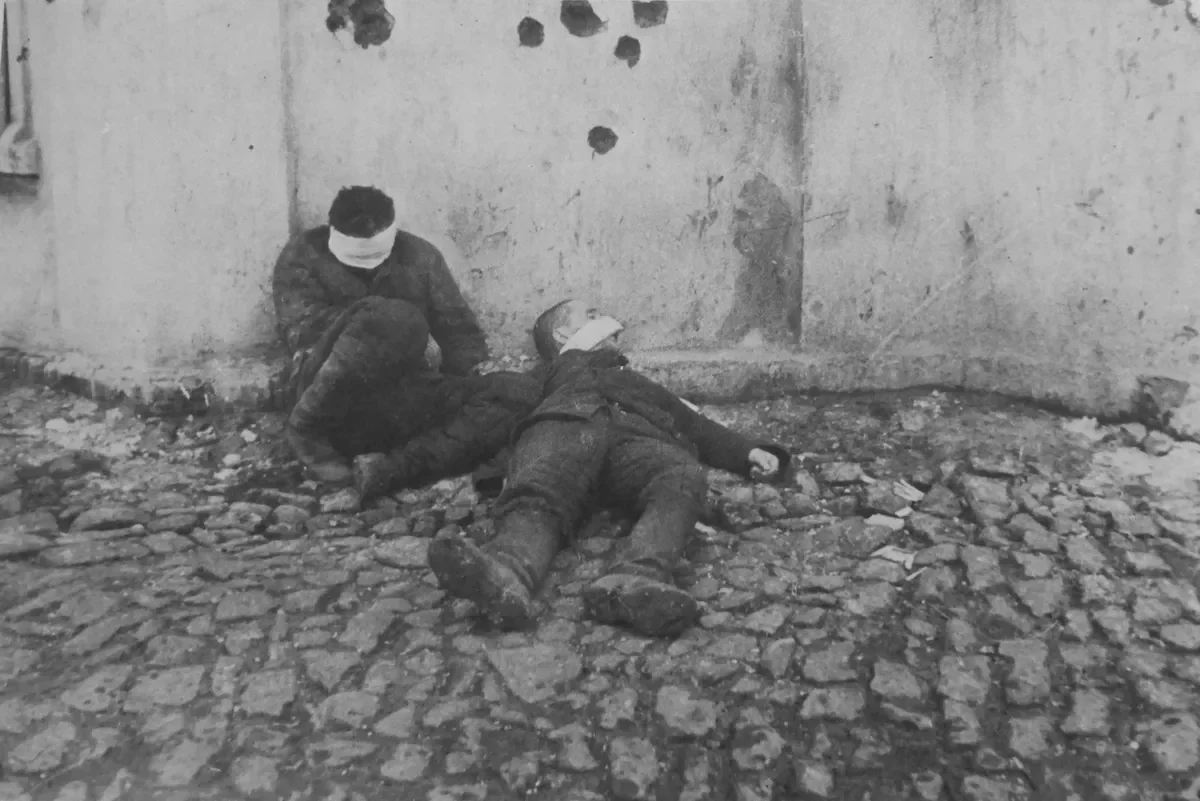
The gangs of partisans, standing outside of any policy and constantly threatening security, become a magnet attracting the disappointed natives. If Ukrainians turn against the Germans, this will be the result of the political activity of the Reich Commissioner Koch ... "
Through Lammers, Rosenberg tried to achieve permission from Hitler to withdraw Koch from the post of Reich Commissioner of Ukraine. To this end, he wrote to Hitler: “... I consider him ( Kokha . - P.G. ) absolutely unacceptable as a representative of the empire in this situation ... Due to the urgency of the issue, I ask you to give me the authority to grant the commissioner Kochu.”
However, before Rosenberg’s letter reached Hitler, Koch appeared at Bormann, who assured him in his support. On March 19, 1943, Hitler accepted at his main headquarters Rosenberg and Koch, took the side of Koch and rejected the political concepts of Rosenberg against Ukraine. In view of Hitler’s position, Koch in practice turned out to be completely independent of Rosenberg “to himself the Minister”.
“... it’s quite understandable,” Koch Rosenberg wrote with mockery, “it is impossible to take out 1.5 million people from my Reich Commissioner to Germany without the use of a certain severity by the German administration. Recruitment takes place using the funds provided for by laws. In case of violations, I acted officially. Consequently, there is no need for your ministry in multiple orders and by telephone to emphasize that any coercion should be avoided when recruiting for work.
At my disposal of May 20, 1942, I proposed that in the forested territories of Northern Volyn, where it came to the open resistance of the recruiting commission, were used to maintain the German authority of the enforcement agency up to the burning of farms.
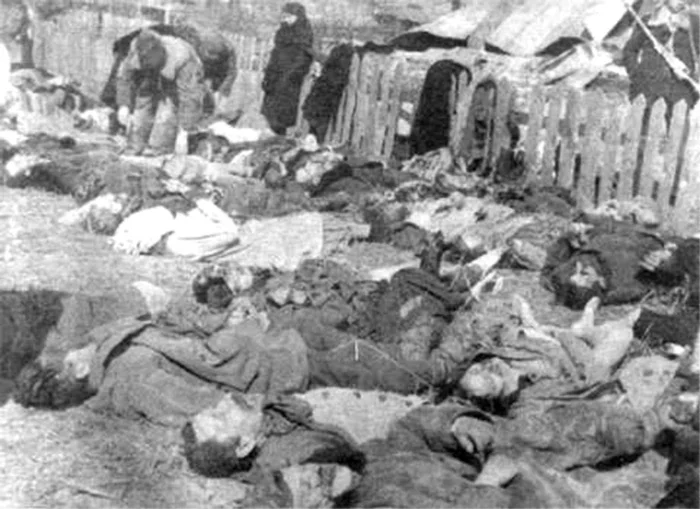
Like an old Gaulyaiter, I was used to going with worries and wishes for my Fuhrer, and this right has never into question the minister, to whom I obey as an oburior. I must emphasize that the Führer repeatedly handed me, as the old Gaulitera, his political instructions and that in some cases he clarified his subordinates to his views on Ukrainian politics ... In conversations with the Fuhrer, I have repeatedly had the opportunity to determine my line of oriental policy. Numerous instructions regarding oriental politics were transferred to me from his inner circle for the last time in December 1942 ... I always tried to pursue my policy in accordance with the directives of the Fuhrer. ”
In the next letter to Hitler, Koch reports: “My Fuhrer. Since two years have passed since the conquest of Ukraine, I believe that I can give you pleasure by reporting that during this time, agricultural products, mining and other industry worth several billion marks have been taken into the empire. In addition, continuing with success to recruiting work in the empire has long exceeded one million people ... "
From the memorandum of Koch Rosenberg. “In my decree dated May 20, 1942, I pointed out that in the territory of the Severovolinsky forested areas, where in one of the counties it came to the open resistance of the recruiting commission ( we are talking about recruiting workers to enforcement work in Germany. - P. G. ), in order to maintain German authority before burning farms. You verbally and on the phone protested against this decree. Fears were expressed that I would “burn the vast fields of Ukraine”. The fact that Ukraine is mainly exists and has not yet been burned is evident from my supply of bread and other products.
In the country where my orders, which I give at the direction of the highest authorities of the Empire, meet resistance, I cannot do otherwise, I must apply harsh and instructive punishments ... "
Alfred Rosenberg was hanged in Nuremberg according to the verdict of the International Tribunal as one of the main war criminals.
Since the time when Koch became the Reich Commissioner in Ukraine, relations between him and other dignitaries have worsened to the limit. This is written by Goebbels biographer, calling Koch "Dictature Dictate"; Goebbels, like Rosenberg, came to the conclusion that Koch's rejection in Ukraine is damaged by the “Third Empire”. He was accused of unnecessary cruelty. Guderian also writes in his "memoirs of a soldier"
That Koch's activity in Ukraine strengthened the resistance movement and that even the part of the population, which, according to Guderian, sympathized with the Germans, turned away from them.
From the book of memoirs of the Minister of Arms Albert Speer: “... on the site of one of the most famous churches of Kyiv, I found a pile of ruins. They told me that under the advice there was a ware of ammunition, which then, for an unknown reason, took off into the air. Goebbels later told me that in fact, the Reich Commissioner of Ukraine Erich Koch decided to destroy the symbol of its national pride and ordered to blow up the church. For six months later, the arbitrariness and violence, fixed by officials of the German administration, led to the fact that partisans appeared there everywhere ... "
Koch asks to the Chancellors
The German journalist Hans Joachim Kaush, who talked with Koch in his residence in Rivne, describes this conversation: “It is ridiculous,” said Koch, “to apply the concept of“ nationality ”in relation to Ukrainians and include them in the family of European nations. Ukraine never belonged to Europe ... If the German soldier won Ukraine, then not in order to make the Ukrainian people make it happy, but in order to subordinate it to German domination, to create the possibility of relocation for front -line soldiers, and for Europe - the market for primary importance. ”
The party and their own dexterity highly ascended Koch. The son of a modest worker became the governor of the eastern borders of the Third Empire, and later, after the outbreak of war, one third of Poland and the whole of Ukraine.
Arriving in 1928 to East Prussia without a single pfennig in his pocket, after 15 years he made a fortune of 400 million marks.
The question of the Polish judge on the trial over Koch: “The defendant undoubtedly heard and knows that he had a party certificate of the NSDAP No. 90. was this a serial numbering?”
Answer: “After the party took party certificates with a gold icon, from the 1st to 100,000th numbers were issued. Party certificates from the 1st to the 100th number were left at the disposal of the Fuhrer. I am blamed for the 90th certificate number. At the same time, the empire had 20 Reichsliters and 40 Gauleiters. Together they had certificates from the 1st to the 60th, I was not among them. But before I stood 89 owners of party certificates, which are currently free in West Germany. "
Among many thousands of documents contained in the court of Erich Koch, there is also a letter written by him in 1950 to the President of the Polish Republic.
He writes that in connection with the “impending war” it would be good for the socialist countries to have Germany on their side. And how can this be done and who will do it? Of course, he, Koch.
He further explains that in Germany, the broad segments of the population are kept away from politics. He claims that in the 20s of our century, three quarters of the population of the Rhine Industrial District belonged to the Communist Party. After her ban, when Hitler came to power, these people were waiting for the defeat of the Nazis. Now they keep aside. Therefore, they must be attracted again.
Koch would like to do former ordinary members of the NSDAP, "who, like him, fought for socialism and strove for it." Finally, he mentions German Protestants. Koch proposes to unite all these people and create one large party from them in West Germany. She would have the task of “breaking the front of Adenauer - Schumacher and supporting the Communists of Max Reiman both in the Bundestag and in the everyday party struggle.” At the same time, he must remain in the shade. Temporarily, of course, so that later, after holding the victorious election campaign, to occupy the chair of the Chancellor of the Federal Republic of Germany.
By the way, Koch was the only Gauleiter that was part of the German government delegation that arrived on August 23, 1939, led by Ribbentrop to Moscow to conclude a non -aggression between Germany and the USSR.
In the picture with him, he closes the crystal glasses with champagne Stalin.
“Dinner was given in the neighboring halls of the Kremlin Palace and took place in a very relaxed and friendly atmosphere, which especially improved after the hosts proclaimed numerous, including very funny toasts in the course of dinner in honor of each of the guests present. The first toast was addressed to Mr. to the Minister ( Ribbentrop. - P.G .). It contained a greeting “bringing good luck” to the guest, and it was completed by the proclamation of “Hurray!” In honor of Germany, her Fuhrer and his minister ... "
He died in a summer village ...
Koch people in the Umansky district (Volyn) exterminated several tens of thousands of people. Their crimes were confused even by Rosenberg, who in April 1943 asked Himmler to conduct a special investigation of this case. Rosenberg’s statement by the International Military Tribunal in Nuremberg introduced the case as evidence.
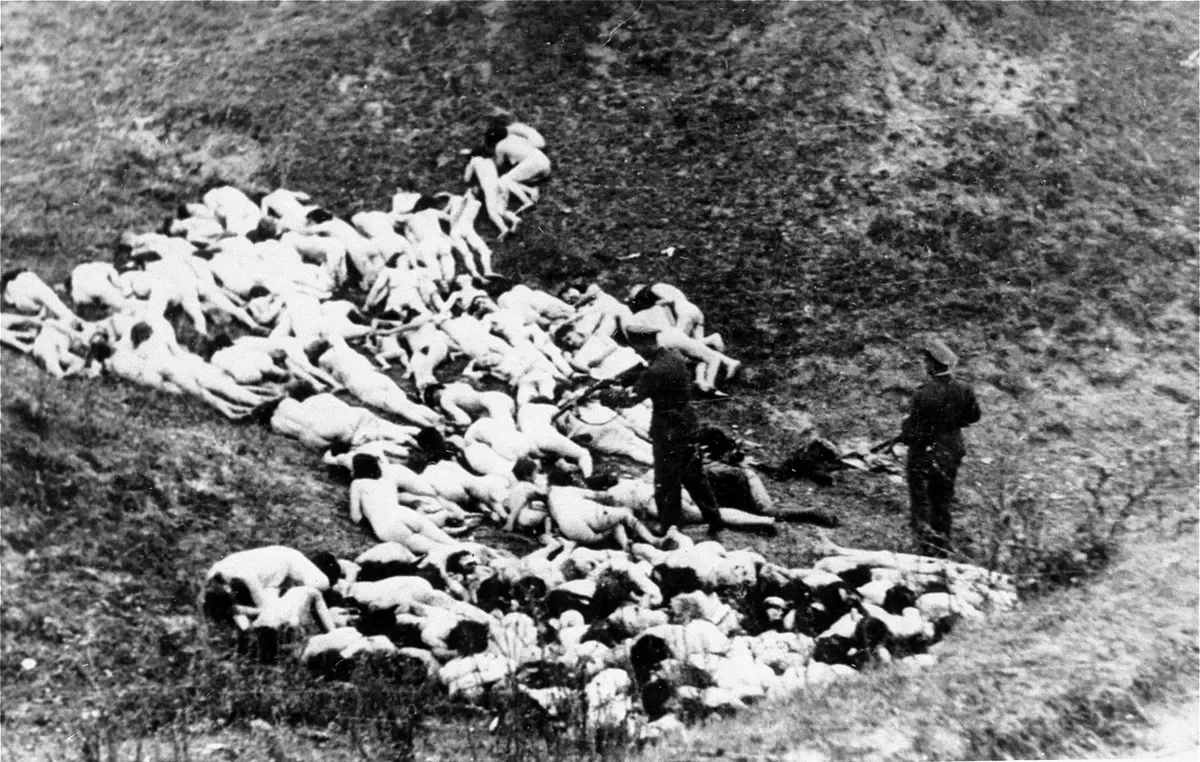
In the city alone, after the flight of the invaders, over 102 thousand corpses of the elderly, women, children and prisoners of war, executed by the Nazis were discovered.
In August or in September 1941, a service meeting of the district commissars was held in Bialya, at which the chief president Koch instructed subordinates: "If you do not exterminate the Jews in the Bialystok district, I will call the SS, and in my order they will cope with this."
In the ghetto, Jews lived in terrible conditions. The daily rate of bread is 150 grams per person was later cut by half. At the end of 1942, during a widely planned action to liquidate the ghetto, 130 thousand Jews were exterminated within two months. After the suppression of the uprising in the ghetto, another 30 thousand people were killed.
In the Bialystok district, 18 villages were destroyed. In the vicinity of Grabuvka, the Germans shot 16 thousand people, in the Gelchinsky forest - 26 thousand, in Tomkela - 18 thousand. In total, 220 thousand people were killed in the Bialystok district.
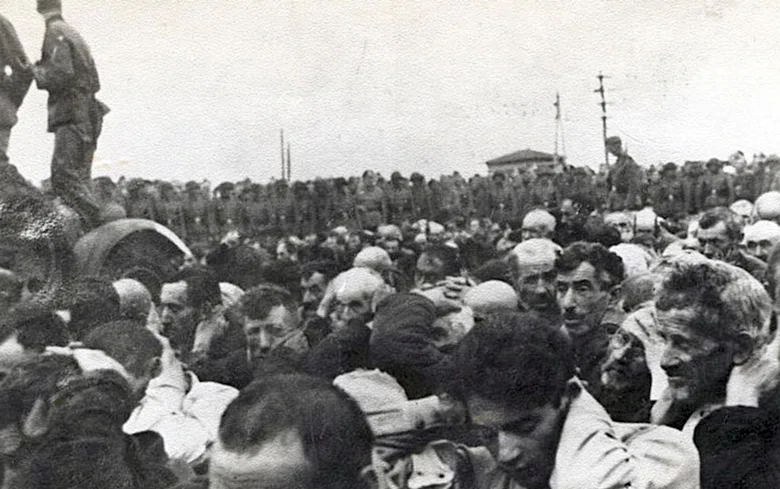
Kokha Gimmler Telegram. February 25, 1943:
“Dear Henry. According to your assignment, Groupenfuhrer Thomas asks about the reasons for my demarch before the Minister for Eastern Territories regarding the burning of villages during the fight against gangs. I am very surprised by this issue, since I never made the police reproaches on the grounds that too many villages are evacuated in the territory under the threat of gangs. Rather, I said that she practiced this in insufficient size. I am a supporter of the full evacuation of a strip with a width of 50 to 100 kilometers on both sides of the Brest-Litovsk-Gomel railway, since these territories do not represent any value. Your Erich Koch. "
Chairman: "Have you often had to make speeches that completely contradict the beliefs?"
Koch: “According to the principles of an honest person, I had to speak in accordance with the NSDAP attitudes. Otherwise, I would break the oath. Only before the corresponding authorities - Hitler and Hess - I expressed my beliefs. Otherwise, I should have left the NSDAP and create an opposition party. And this, the master of the chairman, would not make sense ... "
A sharp reaction of the defendant was caused by the announcement of excerpts from the book “To a bitter end”, written by the former higher official of the RSHA Gisevius.
“It was,” writes Gisevius about Koch, “is one of the most dexterous Gauleiters that Hitler had.”
The author of the book does not spare strong words to the former chief president. So, he calls him the devil in the flesh, a bold adventurer, a demagogue with exceptional abilities for fiction, etc.
Koch surrounded himself with various kinds of scammers, combinators and even unsuccessful inventors. Gisevius reports that Koch settled in Koenigsberg Alchemik, who was supposed to engage in gold. Gisevius also gives Koch's statement directed by the Minister of Miner that many leaders of the German economy are annoying Hitler with uninteresting numbers. According to Koch, the Fuhrer should be treated with something original and striking to get "something like a magic box."
After the announcement of these excerpts, the defendant tried to weaken their meaning:
- Gisevius was a paid American spy. I ask that the excerpts from the book be read out according to the German edition, not in English.
The chairman: "The text was read out precisely by the German publication."
... Coch, pardoned by unhealthy in 1986 in the Polish prison of Barkovo. Of the convicted war criminals, only Deputy Hitler Rudolf Hess experienced him.
However, the obituary about his death, printed in the Katovitsky weekly Panorama, looked like a message about the death of a respectable pensioner: “On November 12, 1986, the former Gauleiter of Eastern Prussia and the Reich Commissar of Ukraine Erich Koch died in the Barchevo Voivodeship in the Barchevo Voivodeship.