
Translated material
“The happiness of the Motherland is more valuable than life”

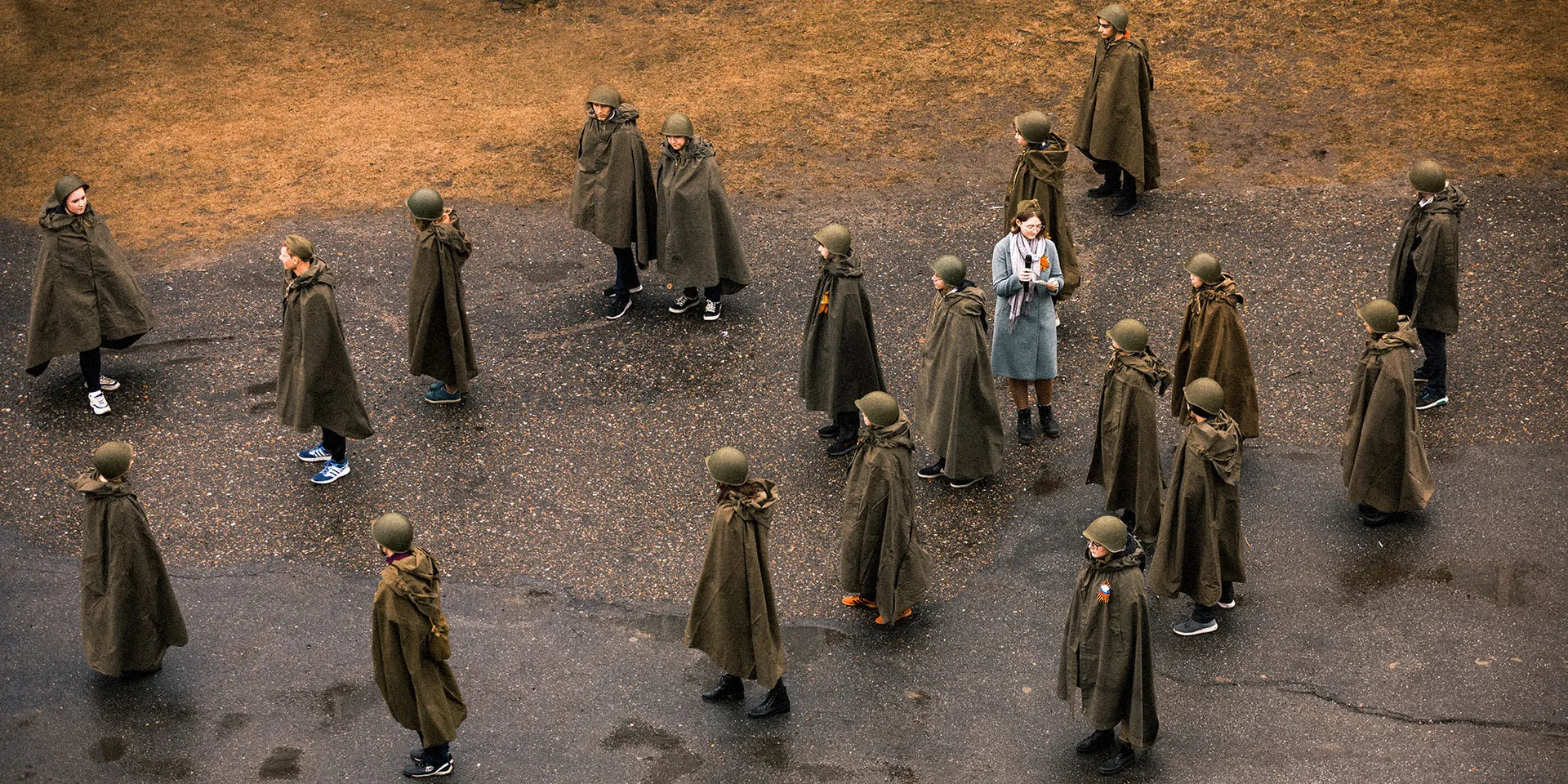 Photo: Shutterstock.com
“The happiness of the Motherland is more valuable than life”
In the new school year, Russian schoolchildren will be told every week that the war in Ukraine is an example of true love for the country and the Russian people, and a true patriot must always be ready to die for the happiness of the Motherland
From September 1, Russian schools will have an additional weekly lesson - “Talking about important things.” In these lessons, as part of “protecting Russian society from destructive information and psychological influences” and “strengthening traditional Russian spiritual and moral values,” teachers will have to instill in schoolchildren patriotism and love for the homeland. Especially for “Conversations about the Important,” a new position will be introduced in each school—adviser to the director for educational work, who will be engaged in “information and educational work with schoolchildren and teaching staff.” The Ministry of Education has already spent 22 million rubles on the development of interactive materials for additional classes.
“Important Stories” got acquainted with the scenarios and teaching materials for teachers for new lessons on patriotism: in them they explain to children that the war in Ukraine is “the protection of the population of Donbass, which was subjected to bullying and oppression by the Kiev regime,” “residents of the DPR and LPR are Russian people, so their return to Russia is important,” and “Russian military personnel are heroes.”
We tell you what else schoolchildren will have to learn every week during the war in Ukraine, and what teachers and parents think about “Conversations about Important Things”.
The names of the heroines and heroes of the text have been changed for security reasons.
“It’s not scary to die for the Motherland”
In classes for the first two grades, teachers should first of all instill in children a love for the nature of Russia, since this is “a manifestation of love for their Fatherland” and “part of a huge sense of patriotism.” After showing photographs, listening to the sounds of nature and songs (for example, the Soviet “Where the Motherland Begins”), and reading poems, the lesson script includes “a free continuation of the conversation about the unity of the country, about how it is necessary to preserve and protect one’s culture, one’s people.”
In “Conversations about Important Things,” schoolchildren in grades 3–4 no longer just contemplate the beauty of nature, but move on to “accepting the idea of effective love for the Motherland.” Children will be told that love for the homeland is passed on from generation to generation, and this love can be learned not only from parents and grandparents, but also “from those who lived a long time ago.” After the teacher gives examples of sayings and proverbs about the homeland, he must ask a test question to the students: “Which of these proverbs reflect the idea that love for the Motherland is not only the ability to admire its beauty, but also the willingness to stand up for one’s Motherland, to work so that the Motherland becomes even more beautiful and richer?”
“Exemplary answers from children” expected by the authors of the manual:
“Don’t spare your strength or your life for your homeland”;
“The happiness of the Motherland is more valuable than life”;
“Let’s stand like a mountain for our native land”;
“It’s not scary to die for the Motherland”;
“Love the Motherland - Serve the Motherland.”
After the children’s answers, the teacher suggests completing the task in pairs: “Consult with each other and prepare an explanation of how you understand the proverb “Love the Motherland - Serve the Motherland.” I'll give you a little hint: on the board are written some of the meanings of the word "serve." Serve:
perform military duties, be in military service;
to work, to work in the name of something, for the benefit of something, someone.”
“We can conclude that from ancient times our ancestors understood love for the Motherland both as admiration for the beauty of our native nature and as a readiness to do things for the benefit of the Motherland,” the teacher sums up. In the video prepared for grades 3–4, the announcer, among other things, says that love for the Motherland is manifested “in courage and determination to defend the Motherland in a dangerous time.”
For schoolchildren in grades 5–7, teachers, after a short quiz with questions on the history, geography and culture of Russia, should arrange a creative task that will help children solve “problem situations” using the example of a “special military operation [SVO].” “Among the goals of the special military operation is to protect the population of Donbass, who were subjected to bullying and oppression by the Kyiv regime, to disarm Ukraine, and to prevent NATO military bases from being placed on its territory. The Russian armed forces, together with the forces of the DPR and LPR, are taking active steps to achieve these goals. Enormous military and other assistance from the collective West to the Ukrainian authorities is prolonging the fighting and increasing the number of victims of the operation,” the script for the lesson says.


The teacher should also tell schoolchildren about “heroes, patriots of Russia” - Russian military personnel. Discussion of the “exploits” of the military should “lead students to the understanding that love for their Motherland does not have to be expressed in loud words. It manifests itself in the small deeds and gradual successes of each student.” The teaching materials also indicate the result that teachers should achieve at the end of the lesson: “students’ understanding of the goals of the SVO, that the residents of the DPR and LPR are Russian people, therefore it is important for them to return to Russia. Russian soldiers are heroes.”
Students in grades 8–11 should come to the same result after talking with the teacher about “SVO” in Ukraine. And in a discussion with high school students, the teacher needs to say that “you cannot become a patriot if you only declare slogans,” and that “truly patriotic people are ready to defend their Motherland with arms in hand.”
Also, students in grades 10–11 need to complete an interactive game : match “pictures illustrating the most important events of these decades” with the dates 1930–1940, 1940–1950, 1950–1980, 1980–2000, 2000–2020. For example, for the last twenty years of Russian history, the game’s creators chose two pictures: a tank column of the Russian military and a crying woman near a stand with dead children during the terrorist attack in Beslan.

“I don’t want to tell my son that ‘there will be such a topic at school, come on, please, stick to the general line, don’t stick your head out’.”
“I don’t consider elements of patriotic education in themselves to be something bad. Loving your homeland is not bad and not shameful, says Oksana, a Moscow school teacher. “But when I saw these manuals, they caused me some kind of rejection on a physical level. I believe that these “Conversations about Important Things” were introduced only in order to form in children a positive attitude towards the actions of the authorities and towards the Russian army as a whole. And all the other topics that are going to be discussed in these classes - caring for your neighbor, science, the day of the elderly, and so on - I believe that all this is a cover for one big goal. This reminds me a little of the situation with the adoption of amendments to the Constitution in 2020. There were amendments that aroused some positive feelings among large social groups. For example, the child protection amendment or the mention of God in the Constitution. Because of this, all the most important and terrible amendments faded into the background. Therefore, I am afraid that these classes in schools will not cause much excitement among parents, because other topics will be discussed there. Although I would really like this.
The teachers at the meeting on August 24 also did not express any complaints or dissatisfaction. It seemed to me that most people were offended by the fact that this would be an extra hour of workload per week.”
Oksana says that children even in primary school, for example during after-school activities, express an anti-war position, which they “most likely learn at home from their parents.” But at the same time, she notes that “they still keep to themselves,” and thinks that at “Conversations about Important Things” they are more likely to remain silent.
Valentina, a mathematics teacher and class teacher from a Moscow school, is ready to spend any free time her students have in class on mathematics. And he will continue to do so, and not conduct “Conversations about important things.”
“Love for the people who govern the state is obedience, not patriotism and love for the motherland. This is not how you are brought up. This is brought up by personal example, not by ostentatious volunteering, but by the willingness to give something in order to help another,” she says.
In her opinion, the lessons contain ideology, which is prohibited by the education law, and a one-sided description of historical events. But what she didn’t like most about the materials in “Conversations about Important Things” was “boring.”
“But one day the child comes home from school crying. The teacher shamed her in front of the whole class for not buying carnations and not wearing a St. George ribbon to put flowers. To which her daughter replied that the St. George’s ribbon is now used as a sign of support for the war in Ukraine. Then the children began to argue among themselves about the war. And at recess all the children refused to play with my daughter.”
The father of a 16-year-old tenth-grader from Kazan, Valery, believes that “first of all, a child learns at home, and if parents have invested in their child an understanding of good and bad, then teachers will not convince him.” “I know that my daughter does not support military intervention. And I think she’s wise enough not to say it too loudly.”
The mother of a 15-year-old ninth-grader from Kazan, Elena, on the contrary, believes that many parents will be “called to the principal” because their children behave inappropriately in these classes. “I know for sure that I will go to the principal’s carpet, where they will tell me that my son is expressing an unpatriotic opinion and arguing with the teacher. I'm sure he will be foaming at the mouth to prove his point. I, of course, worry that this could lead to some unpleasant things, because we see how the screws are now being tightened. But I also don’t want to tell my son that “there will be such a topic at school, please, stick to the general line, don’t stick your head out.” No. It’s better if we go to the mat, we’ll be expelled from school and we’ll go home-schooled.”
The mother of a sixth-grader from Novosibirsk, Anna, said that, most likely, her son is ready for the fact that people have different views on different issues. But he considers it wrong to impose love for the homeland, especially in the form in which it is presented in the materials for the lessons of “Conversations” about the war in Ukraine. “In the second part, everything about ‘special operations’ is just fucked up,” she added. Anna stated that if class hours are like this, she will find out exactly when they are scheduled and will try to protect her son from them, telling the teacher that he is sick.
The beginning of the war between Russia and Ukraine and the increase in patriotic education in schools was one of the reasons why Svetlana from Moscow transferred her daughter to home schooling after finishing second grade. “At the end of last year, various events began instead of lessons: going with a St. George’s ribbon to take flowers to the memorial, etc. I left my daughter at home; it would be better if she worked on conventional mathematics instead of these patriotic actions. Because the quality of education at school was not very good anyway. The teacher didn't tell me anything about this. But one day the child comes home from school in tears. The teacher shamed her in front of the whole class for not buying carnations and not wearing a St. George ribbon to put flowers. To which her daughter replied that the St. George’s ribbon is now used as a sign of support for the war in Ukraine. Then the children began to argue among themselves about the war. And at recess all the children refused to play with my daughter. I believe that, of course, at the suggestion of the teacher, because she singled out my daughter so much in front of everyone,” Svetlana said and explained that she was relieved that she took her daughter out of school when she saw the manuals for “Talking about Important Things.”
“To tell children, who have a slightly different picture of perception, what patriotism is, they need to understand for themselves what this patriotism consists of.”
To prepare teachers for conducting “Talking about Important Things” classes, the Academy of the Russian Ministry of Education, with the support of the Russian Society “Knowledge,” launched the “Cool Marathon” project. And before that, on March 11, teachers of Moscow schools were invited to a video conference by the head of the propaganda RT Margarita Simonyan and the representative of the Ministry of Foreign Affairs Maria Zakharova. Simonyan told teachers that they can have their own opinions about Ukraine and Vladimir Putin, but since they work in a public school, they must protect the interests of the state.
Lectures by teachers and experts from various fields at the “Cool Marathon” were reminiscent of motivating Ted Talks ( popular conferences of the American non-profit TED, at which successful people speak and share their experiences. - Ed. ). The invited lecturers were also officials: the head of the Presidential Administration's Directorate for Public Projects, Sergei Novikov, and the Head of the Russian Presidential Administration's Directorate for Supporting the Activities of the State Council of Russia, Alexander Kharichev.
Subscribe to our newsletter It's hard to block. But reading is not yet prohibited!At one of the “Cool Marathon” lectures on August 8 in Sochi, a journalist, member of the Public Chamber of Moscow, deputy head of the Public Headquarters for Election Observation, political commentator, speaking as an expert in several state media, Alexander Asafov, spoke. The journalist told the teachers that he wanted to talk with them about “important topics in the educational process.” For example, “the consolidation of Russian society in the face of external challenges” was discussed on the first slide of his presentation.
Asafov cited VTsIOM data on Russians’ trust in President Vladimir Putin (80.8%) and the Russian army (89%), on support for the “special operation” (72%), from which he concluded that “society has come to an agreement with itself” and the people are “united.” “Unity is part of our worldview not only now, it is inherent in us as our national code and it is always observed during difficult trials for the country and society. And unity always occurs around some figures and events,” says Asafov. One example of such “unity,” in his opinion, is the “return” of Crimea.
“In order to tell this [about patriotism] to children, who have a slightly different picture of perception, <...> you need to understand for yourself what this patriotism consists of,” Asafov explained to the teachers. Part of patriotism is self-sacrifice - one of the most important elements of the “national code” of Russians. It is also important to convey to children that patriotism is service. “Service is the renunciation of selfishness in favor of one’s neighbors, society, and country,” it is written on the slide.
According to Asafov, teachers must raise a hero in a child. As an example of heroism for children, he cited the action of Captain Alexei Pankratov. The presentation said that Pankratov’s division in the war with Ukraine on February 28 shot down a Su-25 fighter and three Bayraktar drones, and the next day two more drones. And with the help of senior lieutenant Anton Starostin, a crossing in the area of the dam of the North Crimean Canal was captured.


If these examples are not enough, the journalist recommended that teachers use his website , which contains 380 stories of exploits during the war in Ukraine. “It’s also important to talk to children about this now,” he added.
What teachers and school administration will do if a child skips classes “Talking about important things” is a gray area from the point of view of legislation, says the head of the Teachers’ Alliance, Daniil Ken. “In federal law, this [classroom hours] refers to extracurricular activities. It also says that extracurricular activities are based on the principles of voluntariness of all participants in the process. At the same time, extracurricular activities are part of the main educational program. There is a letter from the Ministry of Education explaining the compulsory nature of lessons, and also the Federal State Educational Standards ( Federal State Educational Standards - Ed. ) talks about the voluntariness of attending and maintaining after-hours hours,” he explains.
The telegram channel of the project “Conversations about Important Things” tried to find a solution to this problem in the law. Tasks for teachers related to extracurricular lessons are published there. One of these tasks described the following hypothetical situation: 32-year-old school psychologist Alexandra Orlova compared the lists of at-risk children with the attendance list and discovered that the Darov family (students of different classes) had never attended the “Talking about Important Things” classes. Orlova found out that all the students brought a note from their parents to their class teachers saying that they were seeing a doctor. “How can Alexandra Valentinovna build a conversation with the guys about the importance and necessity of attending classes?” - the problem says. Teachers were asked to send answers to questions to the project email.