
Translated material
Attack with symbolic gestures
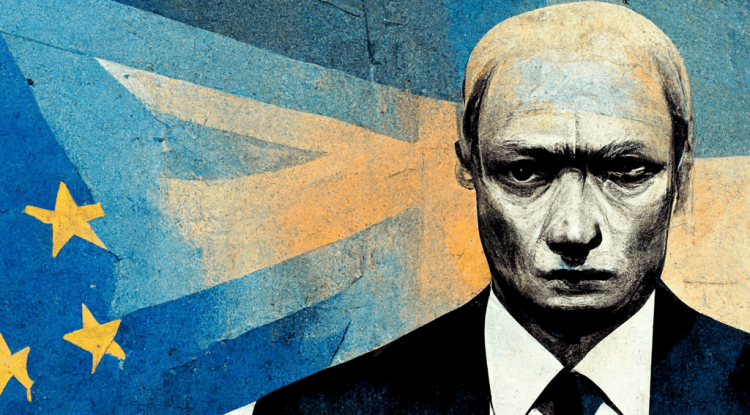
Writer Sasha Filipenko talks about the contradictions in calls not to issue Schengen visas to Russians
Belarusian writer Sasha Filipenko is perhaps the most popular Russian-language author in the world right now. His books are translated into dozens of languages, his journalistic texts are published by leading world publications. With the permission of the author, Kholod publishes the original text of the column, which was published in translation in the Frankfurter Allgemeine Zeitung.
In Europe, calls are growing louder to stop issuing Schengen visas to Russians. At least 10 EU countries have already actually done this: it is impossible to sign up at the Spanish consulate in Moscow, and the Italians, for example, only give out slots for November. The initiative voiced by President Zelensky was immediately taken up by the Prime Minister of Estonia and the Prime Minister of Poland, who proposed depriving Russians of Schengen visas back in the spring. Why is this being done? According to President Zelensky, if people cannot travel to Europe, they will desperately fight the Putin regime. The Prime Minister of Lithuania echoes Zelensky: “Lithuanian Foreign Minister Gabrielius Landsbergis said that the ban will help preserve the opposition within Russia: “When we say that in Russia there could be 5-10% of people opposed to the conflict, then we would already be talking about millions. Do you want these millions to be inside Russia or outside it?”
If the fatigue and irritation of Zelensky, whose country has been attacked by Russian troops for six months, is very, very easy to understand, then the position of European diplomats and functionaries at least raises questions. Most European countries still consume Russian gas. Never before has Russia earned so much from energy resources as since the beginning of this war. After a fall in May, trade between Russia and Europe is growing again. Russian tanks and other military equipment consist of 30–70% European and American components. The Russian army is armed with more than 800 types of equipment, which use parts of American and European production. Drones are produced jointly with Israel, and most armored vehicles have American engines. The Kinzhal hypersonic missile system alone has 133 components produced abroad, and Japan helps Russia in the production of other missiles.
It would seem that the international community could easily leave Russia without spare parts, but at this moment (oh, you will be surprised!), despite six months of war, Ukraine’s allies declare that the agreements cannot be violated and that Russia will receive spare parts because contracts signed for many years in advance. Contracts cannot be rewritten, but the fundamental right to freedom of movement can be rewritten.
War-weary Zelensky says: “Let the Russians live in their own world until they change their philosophy... They elected these people and now they don’t fight them, they don’t argue with them and they don’t shout at them. Russians who publicly oppose the war are isolated cases, and these people are in prison. But let the Russians go home, let everyone go to Russia.”
I repeat: Zelensky’s anger is justified and understandable, but what to do with the fact that at the moment 400 thousand Ukrainians live in Moscow alone. Since February 24, all these people, the overwhelming majority, have not gone out to mass protests: they continue to work and pay taxes in Russia. What to do with them if or when they want to go to Europe? Is it necessary to issue Schengen visas to residents of Crimea, Kherson and other Russian-occupied cities who were forcibly issued Russian passports? Thus, until recently, British or Swiss diplomats smiled and sent Crimeans for visas... to Kyiv.
Zelensky says that all Russians are guilty because they voted for Putin, but 54 million Russians voted for Putin, despite the fact that millions of ballots could have simply been stuffed, as evidenced by the Medusa investigation into the Duma elections. But in Ukraine, until recently, half of the country supported the pro-Russian President Yanukovych, what to do with these people? Not the entire country fought for Freedom on the Maidan. What to do with those who supported the Russian world?
Zelensky is absolutely right that the majority of Russians lead normal lives, oblivious to the war, but will a ban on Schengen visas force them to take to the streets? Will this solve the fundamental issue of inaction and overcoming fear? I guess not. Firstly, only 30% of Russians have foreign passports and the ability to travel abroad, and, I would venture to guess, most of them profess liberal values, opposing Putin. Putin’s electorate does not travel to Europe and will never go - thus, this gesture will not affect the majority of Russians. Secondly, we remember that the peak of anti-Putin protests in Russia occurred in 2012, when Russians were traveling to Europe as much as possible, and not vice versa. Unfortunately, history shows that poor and closed societies do not fight for their freedom, much less for the freedom of others.
At the moment, unprecedented repression is unfolding in Russia. Any resistance to war is immediately punished. How? For example, through equipment for dispersing demonstrations, which - after the annexation of Crimea - was supplied to Russia by France. Moreover, despite the 2014 embargo, France transferred weapons worth 152 million euros to Russia: bombs, missiles, torpedoes, thermal imagers for tanks, as well as navigation systems for fighter jets and helicopters. German companies sold dual-use equipment to Russia, including “special equipment and rifles,” worth 121 million euros. Berlin assured “that the equipment was transferred only after the Russian side guaranteed the use of rifles for peaceful purposes.” As we know, Putin is also destroying Ukraine exclusively for peaceful purposes.
Should all Germans and all French be banned from traveling within the EU after this?
Why are Zelensky and other countries discussing for so long and loudly a measure that, in general, will have little effect, but is more reminiscent of revenge, to which only Zelensky has every right? Because other at least somewhat effective measures have already ended. When Germany constantly finds reasons to delay the supply of heavy weapons to Ukraine, when it is impossible to give up oil and gas right away, and still really wants to sell spare parts for Russian tanks, all that remains is to engage in populism. If you don’t have the courage to take decisive measures, you need to pretend to fight.
Together with Europe, the United States also found itself in a similar situation. These days, Washington is faced with a dilemma: when almost all pressure tools have been exhausted, all that remains is to declare Russia a state sponsor of terrorism, but in this case, not only Russia, but also all countries that are with it will automatically fall under the next sanctions trade. Could the US do this? It seems not, but no one is ready to admit that no one is ready to take decisive measures.
The strategy of the anti-Russian allies seems to be this: we cannot let Putin win, because in this case he will feel the power and destroy half of Europe, but we cannot let him lose, because in this case, enraged, he will also destroy half of Europe -Europe. As a result, Europe is going to build all sorts of walls and pull down the curtains on everything, leaving small loopholes through which it will be possible to transfer goods and weapons to Russia, using, for example, third countries.
In the ongoing era of half measures, Europe is turning to a massive attack with symbolic gestures, and the most offensive thing is that these gestures are stupid. For example, it seems to me that it would be much more reasonable not to stop issuing Schengen visas to Russians, but, by tripling their cost, to announce that 75% of each visa goes to help Ukraine, but - alas...
Unfortunately, no matter what decision European countries make in the near future, the answer to the question of whether a Russian can travel around Europe will remain the same: yes, if he is a gas.
The author's opinion may not coincide with the opinion of the editors.