
Translated material
Brothers by mind
Why did the language of the "street" in Russia become the state language and how it is related to the idea of retaliation
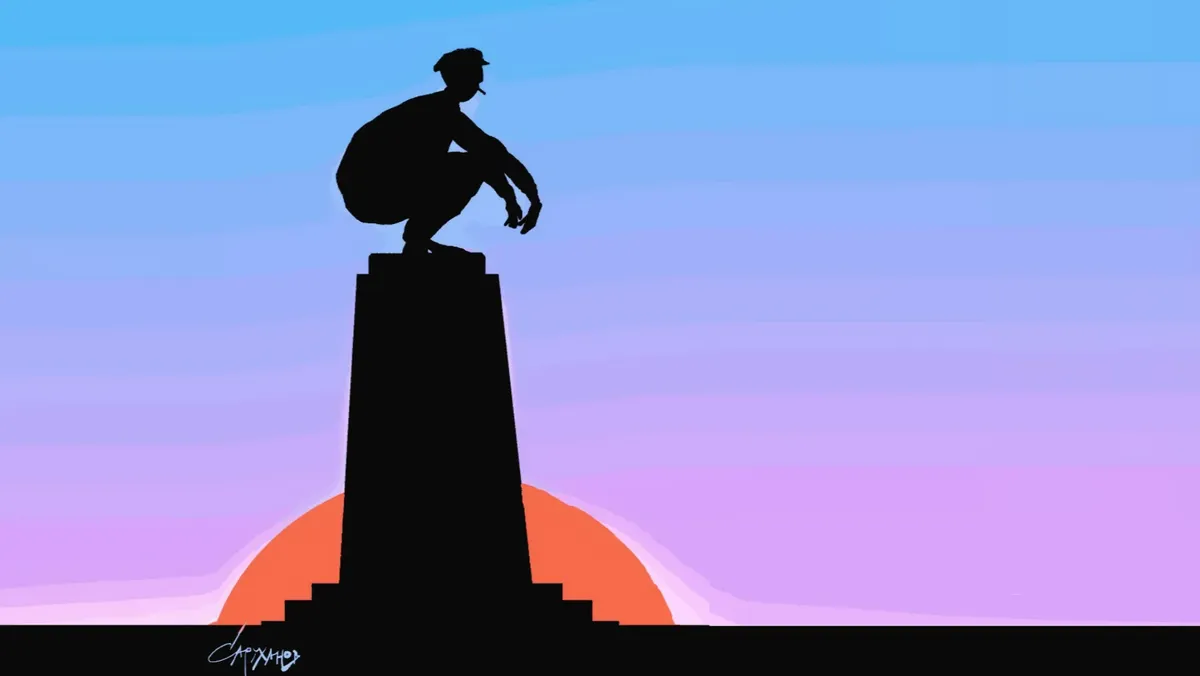
Today's power has mastered and with great excitement uses the language of “street”, the language of “concepts”. It seems that these are not just games with slang and style. A much wider claim is hidden here. The “conceptual” language is a claim of the authorities to embody certain ideas about the “healthy”, “correct” public and political being, not muddered by “vices of civilization”. The traditional-folk lifestyle is opposed to alien civilized formalism.
The fact that the image of such a “traditional” way is expressed by power through a model of “street” discourse, some fundamental moments are laid.
***
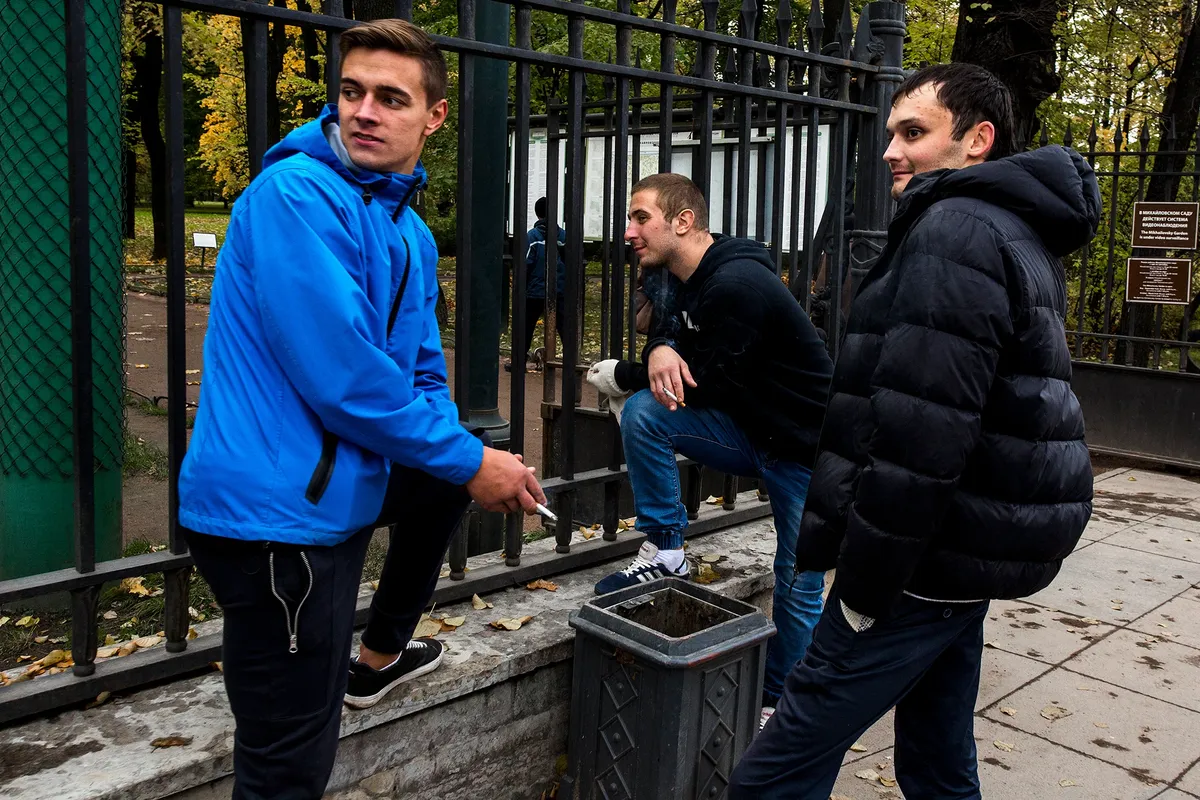
Firstly, the language of the “man of the street” is tied to a certain existential, namely, to the personal experience of an acute pity for his “uncomplicated fate”. This is a negative-fatalistic existential, which is based on-
A feeling of fundamental injustice in the world to its person, as well as the acute desire to “play” this injustice.
Catch good luck, no matter what. The world is against me, and therefore - no ceremonies with such a world. Here the person does not have a question: "Who am I?" But she constantly and painfully pursues the question: "Why do I not receive such recognition, which I deserve?" This happens if the character proceeds from the simplest, non -reflexive, or, one might say, “bacterial” level of narcissism. In other words, if subjectivity has not been developed in the person. For herself, she is, first of all, an object that should - or rather, passionately wants to be a perceived world as undoubtedly attractive.
The object wants to like the world, he wants attention, ideally - of unconditional attention.
The object does not exist otherwise than when they perceive. One crazy heroine of the Remarques novel said: “What happens to the trees when no one looks at them? There are simply not them then. ”
But if attention does not happen, if the world does not look at you somewhere, then the reason for this is in the world itself. The fact that the world is arranged unfairly, it is bad from hand. Should I respect this? Wouldn't it be better to give the world due to its imperfection? The idea of retaliation appears. Pity for himself and revenge for the world - this is a "street" person. In his socio-late form, such a person is called "underground"; He received at one time an excellent characteristic description from the famous Russian writer. In his own socio-active form, this is an uncompromising hero of criminal history, a thousand-pounded by the corresponding Russian chanson. "To love - to love, shoot - to shoot like that."
And even when the story ends with the main protagonist under the escort, his indestructible “narcissistic truth” remains behind him: the world is ruthless, and I am an inconsistent victim.
If the “narcissistic truth” with its fatalism and a thirst for recognition is transferred to a large political object, then a completely extreme case arises here. What is such an object capable of going to get attention to the world?
The world itself is uninteresting to the object and is not respected by it if you do not get attention from the world. Although there will be no respect anyway. After all, the world is a place where there is no truth, except for the one that you force to admit.
A large political object does not see any value in the world, if it, this object, will not find the desired place in it.
The consequences of this view of things are difficult to predict, but all the options for predictions are quite deplorable.
***
And the second point. If we transfer the identity of the “street” person to the existence and consciousness of social groups, then we will meet with one of the most archaic forms of the human dormitory. It can be called as an option “Planting Society” from Latin Potestas - power, power. Like a “street” person, a society of this type sees the world around the world as a dangerous place, which is last to trust. People rule the capricious fate, and in order to “saddle” it, we need power primarily. The daring force that does not know the boundaries is the main resource. Hence the corresponding picture of being:
Everyone is divided into those who have power, and those who do not have it. This is the first and main axiom to which everything else is subordinated.
To multiply forces, cohesion is required; So from the world you can take more than if separately. For rallying, one way or another, an agreement is necessary, according to which individuals must direct their forces not against each other, but according to the vector of a common goal-permission. This agreement is expressed in orally transmitted norms. In the Russian “street” discourse, these norms are called “concepts”. The goal of "concepts" is to keep a unity; They are focused on a group, not an individual. They very harshly determine the behavioral and even linguistic forms of self -expression of the individual. Group consciousness, of course, dominates.
Inside the rally, the first axiom continues to operate: there are strong to a larger extent and less. Those who are as strong as possible occupy the highest hierarchical places and can use less strong as a consumable material to increase their own resource. Despite the fact that rallying is kept on the “right of general concepts” - at any time “the right of strong” can come into effect, whose opinions and interests should be considered a group for priority. The specific authority of the strong has greater weight than an abstract-general “conceptual” agreement.
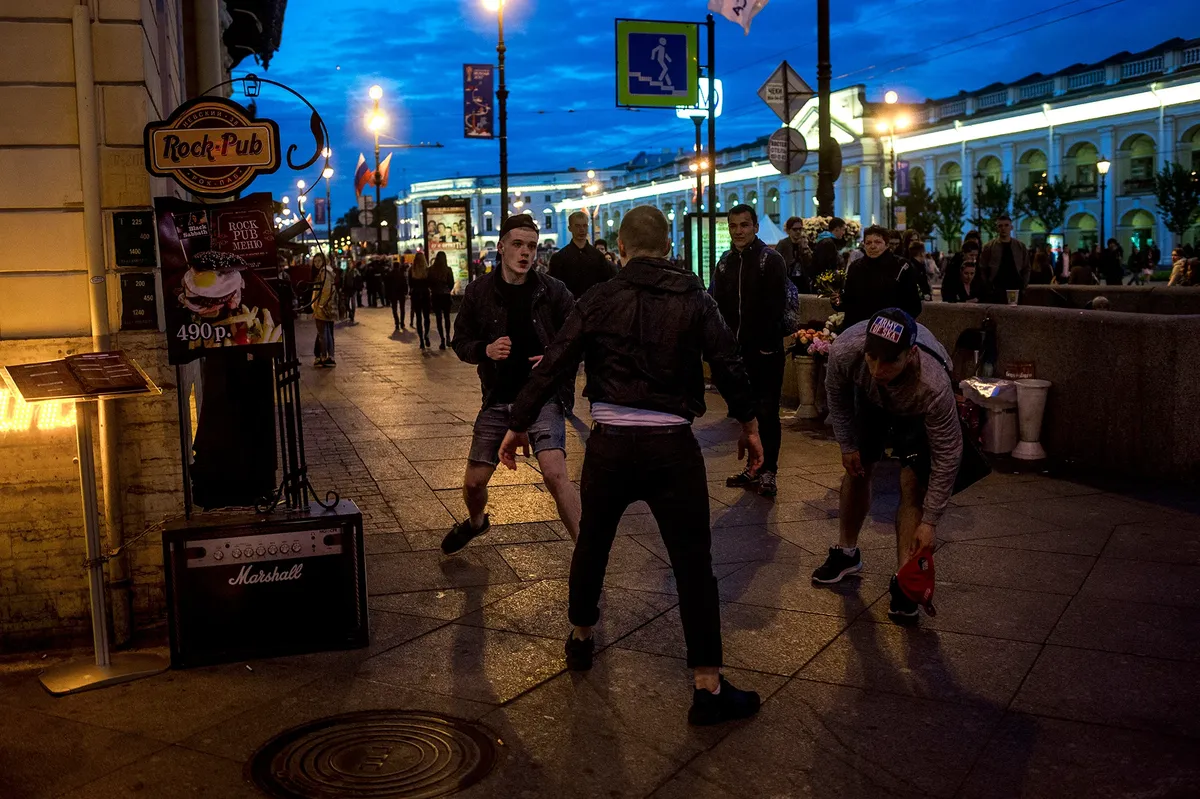
Everyone is divided into “their own” - at those with whom the rallying has been achieved - and “strangers”, which are always potentially dangerous. But if the “stranger” is obviously not dangerous, that is, it does not have a force, almost everything is allowed in its regard. In a pressing, “street” picture of being, there is no universal concept of “man”; This picture in its principle is built on dichotomy - and with an obvious trend in localization, restriction and exclusion. The area of "strangers" is constantly expanding. And the larger the world around us, the more clearly the marginalization of the rallying group is “their own”. Closing from communication with the world, perceiving the world as a danger or as a potential prey, “their own” become an unpleasant and dangerous exception for the world. They wrote off the world from their account - the world writes them off. Actually, for the consciousness of the “street” it is not that the world, but the neighboring “street” seems “alien to the universe”.
***
A pressing or “street” community is a very archaic social system, one of the earliest. It is based on biological properties - it still does not reach anthropology, to the idea of a “person”. Such a system, holding more on the fatalistic “right of the strong” than on the “right of concepts”, is very, very inextricable in its inner nature.
This is a field of constant unprincipled survival, intra- and interspecific warfare; A field where there is a continuous clarification of the same, the main biological question: who will be a “wolf” and who is a “sheep”.
From the standpoint of anthropology, this, in fact, an agonizing system where a person is deconstructed, is converted into an animal organism regime. It has no place for large philosophical projects and sustainable ethics. All the values that the Street use in one way or another is never more than an eclectic design of its always utilitarian and group interests. For "their own." And as long as “their own” are recognized as “their own”.
I would like to think that in the “street” picture of Genesis it is impossible to build anything long -term and stable. But this is not so. History of both before and now gives us examples that the “consciousness of the street” can rally people in centuries -old and multimillion -dollar social entities, in volumetric states. Obviously, the matter here is in the very minds of people who calmly adapt to such constructions. There is too little tendency to questions of philosophy and ethics. Too few anthropology. Too more guidelines for conditional Darwin. Much more than on conditional Socrates or Kant. However, the fact that both communities and states, which are based on “street”, are not other than totalitarian.
Offline
This text will be released in the next, fourth, number "New Story Gazeta"