
Translated material
See how you got used to it!
What told about public procurement, competition and economics “for its” operational report to the Accounts Chamber
Laws predict practice, and practice predicts the results, but laws do not predict the results - including in Russian public procurement. Has the next round of state order regulation helped to successfully counteract economic restrictions?
In early August 2022, experts noted that the reporting on the procurement of state -owned companies actually lost relevance, as the sources of data replenishment were reduced even for the open periodical of the Ministry of Finance of Russia. It is all the more important for understanding where the Russian public procurement moves, the remaining amounts of data are found - in particular, the operational report of the County Chamber of the Russian Federation on the execution of the federal budget for the first half of 2022 published today .
It is characteristic that even the basic indicators of the reports of the Accounts Chamber and the Ministry of Finance discover certain discrepancies, since the first report consists of data from the federal level, and the second is devoted to the entire public procurement system - from the federal center to the municipal level. Thus, the differences in two contours of the public procurement economy, which are visible when comparing the reporting data of the two departments.
Thus, the Accounts Chamber states that, according to the unified information system in the field of procurement, in January - June 2022, 261 182 contracts (at the federal level) were concluded, which is 7.7% less than in the same period of 2021. The total value of the federal level contracts for January - June 2022 increased by a similar indicator in 2021 by 9.2%.
The Ministry of Finance (as a whole in Russia) says that as of the end of the second quarter of 2022, there is a decrease in the number of purchased purchases by 3% (436,840 purchases) while increasing the price of contracts by 10% compared to the same period of 2021.
This means that inflation in the regional circuit of public procurement economies is growing significantly more impressive pace, including on everyday and emergency life support, which there is nothing to “import” - hence the smoking curve of the amount of procurement in the regions.
In general, public procurement grew in value terms compared to the first half of last year from 4 trillion to 4.7 trillion rubles (plus 17%), however, the number of contracts has decreased from 1.7 million to 1.6 million, which makes it possible to evaluate the actual level of inflation in the state segment of the economy - that is, where the supplier’s margin is regulated either directly or (more often) methods, including strict methods of pricing of the initial procurement prices.
In January - June 2022, the Federals has a decrease in the volume of contracts (by sum) concluded following the purchase of a single supplier compared to the same period of 2021: from 246.4 billion (23.7%of the volume of contracts) to 239.8 billion rubles (21.1%), or 2.8%.
At the same time, the Accounts Chamber notes “leaders of non -competency” - departments with a significant share of purchases, for which one application was submitted or made. For example, according to the Ministry of Transport of Russia, the share of procurement “with the only participant” was 87.7%in the amount, while the total level of competition - 2.2 applications per 1 lot, savings - 0.9%, according to Rosavtodor - 53%, 2.2 applications per 1 lot and total 1%savings, respectively.
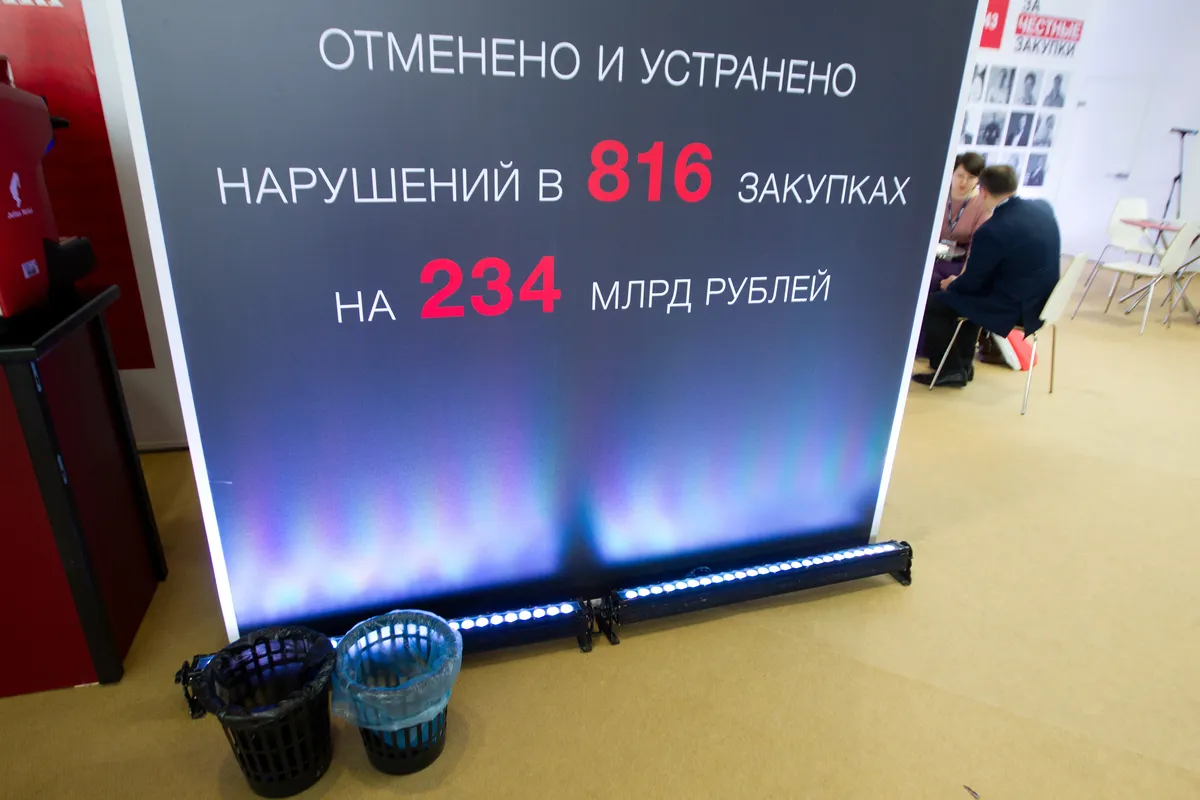
In general, the analysis of the concluded state contracts by controllers showed that for individual departments (for example, Rostransnadzor, Rosavia, Rosavtodor) , more than 30% of the volume of contracts (by sum) was concluded according to the results of failed procurement, that is, on an uncompetitive basis .
But according to the budget system, as a whole, the quantitative share of failed procurement increased from 49 to 52%, and the value share - from 55 to 60%, while the contracts according to their results were concluded in 60%of cases.
This makes it possible to trace two speakers: where the federal level is relatively painlessly abandoning a small share of contracting in the hope of the best times, the “total level” of public procurement increases non -competency - the average number of applications for participation in competitive methods for determining the supplier (contractor, contractor) has sharply reduced from 3.25 to 2.7.
First of all, this is due to the weak availability of credit resources in the whole country for suppliers in state contracts and with a tendency to enlargement of procurement through the invention of various kinds of “locking” money within one region.
The saving of funds based on the implementation of procurement procedures for January - June 2022 at the federal level amounted to 32.7 billion rubles and decreased by 1.3 billion rubles compared to the same period of 2021 (34 billion rubles).
At the same time, the ratio of the volume of savings and the initial maximum price of contracts amounted to 3.7%, which is 1 percentage below compared with the same period of 2021 (4.7%).
In the All -Russian circuit, an average of 7.36%save on average, but rather this is not about efficiency and competition, but about price unpredictability and calculation of them with a significant margin.
The main risks of state contracts remain:
concluding a contract with the only supplier based on the results of the failed competitive procedure;
"Favorite supplier";
purchase of two or more objects with similar volumes, terms and subject of purchase;
disproportionate distribution of advance by the stages of the contract.
However, they pay even “beloved suppliers” not always on time-based on the results of monitoring the sign of payment of state contracts (stages of contracts), according to the UIS “Risk-Monitoring”, signs of violation of payment of 11,138 state contracts of the federal level concluded after January 1, 2022.
In the public procurement, problems and the real potential of small business in the country are reflected as the sun in a drop of water.
Everyone is in hearing bravura relations that the mandatory purchase quota at the SMEs in 2021 was doubled. It is less known that in state (municipal) purchases only 4.2% of SMEs from all subjects of small and medium -sized enterprises included in the Unified Register of Small and Medium Enterprises are involved.
In the whole country, there is a lack of significant changes in the number of purchases in the NSR (reduction of less than 1%) while an increase in their value volume (by 13.5%).
In combination with a decrease in competing in purchases, this can generally mean that small business began “to eat” in public procurement of each other and turn into “zombies” suppliers-when the money is for the current activity of the money, and there is no longer any growth and transition to a level of higher.
However, that small business, which nevertheless participates in the public procurement, had not had any incentives for the transition to medium -sized businesses in connection with the automatic loss of most benefits and preferences before. In general, the share of SMEs in the GDP of Russia by 2-3 times (where the “state procurement economy” is extremely significant) is still lower than the indicator of a number of developed and developing countries, including those included in the CIS (Kyrgyz Republic, the Republic of Kazakhstan).
Despite the abundance of regulators, controllers and ideas discussed from the high stands of the state order, the obvious correlation between the increase in the regulation of the public procurement process and the improvement of its results has not yet been achieved - not least because effective processes can only be in the country with a quality common product.
And this means that the potential of a “bureaucratic discretion” in public procurement - including aimed at monopolizing individual sectors of the economy for individual respected people - will only increase.