
Translated material
Evil spirits
Russian trait. History of personal meetings from Alexander Genis
Pale -faced
The first time I met with the devil already in America, in a seedy church of Paterson. Once there lived "silk barons" holding textile factories. But now only a majestic waterfall remained from them, which once set the spinning machines. The town was impoverished and blackened. On Sundays, when wine shops do not work here, the only entertainment is the church service, for which I came here.
Pastor Herbert Page, tall, young, sports, dressed in an impeccable suit, in a white shirt with an exquisitely chosen tie, did not look like fanatics, but he conducted his service like a shaman. Page rushed on the catwalk, like a hurricane. He sang and shouted his sermon. Words merged into a moan, then in a hymn. A shirt was wet, an elegant Italian jacket blackened from sweat. Without releasing the microphone, the pastor selflessly brought himself to exhaustion.
The frantic dance of his prayers hypnotized the parishioners, and they participated in the worthy of their souls and body: they sang, clapped their hands, burst out with cries of delight.
Every now and then someone was dancing. The most frantic fell into a trance. One elegantly dressed old woman, in a special Sunday hat, fought, falling to the floor. She was carefully supported by her grandchildren. Skillfully filing the flock, Page heated the hall. When the voltage reached the limit, it froze in place. Through it, it seemed, an electric spark passed. Convulsively twitching, the pastor began to penetrately and solemnly shout non -existent words in "angelic languages."
Not knowing how to share someone else's enthusiasm, I - the only one in the church - looked at what was happening from the side and sitting. A storm of other people's emotions rather oppressed me than inspired. But that was my problem. The rest, laughing and crying, were deeply delighted. I have never seen such an open manifestation of a religious feeling, capable of, as it, in fact, should literally get a person out of myself.
When we left the Church, we said goodbye to me as with a family who witnessed a high holiday. It is important to say that there were two in the Church of the White. I and the character from a naive picture, carefully depicting the whole sacred story at once: Savaof, Adam with Eve, Christ with the Mother of God - all, of course, black. But whiter Lilia was a gentleman in the Garden of Paradise.
Varnished boots hid hooves, a tailcoat - a tail, a cylinder - horns, in his mouth he had a thick cigar, green dollars fell out of his pocket.
The Australian Aborigines, which retained the most ancient ideas about the otherworldly, believed that the souls of the dead go back to the clouds, from where they sometimes return to the ground, but in this case they change the color of the skin and become white. When the indigenous people of Australia first met with Europeans, they considered them all the immigrants from the other world.
Emigrants
Having found that even the devil has a nationality or at least the race, I visited the capital of American evil spirits. It is located in the village of Sony Hashchina on the banks of the Hudson, not far from the Katskilian mountains. In 1645, the first Europeans, subjects of New Holland, settled here. After 29 years, these lands moved to the British, but the previous names remained on the map, and the ancestors in the graves in the menu. On mossy tombstones, you can still distinguish between names with the prefix "Van", but one grave looks lively. Near it, fans are removed, pressing the books of Washington Irving lying under the plate of Washington.
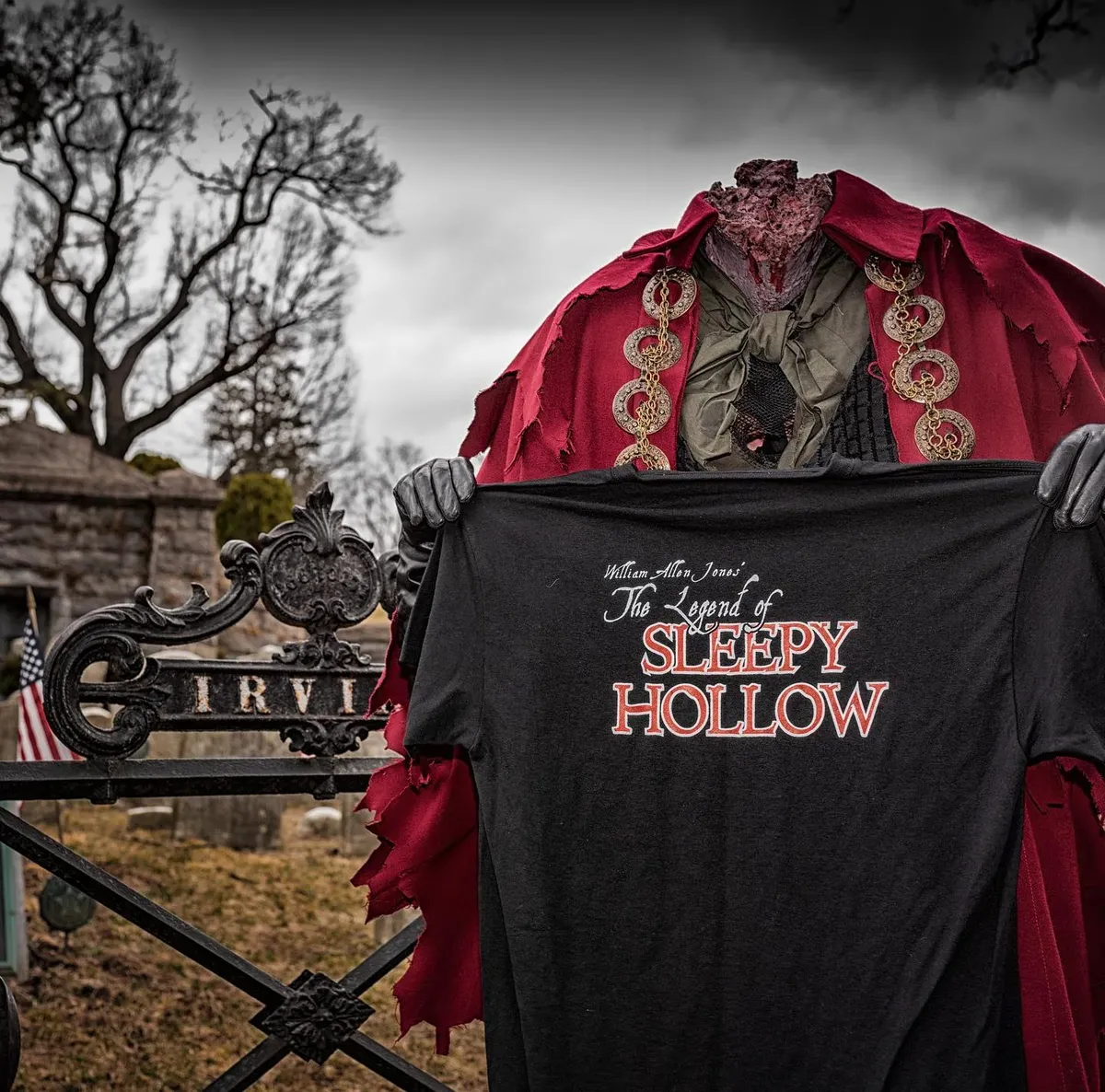
The first American writer introduced the national version of the supernatural in the literary everyday life of the New World, for he shared the need of a young country for the roots. Having taken this task, Irving discovered the Dutch and wrote the heroicomic epic of Netherlands America, which "was based on a wide Dutch basis of harmless stupidity."
Having partially described, partly inventing the background of America, Irving supplied it with what the old light did not do without - with the evil spirits, with which we learned to live since the time of Pithecanthropes.
(Even today in Iceland, famous not only volcanic, but also supernatural activity, a direct road often suddenly wags to go around the elf housing. The locals no longer believe in them, but they still do not want to disturb.)
The second colonization of America, testifies to Irving, allowed it to populate it not only with pale-faced, but also by their fantasies: "The ship delivered a whole colony of evil spirits from some old ghost of the European country."
However, they were able to take root only in the wilderness of Dutch America. The Dutch of Irving, like the old -Soviet landowners, sit still, hate progress and do not want to change how this happened in places not suitable for ghosts. It was from there, from the rest of America, in the story of Edgar, the devil appeared to destroy the idyll of the Dutch town of schoolproof, where they do not believe that "there is at least something on the other side of their hills." The “chmanny dandy” in a tailcoat “with papilli in the hair” , resembling horns or hiding them, climbed the bell tower and made “something inappropriate” with the tower hours. At noon, they pierced 13 times than compromised the previous 12 beats.
The drawing of the feature forever destroyed the correct measurement of the sinless life that the Dutch villages led, where everything changed so slowly and reluctantly that, living in one of them, Rip Van Winkle managed to oversleep the American revolution.
Compatriots
American ghosts were usually people on a ship with a savana instead of a sail. Most often, greedy burghers who fell, soldiers, sometimes without heads, and pirates, buried chests with the loot in a secluded place, became an island of treasures under the name Manhattan, served in the new world ghosts.
In the world of Russian undead, everything is different. Sinyavsky introduced me into it, who himself looked like a brownie, signed the books “with Leshachin’s greetings” and generously shared the experience of treating supernatural, but familiar creatures.
According to Sinyavsky, Russian evil spirits were not formidable, but a home, like mice or cockroaches. Andrei Donatovich swore that he met the water, wandering on a kayak in the northern lakes, and taught how to tie a brownie to a chair so that he would give a hidden thing.
“Just do not forget to untie when there is,” he warned, and I do not forget.
Even the domestic devils, as the best expert on the issue of the pre-revolutionary writer-ethnographer Sergey Maksimov, writes about them, did not differ either inanship or courage:
“During a thunderstorm, they hide behind the men, scared of lightning. They live in an unsightly swamp, because they are used to it. They are lame, for they fell from the sky. People were harmed by trifles, having come up with tea, potatoes and beer. ”
Each Russian spirit has its own specialization. Watery marry drowned, adore crayfish and acne. Bunniks soar at night - on the fourth shift, for which they leave a broom and soap. But most often in a wooded country there were goblin. It is also good that the lost was easy to cope with them: to find the path, it is enough to change the shoes from the left leg to the right. All the devils are immensely hazardous, but the goblin are worse than others, because they play cards for hares and protein: “One of these grandiose games was carried out in 1859 between Russian and Siberian goblin, and the Russians won, and then the blown by the Siberians drove their losing through the Tobolsk mountains from the taiga.”
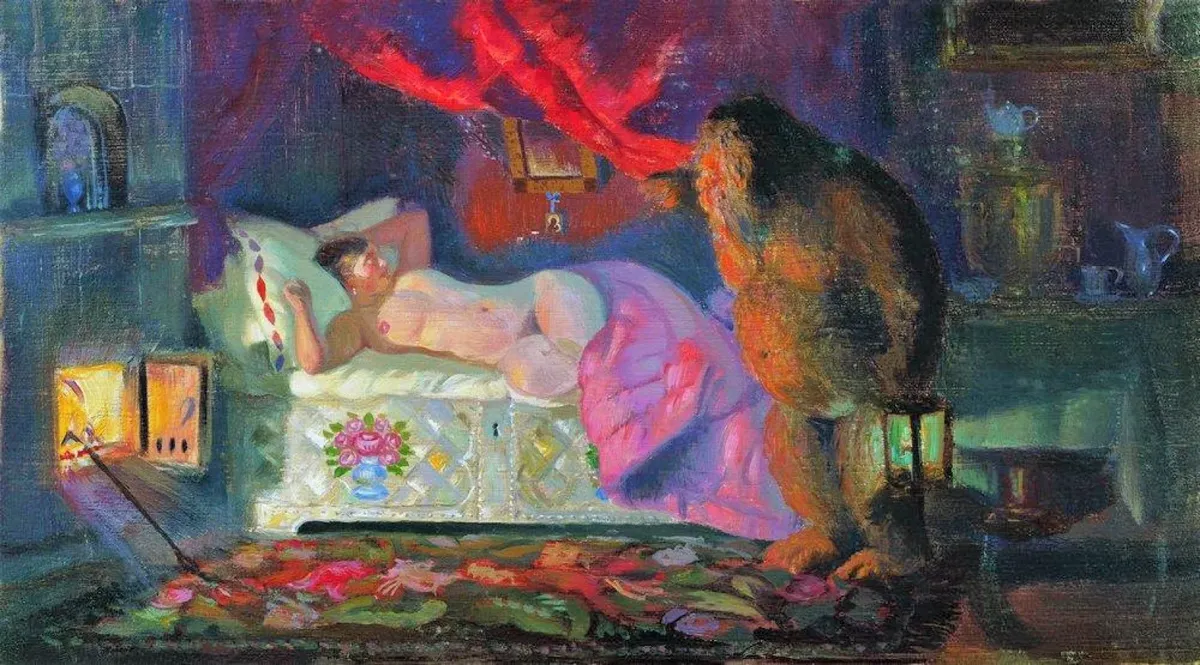
Closer than others to us brownies. Sounded goblin, they are attached to the house, like cats with which they have a lot in common. The brownies have soft, woolly palms with which they stroke the owners in a dream, and a quiet voice - as if the leaves rustle. Brownies love to dance and play a comb. They are easy to please with a salted pitch or a pinch of sniffing tobacco. If they are thrown when moving to a new house, the brownies cry bitterly:
“The case in the Oryol province is known, where, after the fire of the whole village, the brownies were so stooped that the peasants made them temporary huts.”
In general, the Russian devils are unlucky and unsuccessful. It is easier to believe in such demons, and it is easier to live with them, unless, of course, to know the physical education of superstitions. I, say, dare not get out of the house without crouching on the road. Be sure to look in the mirror if I had to return halfway. And I won’t cling to, drinking at the wake.
For agnostic, Vera is an unbearable burden, but superstition is just right. It exchanges the gold reserve of the eternal on the copper coin of everyday life, making it not as terrible as it seems or what it is.
Satellite
Having moved from folklore to literature, the Russian devil retained his best, they are the worst features, in any case, with Dostoevsky.
The devil who appeared Karamazov is a small demon. He has been amused by the ambitious Ivan, awaiting how all of us, that the devil will come to him "with scorched wings, granular and shining." Instead, the devil changed into the "famous kind of Russian gentleman." In checkered pants (an eternal sign of sin up to Kurovin and caricatures for Yankees from the Crocodile), in the non -wound underwear and a white hat inappropriate in winter looks an evil cartoon on a progressive intellectual like Stepan Verkhovensky. The survivor remaining without funds, he assumes the next owner, paying for a shelter with a table conversation, which he without any need buys French words, which then replaced the current Anglicisms.
Signs of parody - journal - education are abundant literary reminiscences. The devil recalls Tolstoy or Belinsky, compares himself with the “grayled Khlestakov”, hints at the Gogol's “nose” in his bad joke and shows himself as a lover of Jules Verne, not mentioned directly. (From 1867 to 1877, the classic of Ukrainian literature Marco Vovchok translated 16 of his books into Russian). The entire otherworldly sphere is described in a typical popular science style for Jules, connecting the numbers and details with a humorous, feuilleton style:
“In order to get to your ground, there was still a spacing ... Of course, this is only a moment, but the beam of light from the Sun goes as many as eight minutes.”
Moreover, the famous ax in space, who appeared in the novel as an Ommage Raskolnikov, in order to “fly around the earth, not knowing why, in the form of a satellite,” allowed one American professor to call Dostoevsky predecessor of the Soviet space program.
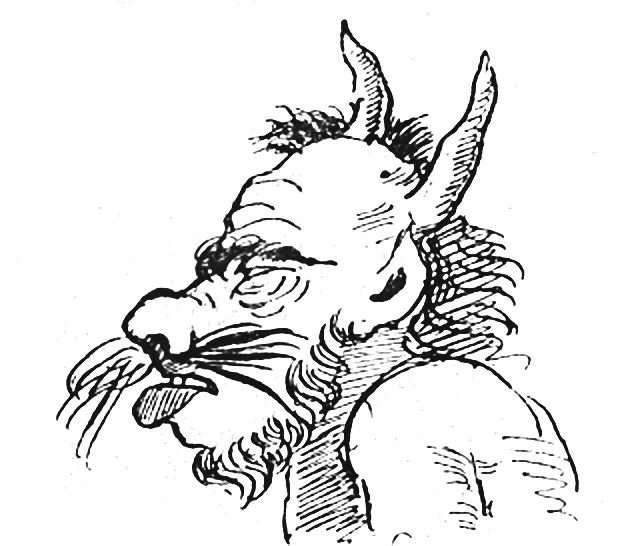
Dream
Having lowered the line as low as possible - to the ground, Dostoevsky plays along with him. He brings the devil's dream closer: "Fighting with merchants and priests." And not in the “navified bathhouse with spiders” , which Svidrigailov prescribed by eternity, but in an ordinary steam room, to become like everyone else, “to finally be embodied in a seven -pudy (112 kg) merchant and believe what she believes in.”
The vain of the abyss is the path from it, but the price of liberation is the rejection of metaphysical issues. To accept life without a doubt means to become a "merchant." This choice of features plow Ivan, insisting on his rough materiality, which can be given by a kick: "My goal will then be achieved: if kinking, then you believe in my realism."
Putting the party into the gadflies, the devil, however, knows that Ivan will not agree to a simple way out. He needs the devil more than he is the devil. The temptation of the line is that he is a living, irrefutable evidence of the existence of those spheres where Ivan does not allow the skepticism of progress.
In order to step on the other side of the mind, he needs to be convinced in the independent presence of the devil, believe that the devil knows more than himself, knows something else, lying outside his borders, Ivan, consciousness:
““ But you didn’t take it from me, ”Ivan suddenly stopped, as if amazed,“ it never occurred to me. ”
In fact, as we always knew, until Freud made science out of this knowledge, the second “I” lives with us, which he knows how to suggest, but only in a dream. Maybe it is not smarter than us, but it falls deeper, which is why it is called the subconscious. Anthropologist Levi-Brule called dreams of the Dikar Bible, others were looking for a source of religion in them, writers-a narrative machine. Best of all, she served Stanislav Lem. He materialized in the manner of Dostoevsky dreams, built from the novel "Solaris", who asked a provocative question: "If we do not answer our subconscious, then who is responsible?"
Having believed in the line, Ivan gives up and recognizes him for another, worthy, finally, “resolve the issue” , which tormented all the heroes and readers of Dostoevsky:
“ - Is there God or not? - again, Ivan shouted with fierce with perseverance. "
But the devil, like his author, does not give an answer, leaving a “seed of faith” in his place in order to grow at least agnostic from an atheist.
The echo of this dialogue can be heard in that scene from the “end of the game” of Beckett, where the heroes of the play pray to God:
“ *Clocks . To hell, nothing comes out! And you?*
Nag. Wait (pause. Opens your eyes). To no avail!
Hamm. Here is a bastard! It does not exist!
Clocks. Not yet".
Dialectics
“Of course, ” Brodsky wrote, “ Dostoevsky was a tireless defender of good ... But if you think about it, there was no more sophisticated lawyer.”
Unnataling the central issue of being ( “if the devil is proved, it is still unknown whether God is proved” ), the devil took up his direct business - the apology of evil. From the puzzling theological structure it looms that the devil, being, though fallen, but an angel, dreams of, like all the rest, even villains, to be with God on the side of good. He even instilled OSPU and "donated ten rubles to the Slavs brothers."
The feature of the “most unhappy property of my nature” is preventing the feature - common sense. The one that does not give all the heroes of Dostoevsky, not excluding the saints, to gain bliss in serene faith and happiness in unity with unconditional good.
The devil is, according to his own words, the “necessary minus”, without which the universe is not only incomplete, but completely impossible.
The devil puts the Universe in motion, brings development into a lifeless static balance and serves as an asymmetric counterweight, without which Dostoevsky would have nothing to write about, and we have nothing to live with. “Without suffering, everything would turn into one endless prayer: it is sacred, but boring.”
In a fit of false self -abasement, the devil tells Ivan that in vain he expects “great and beautiful” from him, for he does only what he can. But do not trust his ostentatious modesty. Despite the small nature of a shabby and vulgar layman, quoting the then scientpop, the devil is the fundamental basis of the world, without which "everything would have faded away in the world and would not have happened."
It turns out that without a feature, the eternal “posture” “squealing” (Dostoevsky was especially holding on to this word) Seraphim - also a kind of “bathhouse with spiders” : an eternity in which nothing changes, which means it does not grow.
The temptation of the feature is that he inspires doubt not in God, not good, not in paradise, but in the fact that all this needs more than the devil with his common sense. Recognizing the mind, the devil does not deny good, but complements him with evil, which he does not create, but - which is even worse - justifies.
Franz Kafka, the most attentive reader of Dostoevsky, said about the feature of a phrase, insightful to trembling: “One of his most effective means of seduction is the call to battle. It's like a fight against women who ends in bed. ”
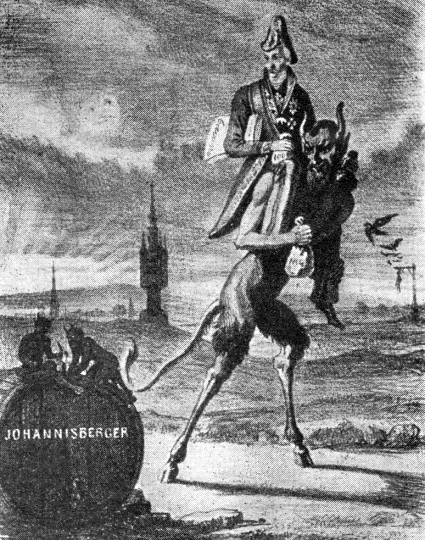
Illness
Damn, as Gogol assured, of course, the German, but the Russified, as evidenced by his conversation with Ivan. At first glance, this is how he appeared to Adrian Leverkun. This is all the same, undoubtedly, small, but even more fraught with demon: “ The man is rather flimsy ... A cap is flooded in his ear ... red-haired hair is knocked out from under it ... A checkered jacket with too short sleeves ... yellow worried shoes.” This was what actor Leonid Kuravlev looked like this in the role of Shura Balaganov.
Although Thomas Mann, undoubtedly, looked back at Dostoevsky, his devil speaks his native language, admitting that "sometimes I only understand German." In addition, in the process of a long conversation, he changes his appearance three times, because the real devil - the fact that Dante was frozen into the lake of coc silent - three faces parody of the Trinity.
The devil from “Dr. Faustus” undergoes external evolution depending on the topic of the conversation. First, he - a “prostitute in pants” - sinks to the level of a person and mimifies under him. In the midst of an intellectual conversation, the devil accepts the guise of "an intellectual in glasses, prescribing an average hand in the newspapers about art, about music." And finally, when it comes to trading, the devil looks like a lawyer with antennae , "a bifurcated beard and small sharp teeth." Only having completed the deal, the devil with relief regains his original mocking image, as if showing his true, but actually borrowed from the same Dostoevsky person.
This feature also cannot say anything about God, who is on the other side of knowledge, in the transcendental space, from where the devil fell to us, on the ground, to live and reddle our and our strengths.
But if the devil serves Ivan as his own subconscious, then he was sent to Leverkun. “Representative, delicate, secret” (simply put, syphilis), she “makes a person look for protection in the spiritual field - in books, ideas.”
The old, beloved, tested thought of Mann, who also wrote my beloved Lotta in Weimar, suffering from brutal pain, prescribes a disease with a source of creativity and reckoning for it. В рамках этого диагноза явление черта — квинтэссенция болезни, которая, как сам черт, и говорит с Адрианом, «позволяет тебе меня воспринимать» .
Психопатология дает алиби сверхъестественному, но не отменяет и не девальвирует центрального эпизода романа — и всей немецкой трагедии.
Bargaining
От Ивана черт, в принципе, ничего и не хотел. Ему хватило того, что Иван признал неоспоримую материальность черта, а с ней реальность и необходимость Зла, которому, впрочем, Иван уже и так уступил свою душу, подбив Смердякова на убийство отца.
Зато в «Докторе Фаустусе» Манн использует старинную и привычную ситуацию обмена. Его черт торгует временем: 24 года творчества взамен вечных мучений в аду музыканта — в «звуконепроницаемом, скрытом от Божьего слуха погребе».
Самое интересное в этой торговле — то, как черт представляет свой товар. Эта сцена напоминает того же привидевшегося мне в «Карамазовых» Жюля Верна. У него капитан Немо объясняет своим пленникам, что они никогда больше не увидят друзей, близких и родины, в ответ на что ученый Пьер Аронакс спрашивает, какова глубина Мирового океана, и получает отчет на 42 убористых страницах.
Леверкюн неизлечимо болен, сделка уже заключена, он знает, что ему, в отличие от Фауста, нет спасения, но черт с азартом и подробностями перечисляет все, что композитор получает от него и чем автор со жгучей завистью любуется.
Дар черта носит, с одной стороны, очень специфический, а с другой — универсальный характер. Выступая в роли критика, Манн становится не адвокатом дьявола, а им самим. Наше искусство, говорит он от имени обоих, выродилось в культуру, каждый опус — это «всего-навсего решения технических головоломок» . И вместо этого убогого и бесплодного творчества черт соблазняет свою жертву немыслимой роскошью: « Ты прорвешь тенеты века с его «культом культуры» и дерзнешь приобщиться к варварству», чтобы познать «первобытное вдохновение, пренебрегающее критикой, нудной рассудочностью, мертвящим контролем разума, священный экстаз».
Результатом такого озарения могут быть «четыре такта» ( «остальное — обработка, усидчивость» ), но и они стоят вечных мук, ибо превращают творца в «богоизбранный инструмент» , или — через запятую — в «божественное чудовище» .
Соблазняя героя, автора и читателя, черт, будучи все-таки немцем, решает центральное противоречие германского духа: спор между настоящей, то есть архаической культурой и пошлой современной цивилизацией, между героизмом обреченности и убогим купеческим идеалом, между смертью и жизнью, между подвигом и счастьем.
О последнем исторический прототип Адриана Леверкюна Фридрих Ницще высказался за всех нас с излишней, я бы сказал, категоричностью: никто не хочет быть счастливым, если, конечно, он не англичанин.
Дописав роман и наказав героя, Манн так и не сумел опровергнуть своего черта. Вместо этого он показал, что в немецкой трагедии нет, в чем его хотели убедить товарищи по изгнанию, хороших и плохих немцев. Плохие немцы — те же хорошие немцы, только более последовательные.
Woland
Говорят, что у Булгакова, когда он работал над «Мастером и Маргаритой», на столе лежали две папки для выписок. На одной, распухшей от бумаг, стояло «Дьявол», на другой, пустой, — «Бог».
Неудивительно, что наш любимый черт стал национальным героем, несмотря на то (а возможно, как раз потому), что многие разглядели в нем Сталина.
«Я часть той силы, — восторженно цитировали мы Гете, имея в виду Булгакова, — что вечно хочет зла и вечно совершает благо», не заметив, что Воланд в романе не делает ни того, ни другого.
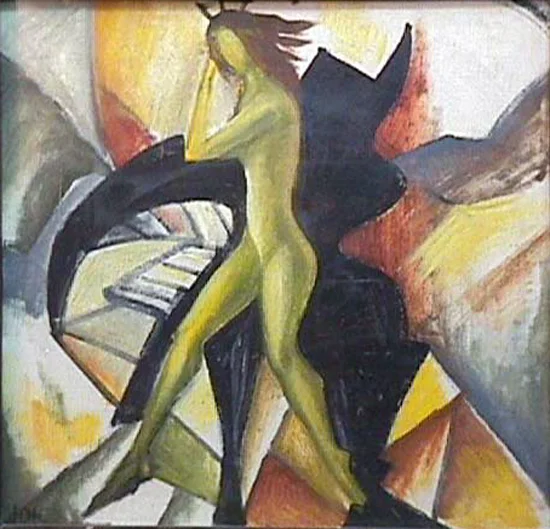
У Булгакова традиционный мелкий бес — это «клетчатый» Коровьев, к которому, балагуря и веселясь, присоединяется прочая нечисть романа. Они, конечно, вредят, но по мелочам, даже тогда, когда отрывают несчастному конферансье голову. Все их проделки проходят без следа — это как стрелять в подушку. Наказанные меняются местами, а если исправляются, то ненамного: скажем, перестают врать, но только по телефону.
Воланд во всей этой потешной, почти карикатурной «трагедии мести» не принимает участия. Он — над схваткой, настоящий князь Зла без страха и упрека, который наблюдает за человеческим родом в ключевые моменты его развития.
Первый раз — на заре христианской истории, когда распяли Иешуа. Второй — на завтраке с Кантом, когда в блестящий век Просвещения, казалось бы, окончательно победил разум. И третий — в Москве большевиков, обещавших осуществить примерно то же, что Первый, с помощью того, что придумал второй.
С высоты своего надмирного, как выяснилось в самом конце, положения Воланд следит за человечеством, не вмешиваясь в его судьбу, видимо, считая нас неисправимыми и не нуждающимися в дьявольских соблазнах. Если он и заведует Злом, то оно носит схоластический характер и оправдывает свое существование неизбывным паритетом тьмы и света.
О последнем мы, по сути, ничего не знаем. Разве что — от противного: если есть начальник Зла, то и у Добра должен быть источник. Вдвоем они составляют гармоническое, пусть и манихейское целое, что внушает хоть какую-то надежду. Ведь Бога никто не видел, а дьявола можно было встретить на Патриарших прудах.
Offline
Этот текст выйдет в следующем, четвертом, номере «Новой рассказ-газеты».