
Translated material
My sinful language
"Baltic states", "in Ukraine" and "Belarus": now it is Moveton. And “sanctions”, “rashist” and “Putinoid” are new words. How the war changed the Russian language
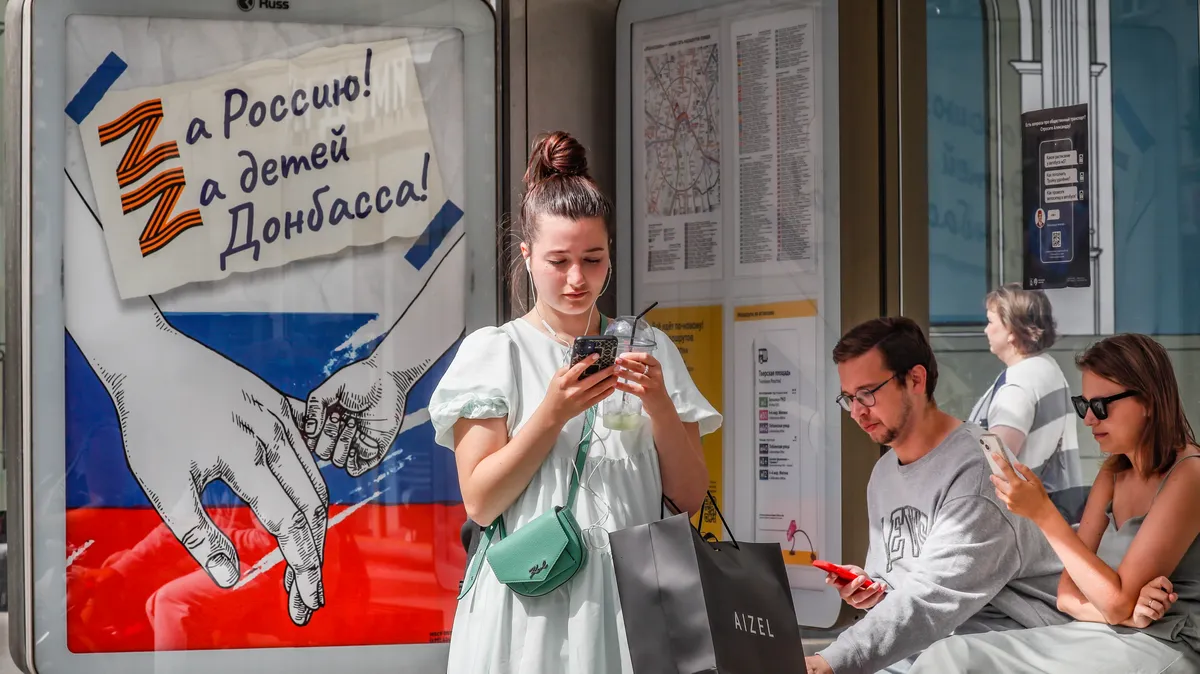
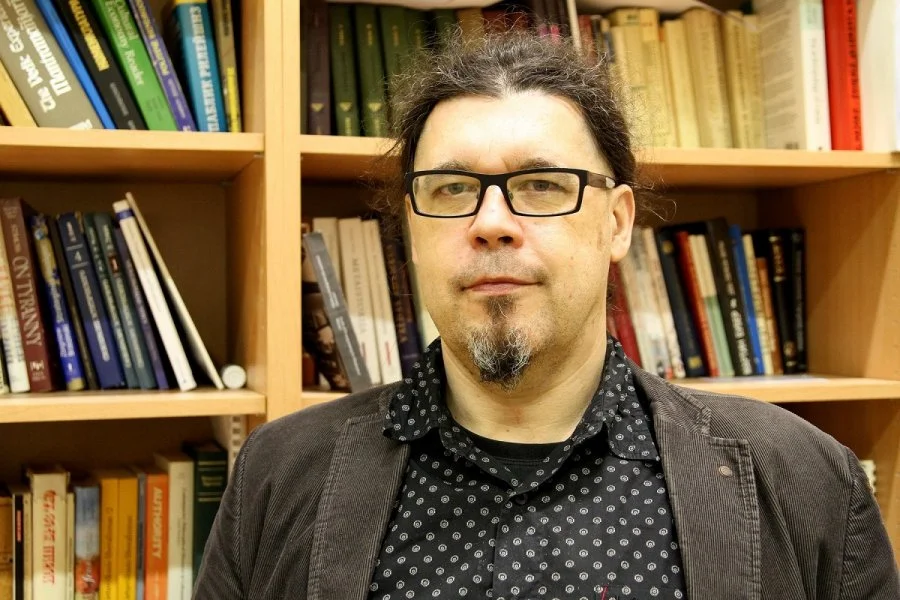
In the Russian media of the country, the Baltic states is often called "Baltic states", Belarus - "Belarus", and Moldova - "Moldova". All Prochrevsky media write “in Ukraine”, and not “in Ukraine”. But what about right? Why are there different names in the same language? These questions are answered by Pavel Lavrinets, Associate Professor, Doctor of Humanities, Head of the Department of Russian Philology of Vilnius University.
Pavel Lavrinets
Associate Professor, Doctor of Humanities
Head of the Department of Russian Philology of Vilnius University
"Baltic states" is an imperialist look
The norms of the Russian language are generally quite conservative and change slowly, despite the fact that living oral speech is quite mobile, changeable, susceptible. But the changes are fixed by norms only over time. This is necessary so that native speakers of the same language, separated from each other with time and distance, continue to understand each other.
As for geographical names, political principles come into conflict with norms. Say, the norms of the Russian language, reflected in dictionaries, are still correctly considered “Tallinn” and not “Tallinn”, although in Estonia and in Russian they prefer the second option.
So the name of the Baltic states carries a Moscow -centric orientation, the imperialist look of the Russian power on its outskirts, devoid of political subjectivity.
Moreover, behind the name “Baltic” is the idea of the geographical and administrative space that has developed in the Russian Empire in the 18th - 19th centuries. After the conquests of Peter, the territories approximately corresponding to modern Latvia and Estonia were included in the province, which were called the Ostzesky - according to the German name of the Baltic Sea. And under Alexander III, who persistently pursued a nationalist Russification policy, this expression was also Russified - and so the Baltic Territory, the Baltic provinces appeared.
Lithuania, included in the Empire under Catherine II, did not belong to them, she was along with Belarus to another, continental space of the former Grand Duchy of Lithuania, and usually one Governor-General General Grodno, Grodno provinces. The Koven province did not have access to the Baltic Sea: the current Lithuanian coast belonged to the Courland province, which ended south of the palange, and then there was already Prussia.
Only in the interwar years, due to the similarity of the history and the situation of Estonia, Latvia, Lithuania began to perceive itself in some unity designated as the country of the Baltic
(including in the press of these countries in Russian), to look for ways of political and cultural rapprochement, which, by the way, was to serve as a magazine with the characteristic name “Baltic almanac”.
In Soviet times, the Baltic states returned, where the Kaliningrad region sometimes began to be attributed. The Baltic states remained in the modern Russian discourse and acts as a characteristic sign of the specific circulation of the Russian Federation back, into the past.
The modern Lithuanian philosopher Gintoutas Majijikis in an interview a few years ago rightly noted that when the term “Baltic states” is used, then it is either the past - about Soviet Latvia, Lithuania and Estonia, or about a simulacel, a copy of the original, a fictional image of what is actually not. In fact, there are Baltic living in their lives.
As for Moldova, Belarus, Sakartvo, then the desire to use self -name reflects the desire for political subjectivity, to recognize sovereignty. No one is embarrassed, for example, Burkina-Faso-as the country called itself. True, difficulties may arise here: if “Belarus”, then you need to say and write “Belarusians”, “Belarusian”, which looks at least unusual.
But the use of normative traditional names can be perceived as a refusal to independence, as imperial claims. If such a parallel is appropriate, then the Patriarch of the Lithuanian National Renaissance in Russian documents was called Ivan Basanovich. But he called himself Jonas Basanavicius! And how is it right?
"In Ukraine" is found both in Pushkin and Tolstoy
A similar situation with Ukraine. In Russia, they traditionally say “in Ukraine”, while Ukrainians emphasize that they need to say “in Ukraine”. In classical Russian literature, it is possible to find arguments in favor of “in Ukraine”. For example, Pushkin has in the poem "Poltava":
Mazepa enemy, passionate rider,
Old man Paley from the darkness of the link
He goes to Klena to the royal camp.
Or in the “War and Peace” by Leo Tolstoy, it seems to him more profitable for him to “retreat to the left and south, bothering the enemy from the flank and rear of the enemy and setting up his army in Ukraine.”
Forms with the preposition “B” can be found in the official Soviet documents of the 1920-1930s, in memoirs and diaries and Soviet figures, and in the works of the works of one of the military leaders of the White Movement Peter Krasnov.
In speech “B” and “on” they competed, but it can be noted that statistically “on” prevailed during periods of centralization of the empire or the USSR, when the ideas about the former or arising independence of Ukraine weakened.
In the first half of the 1990s, the Ukrainian authorities insisted on the normative consolidation of the options “in Ukraine”, “to Ukraine”, “from Ukraine”, to break the etymological connection with the constructions “on the outskirts”, “to the outskirts”-the same Moscow prototical performances rose behind such a transparent connection. Thus, Ukraine, which strengthened its independence, would receive, so to speak, a grammatical confirmation of the status of a sovereign state. For some time in the Russian media and in official documents “B” and “on” were used in parallel.
It is funny to note that by decree of May 21, 2001, President Putin appointed Viktor Chernomyrdin Extraordinary and Plenipotentiary Ambassador of the Russian Federation to Ukraine, and after eight years President Medvedev, by decree of August 5, 2009, appointed Mikhail Zurabov to the Extraordinary and Plenipotentiary of the Russian Federation to Ukraine.
At the same time, a kind of polarization grew - “on” was more and more acutely perceived as a symptom of understanding of Ukraine as a territory, “B” as a sign of perception of the country as an independent state. This is not a matter of the norm of the Russian language, but a matter of political orientation.
Emotional answer: “Kremlin”, “Putin”, “in Russia”
After the outbreak of the large -scale war of Russia against Ukraine in many Ukrainian media began to write their own names, such as Vladimir Putin, Moscow, Kremlin, with a small letter. Similarly, they began to pronounce it not “in Russia”, but “in Russia”.
Pavel Lavrinets explains this by the fact that they began to do so from the contrary: they say, you are trying to humiliate us with your “in Ukraine” - so here is “in Russia”. There is nothing from the norms of the Russian language here, but a lot of emotional attitude and the desire to show that the Russian Federation deleted itself from among countries and states. In addition, in the Russian language, in principle, there is such a design “in + some kind”: in Cuba, in Rus', in the Smolensk region.
The capital or capital letters are used in accordance with the rules of Russian spelling, and the meaning of use is to highlight the beginning of sentences and names, names of countries, cities, geographical objects, historical events, and so on. They resort to the capital letters when they want to highlight, emphasize something important, significant, worthy of respect, for example, homeland, love, victory. You can easily write to an dear person: "Happy birthday!" - Or in writing to politely turn to one person "you".
But sometimes the title letter is replaced by a lowercase according to all the rules. There are cases of the transformation of the names of their own real historical figures, mythological or literary characters into household names - to designate people with certain qualities, character traits and behavior. And the names of common areas are written with a lowercase letter, for example, Molchalin, Manilov, Oblomovs. But the time should pass when, as a result of the many years of tradition, such a figurative use is legalized to write the type of Judas, Lovelas or Donjuan.
But “Putin”, “Moscow”, “Kremlin” is a completely different case, the rules of the Russian language is not provided. He was born from an understandable emotional reaction, by the method from the nasty: if we write with a capital letter God and the Motherland, then how else to express a negative, contemptuous attitude, to indicate nullity by means of typography?
It was even to meet such a spelling when the first letter of the names of the aggressor country is even smaller-the adherent sign “Ruzzia”.
The current rules of the Russian language were established 66 years ago, in 1956, and, of course, in living speech, written and oral, were constantly violated. But the norms established by the rules recorded in dictionaries and reference books remain the same. Nevertheless, from time to time, initiatives arose on their revision and approaching written speech to live practice. Last year, for example, it was announced by the Ministry of Education of the Russian Federation of the project of new spelling and punctuation rules.
New words: “rashist”, “Putinoid”, “zombie”
Another thing is changes in communicative behavior and constant replenishment of the vocabulary. But this is if it is related to the rules and norms, it is perhaps in the sense that speech, gross vocabulary, the very style of performances of current-shows or posts on social networks of high officials go far from what was previously considered the norm and language, and in general decent behavior.
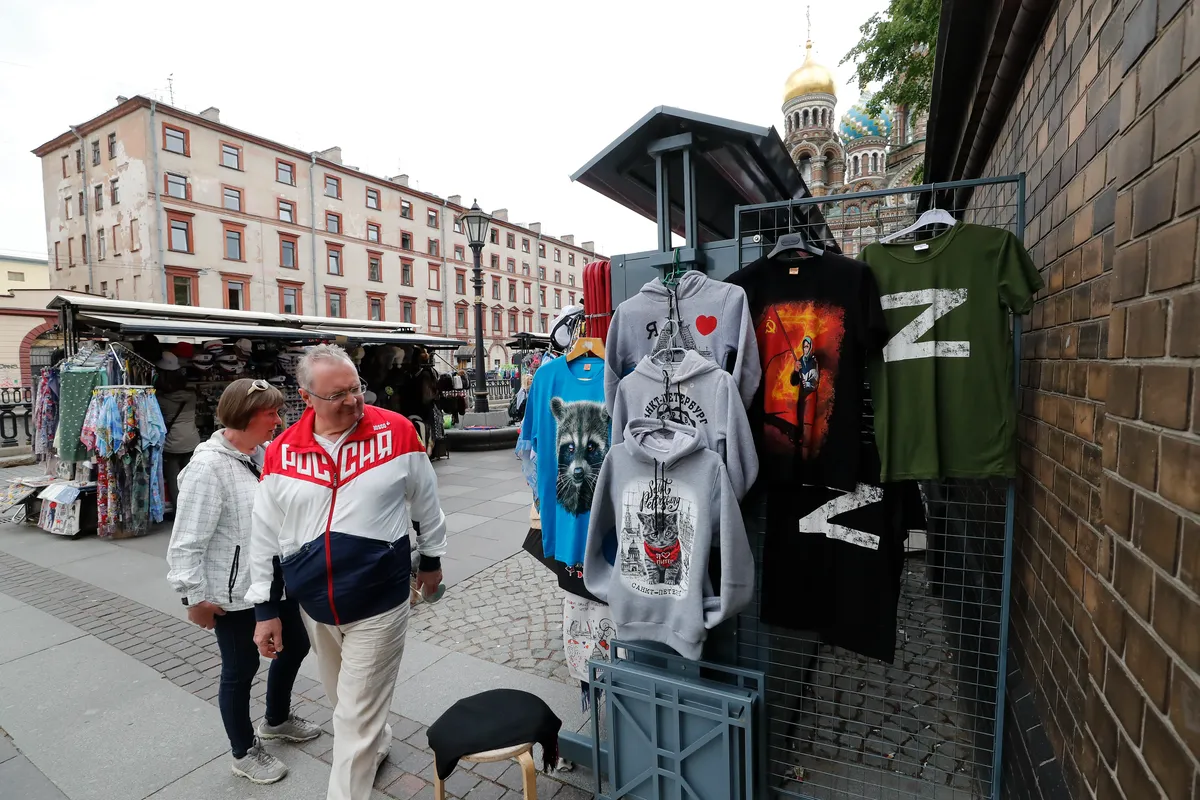
Changes in communicative behavior are associated primarily with network communication and a characteristic erasing of the boundaries between private and public, domestic and official. Even in the areas of public communication, political or business, communication participants move away from the official style and widely use conversational expressions and vulgar vocabulary. The dictionary is replenished in connection with new phenomena and objects, with the spread of new technologies. Moreover, we are talking not only about borrowings like a “rapper” or “smartphone”, but also about the appearance of new meanings in words, for example, “cloud” or “download”. Before our eyes, a wave of such a replenishment of a dictionary caused by a pandemia was held-“remote”, “zumi”, “covid passport”. The use of such words as “forbidden”, “sanctions”, “rashist”, “Putinoid”, “zombie” is associated with completely other areas of life.
There were several major changes over the entire existence of the Russian language. These include the introduction of Peter I of a new simplified drawing of letters and the exclusion of a number of low -supported letters from the alphabet - however, some later returned. A separate conversation is worthy of the efforts of Karamzin and his like -minded people to eliminate the Russian language from heavy -handed Church Slavonic constructions, saturate with new vocabulary: we owe Karamzin the words “poster”, “caricature”, “crisis”, “industry”, “public”, “human”, “touching” and many others. Karamzin's friend Ivan Dmitriev published a collection of poems, where he used the letter “Yo” in a few words, and Karamzin secured it in the Russian alphabet with his works. He introduced dash and ellipsis into the widespread use. But there were no uniform norms of spelling almost until the end of the 19th century.
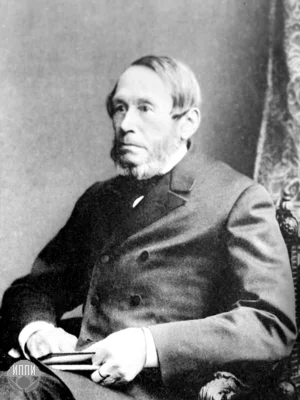
Only the reference book on the Russian spelling of academician Jacob Grot, who was released in 1885 and was repeatedly reprinted, and his other works became something like a generally accepted set of rules. The reform of the Russian spelling of 1918 is widely known, which was actually prepared under the imperial regime and began to be introduced under the Provisional Government. But the Provisional Government did not go further than the circulars, and the Bolsheviks resolutely introduced a new spelling. Of course, she was perceived as the Bolshevik and did not accept in exile. The rules of Russian spelling and punctuation, introduced in 1956, continue to act. Which of these changes were the most radical is difficult to say.
A wave of letter abbreviations and compound words such as “VChK”, “owls”, “scrub” (school worker), “nyercorrot” (head of the operational department), anecdotal “cast -compass” (deputy commander for marine affairs) was very noticeable. It was perceived as the phenomenon of the Bolshevik regime, although this kind of abbreviations (“Glavkuk”, “Vikzhel”, “Central Committee”) began to spread earlier. In Soviet Russia, people were mostly a grin to this phenomenon, and in emigration, with a sharp rejection, although the emigrants themselves used both Soviet abbreviations and their own “ROVS” (Russian National Union).
It seems that the words of socio-political and consumer vocabulary from the “consensus” and “voucher” to the “second-hand” and “varenka” poured into the language caused a sharp rejection in some, more likely to accept adoption.
It is difficult to talk about society as a whole - nevertheless, societies in Russia and in the Baltic countries are multi -layered, consist of many diverse groups with various interests and political, aesthetic, consumer orientations. Therefore, different groups perceive the same transformations of the language differently, and some do not even notice them at all.