
Translated material
He left when there was no freedom left
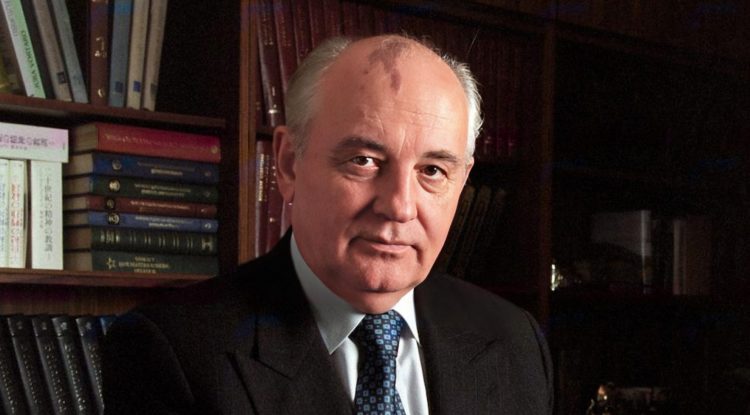
Mikhail Gorbachev died. Ilya Zhegulev recalls the last ruler of Russia, who voluntarily gave power to opponents
On the evening of August 30, at the age of 91, Mikhail Gorbachev died, the first and last president of the USSR, a man who launched perestroika and began democratic reforms, which ultimately led to the collapse of the Soviet Union, a change in the world political order and its own resignation. Journalist Ilya Zhegulev, who grew up under Gorbachev and wrote about his life after politics, recalls the last Secretary General of the CPSU.
"What will the youth say?" I am forty years old, I hid in the corner of a large room where the new year is the new year by Gorbachev-Fund: I came to his office to persuade Mikhail Sergeyevich to meet me and give an interview for Medusa. I am forty years old, and the words of the head of the fund are addressed to me: at the festival I am the youngest, which means that I need to say a toast under which the former president of the USSR will raise a glass.
What will the youth say? Someone grew up on the songs of Paul McCartney, and I learned to read according to the biography of the new Secretary General of the CPSU Central Committee, published in the newspaper Izvestia. I was five years old, and I was madly interested in who would rule my huge country. Then this post seemed sacred - the face of the ruler was printed in primers on the first pages, and all , literally everything in a huge country (and beyond its borders in half of Europe) depended on the decisions and will of one person.
The will of Gorbachev led to decisions that no one was waiting for. He launched the course of history and committed actions opposite in meaning that today's ruler of Russia is committed (which, however, still depends in the country, albeit smaller in size). Gorbachev literally imposed freedom of speech to the country, which - especially if we talk about officials and apparatuses - at first resisted this. He began to talk about real problems aloud - and allowed even to speak even to those who accused Gorbachev in these problems. He held the first alternative elections in his country - and was the first to allow his ideological opponents to the power.
Then, when we met in 2018, Mikhail Sergeyevich was sitting at the table, on which stood an unchanged stack of vodka and a good snack, and recalled the day when the results of the election of people's deputies of the USSR became known. “I walked around the Kremlin and glowed with joy. People looked at me as abnormal. Finally asked: “Why are you happy, Mikhail Sergeyevich? Did we lose the elections?” ( The CPSU received the overwhelming number of seats at the congress, but the very presence of the opposition in the authorities was then perceived as a sensation.-Approx. “Cold.” ) And I say: “I rejoice that finally the people really began to rule the country. My dream came true.”
Soviet power for 70 years said that the people are governing the country. The idealist Gorbachev believed in this and suggested: "Now let's really." He was not afraid to dismantle the system on which the power of the Communists in the country was held, to chop the bitches on which he himself was sitting. He really thought about himself.
Gorbacheva destroyed freedom of speech. And she changed the country. “There would be no publicity, we would have no changes for the better,” Gorbachev told me. - And there would be no freedom. Freedom is primarily publicity. Freedom to speak with people, about his experiences, that a person observes [around] and how he relates to this. "
Now, when Russia was silent under the pain of arrests, when they could simply be imprisoned for condemning a war, it is difficult to believe that in the Soviet empire they criticized the campaign in Afghanistan from the first lanes of newspapers that existed at the expense of the state budget (there were simply no non -state newspapers then). And I read this-like thousands of publications about the crimes of the Stalin regime, about problems in the economy, about rock musicians, about changes in the country.
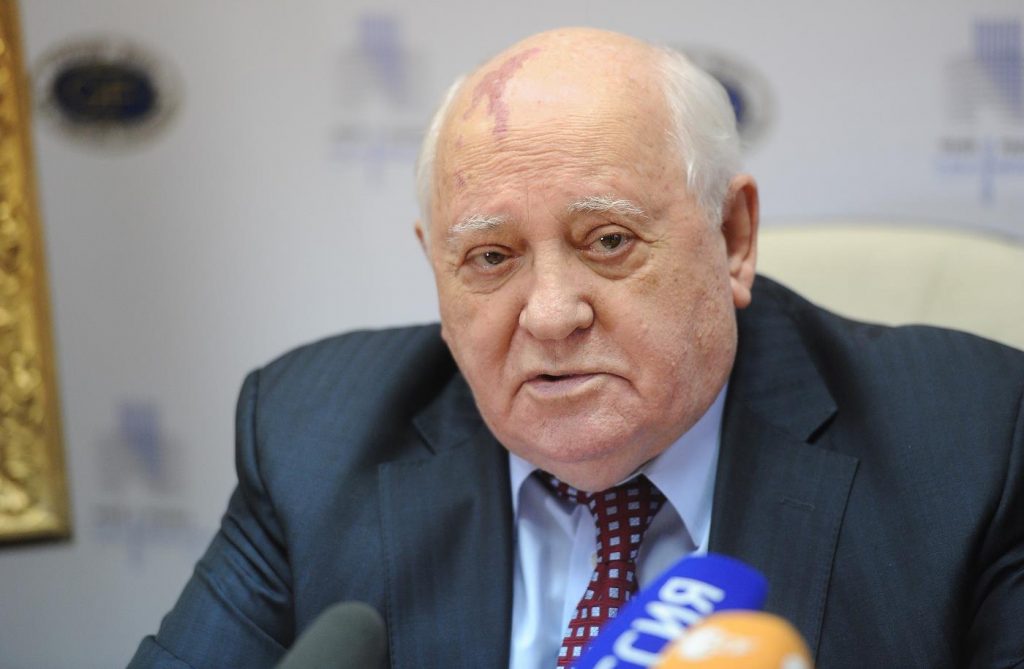
When Gorbachev back from the ruler became an ordinary person, love in his heart helped him to live. “Raisa is some kind of miracle. I loved and continue to love, I still can’t believe that she is not, ”he told me, remembering the late wife. He did not hesitate to admit love for her to strangers, he was never shy about loving, did not hide his happiness - and did not pay attention to the accusations that Raisa Maximovna was governing them. This even affected his popularity: in our society, even now it is not customary to relate to a woman publicly. It is not customary to relate to freedom. It is not customary to treat power.
The son of peasants, Russian and Ukrainian, Gorbachev became the most unusual ruler in the history of Russia. He ruled only six years, for which he changed the country beyond recognition. And he lived 30 years after his resignation, watching how Russia slowly moves back. He did not leave, even when his whole family emigrated. And only when in his beloved country there was absolutely no room for love and warmth, for freedom, for publicity - only then did he leave.
The author’s opinion may not coincide with the opinion of the editorial office.