
Translated material
An atheist who revived faith
Gorbachev gave the real freedom of the Russian Orthodox Church, which she could not cope
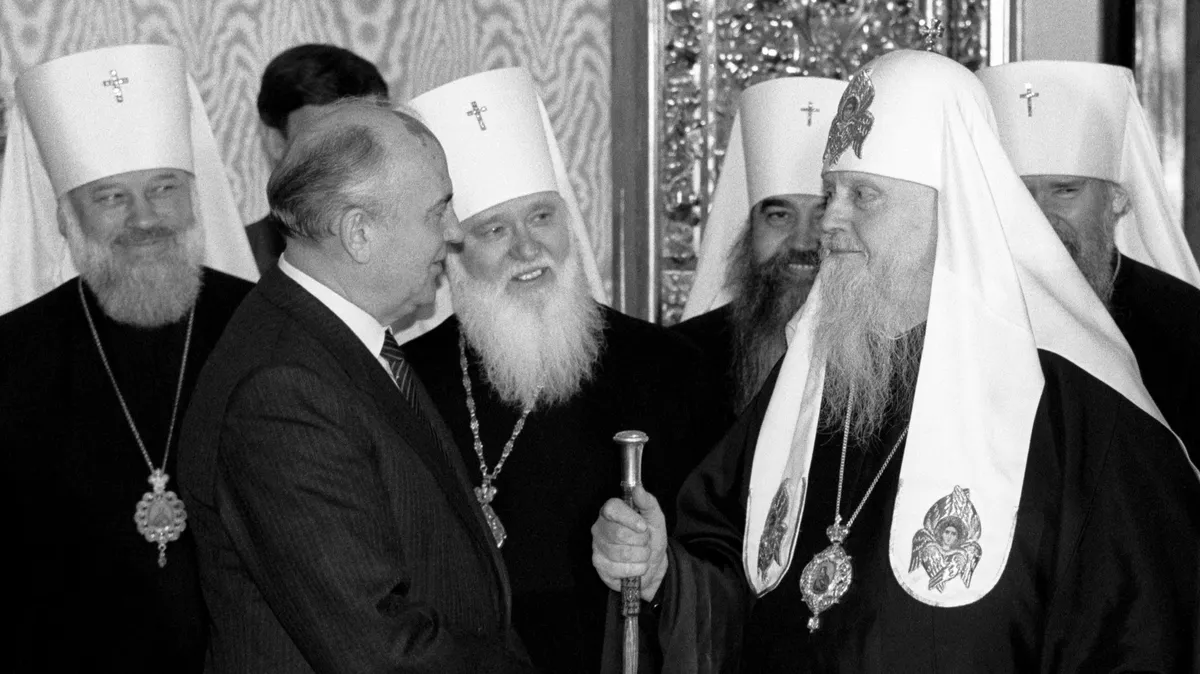
It is not clear whether the Russian Orthodox Church will commit the official funeral service of Mikhail Sergeyevich Gorbachev, whose burial is scheduled for September 3 at the Moscow Novodevichy cemetery (the text was written by the author the day before - approx . The current structure of the Moscow Patriarchate, formed in 1943, recognized “even Stalin, Brezhnev, Andropov and Chernenko, according to which the patriarchs Alexy I and Pimen served solemn memorials. On the occasion of the death of the first and last president of the USSR, the Nobel laureate, unique in the Russian history of the leader, who shot all restrictions in the field of religious life of the country, the current Patriarch Kirill did not consider it necessary to publish even brief condolences. The pro -Kremlin leaders of Russian Muslims and Buddhists, who are no less owed to Gorbachev. Only the Federation of Jewish communities of Russia thanked the deceased "for the revival of religious freedoms in our country", because "it was thanks to its transformations that a real rise and the heyday of spiritual life occurred."
Gorbachev's values are close to Western Christians; Often at various levels there was an assumption that such a feat that Mikhail Sergeyevich performed implies religious motivation.
Gorbachev himself - in the past, a convinced communist and specialist in agitation and propaganda - stubbornly refuted such rumors. In March 2008, he told Interfax that he was baptized in childhood and recognizes the "huge role of religion in human society and history." But at the same time, he honestly admitted: "I was and remain an atheist." “I always treated people with a religious worldview,” Gorbachev noted. “It was on my initiative in the Soviet Union that laws were adopted that returned people the freedom of conscience and religious beliefs.”
"An unbelieving husband is consecrated by the wife's belief"
(1st message to the Corinthians, 7:14)
The family, in which the president of the USSR was born more than 91 ago, was traditional-peasant and at least half Ukrainian. His mother, in girlhood, Maria Hopkalo - came from the peasants of the Chernihiv province (by the way, from there were the parents of Raisa Maksimovna Titarenko, who became Gorbacheva in 1953). It is said that the acquaintance of Mikhail (then a student of the legal faculty of Moscow State University) and Raisa (a student of the Faculty of Philosophy) occurred at the dance evening in the premises of the former temple of St. Tatiana at Moscow State University. As classmates recall, Misha at the beginning of his studies at the university “spoke on Surzhik and looked like a hungry”-he was accepted without exams, according to the CPSU quota, where he entered at the age of 19. The young philosopher Raisa was much more advanced. “It was an outstanding woman,” recalls Gabriel Popov. - To graduate from the excellent philosophical faculty of Moscow State University and get a recommendation to a graduate school for a girl without connections - this is worth a lot. Let's just say, culturally, she exceeded her husband. ” Despite the recommendation for graduate school, the dissertation of the candidate of philosophical sciences on the topic “The formation of new features of the everyday life of the collective farm peasantry” Raisa Maksimovna defended only in 1967, more than 10 years after the university. Marriage affected the birth of a daughter and crossing after her husband, who made a more than successful party career.
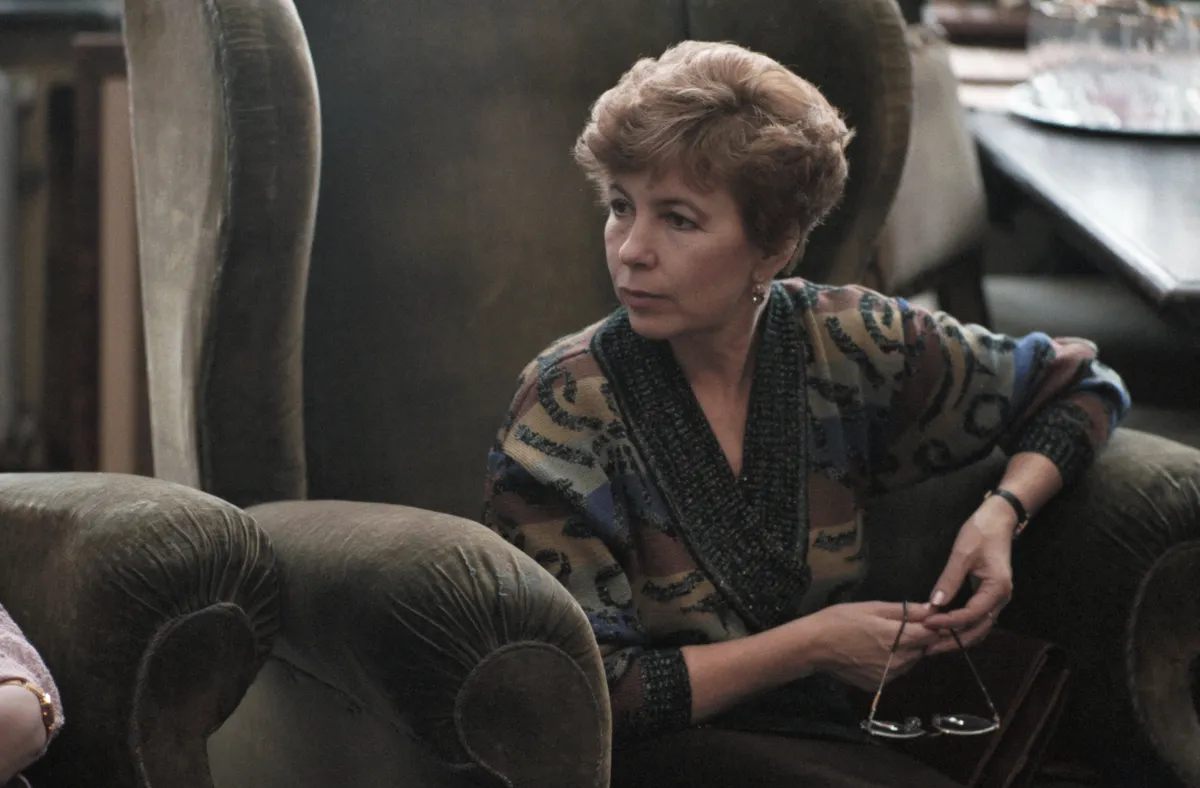
It was Raisa Maksimovna, with her philosophical education and a craving for the spiritual, who, so to speak, became, so to speak, religiosity in the Gorbachev family. Back in Soviet times, according to Zoe Afanasyevna Maslenikova, who edited the manuscript of Fr. Alexandra, Raisa Gorbacheva, read the priest's books circulating in Samizdat. As soon as her husband became the Secretary General of the Central Committee of the CPSU, she, along with a deep expert on Russian Orthodoxy, academician Dmitry Likhachev, organized the Soviet Culture Fund, which closely interacted with the Russian Orthodox Church as part of the celebration of the 1000th anniversary of the Baptism of Rus' in 1988. In the same years, a rumor spread in the Moscow church environment that, perhaps, the most intelligent bishop of the Moscow Patriarchate of that time, the chairman of her publishing department, Metropolitan Pititim (Nechaev) became the confessor of Raisa Maksimovna. It is difficult to reliably say whether the wife of the Secretary General confessed him, but their meetings took place at least once a month.
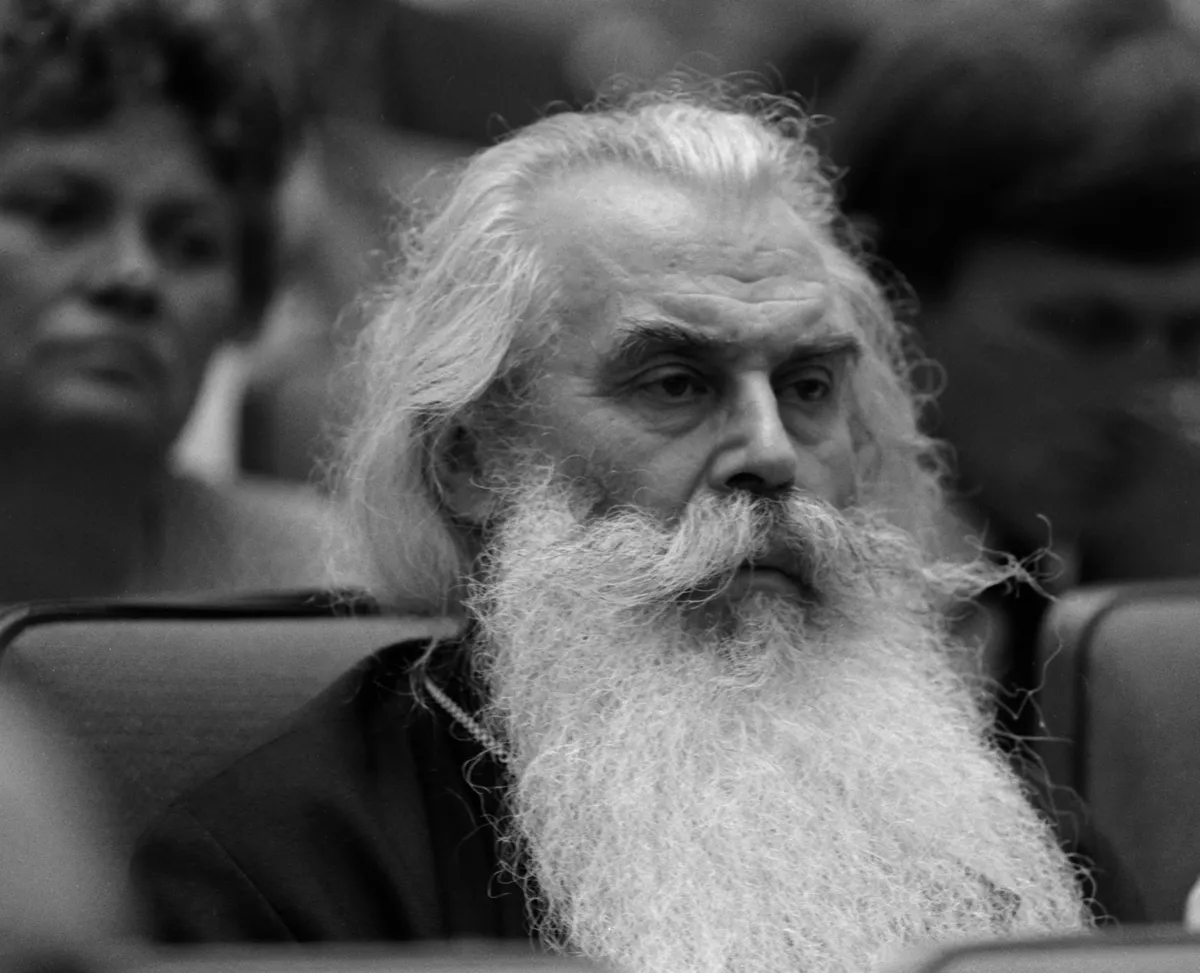
According to the patronage of Raisa Gorbacheva, back in the atheistic 1986, Pitimim became a member of the board of the Soviet Culture Fund, and three years later - the People’s Deputy of the USSR. In the late 80s, the metropolitan began to be included in the official delegations that accompanied the Secretary General during foreign visits.
After the death of Patriarch Pimen, at the Local Council on June 7, 1990, Raisa Maksimovna even tried to lobby Pitirim’s candidacy in the patriarchs, but that cathedral was poorly controlled by party-nomenclature structures, and most hierarchs from the regions, the capital's refined style of Pitirim was alien and incomprehensible. He did not gain the required half of the votes of the Soborians to include in the final ballot for voting. A year later, with small members of the Commission of the Supreme Council of Russia, working with the KGB archives, they revealed the agent pseudonym Pitirim-an abbot, under which he was recruited back in the late 1950s. Two and a half years after Gorbachev’s resignation, Pitirim’s church ministry ended - Alexy II frankly did not tolerate his former competitor in the patriarchal elections. The last nine years of his life, Pitimim spent at rest and died in the Central Military (Sic!) Hospital.
"We will not offend the church"
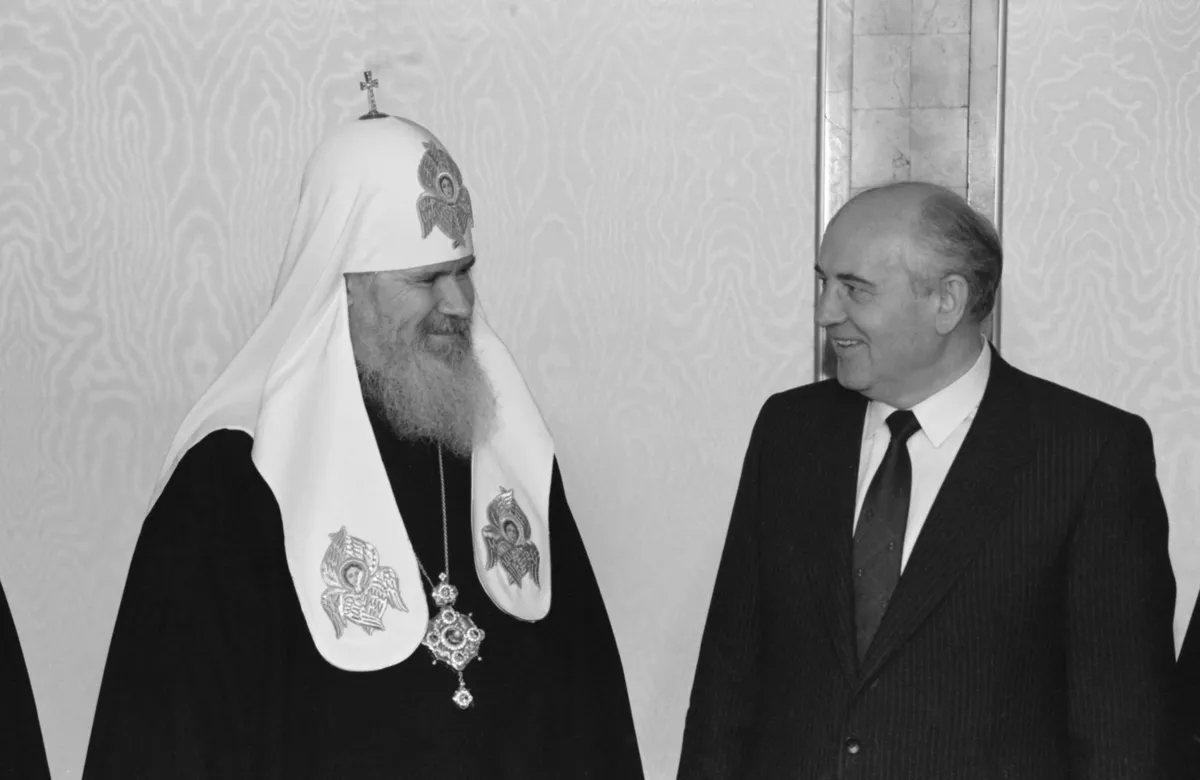
Alexy II did not cause confidence in Gorbachev himself - like a hierarch, too closely connected with the KGB that slowed down the restructuring. When, in 1986, then the then manager of the Patriarchate of Patriarchate, Metropolitan Alexy (Ridiger) wrote a letter to Gorbachev with a proposal to allow the Russian Orthodox Church to participate in the patriotic education of youth, as if insurance of the weakening party-communal structures, the Secretary General was angry, and Alexy lost his Moscow post, going to the Moscow position.
Gorbachev planned his “new religious policy” himself (of course, not without the participation of the spouse who consulted on these issues with Metropolitan Pitirim), without the participation of the ROC Synod, and its proanonsiroal in 1987, the Plenum of the Central Committee of the CPSU.
If before that the party-Soviet bodies were set to discredit the anniversary of the “1000th anniversary of the introduction of Christianity in Kievan Rus” and even managed to publish tons of the atheistic waste paper about the “reactionary” of this historical act, Gorbachev proposed making the anniversary a national cultural and educational event. Annals entered the phrase from the speech of the Secretary General: "We will not offend the church, we have patriotic." The liberal -minded chairman of the Council for Religious Affairs under the Council of Ministers of those years Konstantin Kharchev told the author of these lines as he managed to cross this new course with the then officially unable stateism. The Council issued an analytical note, the main idea of which was that "not every religion is bad." The Council proposed to separate "extremist" groups and individual believers from "constructively tuned" and loyal. In relation to the first, atheistic propaganda and generally repressive policy should be strengthened, while the latter should receive all sorts of state support, up to the return of the status of a legal entity, taken away from religious communities back in 1929.
The second half of 1987 and the beginning of 1988 went under the auspices of large-scale preparation for the celebrations of the 1000th anniversary of the baptism of Rus'. As a symbolic “gesture of goodwill” in the summer of 1987, the government handed over the Patriarchate of Optina of deserts near Kozelsky and the Tolgsky monastery near Yaroslavl, where it was planned to create a shelter for lonely elderly priests (has not yet been created).
From the Moscow Danilov Monastery, declared by the center of the celebrations, they simply made a candy - not only numerous pilgrims, but also foreign television companies, eagerly filming solemn services and prayers, among which more and more young people appeared there.
Since the beginning of 1988, the ROC of desecrated temples slowly began: the first swallow in Moscow was the Church of the Holy Archangel Mikhail in Troparevo, at which the windows of the elite apartments of members of the Holy Synod of the Russian Orthodox Church looked. In order to facilitate the process of returning, the Council of Ministers adopted a special resolution “On the facts of violation of the established procedure for consideration of applications for registration of religious associations”. By the end of the reign of Gorbachev, the Russian Orthodox Church was transferred several thousand previously defiled temples.
ROC did not keep up with Gorbachev
If the night meeting in the Kremlin of Stalin with three hierarchs on September 4, 1943 marked the beginning of the period of enslavement of the Russian Orthodox Church in the Golden Cage and the merger of its clergy with the GB organs, then the daytime meeting in the same Kremlin Gorbachev with members of the Synod on April 29, 1988 marked the completion of the unnatural union of the church and state of state and the proclamation of complete religious freedom. The Secretary General, who at that time also took the post of chairman of the Presidium of the Supreme Soviet of the USSR, promised the Synodals to cancel all legislative acts that at least somehow limit the rights of religious organizations and believers. For his part, Patriarch Pimen received the consent of the highest state power to the mass opening of monasteries, spiritual schools and a free publication of church literature. The resistance of the old atheistic nomenclature and GB was enough for a short while, and already 1989 it was a year of the celebration of religious freedom-the newspaper “Moscow Church Bulletin” was freely sold in Kiosks, godparents began to walk along the streets of cities and sat down, Orthodox film festivals and radio stories began to leave the underground, the clergy began to be ordained and appointed without Any consent of the Council for Religious Affairs, which has turned into a nominal authority. Almost all religious dissidents returned from the camps - for example, about. Gleb Yakunin organized the “Church for Perestroika” movement and soon became the People’s Deputy of Russia. In the modern Russian Federation, where hundreds of Jehovah's witnesses are already sitting, rehabilitated under Gorbachev, and followers of the Islamic movement “Hizb Ut-Tahrir” ** (and now they are already arresting the Orthodox priests for pacifist statements), such a revelry of religious freedom seems to be some kind of fantasy, a wonderful unrealistic dream ...
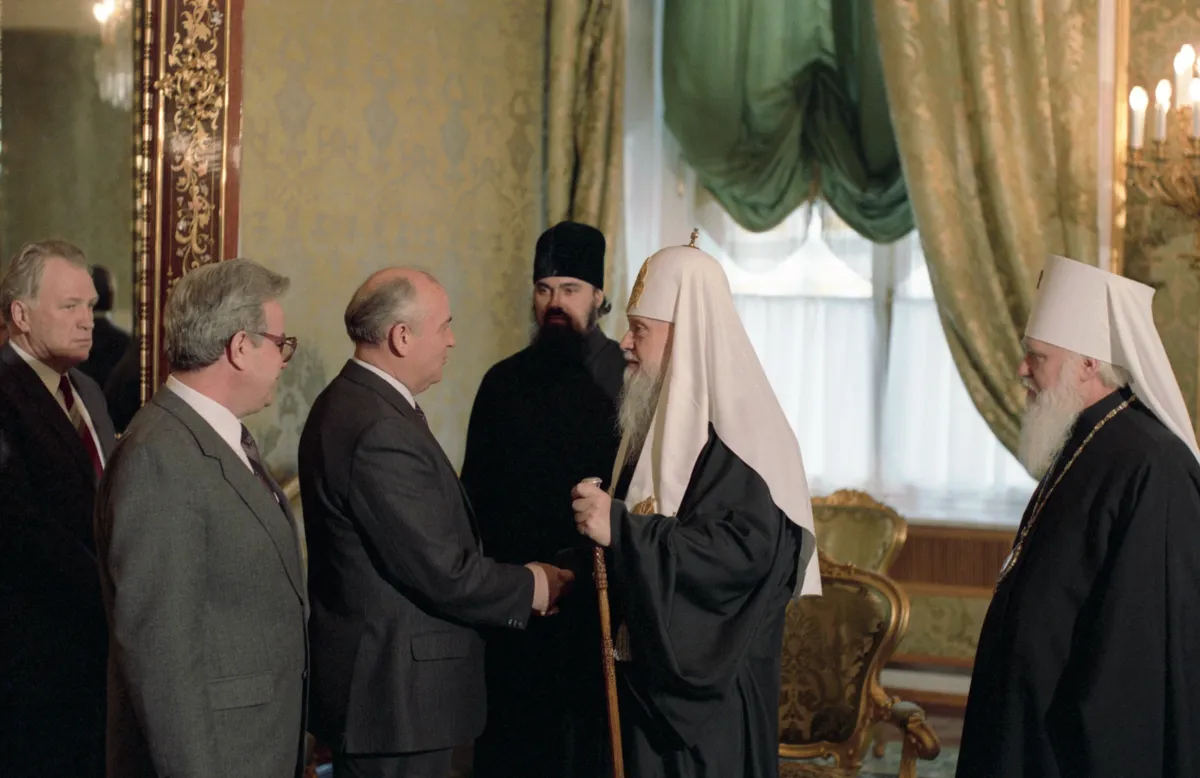
The leadership of the Russian Orthodox Church, then headed by the elderly and deeply sick Patriarch Pimen, clearly did not keep up with Gorbachev's reform pace. Only in the fall of 1989 did it decide on the canonization of the first saints affected by the Soviet atheistic persecution - the Petrograd Metropolitan Vladimir and the Kyiv Metropolitan Benjamin. Although the process of complete rehabilitation of victims of repression and condemning the horrors of Stalinism was in full swing in the country. This catastrophic lag, obviously, has become one of the reasons for the popularity in the last years of the USSR both “alternative” movements of Orthodoxy and all kinds of Protestant and syncretic religious movements such as “White Brotherhood”*or “Aum Sinrika” **. By and large, perestroika reached the Russian Orthodox Church only with the election of the new Patriarch in June 1990. But Alexy II was the flesh from the flesh of the party-kettle system and, with all the effort, did not have time for the stormy stream of history. For example, in October 1990, he granted the independence and independence of the Ukrainian Church-after thousands of parishes of the Russian Orthodox Church in Ukraine have already moved to the AGCC or UAPC. The solution to the issue of the canonization of new martyrs, glorified by the ROCZ back in 1981, stretched out before 2000.
Was it just a dream?
One way or another, but by the end of the history of the USSR, a “fashion for religion” was outlined in society - to call yourself an atheist even somewhat indecent. The new Russian authorities in their own way disposed of this heritage of Gorbachev’s democracy. PR and political instrumentalism came to the place of ideals and values. Among the faiths, privileged and persecuted (communities that moved from the Moscow Patriarchate to the ROCZ, began to be systematically selected since 1992), intensified the control of the special services over religious life, the total commercialization of the Russian Orthodox Church began, its transformation into the ideological servant of the authorities. We have not been written about what ugly forms have gained these trends in Russia of the 21st century, we will not repeat. It is enough to say that the self -identification of the “atheist” again became fashionable, even a kind of spirit of political protest blows from it, and thousands of temples transferred to the Russian Orthodox Church are half empty - the massive influx of parishioners has long ceased. New temples are built on the initiative of the authorities and are increasingly “departmental”.
Perhaps, from all the lost heritage of the Gorbachev era, the loss of spiritual freedom is the most tragic phenomenon. It was it, in the words of one priest-emigrant, that weakened the knees of the people.
* Organizations are recognized as extremist and banned in the Russian Federation.
** Organizations are recognized as terrorist and banned in the Russian Federation.
Do not miss!
This material will be released in the next, fifth, number of “new story-gazeta”. Follow the announcements on the site.