
Translated material
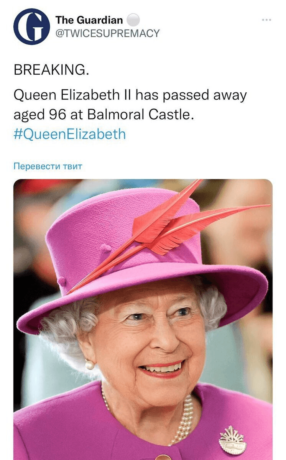
Russian media reported on the "death" of Elizabeth II with reference to the fake twitter account The Guardian
The source was checked after the publication.
On September 8, the UK authorities reported a sharp deterioration in the health of Queen Elizabeth II. For several hours the situation was heated - while members of the royal family arrived in the Scottish castle of Balmoral, the media around the world tried to find out details about the state of the monarch.
The already tense situation was aggravated by the messages of some publications: someone paid attention to the hints of British journalists (the so-called “mourning change in design” on the BBC website, which was always black), someone found tips in the cancellation of service in the Buckingham Palace, and someone simply prepared notes in memory of Elizabeth II in advance.
According to the plan of the British authorities in the event of the death of the queen, the BBC does not have a monopoly on the publication of the first note-after notification of the Prime Minister and representatives of the Commonwealth countries, the news will be transmitted to several world media at once. Therefore, Russian journalists monitored information from various sources, mainly from the official broadcasts of The Guardian and the same BBC.
At some point, the first notes on the “death” of Elizabeth appeared in the news telegram channels and other social networks. At first it was single news, but with every minute their number grew, and the fake was distributed by more and more popular and readable publications. Some did not indicate the source at all, others referred to The Guardian (but without a direct link), others as evidence attached a screenshot from Twitter of the British media.
Telegram block is not availableHowever, the screenshot was obviously not the official account of The Guardian: the owner of the page dedicated to the Korean pop group TWICE-directly under the name of the account, is visible, the original nickname TwiCeupremacy, and instead of the official tick, on the contrary, there was an emoji with a white circle opposite the name.
When the deceit was revealed, those who wrote about the “death” of the publication denied the news in different ways: some just tried to quickly remove the fake without any additional comments, others admitted that the The Guardian account was fake, and the third wrote that “the British edition deleted the post”.
In social networks, they began to ironize over publications that did not check the source before publication.
#social networks #news #UK