
Translated material
"Russian is not Putin's language"
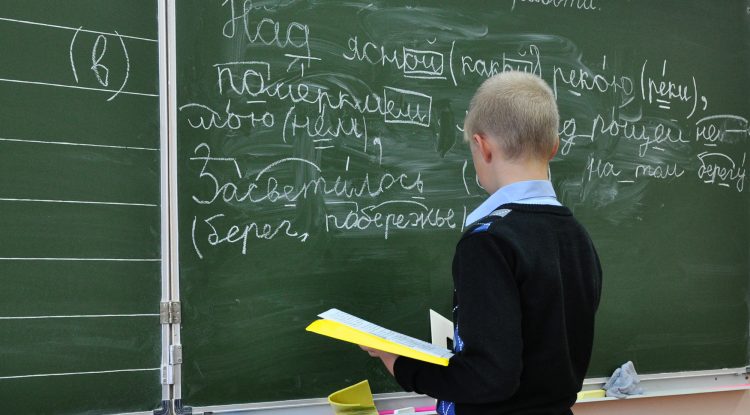
Teachers of Russian from different countries - about whether the war reduces interest in their subject
In September, Russian teachers in Finland noted a decline in the interest of students in the study of the Russian language because of the war in Ukraine. “Cold” talked with the teachers of the Russian language in Israel, Spain and the USA about how their students reacted to Russia's invasion and whether the war affects interest in their work.
Marina Nyznik
Russian language teacher at the Israeli school and the coordinator of the Russian program at Tel Aviv University
My students taught Russian because they wanted to go to Russia: someone dreamed of traveling along the Trans-Siberian Railway, someone to visit Moscow. Many wanted to go to their homeland of their grandparents. I don’t think that this year people with the same motivation will come to study. Some of my students studying the language for tourism purposes have already informed me that “everything was cool”, but next year they would not return because they wanted to go to Russia, and now they will not go. I hope that it was said in the hearts that they would return.
There is no doubt that when recording on the course, people will now take into account the war. At the same time, those who study the Russian language because of the need for specialty or family reasons, no Putin will take this opportunity.
In Israel, there are a lot of immigrants from Russian -speaking families from Russia, Ukraine, Moldova and Belarus. This specificity was taken into account in the development of teaching programs in Israeli schools, in many of which Russian is studied as a third language. The classes have already begun in schools, and nothing has changed. Where the Russian language was taught, they continue to teach it. To date, we see only an increase in the number of Russian -speaking students through repatriation.
For the Israeli, the Russian language is not the language of Putin and not only the language of Pushkin and Dostoevsky. This is a language of about one and a half million Israeli citizens. For my children, this is the language of their mom and dad, for someone it is the language of their grandparents. I think that those who make decisions in Israel will have enough common sense so that no courses can not be canceled, because everyone understands that this is not about the relationship with Putin, not about the attitude to this criminal war - it will be just a gesture of disrespect for the Russian -speaking Israelis.
Julia Amlin
The head of the Online Schools Russificate and RussianCificate Kids. Teaches Russian as a foreign language from Spain
I work with adults who want to learn Russian or pass exams, as well as I am engaged with children-bunning children.
Children both studied the language, and continue, because it is the language of their parents. But the demand for Russian as a foreign language in adults was somewhat slept. But we do not feel a sharp outflow. Starting from February 24, new students came to us.
The fact is that in many European countries, official centers of the Russian language are closed. This happened in the Netherlands. In addition, many centers were closed due to the loss of Russian financing. And the people studying the Russian language in these centers, after their closure, came to us.
At the end of February, we sent a letter to our students and posted an appeal on the site, which said that we did not support what was happening [war in Ukraine].
It seems to me that many foreigners share the state rhetoric of Russia and culture, language. They see that, for example, volunteers who help refugees speak Russian. Therefore, the students did not have questions for us, they refused to continue their studies for political reasons for only a couple of people.
Irina Barclay
Lecturer of the Russian language and literature at the State University of Appalachs in North Carolin, USA
The existing political context did not affect my work at the university. I had as students, so they are. I can’t say that interest in the study of the Russian language is high, but it is indisputably preserved. Of great interest among the local public is the study of Russian literature, any Russian authors. Among the Americans, the late works of Tolstoy, the work of Pushkin, Shalamov and Akhmatova are genuine and lively attention.
Some of my students were adopted by the Americans before the adoption of the "law of Dima Yakovlev." Their desire to preserve their ethnic and linguistic roots does not fade away. And the Americans themselves, too, are happy to study the language and make success in this. One of my students now writes the thesis on the topic “Russian language in Ukraine”.
Of course, there are refusals. I studied a girl from Kharkov, she knew the language well, because she had a Russian -speaking family. But because of the attack on Kharkov, her relatives were forced to leave Ukraine to Austria, and she said that she would no longer study Russian.
I consider talking about the fact that foreigners ceased to respect Russian culture, unreasonable. While we continue to hear that the Russian culture was canceled there and the HEM, the Americans on Independence Day are listening to the overture of “1812” by Tchaikovsky.