
Translated material
"In fact, everything is very bad"
What happens to the transit of goods to the Kaliningrad region
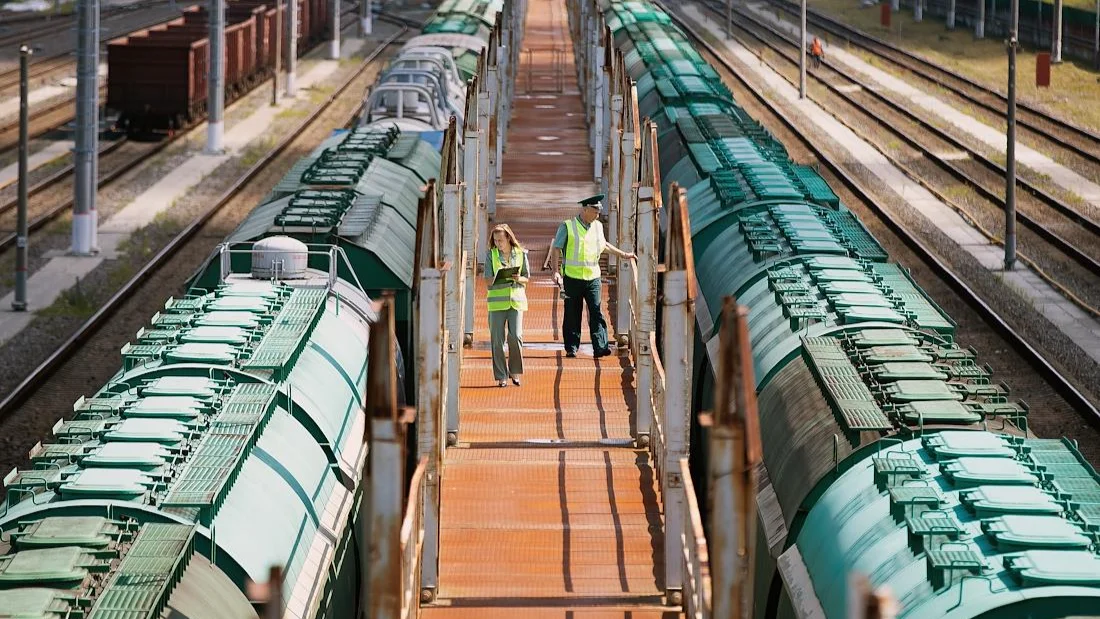
In the second half of June, due to the sanctions of the European Union, the authorities of Lithuania banned transit through their territory most of the goods-those that went to the Kaliningrad region from continental Russia. Up to 50% of all goods fell under the restrictions. Moscow expressed a decisive protest, but the charges were addressed not so much to Brussels as the official Vilnius. For several weeks, stress reigned in the air, the world media seriously reasoned whether Lithuania would become the place where the Third World War would begin. Russian politicians fueled the degree of passions, but the Lithuanian government refused to compromise. In the end, the European Commission intervened - the EU made concessions. The ban on the transportation of suction goods between the two parts of the Russian Federation was canceled, but with reservations. Relief of Lithuania’s official authorities submitted to the decision, but the problem did not end there. What are they? How does business react to the situation? And how does this story develop? Journalist Denis Kishinevsky understood the details.
The essence of time
Railway and automobile transit to Kaliningrad by suction, from the point of view of Lithuania, goods were stopped from June 18. The restrictions came into steel, cement, tobacco, alcohol, wood, coal, some types of chemicals, luxury objects, caviar and oil products. The Russian authorities and the state media called this a blockade, the official Vilnius denied such a wording, emphasizing, firstly, that the restrictions do not affect all the goods, secondly, that they stop the transport in stages, and thirdly, that Russia was notified in advance-the fifth package of the EU sanctions approved in April. And although the authorities of the Russian Federation initially stated that restrictions were not extended to the movement between the exclus and the “large land”, it soon became clear that this is not so.
After a partial stop of transit, the exacerbation in Russian-Lithuanian relations reached a new level. Open threats fell into Lithuania. If you track the messages dedicated to Lithuania in the Russian media from mid-June to the second half of July, we can conclude that the Lithuanian agenda at some point even overshadowed the Ukrainian one.
At first, Russian Senator Andrei Klishas spoke threats. He stated that the decision to block transit "may become the basis for very stringent and absolutely legal actions from Russia." Following him, Senator Andrei Klimov spoke out in a similar way. After that, no less sharp warnings of the ultimatical sense from the press secretary of President Putin Dmitry Peskov and the official representative of the Ministry of Foreign Affairs of the Russian Federation Maria Zakharova followed. The statement of the Secretary of the Security Council, the former head of the FSB Nikolai Patrushev, became even more tough. On June 21, he flew to Kaliningrad, where he held an unscheduled meeting: “Russia will certainly react to such hostile actions <...>. Their consequences will have a serious negative impact on the population of Lithuania. ”
It would seem that such a threat expressed by the most influential and closest figure to Putin among the security forces should be taken seriously, but the Lithuanian government took a different position.
According to Vilnius, a warlike message of senior Russian officials was addressed to the internal audience - Moscow bluff, and "Lithuania does not expect a military confrontation with the Russian Federation."
This opinion was voiced by the President of the Republic of Gitanas Nauceda in an interview with Reuters.
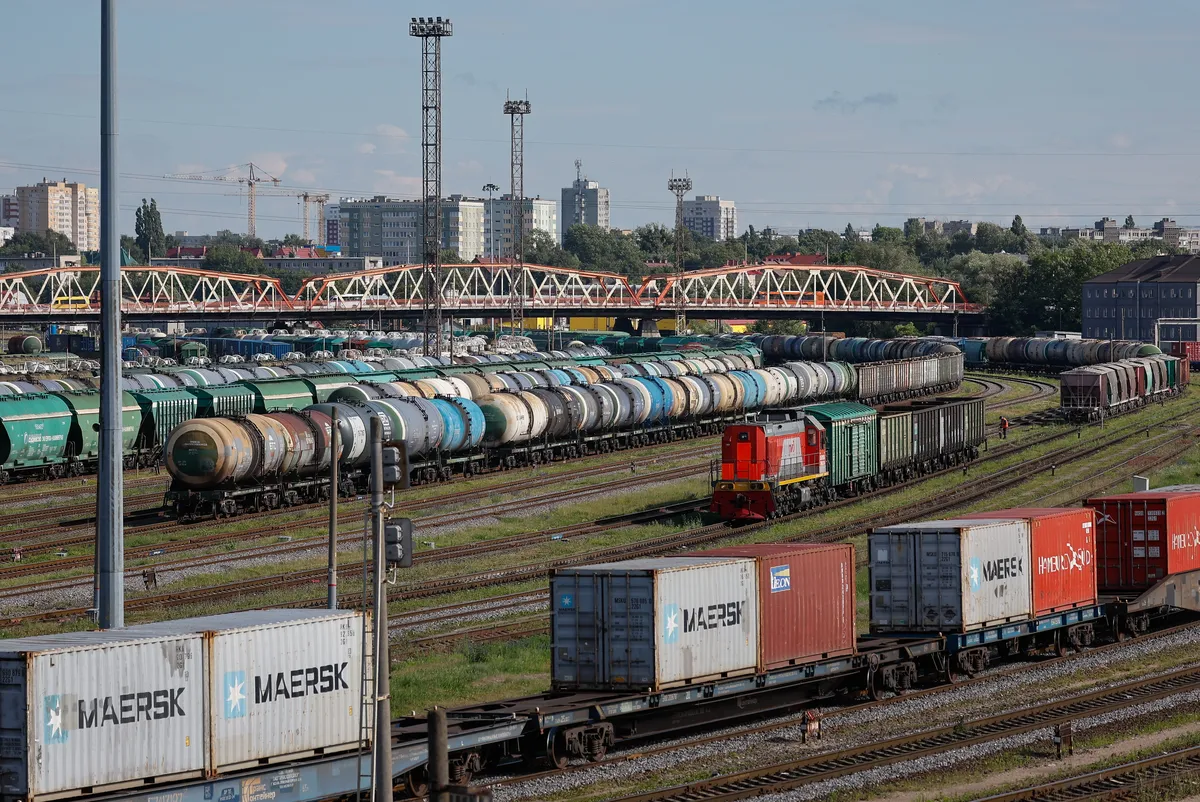
Vilnius’s position was adamant: Lithuania adheres to the policy of sanctions, transit decisions were adopted at the level of the entire European Union, the country did not introduce any unilateral restrictions, so Moscow reproaches are incomprehensible.
Not everything is so unambiguous
On the other hand, it cannot be said that Lithuania herself managed to avoid discussions on this topic. The opposition of the Cabinet of Council and the ruling majority in the person of conservatives and two liberal parties does not share. Former prime minister (2016–2020) Saulus Sprinkalis stated that the authorities could implement the sanctions package differently - the whole question in reading. The ex-Prime Minister (2012–2016) Algirdas Butkevichus also held the same opinion.
In the camp of those who do not share the position of the Cabinet of Ministers, the former Minister of Foreign Affairs of Lithuania (1992–1996) Povilas Gilis is also located.
“Now the goods are moving from one territory of the Russian Federation to another. According to the agreement between the EU and the Russian Federation - through the territory of Lithuania. This is not an export of Russia against which sanctions are applied.
<...> Lithuania pledged to pass transit goods through its territory to the Kaliningrad region and in the contract between the Republic of Lithuania and the Russian Federation. Thus, there are two international agreements on this issue, ”he wrote on social networks.
The first documents about the transit through Lithuania were accepted precisely at the time when Gilis headed the Foreign Ministry.
Third -party observers also dispersed in assessments of the actions of the authorities. So, the doctor of law, the former head of the Lithuanian advocacy, Ignas Vegele called representatives of the ruling conservative liberal block by almost arsonists of the war. He wrote that the current government deliberately provokes Russia to an “aggressive reaction”, thus trying to rally allies - to attract attention and fill the price before the NATO summit in Madrid, where the issue of deploying additional forces in the region was then decided.
On the other hand, Vegele is not the only expert in the field of law. His substantive, the ex-head of the Constitutional Court, Dainus Jalimas-on the contrary, publicly emphasized that Lithuania acts absolutely correctly, and any proposals for concessions on the issue of anti-Russian sanctions are beyond the scope of the law.
“There is absolutely enough what was spelled out [in the sanctions package] <...>. For example, it states that Russian products made of iron and steel cannot be transported through the EU, so there is no difference whether the goods are going through Lithuania or through another state. You just need to not miss its [products]. Why then do you need sanctions at all, if we look for, how is it more convenient for Russia? If there are sanctions, then there must be inconvenience. If they are significant, then the sanctions have reached their goal, ”he said .
Despite the fact that the ruling people along with the prime minister and president were firmly held on the threat of a great war, which could lead to the risky steps of the government, a lot of spoke in the country. In the world media, this topic was discussed no less. The Politico magazine, in particular, issued a large article about Lithuania as the point of a possible new military conflict between the Russian Federation and NATO. The material accompanied by a frightening illustration was entitled: "The most dangerous place on Earth."
Lithuania, Lieutenant General, the former commander of the Lithuanian army, a war veteran in Afghanistan, Valdas Tutkus, also stated the undesirable position of Lithuania on the issue of transit. He spoke out as follows: “If, as a result of our value steps, the Russian tank will stand at our borders, I do not need such a value policy.”
The line in this discussion was the European Commission. On July 13, Brussels said that Russia is allowed by transit of suction goods through the EU countries, but only by rail.
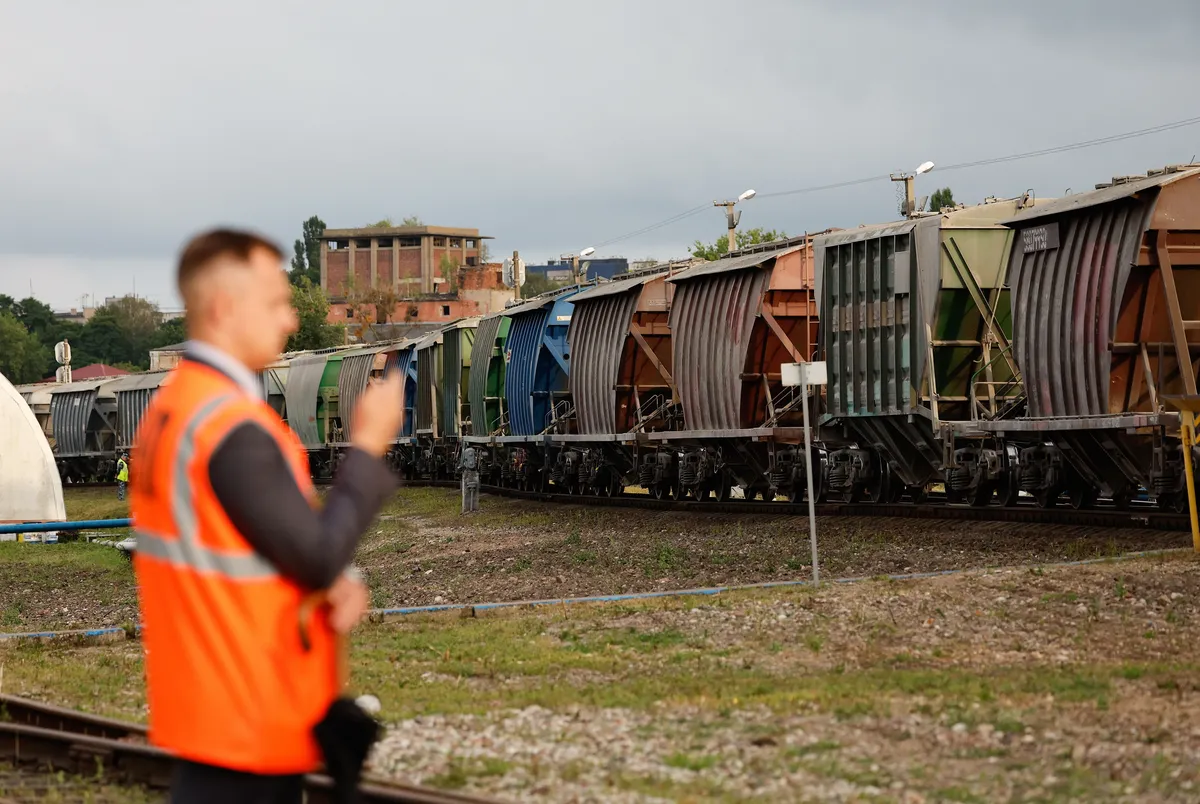
On July 26, the first train with a forbidden load arrived in Kaliningrad. In Lithuania, this decision was perplexed by many, first of all, at the electorate of the ruling parties, but the authorities nevertheless accepted it calmly, making it clear that they could not but obey Brussels.
Not the end
Despite a number of nuances, the authorities of the Kaliningrad region positively appreciated the decision of the European Commission. It seemed that in general the conflict was settled, but very soon new problems arose, and this time there is a risk that transit would stop completely. It is not only about suction products, but also about passengers and food.
The key question is payment. The problem is that
The Lithuanian Shaulyay-Bank, through which all transfers were carried out, refused to accept payments for railway transit from September 1. Bankers fear that they can fall under American sanctions.
The Lithuanian government, in turn, could not give an answer for a long time whether it was possible to receive money from the Russian Federation or not, however, on September 1, the State Forest Party “Lithuanian Railways” (doubles) nevertheless received the September fee for cargo transportation to the Kaliningrad region. True, 2.5 million euros introduced by the Russian Federation will be enough for only 3-4 weeks of transit. What will happen next is unclear. Governor Alikhanov proposed to open a special account in the Lithuanian treasury, but Vilnius refuses.
Meanwhile, on September 1, Shaulyay-Bank officially stated that he was terminating any banking relations with Russia.
True, on August 29, the same Alikhanov stated that the decision with payments was found, but so far no one in Lithuania or in Russia has commented on this thesis.
So far, it is only known that European commercial banks, like Lithuanian ones, do not want to open bills for payment for transit to the region. This was announced on September 1 was announced by the head of the end of the end of Egdiyus Lazauskas.
Another problem is the limit of goods that can be delivered to an exclus through Lithuania. The clarifications of the European Commission of April 13 states that “the member states should check whether the volume of transit remains within the limits of historical average values over the past three years, in particular, reflecting the real demand for primary necessity at the destination, and whether there are unusual flows or trade models that can lead to a detour of restrictions.”
The press service of the regional government states that the restrictions on the transport is not a problem, since "all the goods that do not go through the limit are now calmly traveling with ferries." However, this is not entirely true.
Sea corridor
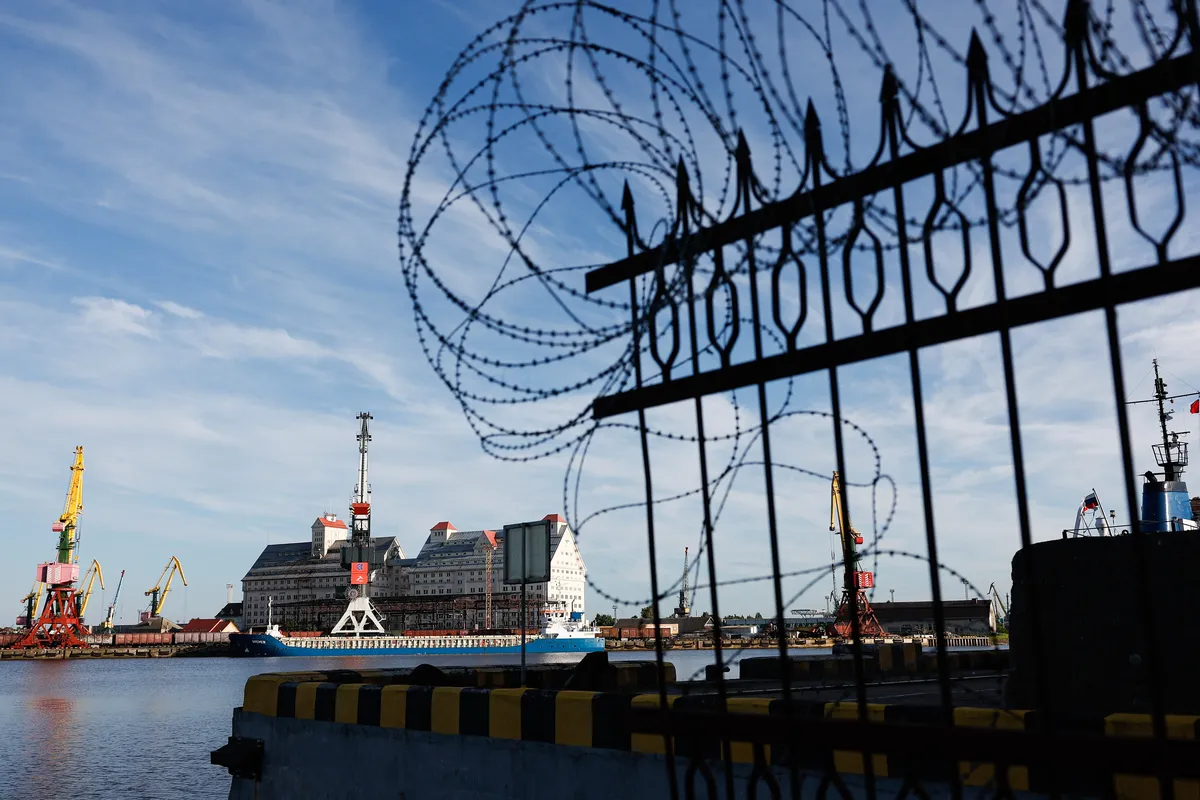
On ferries of the regional authorities are assigned basic hopes. By sea, Russia can deliver goods freely, but there are not enough vessels. The need to increase the amount of sea transportation and significantly reduce dependence on ground transit through Lithuania has been talking for many years, but in reality progress has been outlined only in the spring of this year. Earlier, only three ferries cruised between the excan and the Leningrad region, at the end of April, another dry cargo ship earned on the Ust-Luga-Luga line. Currently, nine ships are made between the region and continental Russia. In late September - early October, the latest “General Chernyakhovsky” steam should come to Kaliningrad, but its capacities are not enough.
For domestic consumption and processing, excesses annually need approximately 20 million tons of cargo, and this, according to Alikhanov himself, “plus minus 20 ferries”.
The goods are delivered by the sea along two regular lines: Ust-Luga-Baltiysk and Bronka-Kaliningrad. On the first route, the barns, Baltiysk and Marshal Rokossovsky, as well as the Ursa Major dry cargo, work on the first route. On the second, goods are transported by Kholmogory, Captain Mironov, STK-1004, STK-1019 and StK-1023.
On September 1, at a meeting with the governor, Putin promised to make transportation to Kaliningrad convenient and economically appropriate. And Rosmorrechflot on the eve of the subsidy of transportation of socially significant goods. The nomenclature will be determined by the region itself.
The word business
The main problem of transportation by sea is time and additional costs. On average, the cost of sea transportation increased by 20-30%. In addition, even taking into account the restored railway transit to some enterprises, this will not help.
“90% of our materials were delivered by vehicles. Therefore, until they open the car, we will not be better. The deliveries of the main positions are limited - these are metals, we bring them to relatively small quantities, ” said Dmitry Niklonsky, chief designer of the Sudorybtehmash Kaliningrad company.
Entrepreneurs are embarrassing additional checks on the border with Lithuania, and transporters in continental Russia are afraid to work with the region due to the risks of losses.
With subsidies, too, not everything is so simple. So far there is no desired number of ferries, such a benefit contributes to the formation of queues that are already large.
“What can be carried by car and railway transport will begin to redirect the ferry, and nightmares will turn into hellish terms. Subsidizing, of course, is necessary, only now what to do with the delivery time? " - the general director of Stalkor Andrei Bykov is outraged.
“On September 3, we received a container that stood in the port from August 1 - there was constantly not enough space. 33 days on the way! Previously, there was so much from China, now from St. Petersburg, like from China! - Entrepreneur Svetlana Krasnopevtseva writes in social networks, demanding from officials to answer the question when and how much the number of ferries will increase. “I just don’t understand why authorized people in all media trumpet about how we all live perfectly here when everything is really very bad!”
The Kaliningrad Business Ombudsman Svetlana Nizhny Novgorodova in a conversation with Novye recalled that the sanctions hit the region more than other subjects.
More than 70% of small and medium -sized businesses suffered from restrictions, primarily the manufacturing industry, since the region was focused on the production of products from imported components.
As for the removal of restrictions on railway transit, it cannot be said that everything is smooth.
“The business was rather adjusted to the current situation, but talking about normalization would be wrong. However, we must pay tribute to the regional government - the marine message has really become more developed than it was recently. Logistics is the main problem for our region. The Kaliningrad business still mainly carried its goods on the land, and not by sea. Some of the products now continue to go land - by rail, but I must say clearly and clearly: the blockade by the Lithuanian authorities has not been completely removed. The limits of the transportation of sanctions goods indicated by the Lithuanian Republic are too small to meet the needs of the region, therefore, for many entrepreneurs, railway transportation is not available, ”says Nizhny Novgorodov.
Ambiguity
The Lithuanian side with the wording of Nizhny Novgorodova does not agree. The Foreign Ministry emphasizes that the limits are established by the European Commission, and not the Lithuanian authorities. The problem, as it was more than once, is interpretation. If in the Russian press EU explanations in transit are most often called “recommendation”, then in Lithuania they are translated as “guide to action”. In the original, the document is called: Guidance to EU Member States, and since it is presented in publicly in English, the ground for manipulation appears.
By the way, earlier the newspaper Financial Times pointed out that the “blockade” was mainly to blame for the ambiguous formulations of the European Commission.
On the other hand, the mentioned former chairman of the Council of Lithuania Lithuania, Ignas Vegele, believes that it is the leadership of the Republic of Lithuania that is incorrectly interpreted by EC.
“Once again, the European Commission extinguishes Lithuanian diplomacy: [Brussels] claims that the quotas [limits] are only advisory, and the issue of receiving payments should be resolved by the EU member itself, that is, Lithuania itself. The story has not ended yet "
- He writes on his page on Facebook*.
However, in the official representative office of the EC in Lithuania, we were made to understand that the authorities are acting according to the adopted attitudes.
“Officially, Brussels have no complaints about Lithuania. The clarifications of April 13 clearly say that EU member countries “should check whether the volume of transit remains within the limits of historical values over the past three years”, therefore, the statements of Mr. Ignas Vegele, softly, are not entirely correct. We do not agree with such an assessment, ”said our source in the European Commission.
The crisis is worse than during the pandemic
The key difference between this crisis and 2020–2021, when there was a pandemic, is that it hits large industry - the locomotive of the region’s economy.
“This is a crisis of industrial and large business, and a small business suffered during the coronavirus. Production enterprises are most difficult, since they cannot quickly rebuild the process - the established supply chains fell apart. In addition, many European partners completely abandoned cooperation, ”says Nizhny Novgorodov.
Nikita Kuzmin, editor -in -chief of the Kaliningrad business portal, also believes that the problem with the “blockade” is not allowed.
“The fact that they are now again launched on railways is primarily intended not so much for business as for the so -called state construction projects. For example, the Presidential Cultural Center now under construction. The enterprises got a little. Since the business still does not understand whether the Russian and Lithuanian side has found a decision on the issue of transit payments, the mood is careful, ”says our interlocutor.
He shares the pessimism of the Ombudsman about a large business - industry really suffers stronger than everyone.
“Small business, due to its small volumes, may fit into some total deliveries, so we do not see bankruptcy reports. Что касается крупных игроков, все заявленные проекты по строительству заводов, фабрик или расширению производств аккуратно откладываются.
Пока нет понимания, как возить сюда стройматериалы в достаточных количествах и по адекватной цене. Цемент в Калининградской области стоит в три раза дороже, чем в Санкт-Петербурге, хотя мы одна страна», — сетует Никита Кузьмин.
В качестве одного из примеров он привел корпорацию «Росатом», которая приостановила строительство завода по производству аккумуляторных батарей: «Говорят об изменении графиков, но, по данным источников, проект отложен, так как нет понимания, как быть с поставками. Аналогичная ситуация с индустриальными парками».
Проблемы испытывает и автомобильная промышленность — одна из важнейших отраслей экономики региона.
«Наш «Автотор», как и вся российская автопромышленность, находится в отложенном состоянии. Даже по цифрам Росстата видно, что за последние полгода в регионе огромное падение производства, которое формировалось как раз за счет деятельности холдинга», — пояснил эксперт.
Также Кузьмин рассказал, «Они хотят ответных, то есть зеркальных санкций. Настаивают на том, чтобы европейские перевозчики после пересечения границы загоняли фуры на логистический склад, где товары будут перегружать — отдавать россиянам. Такая инициатива рассматривается».
Запрет на въезд в Россию тягачей из ЕС, по данным источников в Минпромторге, может вступить в силу с 1 октября, но это не точно.
В четверг, 15 сентября, находящаяся в управлении государства литовская группа железнодорожных компаний ЛЖД заявила, что Россия и Беларусь должны сами позаботиться об оплате услуг по обеспечению транзита грузов (в том числе в Калининградскую область), иначе компания LTG Cargo просто не будет заниматься их транспортировкой.