
Translated material
“They stole everyone in a row. One horse was stabbed. Got drunk and fell for other Russian soldiers "
The occupation of Elena's eyes - a resident of Balakli, who was under the control of the Russian military for six months
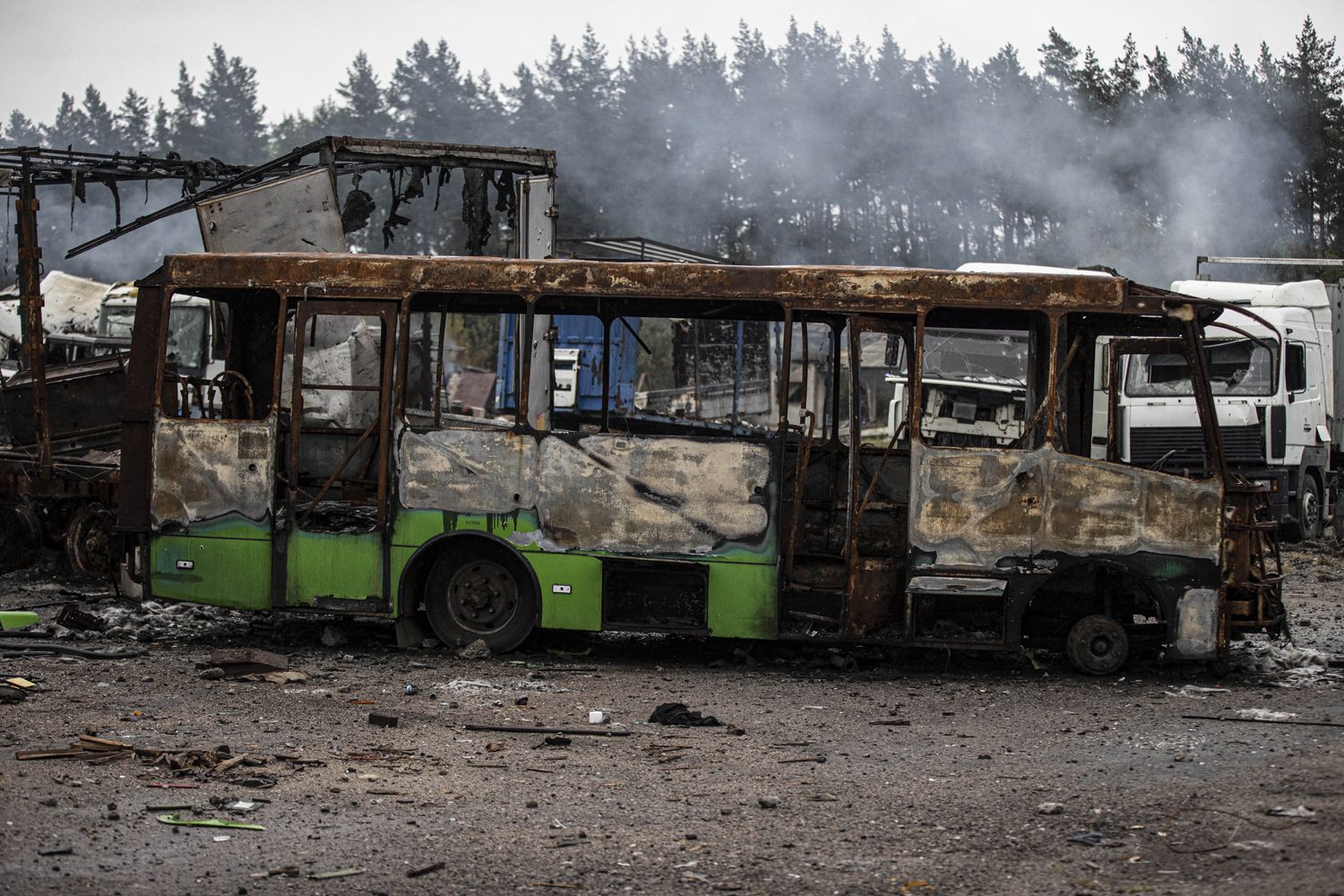
The counterattack of the Ukrainian military forced the army of the Russian Federation from the Kharkov region. Many cities and villages in this region have been in the occupation for more than six months. One of them is the city of Balaklia, which the Russian military occupied on March 2. 56-year-old Elena left Balaklia a few days before her release, September 8. She kept notes the entire occupation, and now told the Belarusian publication Mirror about torture in the police department, collaboration and the promise “Russia here is here forever”, which did not come true. With the permission of the Medusa publication, Elena completely publishes the story of Elena.
"I put on a cap and glasses so that they would not see hatred in my eyes." How Russians settled in the city
When I first saw the Russians, they walked along the central street of Council. I looked from the fifth floor, shot on the phone. They moved slowly, in front - tanks, followed by infantry. Armed, equipped. I don’t know what kind of troops they were.
First they were accommodated in the prosecutor's office. When it flew there, they relocated. Where they were sitting, leaflets "the police are looking for them." In the central market - pictures about the "Nazis", "ukronacists" who "oppressed us", and Bandera. They organized a military police, periodically said something to Megaphone.
There was often no connections in the city-more or less caught for children's clinic and on the Komsomol ladder. And so everything was jamming, there was only one wave of radio. There, between the Russian and foreign songs, the voice of Levitan read out the manual how to behave in the occupation: “If you see a Russian soldier, you can approach him. And he will help you. ” They turned to Ukrainian soldiers with instructions on how to surrender to them: to surrender weapons, lie down, hands behind their heads and so on.
I tried to walk down the street in the morning and quickly. I put on a cap and glasses so that they would not see hatred in my eyes. At home, if there was light, we watched the TV: they connected to the satellite antenna, because the Russians pulled out all the wires of cable television and the Internet.
Everyone spoke Russian - God forbid in Ukrainian. In the market, I approached my friend and said in my ear: "Glory to Ukraine!" She turned around and in a whisper: "Glory to the heroes!"
Near the music school they put a checkpoint. There were Buryats and the military self -proclaimed LDNR (they could be recognized by the ugly form), and the Russian Guard. The Buryats were the worst of all: they did not speak Russian, were the most equipment. You go by, on your back a backpack, I will meet you 10 Buryats with machine guns. Naturally, you feel uncomfortable. You think: well, if they shoot, maybe at least in a backpack, and he will save you.
At the checkpoint, it was necessary to show a passport. Could search. The men were more carefully checked - they watched the presence of tattoos, especially among young people. If they did not like any tattoos, these boys disappeared. Therefore, the men tried not to go out at all.
The Balaklia itself was divided into three parts: the camp "Camps", the city center and the so -called village of Neftyanikov. The latter was the most separatists. There were grandmothers-grandfathers, and even younger people, 45 years old, who washed their brains very well. If the light was cut down, the Rashists said that it was Ukraine. If the water disappeared - again: “You see, Ukraine turned off the water to you. You are cut off from everything and no one needs. We came to protect you, Russia is here forever. ” It was they who crushed people in the head, and also crushed a fuel-fingering fiery. Many have watched Russian television channels for years, and now they ran with the Russian tricolor. Some girls cohabited with the Russians. In the houses, the elders were chosen, some of them went around the apartments and settled in the empty military.

"They took and took people with a bag on their heads - apparently to be terribly different." Whom and for what they tortured in the basements
In the village of Neftyaniki, they were the first to cooperate with the invaders. And if you were against it, you could give you your classmates with whom you were sitting at the same desk. My friends, husband and wife, also passed: supposedly they are gunners. They came to the man with a search, found something on the phone. They took both, they are 35 years old. They kept for five days, passed the phones, laptop. When they were released, they immediately left, because it could happen both the second and third time, and you could no longer go out.
At the beginning of the war, there was still the Internet, and some people shot something about Russian soldiers or equipment in the city and laid out on social networks, without removing geolocation. They came to them home in a week or two. They selected the phone, they could "throw it onto the pit."
“Pit” is a basement in the police department, now terrible videos appear from there. The neighbor told, screams of both men and women were heard there. On the contrary, in the printing house, they kept people. One friend of mine was sitting in another place, a comrade also passed him: allegedly he took out some kind of equipment. He was pressed for three weeks, did not feed, knocked out the tooth, beaten the liver. After some time, when they released, he went to cooperate with the Rashists, and they appointed him the director of the greenhouse. But then again they grabbed and threw into the basement for another five days.
Even women were taken 60 years old. One was just taken from the garden: they put a package on their heads and took it somewhere. By the way, they drove around the territory of the district and released people from there with a package on their heads. Apparently, to be terribly different.
They could also take away if a person staggered through the streets during a curfew, but the most active people often disappeared, pro -Ukrainian. Among my friends there are many such cases. In the publics of Balaklia, posts with the search for the missing periodically flash.
Some boys were taken away, so we did not see them more. Here is Artem, who was very pro -Ukrainian. He disappeared at the very beginning: supposedly also found symbols, flags. And two more guys - they volunteer, and in early March they greatly pressed for it. The three of them have not yet been found. Like our entrepreneur, deputy of the Freedom party. True, another freedom was released, he left for Germany. But if a person belonged to some political party, as the Russians said-the "dill", he was also taken away. They had lists.
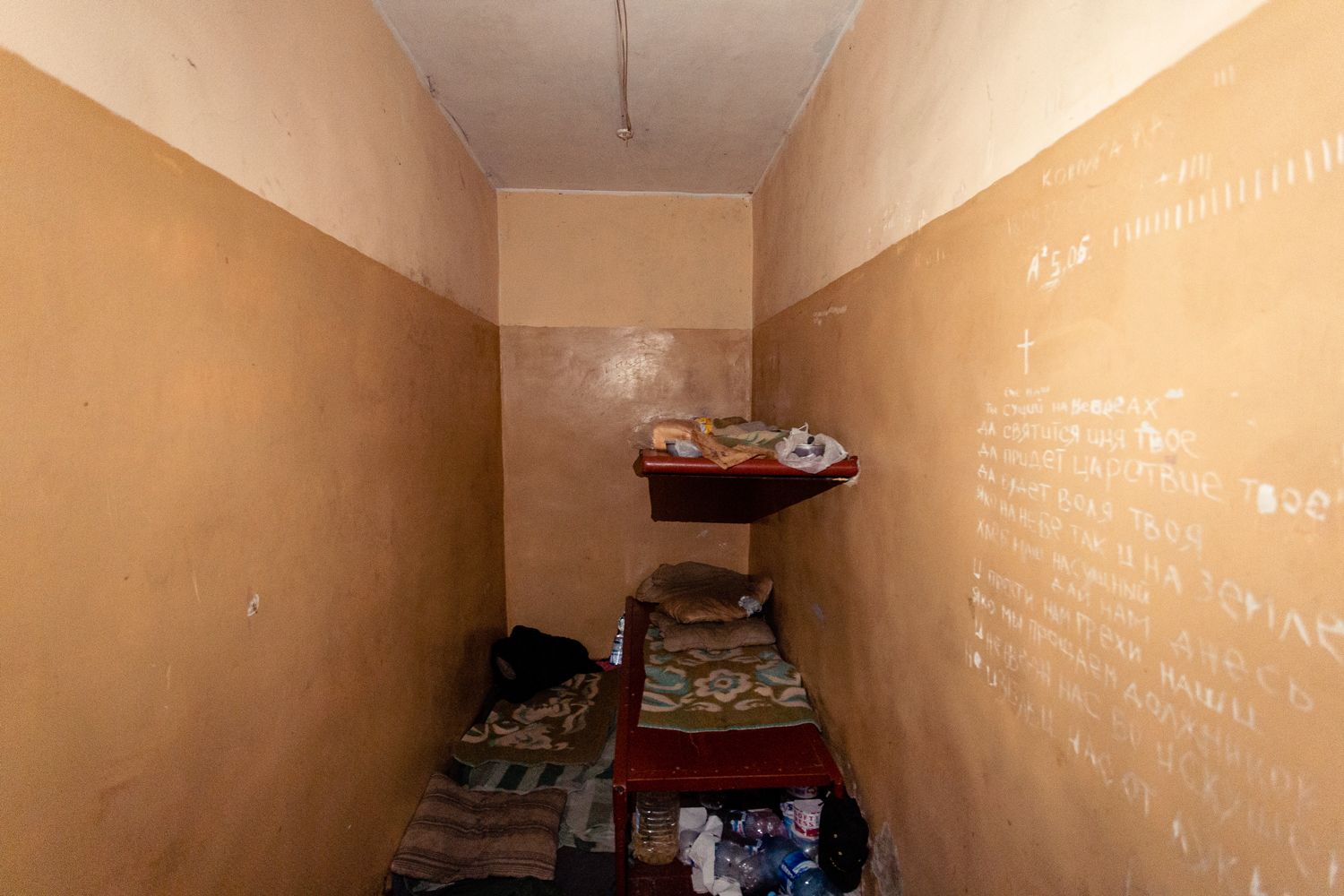
They said that on the territory of the ATB supermarket, which we were repaired, we allegedly found corpses. But this was still under the rashists, I personally did not see - I just heard.
In a music school, the Russians arranged a hospital, there were their doctors. They brought the wounded military, there were a lot of "three hundredths." Several times we even saw black bags with what was left of them. The trash stood with bloodied bandages and their green dryers. After arrivals, they moved the hospital to another place.
Our hospital stands in the forest, it was partially destroyed, there were almost no doctors, but our local sometimes turned to this hospital for help. My acquaintance hit the fragment in the hand, there was no choice but to go there. He was operated on, then they made dressings. The clinic also worked, but only the first floor - there were mainly dropped droppers there. And on the second they also had the military. There are several family doctors in the children's clinic, they could take at least some pills, baby food and diapers. With serious injuries, they sent to Kupyansk .
My phone stood on vibration for six months. I did not take him to the street-I put it in an aircraft mode before going out and hid somewhere in the apartment just in case.
"They blew up half of the garden - the husband buried the funnel for three days." That she survived Balaklia under shelling
The military in the city traveled on tanks, armored personnel carriers and cars squeezed by the population. Naturally, without observing the rules: they are power, "liberators!" Once, drunken rashists crashed into a fence, and children played nearby-they were not affected by a miracle.
The Buryats, just like they write on the Internet, stole everything in a row: microwaves, even electric kettles without stands. We went into the houses and demanded a wifi if they had to call. One horse was stabbed. Sometimes they got drunk and began to shoot other Russian soldiers, there was such a random shooting. They then came to the locals and threatened: "You will sell alcohol to them - we will throw you grenades."
The military, used to drive the mortar in the private sector and shot stupidly in three or four o’clock in three or four hours. Sometimes it was possible to sleep up to six, if you were lucky. And that’s all, Balaklia “got enough sleep” - for half an hour you will listen to loud sounds of departure, as if this crap is standing and banging in your yard. Then they could repeat in the evening. You go to bed and think: well, shoot already and finish so that we sleep.
And the worst thing was in March, when our Russian military plant was thrown by two hundred -kilograms with bombs and the whole house cowardly.
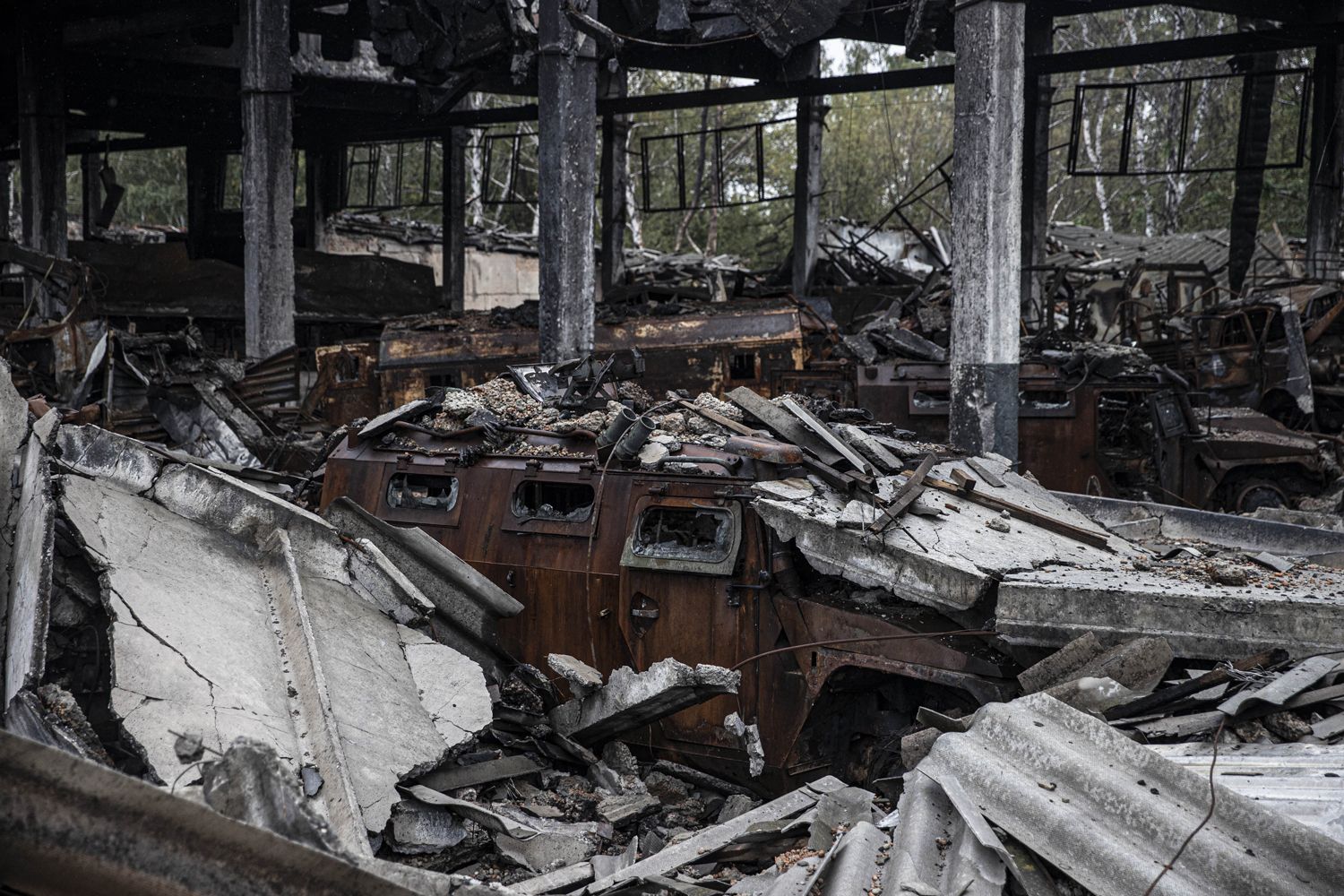
They also bombed the military base . When the Russians settled here, they made their logistics center there. Before liberation, our place was already bombed to destroy their supplies. And they imported new ones, and ours bombed. You lie in bed, listen to a whistle. You cover with your head and think: it will fly to your house or fly on. It was very scary.
When it was completely hard, we went to the country to the neighbor, the windows of the house just went to the city administration, over which a tricolor fluttered. Every morning I got up, and he was still hanging, still hanging ... And everything was waiting for our Zhovto-Blakite flag to return.
In our dacha, we planted a garden. When there were arrivals, half of the garden was blown up - the husband buried the funnel for three days. The cucumbers were planted again. They buried a neighbor's dog: sipped with fragments. And in the city, all the sidewalks were dotted with fragments and broken glass. When I saw young children on the streets with mothers, I did not understand: how can I stay in this hell with the kids for a year and a half?
It was even sadder around Balakli, because our soldiers stood there, and they were constantly fired. It was evident from my window how the oil and gas processing plant was blown up in Andreevka. He burned and smoked, maybe a week.
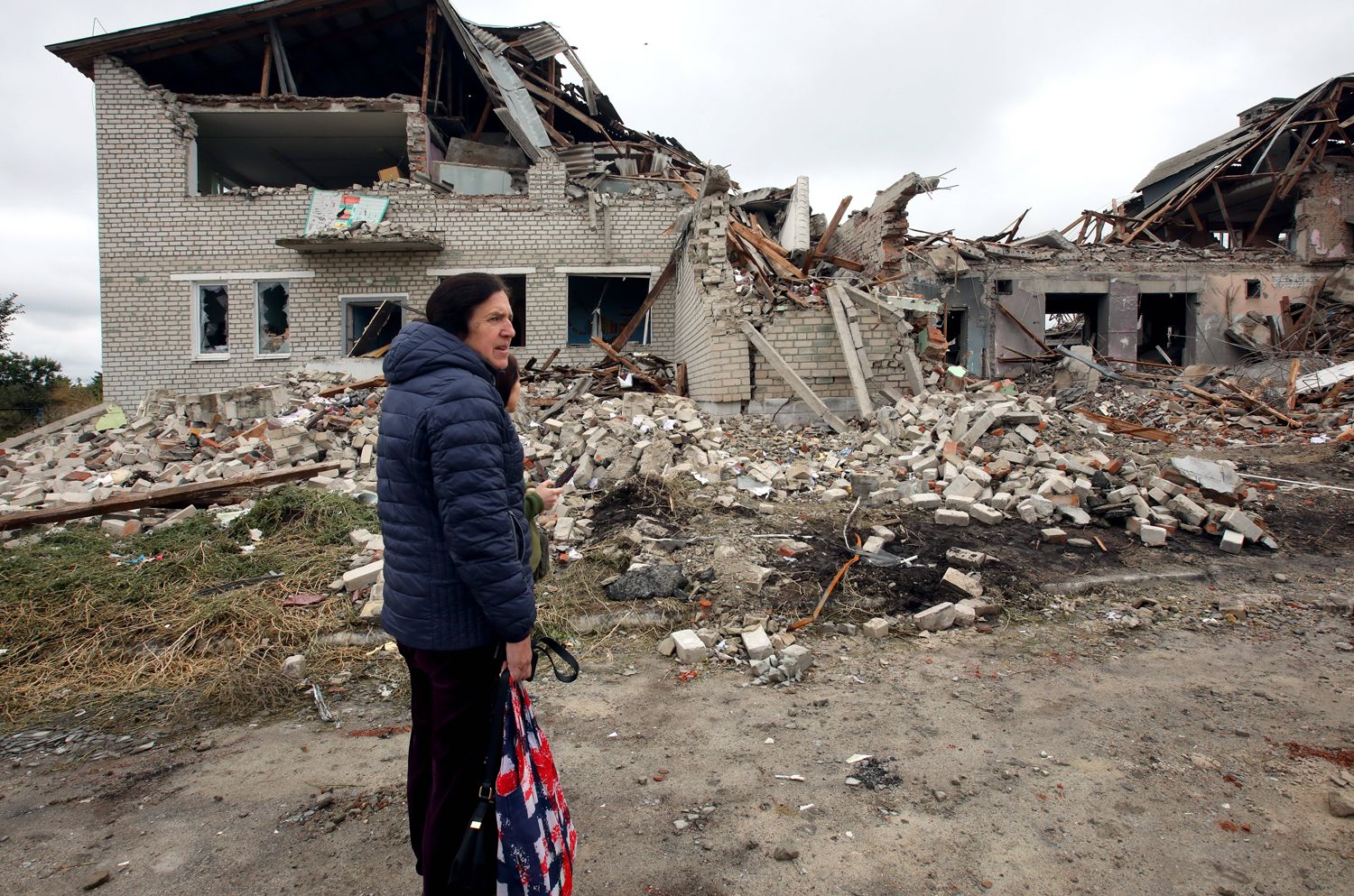
And our city itself was not so badly damaged: the shopping center near the bazaar, the New Mail area, a large nine -story building, which is called the "Chinese wall", was destroyed. There is destruction in the village of oil industry workers. But not the same as in raisins - here he was very much injured. And you can live in Balakley. True, there are no water and light, with heat -caves questions - perhaps from high -rise buildings people will go to private houses for the winter.
"XXI century, and you rejoice in dry corn!" Life in occupation
In April - Marta in the houses there was no heating. Due to constant shelling, we then lived in the basement with my husband and parents. They turned on the heater, slept on chairs under three blankets, without undressing.
Balaklia could be without light for 10 days, it disappeared often, because many wires were damaged. Naturally, then there was no water: the pumps did not work. The younger people gained it in the private sector and wore eggplants, but the old ones could not. Our acquaintance in the country said that his retirement neighbors, sorry, went to the toilet into bags, and then they were thrown away, because there was nothing to merge. And the sewage system sometimes did not work for two to three weeks. The fact is that the water pumping was near the gray zone and constantly under shelling. Therefore, it will be repaired, fighting will begin again-again something broke. In the summer there was hell in the heat. We washed in the summer soul in the country, but as pensioners in high -rise buildings, I did not even know.
At the beginning of the occupation, there was almost no bread. We baked ourselves from the remnants of flour ... Somehow we found corn-we were very happy, as if a treasure! We grinded it and diluted it with wheat flour, so it was possible to bake more bread. XXI century, and you rejoice in dry corn!
Two or three stores were opened, they traded a Russian humanitarian, as their owners lived with the rashists. The grocery market worked. In March - April, people simply traded from the ground or cars. They brought meat. I remember that the rashists killed some pig in the village, with dirty bloodied hands without gloves cut it and sold people 80 hryvnia per kilogram . At a private trader, it cost 100-200. The machine hangs, blood flows in shape, and it gives this meat to people with such, you know, disgust on the face. And they almost fought, some pensioners simply fainted: "God, what good Russians are so cheap to us meat!"
Who had his own gardens, he survived. For all the time we were given a humanitarian twice. At first we did not want to take it, we refused. They: “You understand, we will put a gap in front of your apartment, they will come to you - the conversation will be different and not in the apartment.”
My parents are over 75 years old. Although we have our own garden, there were sunsets, but we understood that we would not stretch for a long time. And in such conditions, I think, taking food is not collaboration, not separatism and not cooperation. Therefore, we agreed. There were pasta, stew and condensed milk, flour, sugar and canned fish in the humanitarian. By the end, they gave another half a liter of sunflower oil per person.
The market also worked, and the people sold a little production - T -shirts, T -shirts could be bought. When the arrivals went, half -fish burned with all the property. Then everything was like a flea market: the same stew that they received by humanitarian aid, people put up for sale. In spring and summer they endured their crop. We had the milk, maybe the cheapest in Ukraine - they sold 5 hryvnias per liter , when 25-35 in the supermarket. Due to vegetables, fruits, milk, people at least ate something.
“Where we had Oschadbank, from the inscription“ Oschad ”was torn off - there was a“ bank ”.” How they tried to make a Balakliy Russian
There was not really earnings. Someone had savings. Everyone tried to save, bought only the necessary. Or they carried dishes from the house, things to sell in the market and buy a loaf of bread. It was especially difficult for older people who could not receive pensions for months. The mail did not work, ATMs were also torn. Relatives would like to help them, but could not.
In August, we had Russian money - pensioners gave 10 thousand rubles. Where we had Oschadbank, the “Oschad” inscription was torn off - the “bank” remained. Armed people were sitting at the entrance. The senior houses made up lists, then transferred to the administration, and the bank was appointed a day when and how much you should come to pick up your new pension. I took my father, he says at the checkout: “So, and the sho of I have thought, they give hryvnias. ” I say: "Dad, take it - and let's go from here." Employees came to the bedridden themselves. We wanted to spend them soon - these candy wrappers - but did not have time. And some grandmothers rejoiced that they would now have a Russian pension.
And so in the city, in addition to the market and stores, only utilities worked. In the summer, the occupation authorities said to the entrepreneurs: "Either you open until July 15, or we are your IP, we are nationalized by the enterprise." They were afraid and began to work. The hairdresser slowly opened, ritual service. Those who traded products, household chemicals went to Kupyansk, but the prices of everything were equated with Russian and were 2-3 times higher than in Kharkov.
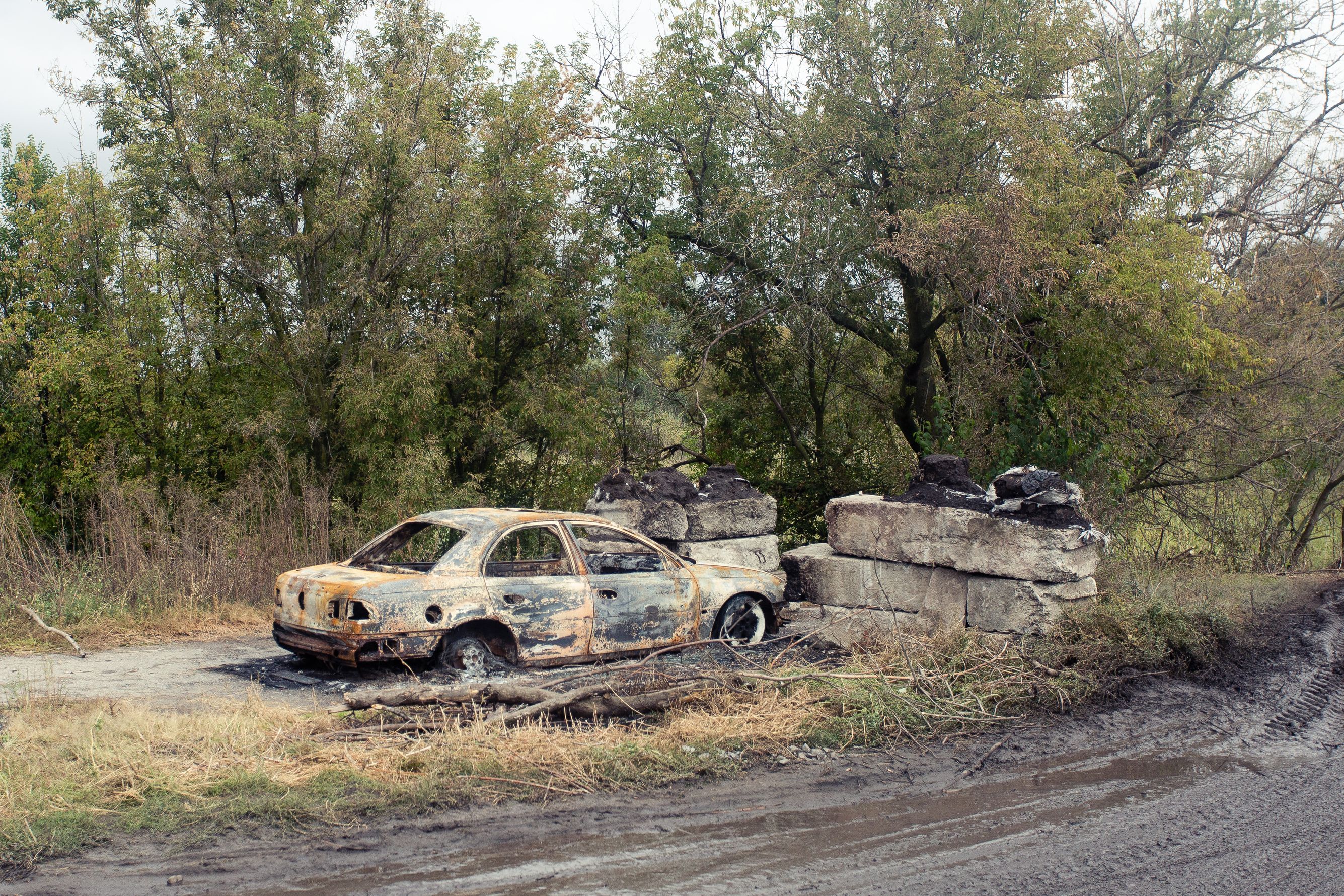
Somewhere on August 1, they announced: “Russia is here forever. Strive up for work, we will pay you. ” They searched for a spokesman for the occupation administration “with knowledge of the Russian language”, and the children were offered to be sent to the sanatorium of the Russian Federation. Teachers were sent for weekly courses to the Kursk region, where they told how to teach. It was said that the directors of the recreation center and schools were forced to collect all Ukrainian literature, textbooks and manuals and take it to the archive so that no one else saw them. So fought with Ukraine.
A hospice was equipped in the kindergarten - they were going to bring pensioners, disabled people who were left alone to survive the winter. They had to pay employees 30 thousand rubles. The head of this kindergarten did not go to cooperate. The military police took her several times, forced to sign something. Then they brought home: "Get ready, we will deport you." She was allowed to pick up her husband. They were brought to the gray zone, where on the one hand the Russians stand, on the other - Ukrainian troops. As soon as they released, they began to shoot at them.
All this was hard for me. I could not live like that - this “Russian world” annoyed me and crushed me. I went out into the street, I saw these “sizes-wards” (cars with symbols Z and V.-Approx. Ed. ) And in the mind matured. Or aloud so that no one would hear, but my husband restrained me. Then they said that they would close the Balakliy and there would be no exit-entry for two years. I realized: everything, I can’t live in this hell so much. The husband remained, because both the apartment and the cottage there were with us, and the neighbors left the keys to their housing, we had to look closely. And I decided to leave.
People were evacuated on Mondays - then the Pechenezhsky dam was opened. Мы с родителями уехали за несколько дней до освобождения города. Когда эвакуировались, встретили 70-летнюю женщину из Щуровки . К ней домой пришел человек в черной форме, когда она с ним заговорила по-украински, стал кричать: «Что вы мне тут на хохлядском? Разговаривайте на нормальном языке! Я вам даю два дня, чтобы я вас тут не видел». Вот эта женщина собрала вещи, наняла каких-то мужиков, которые помогали ей нести сумки полями-лугами. Там как раз кинули какие-то мелкие мины, в народе их называют «лепестками», и она шла впереди, смотрела, чтобы их не было под ногами, а мужики за ней по следам. Если наступишь — останешься без ноги или руки.
«Женщины обнимали солдатиков. Просто не верилось!» Как местные встречали ВСУ и живут теперь
О том, как из города уходила российская армия, а потом пришли ВСУ, Елена знает со слов мужа, который остался в Балаклее после ее отъезда.
Когда начали освобождать город, русские стали прятаться по подвалам или переодеваться в гражданскую одежду. Муж старался просто не выходить из дома дня три-четыре.
Были бои, обстреливался центр города, район почты, где оккупанты тоже сидели. Народ старался сидеть по домам. Русские возле соседского дома оставили «Урал», полный боеприпасов. Наши начали зачистку и попали в эту машину, в доме загорелся пятый этаж и крыша. Пожарные не могли выехать на тушение, потому что все простреливалось. Верхняя часть дома сильно пострадала.
Русские убегали и бросали технику, боеприпасы в городе и за его пределами. Они были очень злые и вымещали эту злость на мирных жителях, которые им попадались под руку. Двух хлопцев убили и уехали. Их нашли расстрелянными в машине. Одному было 49 лет.
Муж рассказывал, что ВСУ все встречали со слезами на глазах. Техника ехала медленно, американская, солдаты шли хорошо экипированные. Они проходили через наш двор. Наши вышли к ним — плакали все, хотя вот мой муж неэмоциональный человек по жизни. Хоть уже похолодало, один хлопец вышел в шортах и с украинским флагом на плечах. Столько эмоций у людей было! Просто не верилось! Все фотографировались, женщины обнимали солдатиков. Те сказали на украинском: «Ребята, не переживайте. Мы тут навсегда. В Балаклею мы больше никого не пустим».
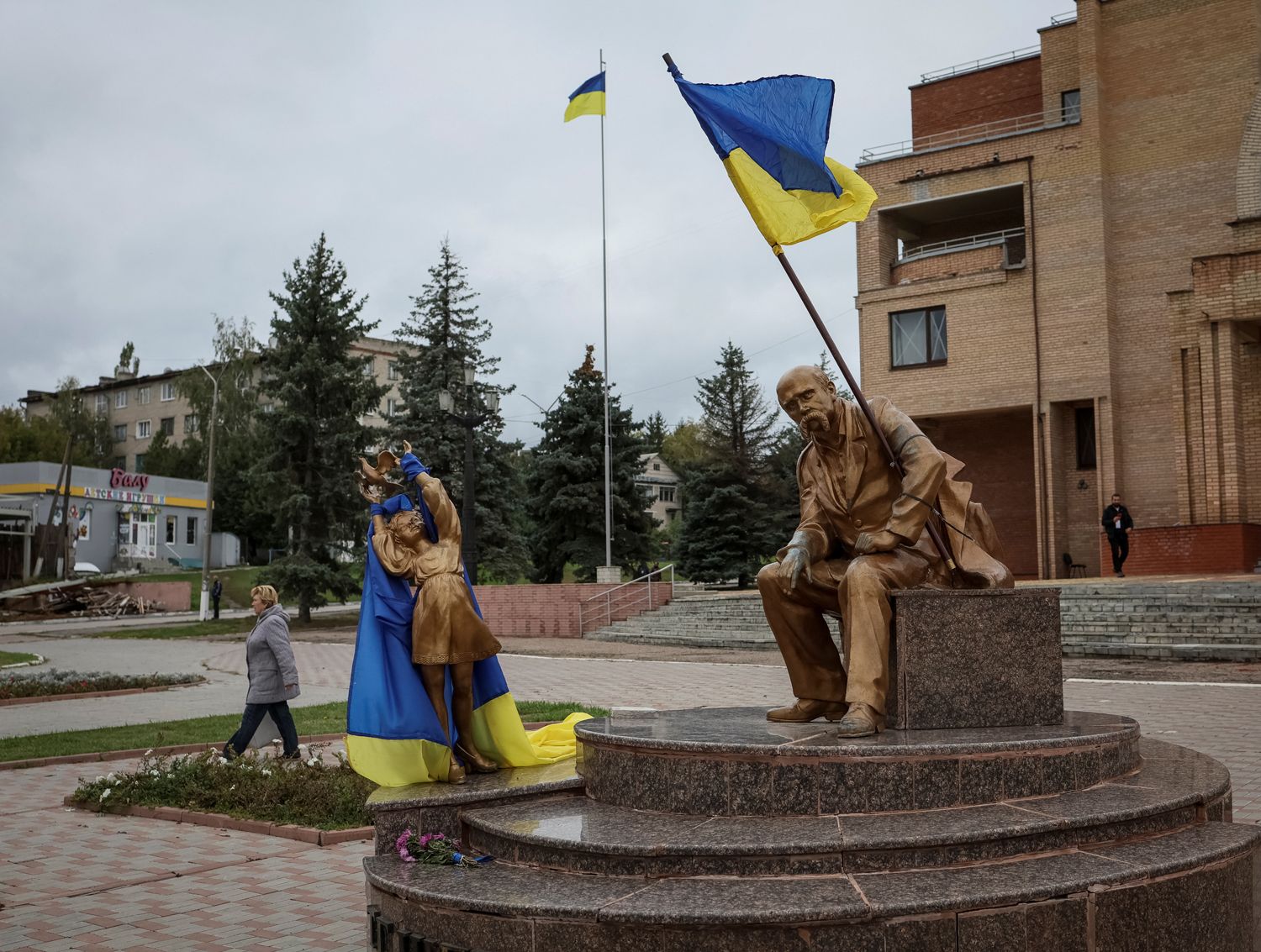
Ну а сепары и коллаборанты, думаю, сидели, чистили свои телефоны и подписки на телеграм-каналы. Наши солдатики ходили по дворам, спрашивали, нет ли чужих. В первые дни просили местных пока не выходить из квартир, домов на время зачистки — искали рашистов в подвалах.
В Балаклею уже привозили гуманитарную помощь. Муж получил, говорил, очень хорошая. Привезли пенсии за пять месяцев. Почту открыли, теперь можно туда прислать посылочки, хоть и небольшие. Идет разминирование вокруг — леса, поля, в самом городе.
Сейчас там еще идет зачистка и фильтрация. Формируется военная администрация, чтобы хоть как-то наладить быт. Уже задерживают коллаборантов, хотя они пытаются через Купянск выезжать в ЛНР. Люди наши теперь, конечно, свободнее себя чувствуют, радуются, разговаривают. Возле здания администрации поют украинские песни, гимн, там теперь наконец наш жовто-блакитный флаг.
Боятся ли местные, что опять придут русские? Пока я такого не слышала. Наши отогнали их вглубь, хотя тот же Харьков обстреливается. Мы же не знаем, что в голове у Путина. Но те жители Балаклеи, кто уехал раньше, уже хотят вернуться. Люди рвутся домой.
"Mirror"