
Translated material
Death or 10 years for surrender
How they will haunt those who do not want to fight with Ukraine
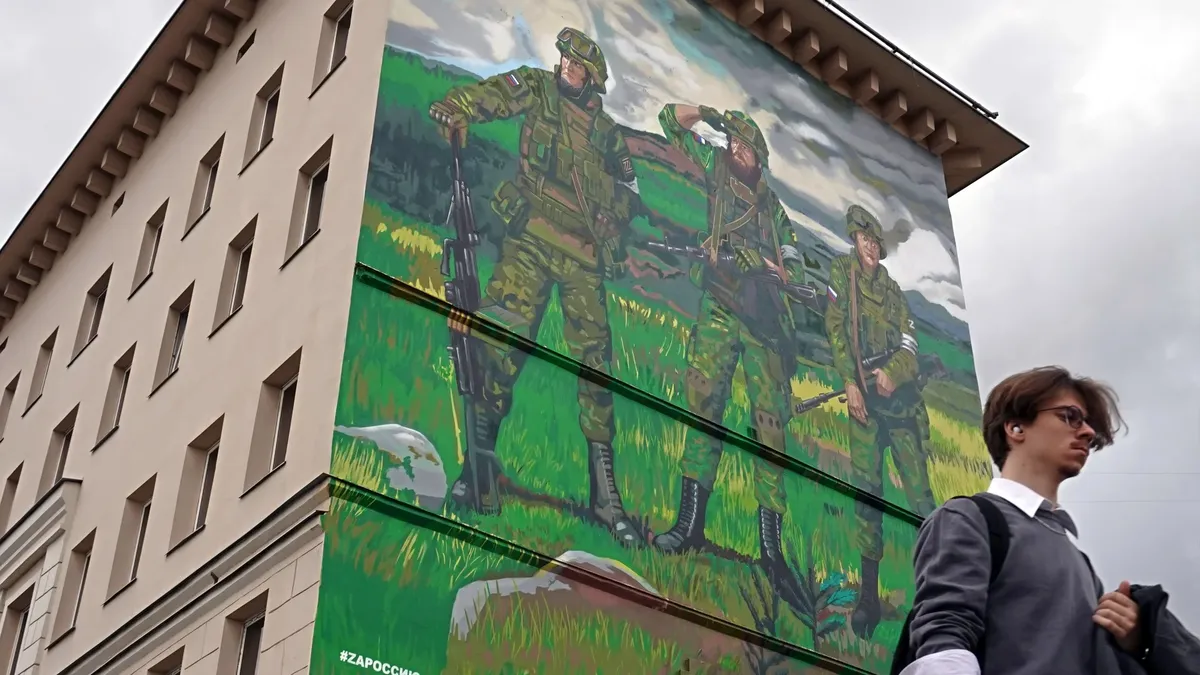
On September 20, the State Duma at once in two readings adopted a bill, which makes amending the Criminal Code. The adopted amendments are introduced at once by several new criminal articles: for voluntary surrender and unauthorized abandonment, units can be punished for 10 years in the colony, for refusing to fulfill the order or participate in military or military operations “during martial law, in wartime or in the conditions of armed conflict or conducting military operations”, from two to three years of the colony can be obtained. In addition, several articles appear on non -fulfillment of the state defense order and violation of the terms of the state contract.
“New newspaper. Europe ”talked about these innovations with military lawyer Maxim Grebenyuk, who created the“ military ombudsman ”project at the beginning of the war and helping the military who refused to go to fight in Ukraine.
- The concepts adopted today are introduced the concept of “wartime”. Is it somehow different from martial law?
-No, in my opinion, it is no different, these are just synonymous terms.
- In the case of wartime, will mobilization be carried out in the same way as in martial law?
- Yes, sure. It may not be at all, as with the introduction of martial law. They seem to exist separately, but most often go together. No changes have yet been made to the federal law on mobilization, they have been made only to the Criminal Code. I think that they don’t have no need to make changes to the Federal Law on Mobilization at all: everything [goes] is normal, everything is according to plan. They simply introduced [criminal] responsibility so far only for current military personnel and a little - for those called up for military training, that is, for the military. We study these changes, but they are not very good, because it is quite tough.
- That is, you can mobilize without the introduction of martial law or "wartime"?
- Yes, they live a separate life.
Mobilization is fuel, and war is a tank. That is, for the tank to ride, you need fuel, that is, mobilization, but they, in principle, can also exist separately.
You can mobilize without martial law, or you can introduce martial law and not to declare mobilization. But for the tank to ride, it is better to refuel it. Therefore, martial law and mobilization most often go hand in hand.
- And for whom did they introduce responsibility for the refusal to appear at military training, if new criminal articles concern only the military?
- This applies to those who are in stock. Typically, such citizens are liable for military service and they are in reserve, which means they can be involved in military training: they are given a summons, if they are on it, that is, they are called up for these fees, then they bear the same responsibility as military personnel, and further - and for refusal [from the execution of the order], and for universal abandonment of the unit, for desertion, and so on.
- How will mobilization go in case of martial law or “wartime”?
- To begin with, they will send the summons and present a mobilization order, that is, they will be called up for military service. There are several queues, the so -called categories: who will be called first of all, who - in the second one, who, maybe, will be given a reservation. Those who are up to 35 years old, first of all, go, who are older - up to 45 years - in the second [queue] will be mobilized. And those who on the civil service or in power structures can give away reservation, that is, they may not participate and not be called up. In recent history, we have not yet had mobilization, so it is difficult to say what exactly will happen. I think it will be approximately similar to a call for military service, that is, they will hand over the summons and call.
- And who faces responsibility for refusing to fulfill the order?
- She threatens only to the military, besides, she was very tightened. Previously, the refusal could be attracted only during the period of martial law, in itself the rejection of the “special operation” was not criminally punishable. And now the refusal to participate in "hostilities" is also a criminal offense, for which the colony threatens from 2 to 3 years. That is, after the entry of the law, [concept] “fighting” appears into force, which is now being carried out in one way or another, so it will also concern the people who are now there.
- It seems to you, now there are more and more “refuseniks”?
- I don't know. I do not own detailed statistics. But [to me] they turn to me quite often, especially after making these amendments [to the Criminal Code], many became interested in obvious reasons.
- As far as I know, not a single criminal case against the "refuseniks" has still been instituted. Is that so?
- Yes, there were no criminal cases yet, because the refusal itself is not a crime.
Until now, there has been a criminal liability for failure to comply with a particular order, if this entailed some consequences, but now the refusal itself will also be punished if these amendments finally accept.
- What about the article for “voluntary surrender” - can this not be voluntarily?
- An involuntary surrender is considered if the soldier is wounded and cannot resist, for example, either [is] unconscious, or he was unexpectedly taken by surprise, immediately disarmed and twisted, that is, deprived of freedom. If a soldier is offered to surrender, and he does it, then he surrendered voluntarily, even if death threatened him.
- Which article of the State Duma adopted today seems to you most dangerous for civilians and for the military?
- For civilians, it is most dangerous for [criminal] an article about those called up for military training, because they [first] are civilians, but then they become military personnel and are responsible as the military. And the most unpleasant article for the military is, of course, a refusal to participate in hostilities. Previously, this was not crime, but now the refusal itself is a crime. The contractors also affected the changes, I mean the punishment for unauthorized abandonment of the part. Previously, they could not be up to 10 days and there was nothing. Now the contractor, as a SLI, if there is no more than 2 days, it becomes an “unauthorized”.