
Translated material
With "eagles" on the same time "Shahids"
Russia purchased the Iranian UAV SHAHED-136 and is already using them in Ukraine. We figure out what kind of drones are and how they got to Putin
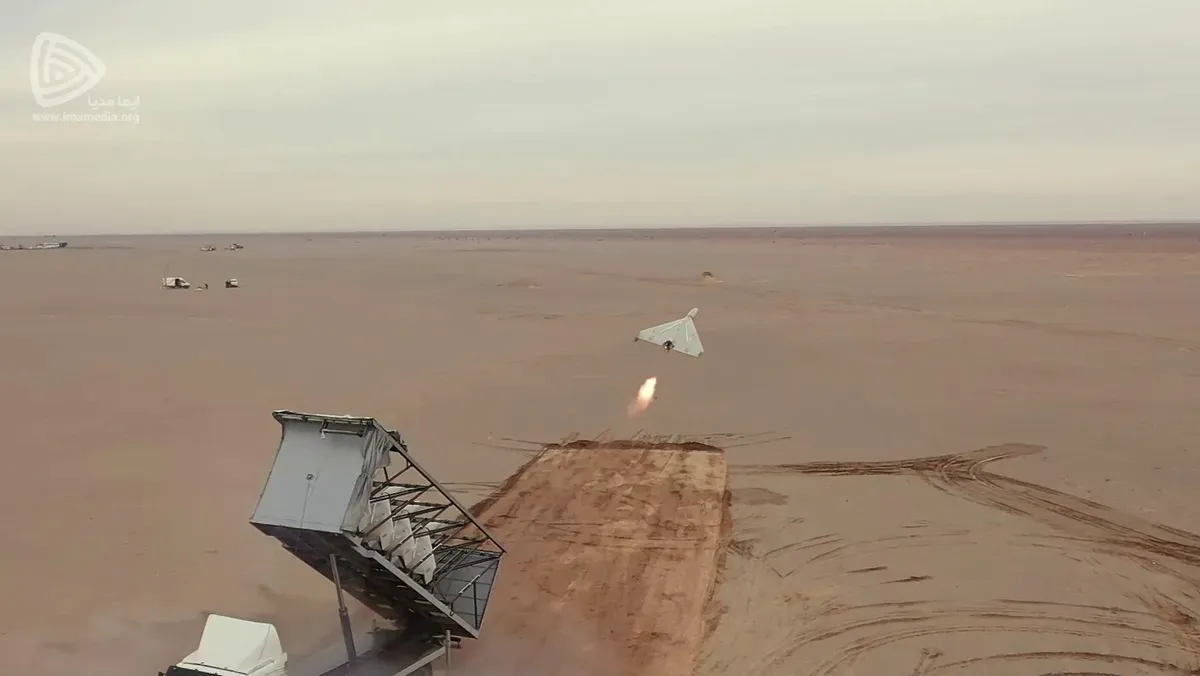
In mid-September, the Armed Forces of Ukraine for the first time stated that they managed to bring down the Iranian unmanned aerial vehicle of the Shahed-136, which, as experts previously suggested, Russia can purchase for its military needs from a prominent Iran.
Shortly before that, The Washington Post journalists wrote that the first batch of Iranian UAVs of the Mohajer-6 and Shahed series entered the RF Armed Forces. Russia turned out to be in a position where the only drum supplier in the world remains much less (as it seemed before) Technically developed by Iran - and this was an unpleasant surprise for many militarists. But what can Iranian “shahids” actually, what are they filled and from what components are made? Especially for Novaya Gazeta. Europe ”Air Chakhaki specialist in Russian-Iranian relations answers the main questions about drones from the Islamic Republic.
- How does Iran produce drones in the conditions of sanctions: based on its own developments or purchases components abroad?
Amir Chakhaki
Russian-Iranian specialist
-The topic of creating drones arose in Iran during the Ira-Iraq war (1980-1988). In conditions of sanctions, which especially intensified since the beginning of the 2000s, the entire economy of the country, including military industry, gradually adapted to new conditions and learned to circumvent sanctions. As a successful example, we can cite the sphere of nuclear technology, enriching uranium and creating modern centrifugs. In addition, Iran now has the production of ballistic missiles with a launch range of up to 2000 km. Therefore, we can definitely say that Iran produces drones with both their own components and foreign ones.
-What are the features of the Iranian drones of the Shahed-136 compared to other devices? And were they used anywhere before the war in Ukraine?
With a great degree of confidence, it can be said that dried-ups of the SHAHED-136 type are developed on the basis of the study of the American drone RQ-170, which was captured in 2011 on the Afghan-Iranian border. The device flies at a fairly low altitude, so it is difficult to notice them calculations of the air defense of Ukraine. Shahed 136 carry a very large useful load (instruments or cargo installed on the drone), the second in volume after the Turkish Bayraktar TB2. This type of drone is intelligence-attendant and can play the role of Kamikadze with a range of flights to 2500 kilometers.
Shahed-136 was previously successfully involved in the protection of the Iranian border, in particular to combat drug trafficking from Afghanistan and Pakistan. In addition, Iran was accused of using various models of drones, including Shahed-136, to strike at the territory of Saudi Arabia and other countries of the region, although Tehran denies all such accusations. At the same time, Iran has a serious experience in applying his drones during a military operation in Syria.
- What can be said about the use of these drones now in Ukraine? In what ways does Iran supply drones to Russia?
Yes, we can already definitely say that
Russia has acquired from Iran hundreds of drones of the Shahed 136 type. The Russian army used them in the Kharkov region against the anti-aircraft missile forces of Ukraine.
As for the supply of these devices, two ways are involved here: military transport aircraft, as well as by sea through the Caspian.
-How will the deliveries of drones to Russia affect Iranian-Ukrainian relations?
As we know, Iran’s authorities deny the supply of their drones to Russia, because Tehran would not want a deterioration in economic and political relations with Kiev.
After the collapse of the USSR, Iran and Ukraine established diplomatic relations, and they developed at a fairly high level. In recent years, we have also observed the development of Iranian-Ukrainian relations in the economic and cultural spheres. Thousands of Iranian students studied in various Ukrainian universities. Iranian tourists actively visited many Ukrainian cities. Some strategically important goods were supplied to Iran from Ukraine. Therefore, the Iranian government is completely not interested in the deterioration of relations with Ukraine.
At the same time, the army of the Islamic Republic and the Corps of Guardians of the Islamic Revolution (elite units of the Iranian Armed Forces) are subordinate only to the spiritual leaders of the country.
And in Iran there are serious contradictions between the political and military authorities. It is highly likely that the decision on the supply of drones to Russia was made without coordination with the political leadership of the Islamic Republic.
- How does Iranian society feel about the supply of drones to Russia? What are the Iranians as a whole by the attitude to the war in Ukraine?
We can definitely say that Iranian public opinion, in its mass, condemns the military invasion of Russia into Ukraine and opens against Iran’s intervention. News about the supply of drones to Russia caused a huge resonance and indignation of the Iranians, in particular on social networks. Most Iranians are convinced that the assistance of the weapons with which the Russian army will kill Ukrainians does not correspond to the national interests of the Islamic Republic and will very much harm the relations of Tehran and Kyiv.