
Translated material
"The howl rose as if they were sent people to the cemetery"
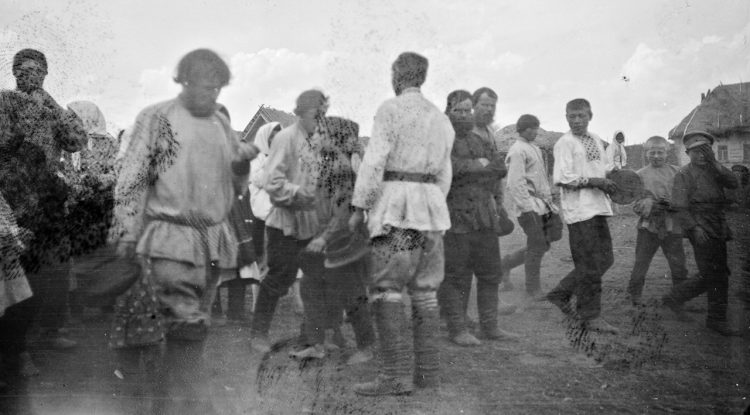
In 1914, mobilization was also announced in Russia. This led to protests and pogroms
One hundred eight years ago, on July 18, 1914, general mobilization was announced in the Russian Empire. The next day, Russia officially entered the First World War. The traditional, “school” course of history usually reports that the beginning of the war has led to a powerful growth of patriotism among the country's population. In fact, everything was much more complicated: for hundreds of thousands of people, mobilization became a tragedy, and its poor organization regularly led to riots and pogroms. The historian Vladislav Aksenov in his book “Rumors, images, emotions. Mass mood of Russians during the war and revolution (1914–1918). ” With the permission of the Publishing House "New Literary Review", "Cold" publishes several fragments of chapters on the perception of mobilization of 1914.
In order not to miss the main materials of the "cold", subscribe to our Instagram and telegram .
"I returned from the reception room - the mother rides, roars"
State propaganda talked about enthusiasm around mobilization. In fact, everything was completely different
In July-August 1914, two paintings of military mobilization began to form in Russian society. The first was a propaganda structure, the second, unofficial, was transmitted in private letters, conversations. At some point, these two paintings finally dispersed, discrediting the means of official information in the eyes of the people.
The patriotic press described enthusiasm, which allegedly covered the recruits immediately after the publication of the order on the draft. “Evening Time” reported on the second day of mobilization: “Today, by six in the morning, the whole capital took an unusual look. From all over the city, the groups of those who were heading to the police were drawn ... The rise of the spirit among the conscripts is extraordinary ... The more you peer into the crowd, the calmer it becomes in the soul. Serious, sober people who gathered to earnestly fulfill their duty, without noise, without hysterical cries. And it seems that everyone's eyes darkened from inner thought, from determination. ” <...>
At the same time, the mobilized themselves subsequently reproduced the atmosphere there. The future proletarian writer I. Zyryanov (V.V. Aramilev), who went to the front, several years later recalled ditties and folk songs that performed in memory, which were performed by one spare from the peasants of the Vyatka province during the haircut of the recruits. These pieces were not invented by them, they reflected the traditional attitude of the people to the tsarist service, repeating in the mobilization of 1914:
They got a reception,
Put on the machine
Put on the machine
The strap was measured.
The strap was measured
And they said - they accepted.
A boy came out of the reception
The tear dripped
The tear dripped
Mother, father cried.
I thought, I thought - they would not be wound,
I thought - the mother will not roar.
He returned from the reception room - the mother rides, roars. <...>
The nurse S. Fedorchenko, who collected characteristic statements of the people, folklore of the First World War, brought the peasant's typical words about the beginning of the war: “How the war was stitched by thunder. Just coped with the house-Paul settled it, blocked the roof, I got hold of the money. Here, I think, I’ll become on my feet, no worse than people. And then please! At first it was planned to drink, but only restrained - for such trouble vodka is not a medicine. " <...>
The irritation of the peasants about mobilization was noted by the seventy -year -old widow of L. N. Tolstoy in Yasnaya Polyana: “Everything is in despondency; Those who are torn away from the Earth and the family say a strike: “Do not go to war!”, - and a seventeen -year -old gymnasium student in Skopin: “How many tears, sobs, grief! Families are left without breadwinners, it’s time for working, bread is not cleaned, many still have in the field. And all these young, full of strength people are doomed to death. ” <...>
While the official press in the first days after the start of mobilization described high consciousness and the rise of the popular spirit among the recruits, the Russians in private correspondence painted completely different paintings. One of the Yekaterinburgers described the mood of the mobilized and the population in the city on August 5, 1914: “<...> for all the time of mobilization, staggering around the city, I can say that I have not seen not only enthusiasm, but did not even meet just a cheerful physiognomy. If there was an opportunity to interrogate all this motley public, then, probably, we would have received the curious answers regarding the causes of the war; Complete apathy in relation to the personality and intentions of the external enemy and a very meaningful and fierce hostile attitude towards the internal enemy - primarily to the police. The police were everywhere met with stones and cat concerts. Here, police officers were removed from many posts, so as not to arouse spare ones. On the first day of mobilization, there was a major collision with the guards. 3 was killed and wounded 3 days ago a decree was published, forbidden to ride a spare to ride for free on trams. To maintain order, they put the city on each tram. Spare ones stormed the wagons, threw up the city and panic to the police. The soldiers and armed guards were called, the governor arrived, who promised to let several wagons specifically for the spare ones the next day. ”
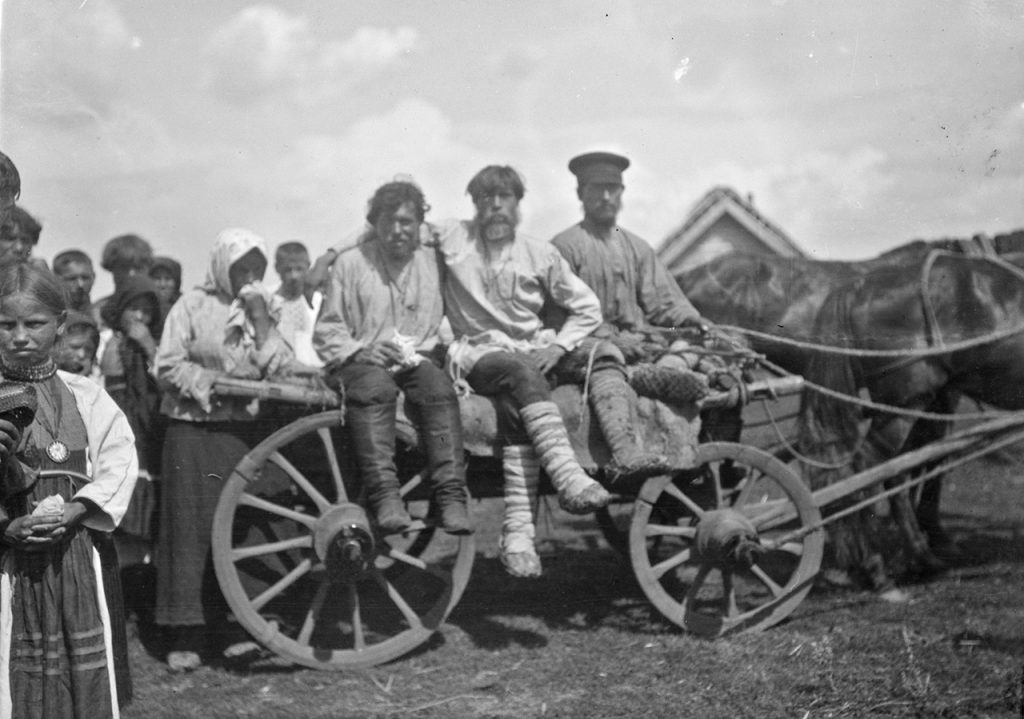
Old Vechkanovo, Samara region. July 1914
"The outrage of the spare takes the nature of the rebellion"
During the mobilization, the authorities introduced a dry law. This led to riots
The mobilization of peasants did not contribute to the unity of the people and power, on the contrary, it became another source of political danger to the existing system. The nationalist resident of Armavir, in the conditions of a patriotic “psychosis” who did not lose the charge of skepticism, discovered a very curious reason for talking about suddenly covered all patriotism. In his opinion, the reason for the imaginary patriotic unity was the temporary “sobering people” due to the closing for the period of mobilization of the taverns: “Our liberal newspapers see some kind of rise in the spirit in the masses, which are called up in the troops. In my opinion, there is a simple mistake. The people did not drink on the days of mobilization, that is, they did not let them drink, and this is the result of the calm and seriousness that we observed in the real war. There was no folk climb - there were small piles of truly Russian people with portraits and icons and only. ”
Zyryanov noticed not the calm and seriousness of the mobilized peasants, but with difficulty restrained irritation from the fact that they were torn away from their usual life: “The man was prevented by living, healing him like a bear in the den. He is angry, but yet he himself does not really know who: the Germans, on the king, to God, to the Fatherland. " Prince A. D. Obolensky on August 12, 1914 noted that in the Kaluga province the mood of a calm and waiting, self -confident tone of the capitals is absent, but the peasants are in a state of “calm sadness” and “some sad perplexity”. V. A. Gorodtsov described the mood of the peasants of the village of Dubrovichi, the Ryazan province before sending mobilized as anxious: “In many houses, crying and lamentation was heard. The men wandered sullenly through the streets or sat at the gate, interpreting about the rushing trouble. ”
<...>
[The weekly state newspaper] “Chronicle of War” from its first number tried to convince readers that the draftees almost enthusiastically met the ban on alcohol trade: “For all the days of mobilization, Russia was literally sober. Everyone where you can find at least a bottle of vodka or wine was closed ... And, mind you, not a word of dissatisfaction, on the contrary, even avid drunks blessed such a wise government. Yes, and was it possible to drink at such moments of universal civil enthusiasm. ” The official picture did not correspond to what was happening in Russia. Zyryanov described alcohol trade in a small county town in the first days of mobilization: “There are many drunk in the town. Wine and beer shops are closed, but, obviously, not the official of the unified drunk Rus'. Shinkari appeared. They sell forbidden wine at unheard of high prices. ” <...>
With the beginning of the mobilization in the provinces, a wave of defeature of state -owned official wine shops swept. Already on July 21, an urgent telegram from the mayor was sent to the Minister of Finance from Sterlitamak, which occupied as many as five telegraph forms: “Sterlitamaka more than ten thousand spare ones began riots that threaten the defeat of the whole city. The defeat has already begun with a wine warehouse that has been melted. The overseer and assistant were wounded by police guards. Shots began. Shops and shops are closed. Their defeat and property of residents are expected ... "
The most alarming reports to the Main Directorate of Net -Featers and State Sales of Peti received on July 22 from the Tomsk province. For the incomplete five days, more than twenty wine shops and warehouses were defeated in different places. In Kuznetsk, the warehouse was taken by an attack and was in the hands of the spare ones for several days. Fearing to penetrate inside, the police outside watched what was happening, listened, reporting on the deaf “strokes of iron” coming from the inside. During the defeat of the warehouse, a fire began in Barnaul. The alarming symptom of the rebellion was that the peasants began to join the reserve. Lagunovich directly telegraphed the excise taxes of the Tomsk province in St. Petersburg: "The outrage of the spare Tomsk province takes the character of the rebellion."
At the same time, the drunken Barnaul riots were painted in patriotic colors: a drunken crowd, in which Xenophobic sentiments very often arose, after the defeat of wine warehouses began to defeat industrial institutions, and, as already mentioned, with the greatest bitterness, the representative offices of six Danish firms, mistakenly accepted by the crowd behind the German. As a result, the Minister of Finance allowed Tomsk authorities to begin the destruction of alcohol reserves. <...>
Not lagging behind Siberia and the Urals. In July, 29 warehouses were defeated in the Perm province; As well as in pogroms in other areas, peasants, women and adolescents took an active part in the events. The tense situation was formed in the Volga region. In the city of Volsk, the Saratov province called on the military service on July 19, learning about the closure of not only taverns, but even tea in the city, defeated three official wine warehouses, after which they hacked the Meinz’s weapon store and went to storm police board. Thus, the “sober mobilization” contributed to the development of military operations with drunken conscripts before sending to the front.
"The women shouted as if they were cut"
In Russian villages, mobilization was perceived as a tragedy
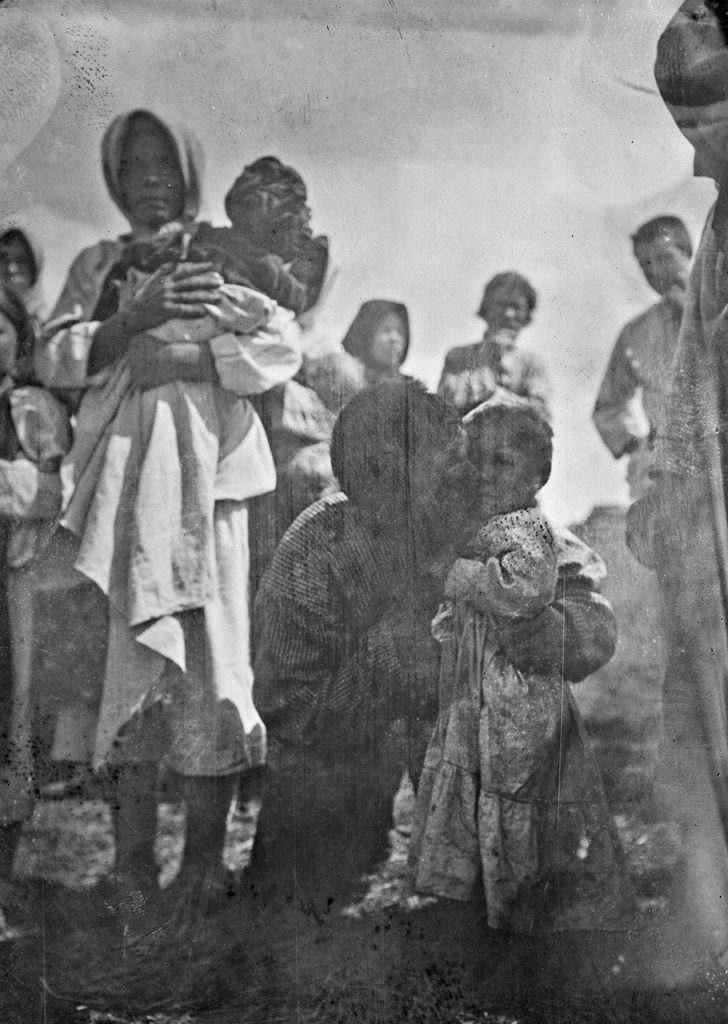
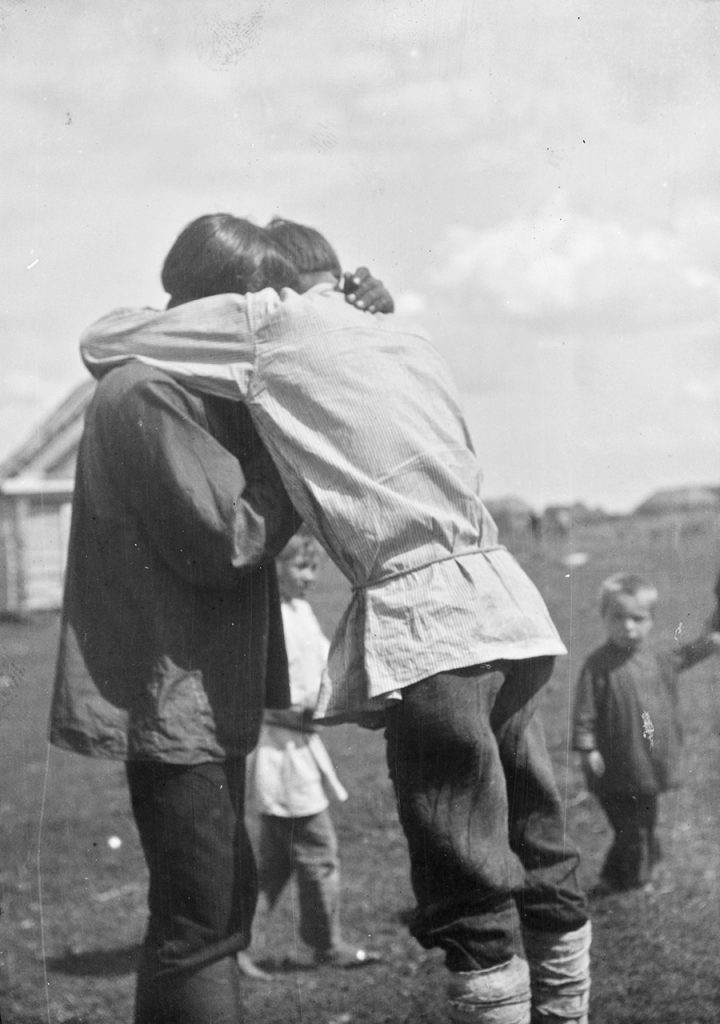
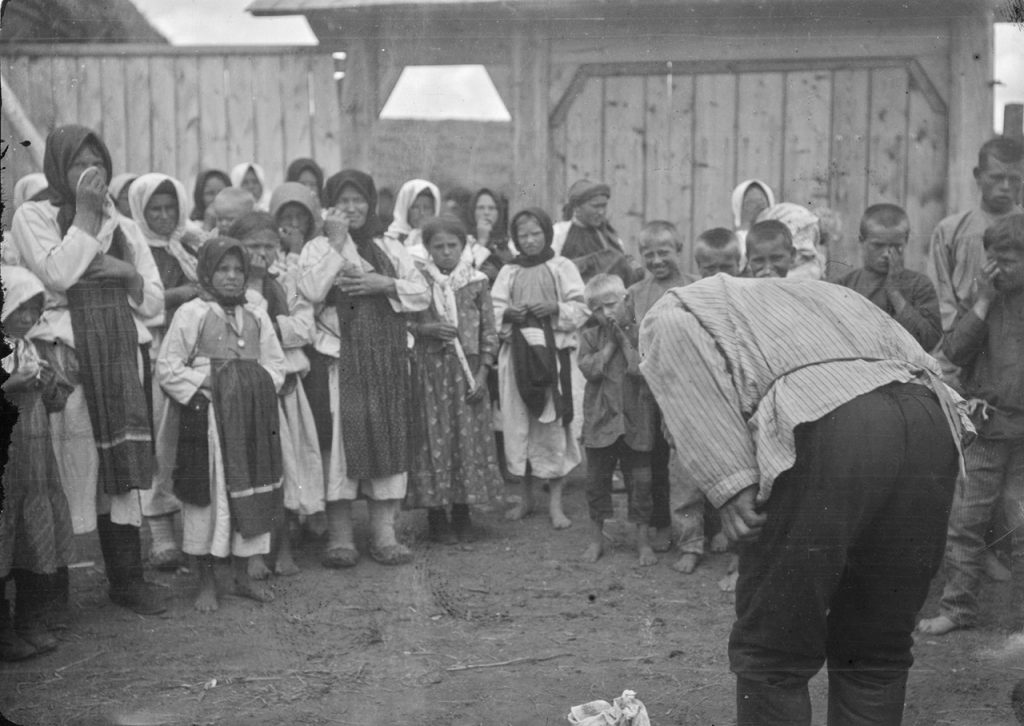
The crying woman became one of the brightest symbols of mobilization. The Riga worker, called up by mobilization, A. Pireiko recalled the sending of his echelon: “When they began to immerse us in the wagons, the heartbreaking screams and crying of women, relatives and close mobilized ones were heard ... wives mobilized from burning their hair, clinging to the buffer of wagons to stop the retreating train with close people. The howl rose such that it seemed as if they were being sent people to the cemetery. "
Not only women cried. The Vologda peasant I. Yurov, credited to the warriors of the militia because of a sore leg, described the sending of the first parties of the mobilized: “A huge crowd of common people - men, women and children. For many men, no matter how they attached them, tears poured from their eyes, and all women sobbed hysterically or whined in some inhuman voice, holding both hands with both hands. Men with some kind of dead look looked at the wives and children left. Looking at all this, I also wanted to howl from the opponent from the powerless against this great and terrible disaster ... In Ustyug, they told us how a woman who had five children, saying goodbye to her husband, went crazy, and her husband, seeing this, strangled him out of despair. " One young rural clerk told how he burst into tears, observing the sending of the spare parish: “They took N, you know, he had a wife with five children. He goes, but the face itself does not. One child - on his hands, the other wife carries, and others grabbed the hem of his father and mother and run on the sides. Mother laments, cries and children roars; Already terrible. And a tear flashed through me. ” <...>
Similar paintings are reproduced in letters, diaries, memoirs of different contemporaries, both “from the inside” - officers and mobilized soldiers - and third -party observers. <...> I. Zyryanov recalled the sending of the reserve to the provincial city: “The village is in the midst of field work, and the women who came to the town with mobilized husbands, do not want to leave home, are waiting for sending. They are like a shadow, like miserable, submissive dogs roam their husbands, vote, lament ... Woe struck the women. The faces of the women are red and swollen from tears ... The women detained the train sent for two hours. They definitely went crazy ... After the third call, many laid down under the wheels of the train, spread on the rails, climbed onto the buffer, on the shoots of heat. It was impossible to tear them from husbands. These are wires ... All county authorities fled to the station. The views of the authorities are bewildered, miserable. They don’t know how to be with women ... they called a special outfit from the local convoy team. The convoy carefully took into the arms of women who had fallen to the rails and wagons, carried them off the platform somewhere to the depths of the station. The women shouted as if they were cut. ”
It is significant that during the spare wires there were cases of collective suicides of adolescents - the psyche of young people could not withstand tragic paintings; The moan, which stood in villages, cities, stations, introduced contemporaries into the depression (hereinafter the topic of suicides among adults and children will be considered in more detail). The press did not write about this for patriotic considerations. If you try to recreate the emotional picture of the first days of mobilization, then, contrary to the official propaganda that wrote about the enthusiasm of the people, the true common feeling will be a feeling of deep grief from parting with loved ones. <...>
In all corners of the Russian Empire, regardless of local national traditions, the same paintings were observed. The young noblewoman H. D. Semina, the wife of a military doctor, described similar scenes in the city of Shemakh of the Baku province, when, after the announced mobilization, “such a cry and howl of women and children rose that it became directly terribly. The rumble of this crying stood in the whole city day and night. And the parties called up in the morning in the morning already walked past our house to the station to be sent to the shelves ... I could not break away from the window and looked at people in different clothes that were not at all like a soldier ... Others sang loudly ... Many wiped their eyes and wrinkled - cried ... The women walked next to them, holding the hand of her husband, father or brother. Many did not go further than my house, but how the subcutaneous fell on the dusty road and howled, and wailed so plaintively that there was no strength to hear this cry. ” Semina called the road to the station, passing by her house.
"You can’t think that this is an army, but everyone is a rabble."
Organized mobilization poorly. There was no equipment or infrastructure
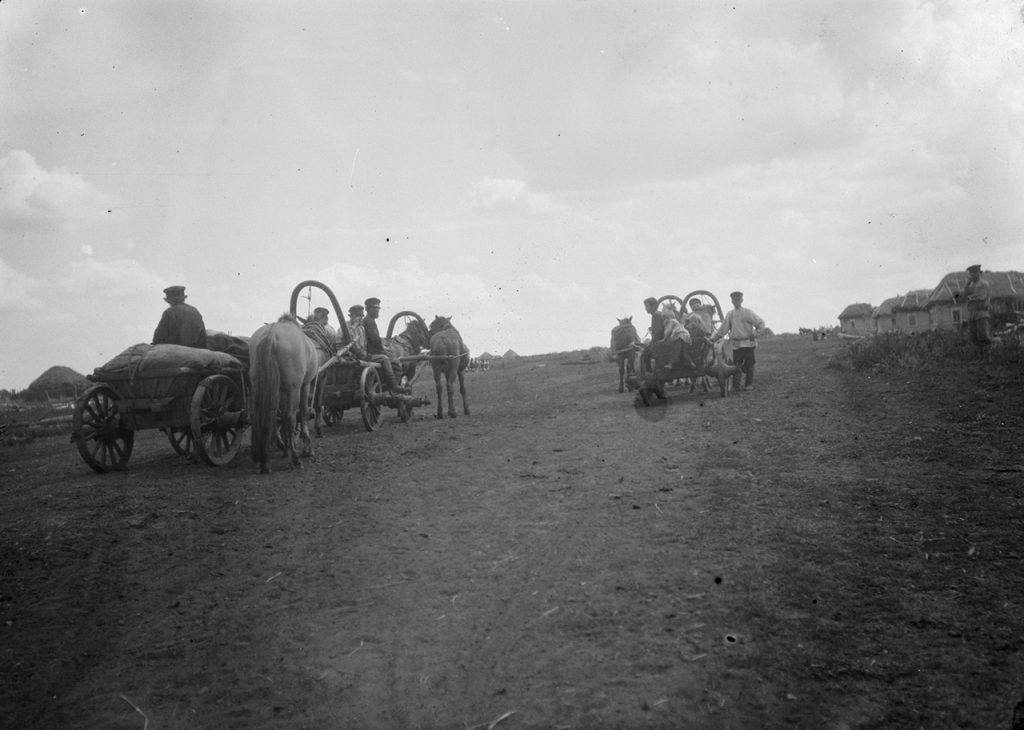
The inability of local authorities for a number of reasons to ensure timely collection, maintenance and sending of spare ones without delay caused discontent and, as a result, the growth of rebellious sentiments. So, for example, in the Verkhotursky district of the Perm province on July 20, riots occurred in which more than 500 recruits participated. All of them arrived at the Shaitank station for further sending to the assembly point, but at the station it turned out that the train would be served only a few hours later. All this time, the recruits were left to their own devices and went for a walk around the neighborhood. Some of them found out where you can secretly purchase wine, and by the appointed time of departure to the station they were already pretty tipsy. However, on the spot it turned out that there was still no echelon, and the station authorities were not able to provide the recruits with either a roof above their heads or food.
Drunk, hungry and tired recruits tried to decide their future fate on their own, for which they burst into the office of the station chief demanding bread and tried to capture the phone with a telegraph to communicate with higher authorities. As a result of all these actions, the station building was caused by serious damage, and when it came to the search for the perpetrators, the peasant P.V. Olenev, who allegedly secretly sold wine, turned out to be “extreme”. Announced by the chief culprit of the riots, by decision of the Perm governor, he was evicted from the province and went to Barnaul.
The poor organization of the call was also reported in a letter from Kazan dated August 8: “There is a lot of work. Every day, more and more new spare ones. There is nowhere to even go. Of course, there is no uniform, no weapons. And all this walks dirty, ragged. How to get out, you can’t think that this is an army, but everyone is a rabble. There are hooligans, of course ... constantly the masses of the people are not checked-somewhere they walk for themselves. Apparently, the organization of all this case is a prodigy. For example: a mass of infantry was attached to us, and now they are ordered to send back somewhere. ”
Another letter reported the atrocities of the recruits in the Chistopol district of the Kazan province, arranged during the connivance of the administration: “<...> the people there are all the robbers, and you can imagine, they were thrown to their fate, sending huge parties on small roads without guilty. For six days in a row, they passed my estate and all six days set fire to my estate in different places, and only thanks to the rain I had a pine forest ... In addition to me, all the estates lying on the road suffered, but only they did not burn, but they robbed rye and oats and broke glasses in the windows. In general, it can be seen that the ideas of 1905–06. The roots were deeply allowed ... ”The author of the letter personally complained to the governor Boyarsky, but he justified only because in other places it was still worse. <...>
Similar atrocities of the spare ones took place in the Kyiv, Minsk, Mogilev provinces. The spare moved in separate batches of 200-300 people, often without proper military supervision. The reserve lower ranks, called from the Igumen district of the Minsk province, walked to Minsk along the Igumensky tract, smashing the wine shops along the path, entering the nearby estates, extorted money, took things, robbed and set fire to the estates. In the Mogilev province in the estate of Pochaevichi, Count Kheptovich-Butenev, the peasants and the reserve cut down the forest, took firewood. Причем доставалось не только помещикам, но и крестьянам «чужих» деревень: по сообщению киевского губернатора, мобилизованные поджигали находящийся на полях в снопах овес, били стекла в домах, ломали изгороди. <...>
Конфликты с представителями власти являлись не только отголоском былого противостояния на революционной почве, борьбы с полицией как символом внутреннего политического и классового врага. Выдвигались претензии, вызванные мобилизацией: запасные были недовольны, что полицейских не отправляют на фронт, и требовали, чтобы мобилизация распространялась и на них. Так, например, 23 июля в Череповце толпу из запасных и частных лиц, намеревавшуюся разгромить винную лавку, остановили несколько полицейских. Собравшиеся начали обвинять последних в том, что они не идут на войну, пытались учинить насилие в отношении представителей власти, но последние открыли огонь, двое были убиты. Во время бунта в Самаре запасные потребовали, чтобы стражников также отправили на фронт, после чего напали на них и на полицию. В Барнауле 22 июля началась форменная охота запасных на всех полицейских. Во время мобилизационных беспорядков толпа запасных, случалось, поднимала красные флаги и выкрикивала политические лозунги, что произошло, например, 22 июля в Томске около сборного пункта. Также имело место сознательное осквернение царских портретов, что случилось, например, в Барнауле и селе Ребриха во время разгрома запасными местного волостного управления.
«Подсудимый отрубил себе топором указательный палец»
Чтобы не идти на войну, мобилизованные прибегали к членовредительству
Высокая явка запасных не свидетельствовала об их желании идти на войну. Приходившие на сборные пункты запасные иногда заявляли воинским начальникам, что на войну идти не хотят, вследствие чего подвергались арестам. Свидетели рассказывали, что некоторые сибиряки отказывались идти защищать Россию, аргументируя это тем, что «у нас-де своя земля, а до чужой нам дела нет». В воспоминаниях рядовые участники Первой мировой признавались, что являлись к войсковым начальникам от безысходности: некуда было бежать, а чтобы скрываться, нужны были деньги. В материалах перлюстрации встречаются письма запасных родным и знакомым, в которых авторы просят сообщать полиции и военным чинам неверные адреса проживания, чтобы до них не доходили призывные повестки.
Некоторые рабочие, предвидя, что не получат «бронь» ( как и в 2022 году, в 1914 году сотрудникам предприятий военно-промышленного комплекса давалась отсрочка от мобилизации. — Прим. «Холода» ), на последние деньги меняли место жительства, переезжали в другие губернии (часто по поддельным паспортам) и пытались там устроиться на военные заводы. За места на последних начиналась конкуренция. Те, кто был побогаче, давали взятки управляющим, другие писали на управляющих и друг на друга анонимные доносы, добиваясь увольнений. В одной из анонимок сообщалось, что проживавший в Петрограде ратник 2‐го разряда Матвеев за 500 рублей был зачислен на пароход матросом и на основании подложного списка получил освобождение от призыва. Был более простой и чуть более дешевый вариант — в условиях начавшегося дровяного кризиса в городах крестьяне покупали лодки (лодка-соминка, передвигавшаяся с помощью шеста, стоила 450 рублей) и получали разрешение на перевозку дров, за что полагалась отсрочка. <...>
В качестве альтернативы покупки белого билета нижними чинами из бедных слоев общества рассматривались самопоранение (самострельство, отрубание пальцев, впрыскивание под кожу растворов карболовой или азотной кислоты и др.), а также дезертирство. Иногда военнообязанные вместо себя на медицинское освидетельствование отправляли больных людей, которые для них получали освобождения от службы. <...>
В 1914 г. членовредительство достигло больших размеров и приобрело более осознанный, целенаправленный характер. Согласно подсчетам Асташова, в некоторых партиях призывников, прибывавших на медицинское обследование от уездных воинских начальников, насчитывалось до 12% симулянтов. Причем практиковали это не только запасные, но уже принесшие присягу рядовые солдаты. <...>
В воспоминаниях русских офицеров встречаются истории, как русские крестьяне занимались членовредительством, лишь бы не идти на службу. Подобное отношение к воинской повинности сохранялось, вероятно, с эпохи рекрутских наборов, бывших для русских крестьян одной из форм крепостного рабства: «На том заседании, на котором пришлось мне присутствовать, добрая половина дня была посвящена разбору дел о членовредительстве… Я не верил своим ушам, когда читали обвинительный акт: подсудимый, молодой крестьянин, узнав о своем призыве в армию, отрубил себе топором указательный палец на правой руке, чтобы не быть годным к военной службе. Несчастный, чахлый маленький человечек, охраняемый двумя громадными кавалергардами в касках, слушал все это с полным равнодушием… Суд, состоявший из украшенных орденами гвардейских полковников, приговорил подсудимого к пяти годам арестантских рот. Тяжелое чувство вызвал во мне этот суд. Впервые я увидел с полной наглядностью, что для русского крестьянина наша армия была чем-то вроде каторги».