
Translated material
Gorbachev vector
He gave us freedom, and we did not manage to use it. Essay Grigory Yavlinsky
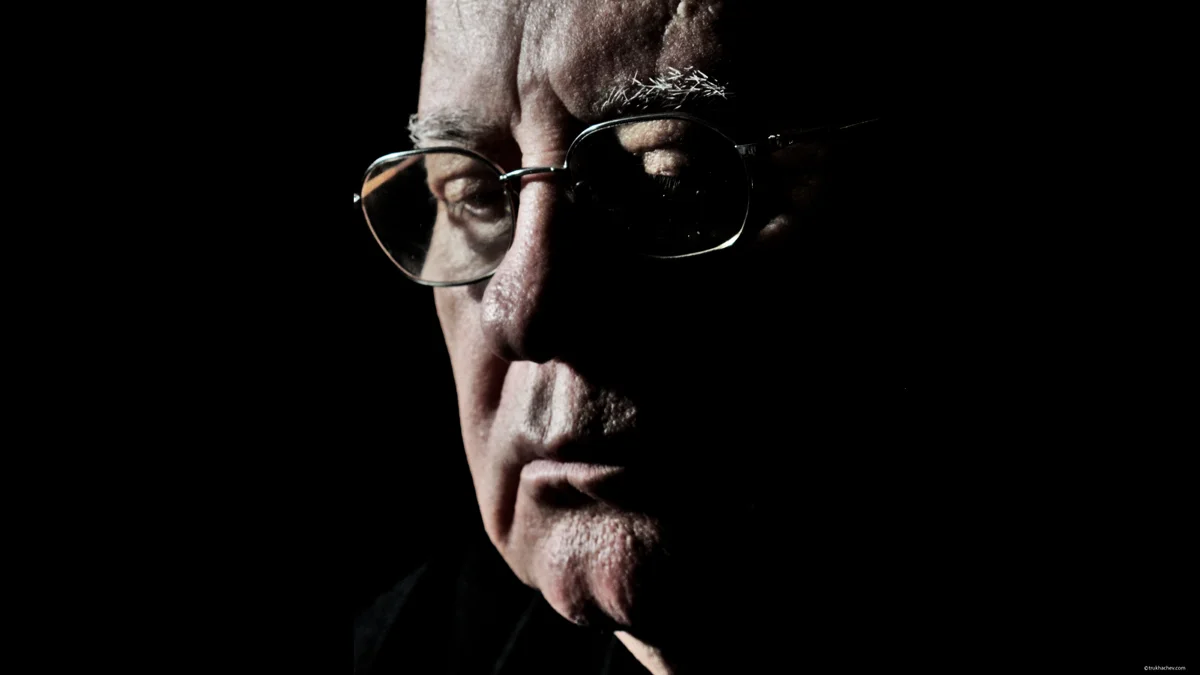
“But how can we be with the eras of the decline, when the time of development and flowering passed and the place of disappeared devotion and faith took the false phraseology, when the celebrations replaced magnificent performances, and the principle of trust in power turned into stupid indifference or Machiavellism? Alas! Such eras do not represent interest for the world history, in the annals of mankind, the records of them will be shorter and shorter until they are completely deleted, like false and unnecessary. What misfortune to be born in such an era! To be born only in order to find out by your own example that not God, but a lie and Satan, rules the world, and that the Supreme Charlatan sits at the top of the public staircase!
You just imagine how an innocent worldview of several (two, sometimes three) live in such an era of generations, from their point of view of living, in fact, in essence, destroying themselves and at the same time recognizing that there will be no second life for them ”*.
That's what he saved us, his contemporaries, Mikhail Sergeyevich Gorbachev. He freed us. And he himself did it, of his own free will, we did not ask. Units fought for freedom then, there were even fewer those who believed that this was possible. He gave freedom to all of us, and what we did, not his fault and not even his concern. This is our responsibility. Actually, you can stop there. In history, this happened peacefully only once and thanks to him.
* * *
For a little more than six years, Mikhail Gorbachev had real power as the head of state. You can analyze in detail what he managed to do during this time and what not.
But, paradoxically, the main achievement of Gorbachev is exactly what he did. But he did not do what all the Soviet leaders did a great job: Gorbachev did not hold people in fear.
And despite the fact that three decades have passed since the resignation of the first and last president of the USSR, the figure of Mikhail Sergeyevich remains extremely important for the present and for any conversation about the future of the country.
1989 is an obvious turning point in recent history. The 30th anniversary of those events has recently been devoted to many articles, research and even books. The overall tonality of these publications is the unjustified hopes, unrealized opportunities, unattainable goals, in general, The Light that Failed, faded the light (the name of Redyard Kipling’s novel “Light” was recently used for their book about the hopes and realities of the last three decades in Eastern Europe Ivan Krastev and Stephen Holmes **). However, hardly anyone questions the critical importance and the epochal scale of the fall of the Berlin wall, the liberation of Eastern Europe from communism and democratization of the USSR. And it was Gorbachev who played a key role in these events.
During his reign, Gorbachev managed to put the beginning of a new era. And the reasons for today's global problems and crises are largely due to the fact that the era begun by Gorbachev ended: the new, based on values of thinking, came archaic, opened the windows of possibilities slammed slammed, and now it is necessary to open, and sometimes cut down new ones. But for this you need to comprehend and understand what has been done and has not been done in three decades.
Do not curse Gorbachev, but to look first of all and try to answer the question of how and why the possibilities opened for all in the late 1980s were missed.
These possibilities were based on freedom. The freedom that Gorbachev gave Russia. Freedom, which we did not manage to use. Gorbachev gave the opportunity to Soviet citizens who had been afraid to open their mouths for decades, to freely say what they think, without fear of execution, prison, dismissal from work, and even exceptions from the party. And this is not just freedom of speech as one of the democratic freedoms, but the existential liberation from fear - the one that in Russia sometimes with contempt, sometimes with justification is called genetic.
For this donated freedom, the absolute majority did not have to fight - units donated themselves. The complete awareness of the achieved did not come. Russia failed with this freedom: I did not learn to live without fear, did not take advantage of freedom for creativity, did not save, did not protect, did not increase and eventually lost it.
Today, many in our country consider what happened in the second half of the 1980s not a blessing, but a curse.
However, then, more than 30 years ago, tens of millions of citizens of the USSR readily perceived the freedom of speech literally collapsing on them.
Criticism of power without fear of repressions, the discovery of forbidden topics from the “white spots” of history to the problematic “blind zones” of the everyday life of Soviet society - all this was like rain that fell on dry soil. New information was instantly absorbed, and it was required more. The country, people, public consciousness wanted freedom (at least to speak, listen, read, discuss) and the truth. And what has happened to Russia over the past 30 years is not the fault of Gorbachev.
The era of post -Soviet reforms from the point of view of freedom and respect for a person ended in complete collapse, and the responsibility for this failure lies with everyone who lived and worked in this era.
This applies not only to politicians who made decisions, but also ordinary citizens who had the opportunity to speak and act, choose and vote as they considered necessary, without fear of repression. Therefore, all those who allowed themselves to drive themselves back into the political stall of irremovable corrupted deceitful power are responsible for the reverse transformation of the country along with those who were allowed to make such decisions.
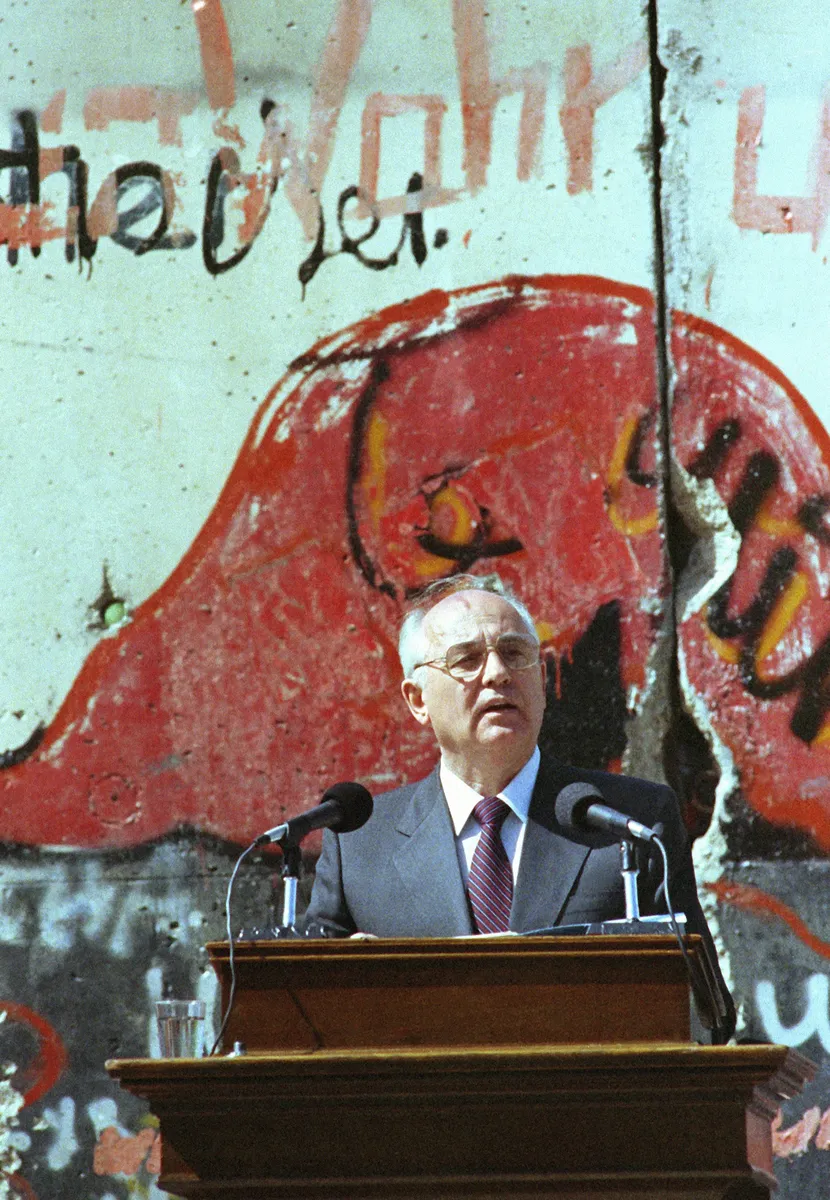
By the way, at the junction of the 1980s and 1990s, not only the peoples of the USSR received freedom. Europe was freed from division and military blocker confrontation, and the whole world-from the permanent fear of nuclear war. How Europe and the world took advantage of this freedom - another question.
* * *
Once Putin, answering the question of whether the head of state should hide his children and grandchildren from the public, said: “... such a Western political culture is connected with the representative office, as it were, family members. But it seems to me that we are not in this state to be engaged in this theater. We should have everything in an adult way. Seriously"***.
In fact, the Putin’s approach is not at all “adultly”, it is simply imitation of Bolshevik models and practices. Gorbachev, even in this paragraph, had everything in fundamentally different.
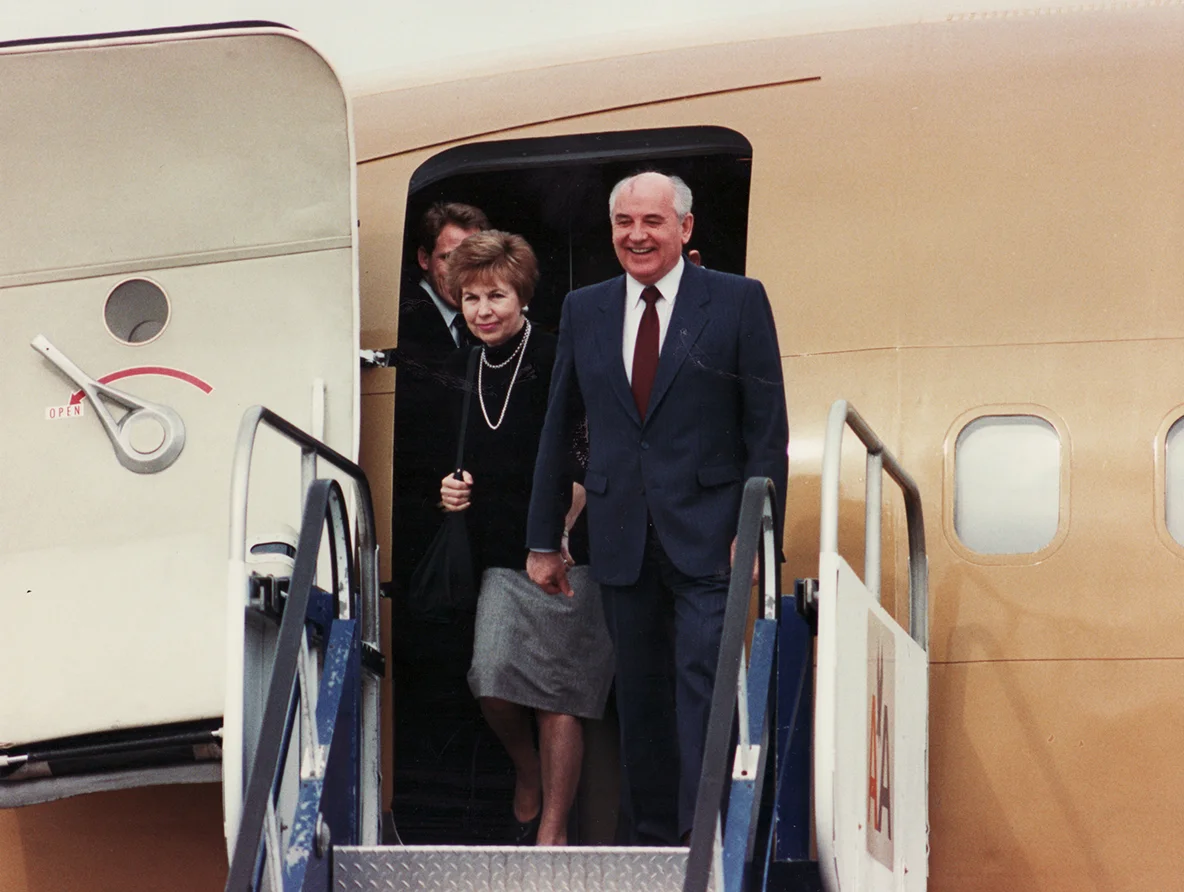
The appearance of Raisa Maksimovna next to the Secretary General was not “copying the Western tradition”, but by the gap of the Bolshevik template, in which a person is a function, a sliver, and any human manifestation is perceived as a weakness (about sincere love and warmth in the relations of the Gorbachev spouses testify to the last days of the first and only lady of the Soviet Union - when her husband fading from cancer was literally worn hands).
It is in the return of the Russian state to the Bolshevik standards of political thinking and behavior - the roots of current processes in our country.
This is the breakdown of the constitution, and the persecution of political opponents, and the interpretation of state sovereignty in the spirit of “what I want, I turn, and the concept of“ multipolar world ”based on this understanding, and an attempt to revive the policy of“ limited sovereignty ”in relation to neighbors. This is a conscious reversal back, return to the Dogorbachev era.
For the rejection of the achievements of democracy of the late Soviet period, for crossing out everything that Gorbachev managed to do, Russia will have to pay expensive. One example with the destruction of arms containing contracts is enough to understand the scale of the price of this turn.
In recent months, as the head of state and after the resignation, Gorbachev had to survive a lot: humiliation, insults, and injury. But this did not break Mikhail Sergeyevich.
He managed to maintain dignity and remain a man, perhaps even more vivid and more authoritative than he was, being at the helm of the state.
Having all the possibilities, Gorbachev did not go anywhere, remained in Russia. By and large, he remained in politics. From time to time he was interested in his opinion in the Kremlin. Gorbachev’s words are probably the last thing that they were ready to hear in the world from a country with a negative reputation. By the way, if he went abroad, then all that he had done once, all the changes that he contributed would have had a completely different meaning. And personally, I am infinitely grateful to Mikhail Sergeyevich for the fact that he remained in Russia, with his people.
Gorbachev also proved that you can part with the authorities, while maintaining respect and dignity.
Yes, in our country, many do not like Gorbachev, do not even try to understand and evaluate his contribution to the future. And this, of course, is an unfair attitude. After all, Gorbachev gave people the freedom of choice, allowed the peoples of the USSR - Ukrainians, Kazakhs, Latvians, Lithuanians, Estonians, Moldavians and many others whom he released from the “barracks” - finally live as they want. Then, in 1991, the Russians themselves unconditionally supported the Bialowieza Pushch, Yeltsin and catastrophic reforms, which by the end of next year led to complete and general impoverishment. Gorbachev has nothing to do with it.
So now, the Russians themselves vote, Pustin, for the lack of economic policy, for the fall of real income, for the extension of the retirement age, for judicial and extrajudicial reprisals, for the authoritarian constitution, for the irremovability of the authorities, for the destruction of the Memorial **** and for a special military operation. After Gorbachev, 30 years passed. During this time, the Russians voted eleven times in the federal elections, when, in spite of everything, there was a choice.
Eleven times, people had the opportunity to change the course of events and begin to move towards freedom, truth and justice, to follow the path that Gorbachev opened to the country. But most have made a different choice.
Well, this is the right of the people. But if someone does not suit anyone in modern Russia, then you need to be offended by yourself, and not at Gorbachev.
* * *
The historical role of Gorbachev, his contribution to the idea of politics are extremely important and valuable, and not even so much for the current moment (unfortunately, this moment has already been lost), but for the future. The figure of Gorbachev, his life and political heritage today are more than ever relevant for the whole modern world. This is one of the components of a new hope.
The current state of the world in all positions is much less stable and much more dangerous for humanity than the one in which the world of Gorbachev left us. Look:
He created a global nuclear security system, and now this system is practically destroyed;
He did a lot for international unity in solving global problems, and the current world is more and more split, demonstrating the lack of will to develop joint decisions;
He set a vector to overcome the gap between the eastern and western parts of the Euro -Asian continent with the potential for creating a single value and economic space from Lisbon to Vladivostok, and today Russia is moving in the opposite direction from European values, while Europe itself is torn to parts of nationalism and populism;
He contributed to the peaceful dismantling of the Soviet totalitarian system, and now the US authoritarian future is being discussed.
In recent years, in the West, the topic of Russia's intervention in the elections and politics in other states, Moscow involvement in the collapse of Western democratic institutions has been extremely popular. Maybe it intervenes, maybe involved. But if the West really falls apart due to the frauds of some Kremlin cooks on the Internet, then the problems are in a state of Western society, and not in Russian hackers.
All this is very similar to talking about the role of the CIA in the collapse of the USSR. Like the West today, the USSR then collapsed from the inside, the problem was in the Soviet system itself.
In general, today it is important to remember that the USSR had the second largest army in the world, a huge nuclear arsenal, and the state collapsed for its internal reasons, which were in no way connected with defense capabilities - it simply became an insurmountable gap between society and the state. But could Gorbachev prevent such a development of events?
Was the last Secretary General when making fateful decisions a certain strategy or momentary considerations? How consciously and thoughtfully did he act?
Most likely, Mikhail Sergeyevich simply did not imply such a rapid development of events, such a decisive rejection of the Soviet system. He gave people freedom of speech, and everything else was already a consequence, everything happened almost instantly.
Yes, Gorbachev really believed in the possibility of renewing socialism, believed that life can breathe into the already lifeless body of the Soviet system.
Yes, there were erroneous solutions, it happened to make mistakes in people, in understanding and evaluating the situation at a particular moment in time.
It was all.
You can also reproach Gorbachev for not formulating deeply and convincingly, which should be new political thinking for our country and the whole world.
However, all this does not change the main thing. And the main thing is that the transformation that happened during the reign of Gorbachev with our country and the world was actually a value revolution. From a distance of decades, Gorbachev began to embody new political thinking, a new philosophy.
Yes, there were no institutions based on values. Gorbachev did not do this - a too short period of time in power was measured in power, and perhaps he did not see such a task at all. However, in the next three decades, new institutions based on common values have not been created. On the contrary, the concept of the “end of history”, the celebration of the model of Western democracy of the last years of the 20th century as a frozen institutional form, won. Meanwhile, the values that underlie this democratic model, in the absence of rigid opponition from Soviet totalitarian socialism, began to be perceived as a formality, common place, beautiful words, truly not related to “real politics”.
However, the source of the problems of the modern world in fundamentally different phenomena is in cynical pragmatism a real policy and real economy.
It is these phenomena, unfortunately, today determine our life and the modern world. But to the historical vectors of Gorbachev, to the values to which they are directed, will inevitably have to return. And the sooner the better.
* * *
In August 1995, Gorbachev was the only time in my office (and not me in him). And I asked him a question:
- Mikhail Sergeyevich, I understand correctly that the most important thing you have done - gave people the opportunity to speak loudly and aloud what they think? For this, they stopped putting them in jail, dismiss from work and even exclude them from the party. And this turned out to be enough for the communist totalitarian system, built on lies, fall apart?
“That's right,” Gorbachev confirmed.
“And then,” I said, “please explain to me how you, the General Secretary of the Central Committee of the CPSU, could have occurred to me?” How could you think that people could be free?
Gorbachev smiled and answered:
“Grisha, don't you know that Raisa Maksimovna is my philosopher?”
* * *
Gorbachev gave us freedom. He gave freedom to millions of people in Russia and around it, as well as half of Europe. How we took advantage of the freedom donated to us in Russia, this great opportunity is already our responsibility.
Few leaders in history had such a decisive influence in its time. Over six years in power, Mikhail Gorbachev changed the world.
Gorbachev did not leave Russia. He would be accepted with enthusiasm in any country, and he remained in his homeland, where he was extremely difficult from mass misunderstanding and rejection.
And yet. Gorbachev, who possessed unlimited power, did not steal anything among his country and his people. When the money was needed for his charitable foundation, the USSR President starred in advertising. Having passed the test of power, Gorbachev managed to maintain dignity and remain man.
* * *
Thank you, Mikhail Sergeyevich, for freedom, for a chance, for the opportunity to see the prospect of truly free Russia!