
Translated material
Country of coffins, country of gentlemen
A stress test for a bureaucratic machine caused by mobilization will lead to a complete revision of the Putinism Public Treaty of the Public Treaty
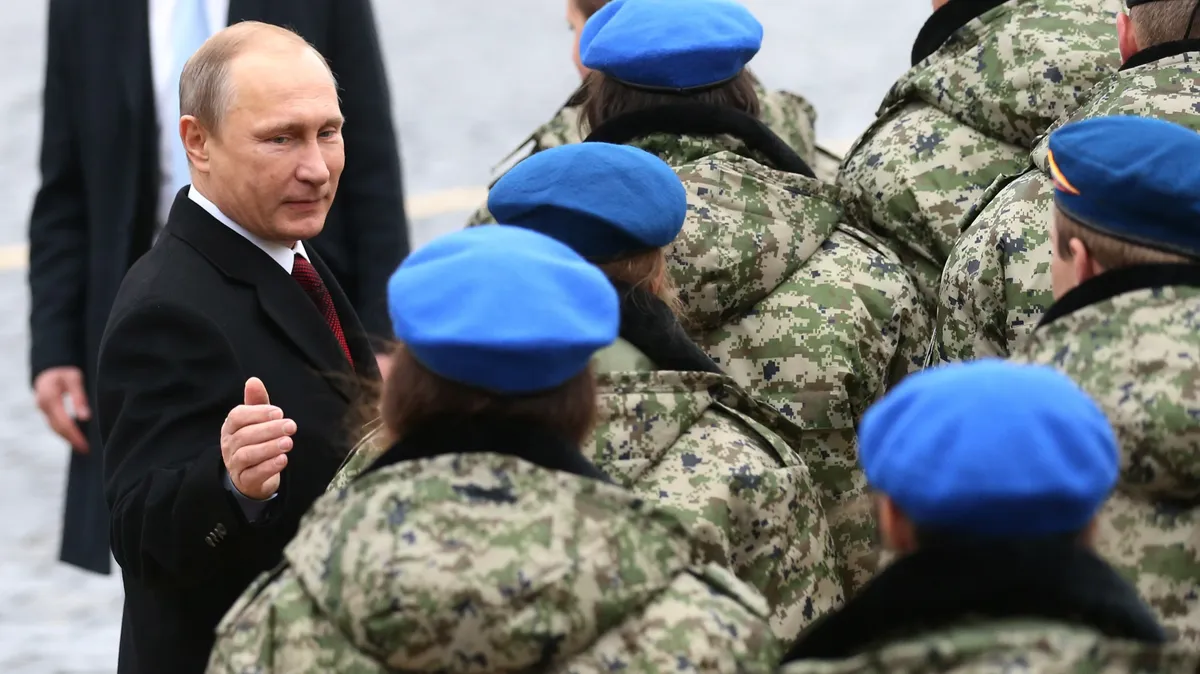
The “partial” mobilization announced by the president, by the second day, has become a serious stress test for the bureaucratic machine built in Russia in recent years. The problem is that the quality and nature of its local execution, unlike other problems more traditional for Russia (roads, benefits, inflation), will directly affect the support of the president: by the sixth month of the war, it is unlikely that anyone had doubts that the war with Ukraine is its personal decision.
Decree with spaces
The decree published yesterday - in the traditions of Russian legislation of recent times - is written as framework as possible. As it has already been noted correctly, it does not follow from it the “partial” nature of the mobilization.
His seventh paragraph, where, in theory, the number of reserved reservists should be indicated, hidden by the heading “for official use”, although this figure was announced by the public defense minister Sergei Shoigu and indirectly confirmed ,) Dmitry Peskov - 300 thousand people. A fair question - why it was necessary to hide the voiced information - it is in the air and obviously gives rise to a wave of rumors about a much larger scale of the draft campaign. In addition, the traditional closeness from the public of any significant data from the Ministry of Defense, and the absolute disobedience of the department under the GOSTINA label, gives the Kremlin an obvious opportunity to try to mobilize more than 300 thousand people, never revealing the present number of people who, as a result, on the front line. All the same, no one will ever check this number, and for the needs of the homeland - any “excess” can be considered permissible.
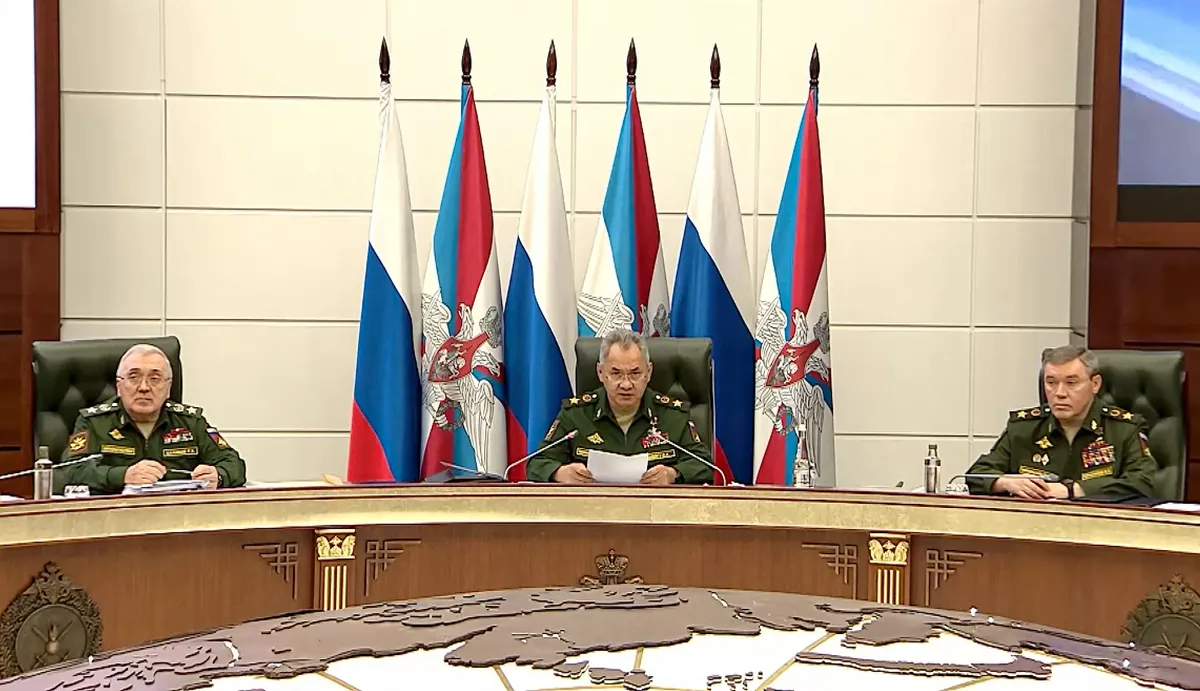
The decree does not contain any other hints of the partiality of mobilization, including the shoiga stated by the age of age and priorities for any military-related specialties, supposedly more necessary for the front. In theory, these norms should be set by a special directive from the Ministry of Defense, lowered to military commissars in the regions. Of course, no one also published the directive either. The clarifications of the Ministry of Defense at a briefing on Thursday, September 22, are an incomplete retelling of the law on mobilization or repetition of yesterday's theses of Shoigu, that is, they do not clarify in any way what the promised partial parties of mobilization are.
Governor's race
However, this is initially a “rubber” decree that is one point written quite clearly. Clause 8 The performance of the mobilization standards is actually lowered to the regions. Moreover, the responsibility is not entrusted to two actors at the same time - for example, governors and military commissars in the regions, which would be more logical - but fundamentally only at the first. On the one hand, without regional authorities, it is simply quickly not to deploy the infrastructure for mobilization, which is required in addition to the military commissariats already available to the norms of even 300 thousand people. But on the other hand, such exclusivity in responsibility for fulfilling the KPI on mobilization, assigned to the shoulders of governors, looks like the only possible way to ensure these indicators somehow.
Contrary to popular belief, over the past 5-7 years, the average level of quality of the bureaucracy and what is called Government Capacy (state viability) has grown in the Russian regions. It is still quite low and is very different between leaders and outsiders, but on average it became better than 10 years ago.
Firstly, part of the older, local regional teams overgrown with rental flows and turned the regions into their sultanates, was replaced by younger in the course of targeted “technocratic” pumping of the governor’s corps from other regions. It is more important here not so much the replacement of the governor himself as the shake of the local bureaucracy, when everyone who remained from the previous team must mobilize, and new people specially instructed to departments should, at least the first time, prove their effectiveness.
Secondly, this new governor's appeal, and after them and the old appointments, presented new incentives for more efficient work. Namely, they tried to realize the Chinese version of vertical mobility, imposing the future continuation of the career at the federal level with the achievement of indicators , not only related to the results of “United Russia” in the region, but also quite economic - the volume of involved investments, the number of new housing commissioned in return for the old, etc. In this race to the chair in the federal center, governors are not competing with themselves the same, but with each other, which spurifies them to run all the time faster.
Thirdly, the governors and their teams recently had their own mobilization: pandemia, Locksuns and a vaccination campaign. Just as this time, making decisions on anticornections (along with responsibility) was lowered to the regional level. By the general opinion from the center, the regions with a stress test as a whole coped, in many ways focusing on the local context, borrowing practice from each other (not always the best, but nevertheless) and focusing on one fairly understandable goal. Probably, the Kremlin decided that the task of mobilizing is similar to an attempt to cope with the coronavirus, and decided to repeat the experience. That is why we already see regional differentiation today: for example, in terms of the regions, the departure of all reservists is prohibited , and in the part - the “borders” remain open.
Thus, in several dozen regions with a relatively good level of Government Capacy of regional teams, governors can also perform the KPIs by him for a set.
In 10-15 regions, the figure will be brought to 70-80% of the declared norm due to the excessive retail and the odiousness of the mayor themselves: the conventional Alexander Beglov or Vyacheslav Gladkov will do everything in order to prove their effectiveness to the center. For the rest of the regions, I think that the Kremlin is seriously not counted.
Failing complexity
The problem is that even the most effective regional teams are able to take the bar only if it is “numerical” rather than a day. If a real order by the type of military accounting specialties or other mobilization parameters from the Ministry of Defense exist (and this is not a rhetorical figure to soften the message for the population), then in order to cope with a much more complex scheme-“not to call anyone, but specific,” the governors simply do not have tools. Probably-and we see this on the present day-the achievement of the indicator will be closed due to more debugged and tested tools for coercive population to some actions. There are two such tools, in fact. The first is the descent of instructions on the administrative vertical in the form of lists of enterprises, departments, public organizations and, as a whole, administrative-dependent social groups. They tried exactly so to achieve the filling of the vaccinated registry, and they also “pull out” to vote for the right party or candidate. The second method is to capture in the mode and special operations of everyone who is too noticeable or has long interfered. Such indicative selectivity is needed to make the rest be afraid and cooperate.
As a result, the regions where the second tool will dominate - literally capture on the streets - gradually (possibly not in this, but the next, i.e. in a couple of months, a wave)
They will turn into an analogue of the LDNR of the first months of the war. Regions with the dominance of the first tool will look more civilized, but with the exhaustion of socially-dependent groups, everyone will gradually switch to the second option.
Society without a contract
In any case, there is no appeal on the lists of military accounting specialties or by age, in words declared by Putin and Shoigu, in most of the regions will not take place. Even if these lists with such details are lowered, they mobilize those who can, and the lists or military tickets of reservists are falsified by retroactively. Probably, the prevalence of falsifications will be similar to the pattern of the distribution of manipulations by death statistics from coronavirus. As a result, this gap is between Putin’s speech / Shoigu about the partiality of mobilization and the reality of the call of everyone to whom the regional state mashmashin will reach - it will quickly become obvious to the population.
The social treaty, which was held by Vladimir Putin in the first years of his reign of Russia, consisted in the fact that society did not go into politics and did not interfere with the elite, in return, receiving a small but stable growth of the standard of living and the state’s reciprocal non -interference in your affairs. The social contract of “late Putinism” has been simplified for lack of economic growth: you do not go into politics and give us to enrich, and we do not climb into your affairs without the need. Both the first and second stage demanded from the society classic for the authoritarian regimes of conformism and largely held on it. Even the first half a year of the war with Ukraine , the “loose majority” traced in the pollution, which was more likely to reconciled and adapted to life with a “special military operation”, continued to drag the president’s rating exactly in the same logic: the professional army is fighting, nothing is required of us except to get his belts again.
The mobilization announced by the Kremlin fundamentally changes the type of public agreement: you are still persistently asked not to go into politics and not interfere with the residues of the suction economy, but now the state mashmash has come to your house and is going to take a son, brother or husband for her purposes. Moreover, this can happen to anyone who does not belong to the elite directly , and will occur periodically, since the goals of the war and the decree on mobilization are “rubber”.
The instantaneous folk rebellion due to the final funeral of the public treaty of “late Putinism” will not occur. But by the end of this wave of mobilization from the real rating of Vladimir Putin, it is also unlikely to remain.