
Translated material
In Iran, protests continue for a week because of the death of the girl, whom the police detained for the "wrong" wearing of the hijab
Dozens of people died
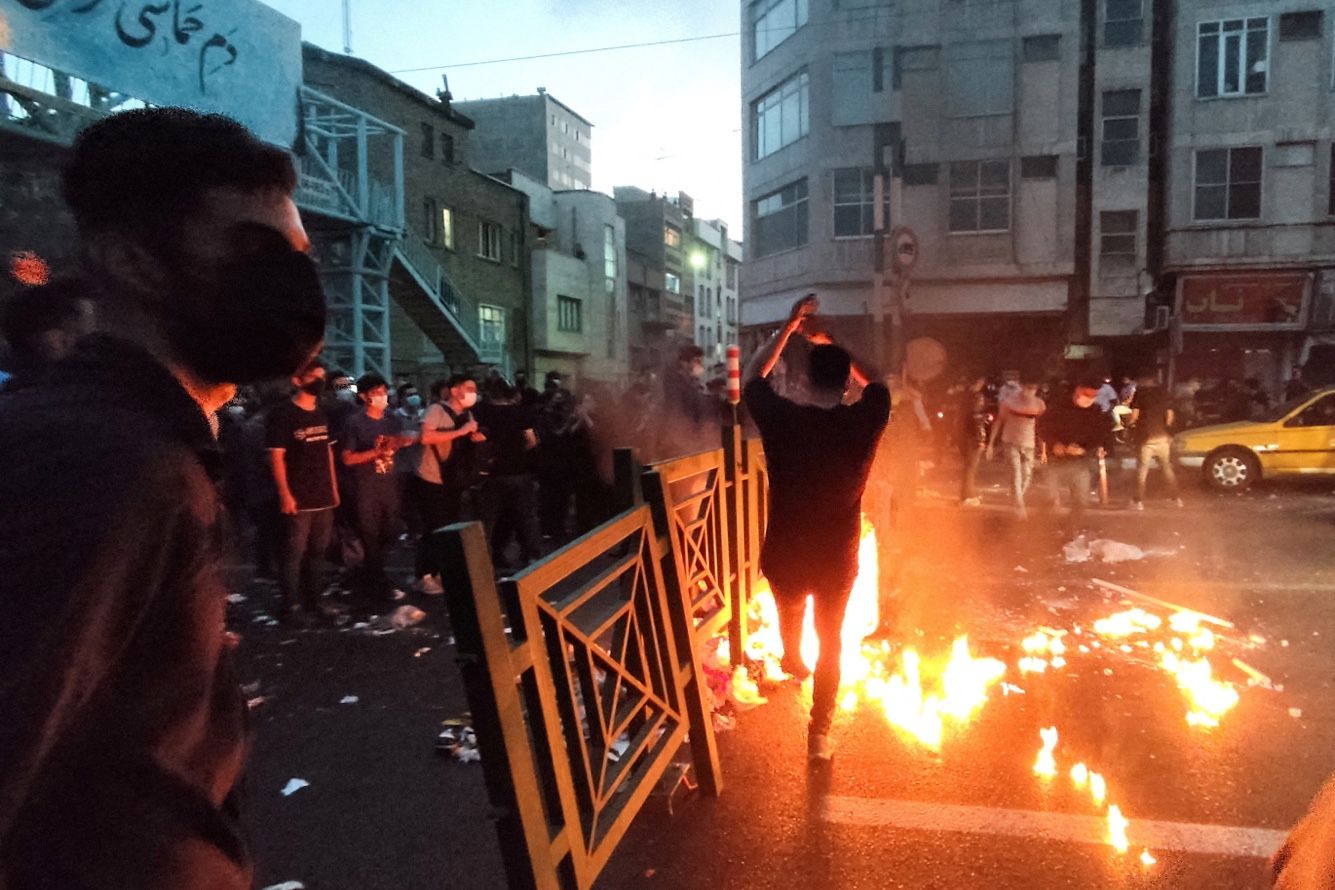
In Iran, the protests that began after the death of 22-year-old Mahsa Amini, which the moral police detained for the “wrong” wearing of the hijab, has been going on for a week. She died in the hospital after she was brought there from a police station.
The first shares began on September 16, on the day of the death of the girl. Since then, protests covered dozens of cities. Their participants build barricades on the streets and chant “death to the dictator” and “woman, life, freedom”. Law enforcement officers disperse the shares with particular cruelty - dozens of people were killed, hundreds were injured.
According to the human rights organization Iran Human Rights (IHR), at least 31 people died during the protests-among them were teenagers, elderly people and one 10-year-old girl. Most people died on the night of September 22 in the city of Amol, located in the north of the country. According to the source of the organization, during night clashes, 11 people were killed by security officers. About 60 people were arrested.
Another source told IHR that the same night, about 200 women arrested for participating in protests were taken from Tehran to prison of Garkchak. According to him, women had been in custody before for two days, where they were severely beaten.
After the start of the protests, Iran’s authorities began to limit access to the Internet, and later they completely turned it off. Netblocks non -profit organization reports that in some parts of the country this began on September 19. Later, restrictions spread throughout the country. On September 21, a complete shutdown of mobile networks was recorded. According to the organization, these are the most large -scale shutdown of the Internet in the country since the protests of 2019 , when about 1,500 people died .
“The government blocked access to the Internet so that people could not send the evidence of the atrocities of the authorities to the outside world. We must continue to strengthen the voice of the Iranian people so that public indignation because of Aini’s death does not turn into a massacre, ” said Hadi Ghami, head of the Center for Human Rights in Iran (Chri) human rights organization.
The Kurdish human rights organization HENGAW gives the most detailed information about the victims during the protests, but its data are limited to Iranian Kurdistan and Western Azerbaijan. So, the organization confirmed that on September 21, protests took place in at least 12 cities, eight people were killed on these shares and about 300 were injured. Among the dead are two teenagers - 15 and 16 years old.
In total, according to the organization, in five days after the death of Mahsi, Amini in two provinces of Iran was killed at least 15 people, more than 730 were injured and about 600 were arrested. At the same time, the organization notes that many of those who have been injured do not seek medical help, as they are afraid that they will be arrested.
Information on cooperation between law enforcement agencies with medical institutions is confirmed by Iranwire news resource. In particular, he claims that ambulance cars with the victims immediately go to police plots.
Iranian President Ibrahim Raisi, during a press conference at a session of the UN General Assembly, said that “there is freedom of expression in Iran,” but actions aimed at creating chaos are unacceptable. The head of the judiciary Iran Golyam Hossain Mokhseni-Edgei approved the “preventive detentions”. Iranian journalists were forbidden to cover protests under the threat of arrest.
“After hundreds of civilians have been killed in recent years during the suppression of anti -government protests, the possibility of mass bloodshed is now real, and the world must take measures until it has become too late,” said Chri Head Hadi Ghaemi.