
Translated material
Plus electricalization of the whole country!
Disposable cars - a product of the super -consumption society. Problems caused by the rapid distribution of electric vehicles, which is more difficult than Ilon Musk thought
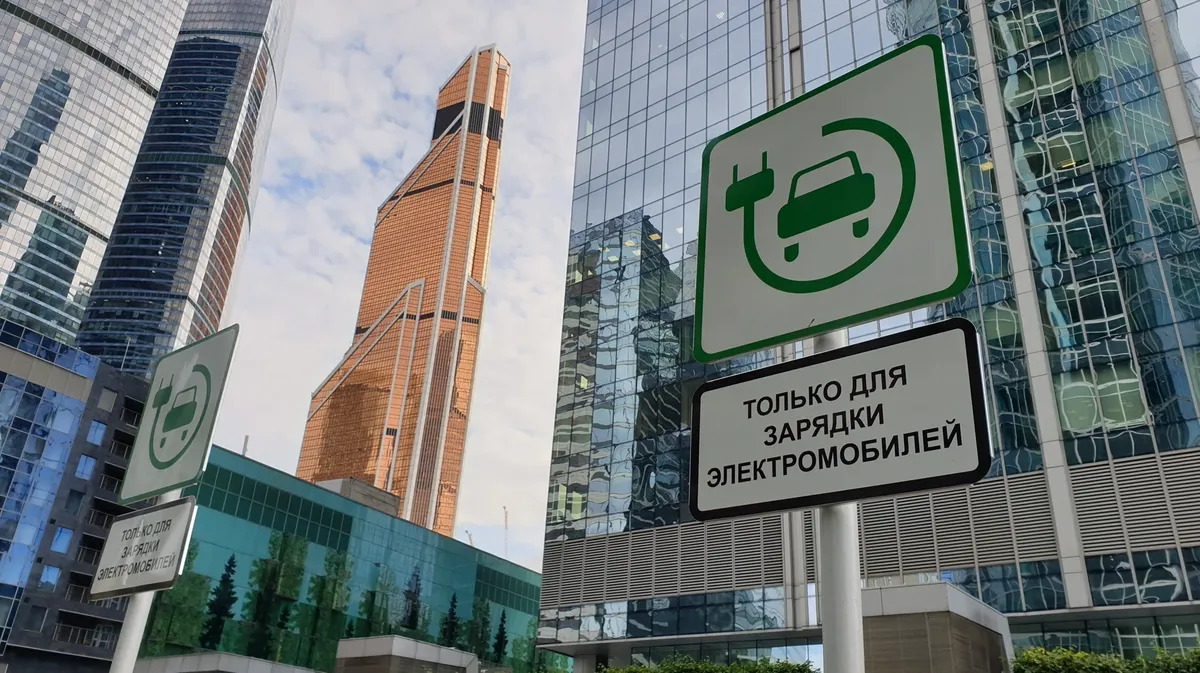
Moscow enters the era of electric vehicles
On September 4, three models of Motorinvest EVOLUTE electric vehicles were presented in Moscow, which will be assembled under the Lipetsk method of coarse assembly. Before the New Year, it is planned to manufacture and deliver to the dealerships of Moscow 2000 of these clones of Chinese factories Dongfeng and Sokon. The government will subsidize the purchase, the average price of the EVOLUTE 2-2.5 million rubles is expected on sale.
Motorinvest announced truly Napoleonic plans: the localization of Evolute cars should become almost complete in 11 years. Everything will be domestic in general, including traction batteries and electric motors. So far it is like boasting. But the screwdriver assembly is an absolute reality.
By the same period, the Moskvich plant, with the support of the Sobyanin government, will begin to assemble UAZ Patriot electric cars. The initial production capacity is 1000 pieces per year. UAZ has reached much more, today it puts domestic engines on its electric cars (almost everything else has long been Russian). But the batteries are still Chinese.
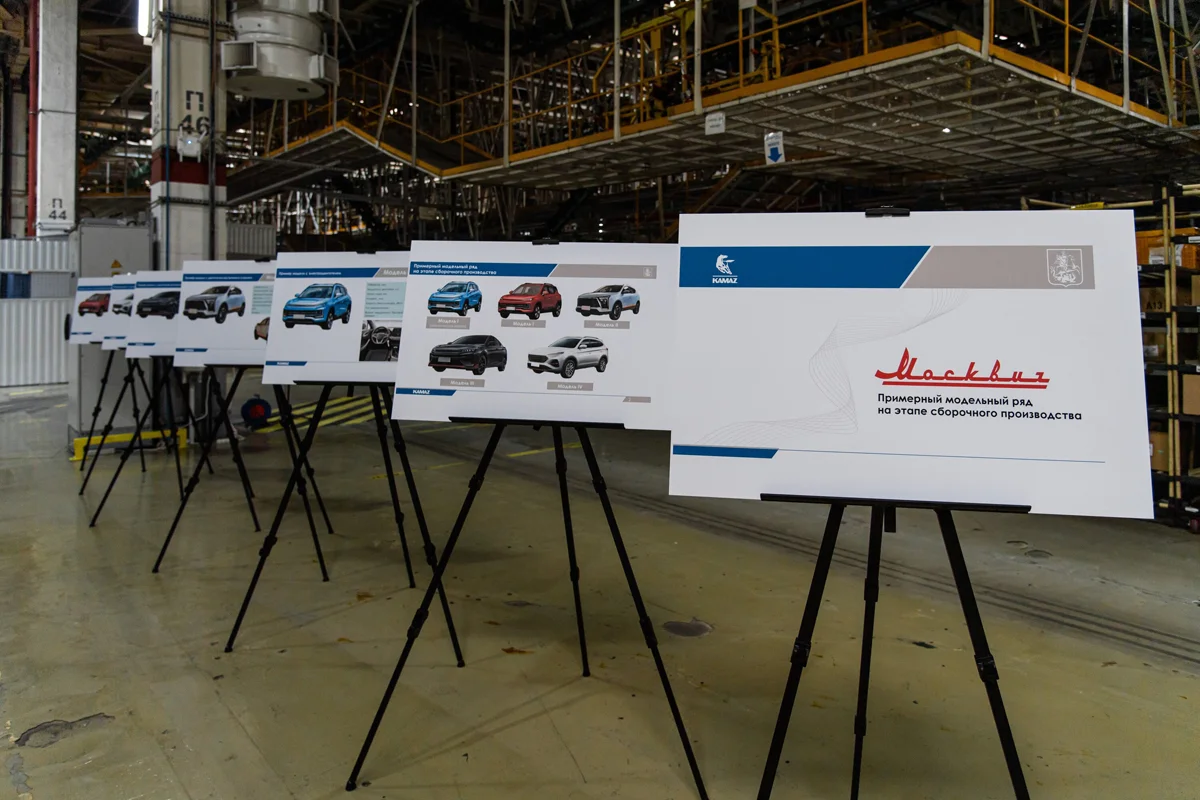
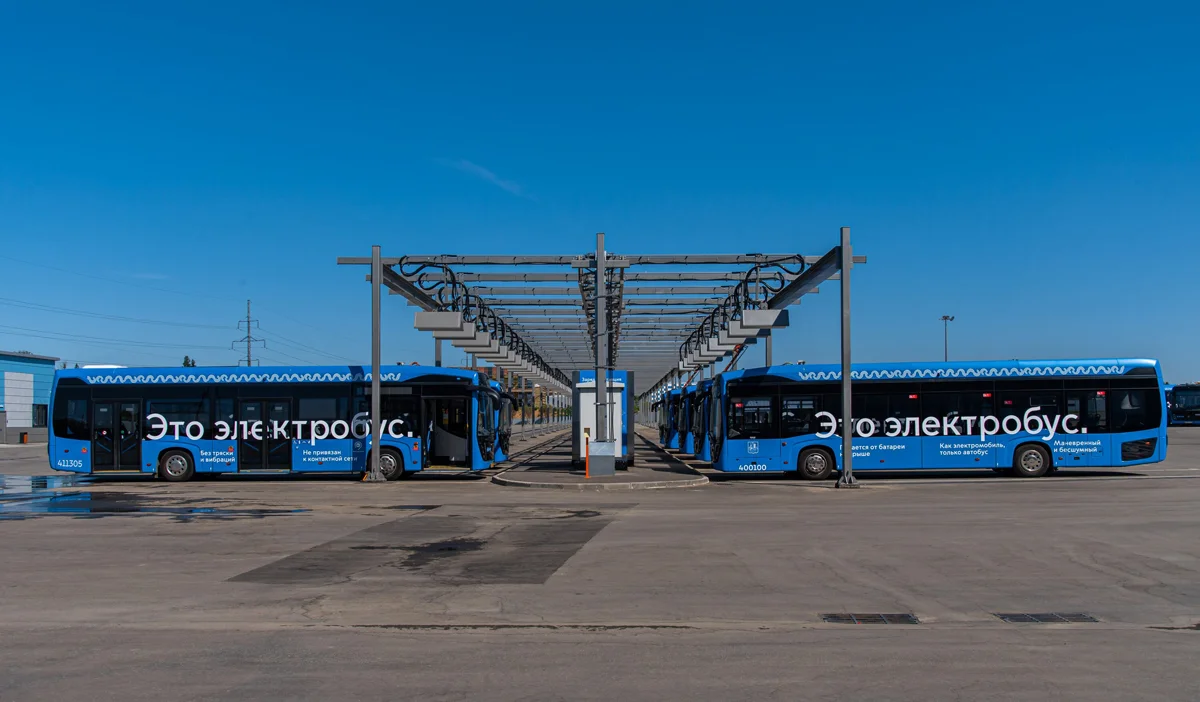
In the development of another line of electric cars - Moskvich Electro , the capital collaborates with Chinese AiWays. Moscow generally goes ahead of all in the development of production and infrastructure for electric transport. We have already written about the metropolitan park of electric buses . At the same time, the project of electric passenger river ships is approaching by the same (the first line “Fili Park” - “Kievsky Station”), to which the shareholder of Novaya Gazeta Alexander Lebedev is most directly related.
"Electric car" now we have a fashionable word. Their imminent production is declared both in KAMAZ and in a number of unknown startups.
Today in Russia only 0.06% of electric cars from the total number of cars. But their number is growing rapidly.
In addition to the decreased value, experts indicate a low cost of operation and ownership.
Their main disadvantages include a small run on one charge and loss of up to a third of energy in winter frosts. A small number of charging stations also cause skepticism. Today in Moscow there are about a hundred (for many charging are generally free), they plan to create 600 by the end of next year.
Law and the government plan to introduce free travel for electric cars along the paid routes of Russia for three years. It is assumed that the preferential regime will begin to act next year. This, of course, is an incentive, but the development of a network of charging stations is more important.
Paradoxes of environmental utopia
On this, good news about electric cars end, and it is time to move on to the problems of the young industry that experts explore. And there are more questions all over the world than answers. Therefore, we forget PR publications and turn to the realities.
Let's start with the most obvious. We all see that the global economy is moving a model of overcoming. Over the past decades, there has been a radical decrease in the cost of everything that is produced in factories. A suit for $ 150 at the output of an automated sewing workshop is reality. We are not discussing quality, but this is a costume.
And so everywhere. More and more complicated technical products - refrigerators, televisions, washing machines, smartphones - becomes “disposable”. Generations are replaced in two years, the cost of repair exceeds the cost of the goods.
The turn came to cars. Their durability, even in Germany, decreases. What previously could run along the roads 20-30 years without catastrophic damage for the cost of ownership, now it is necessary to change every 3-5 years - taxes on old cars throughout the operating chain are forced to this consumer. Therefore, cars began to be done with the expectation for a shorter life.
It’s cheaper to buy a new car than to repair the old one. Especially if it is electric.
An example from China - the replacement of the damaged battery of an electric car is 1.5 times more expensive than a new car!

The study of the problems associated with the development of the industry of electric cars was given by Andrei Ionin, candidate of technical sciences, chief analyst of the Association “Digital Transport and Logistics”, the host of the Nemintem Telecase channel, and the author of Novaya Gazeta. He describes the phenomenon of Chinese prices as follows:
“Of course, this is the result of large benefits for manufacturers and buyers of electrician in China. Dutations reduce the price of a new car as a whole, but not its details. The strategy of automakers around the world who earn money on the repair of their cars has long been built on this: the total cost in the retail of all parts separately 2-4 times more than the cost of the car itself. ”
But from statistics it is already known that the residual value of an electric car behaves differently than that of a traditional car with an internal combustion engine.
The price of electric decreases sharply after 5-6 years - when the deadline comes to change the battery. It sometimes decreases to a negative cost, since the battery is not repaired, while it costs 30–40% of the cost of a new car.
In a car with an internal combustion engine there is no system or unit, which is 30-50% of the cost of a new car. When repairing a used car, this is already 100% residual value and even more. This process survived the production of all household appliances - a new unit cheaper than repairs.
It turns out that the usual models of the “secondary market” will not work for electric vehicles - to resell to the province or to developing countries (conditionally from Japan to the Far East).
There are already frequent cases when, after 5-7 years, Tesla owners do not sell them, but burn or simply abandon them. This is not crazy or shocking, but business calculation.
But such a “one -time car” cannot be a model of ecological development of automotive industry.
Problems of mass production. A hunger strike in lakesher segment
For a long time, electric cars were represented mainly in the Laksheri segment. But the time has come to scale production, develop a mass segment. And there were unexpected problems arising from their past marketing positioning.
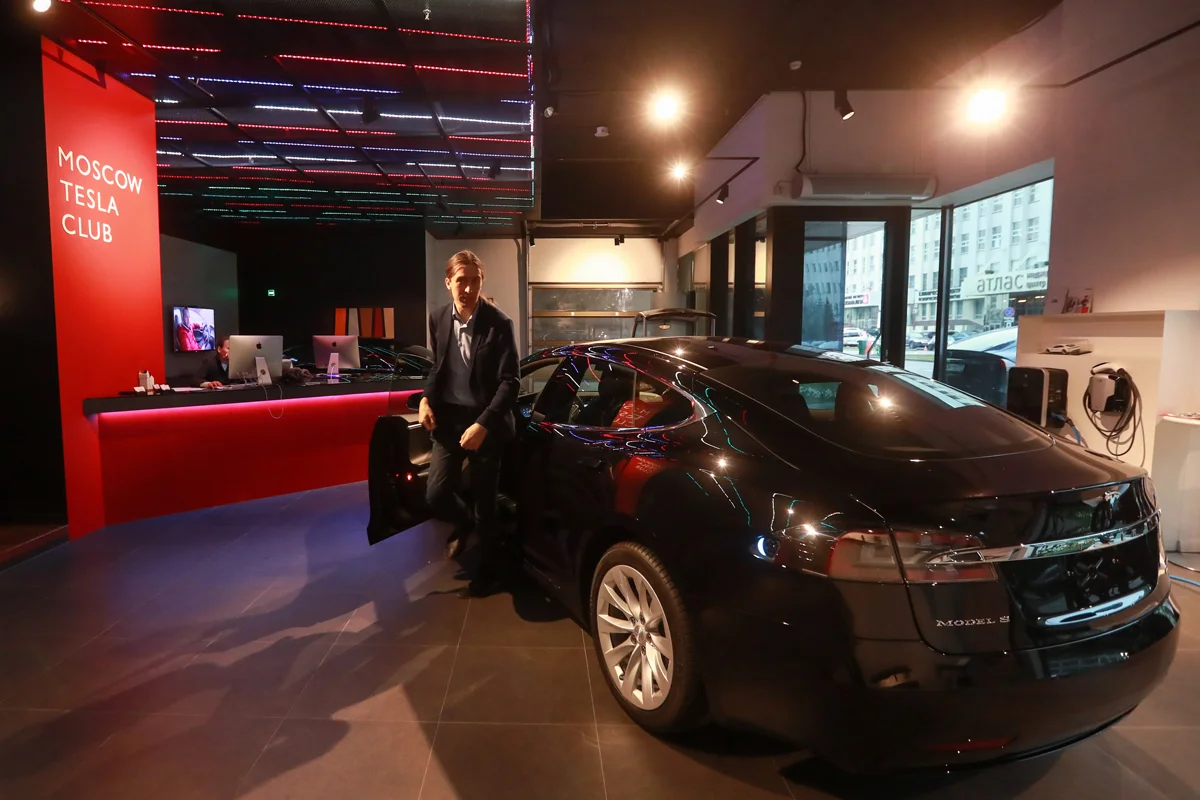
Each year, reliability ratings show: among electric cars the most unreliable - Tesla, and with a large margin. She loses to cars made by an ordinary automobile industry. And this is a direct consequence of the strategy of Ilon Mask.
Comic case. Of the numerous blogs of Tesla's owners, it is known that there are many complaints about the car. Among them are “poor quality of paint, rust, too short the battery life, fruits of door handles, yellowing of the screens of the multimedia system.” In response, Tesla’s services either “ask to wait without indicating the deadlines”, or they will completely ignore the requests (I recall the unobtrusive service of the times of the USSR). As a result, some Tesla owners from Norway united and decided to declare a hunger strike. In the same way, the Canadian sold his Tesla this week because he could not pay for its repairs.
According to Andrei Ionin, an ordinary person, buying a car “for every day”, should not chase the prestige and advertising slogans. In the mass segment they act pragmatically. In the first place is the reliability of the car. And we must think about how closely the repair is located and how much time you will have to wait for spare parts.
That is why the main competencies of mass car manufacturers (in addition to global sales networks, warehouses with spare parts and repair centers) are suppliers and verified by long years. This guarantees high reliability. On that staging and standing stamps like Toyota, Ford, Renault, Mercedes.
But the Tesla strategy is built on elements that are characteristic exclusively for Laksher Segment. This is prestige, which today is increasingly called hype.
A fashionable topic of ecology, the personality of a visionary mask, support for the company by the Western governments as part of a green agenda-also component success.
It is not the quality and reliability of the product that became the driver of tesla capitalization growth, but a quick capture of the market share. This is rather a strategy of IT companies than car. And while Tesla was sold in the premium segment, where buyers follow fashion and want to be the first, she worked.
Such buyers are usually not one car. And the relatively low quality of cars, a long expectation of spare parts or repairing them was little worried: there were other preferences when buying and operating. But as soon as Tesla moved to the mass segment, the requirements of customers to the car changed sharply. They already needed reliability and quick repairs.
According to Andrei Ionin, Tesla did not have and did not have proven suppliers and global spare parts. In its corporate culture, rapid growth is more important than quality. That is, the competencies of the company remained the same. It is here that the root of discontent is its mass models.
How are the rest?
The next blow to the supporters of the complete transition of mankind to electric cars is inflicted from an unexpected side. The leading insurance company of Europe Aha based on tests and statistics shows that
For electric vehicles and risks of the accident higher, and the damage is greater than that of machines with an internal combustion engine. This means that the tariffs of electric car insurance will be higher.
And apparently, significantly .
The study of insurers opens up the details that are not previously known to a wide range of consumers. It turns out that the risks of the accident of electric vehicles are higher because they differ in the dynamics of acceleration at the level of sports cars. However, this dynamics - up to 100 km/h in 5 seconds - was still the only real, and not created by marketers, the advantage over conventional mass segment machines.
Management, brakes and width of tires in electric cars, as in ordinary cars. But quick acceleration often requires quick braking. Their drivers are ordinary people, without special training. It has been proved many times: it is better not to get drunk behind the Ferrari wheel without special preparation. And now behind the wheel of Tesla with overclocking to a hundred less than 5 seconds to sit down, it turns out, maybe anyone.
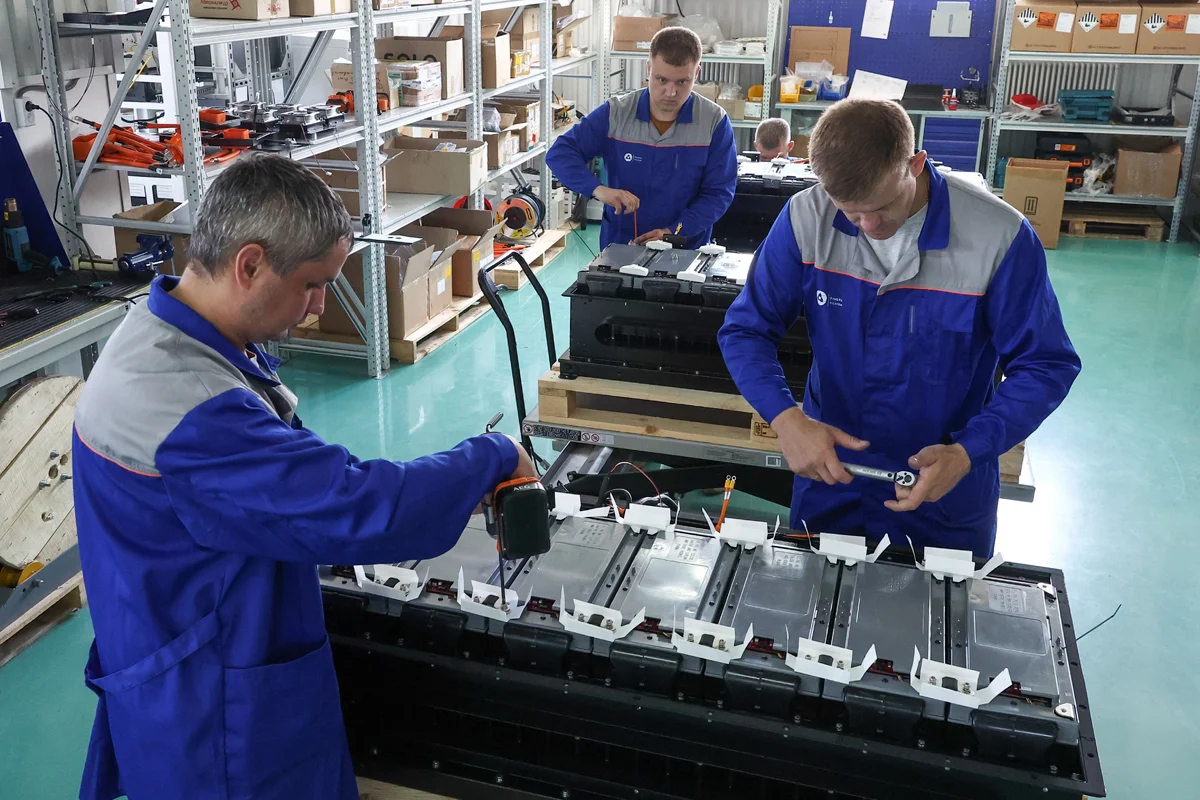
From constant fast accelerations and braking, the tires of the electrician wear out quickly. In the Rounds Formula 1, 3-4 sets are used for 300 km. But on the electrician now they put tires, like the usual cars with an internal combustion engine, and change them with the same frequency. Wanted tires and the inability of drivers to cope with the overclocking of a supercar and lead to increased risk of accidents.
If the tires are changed more often, then the cost of operation of electric vehicles will increase. But this is not yet told to citizens. They do not say that microparticles of tires with constant rapid acceleration and braking are a dangerous carcinogen. It was previously developed on roads in emergency situations, but with the total distribution of electric vehicles, the problem will sharply worsen.
All this can be eliminated. It is enough to artificially limit the acceleration of an electric car, bringing to the usual 10-15 seconds familiar to all of us. Most likely, this will soon happen. But powerful acceleration at the start is the only actual advantage of electric cars. This parameter is specially emphasized in advertising - “Buy turbocharged Porsche at the price of an average“ Audi ”.
The damage in the accidents of the electric car is higher because the replacement in case of damage to the extremely expensive and non -combination battery will cost the price of a new car.
Therefore, the battery is protected by special methods. And therefore, fires from the breakdown of the battery for accidents have recently become relatively few.
But the slightest change in the geometry of the protective cocoon around the battery is not immediately, but it will certainly lead to its damage. Therefore, even after a small accident, it is important to check the entire geometry of the car, and this is not cheap. And to rule in the service the geometry of a protective cocoon ... It is easier to buy a new one, we started with this. It is impossible to eliminate this Achilles heel of an electric car at the present stage.
The main problem
The most important problems in the development of the electric car industry are associated with the key system - a specially protected battery. Just a week ago, an electric bus flashed in the center of Paris - the battery exploded. It is impossible to extinguish the battery with standard means of municipality. It is necessary either to wait until the transport burns out completely, or pour it with an incredible amount of water (it takes to 5 tanks to one passenger car). The simplest thing is to completely immerse it with a tap into the water.

And here we are faced with a problem that countless startups and huge design and scientific groups are fighting. The contents of modern lithium batteries are a very dangerous, inextricable and durable poison for nature. The battery of the bus, dropped into the Sen, will poison the entire river during oxidation, the fish in the Seine will die many kilometers downstream.
That is, such an environmentally friendly transport of the future should be considered exclusively in a certain context. So far, humanity has not learned to dispose of spent lithium batteries. A number of companies, including KAMAZ, are developing electric trucks.
The battery of such transport will weigh up to five tons. The damage to nature when the contents of such monsters fall into the soil and water without proper utilization will block the entire hypothetical danger of nuclear power plants.
The vast desert spaces of Russia attract managers thinking about mass production. Talking about the creation of special storage places for spent batteries is already heard. Of course, for this, companies will pay good money to countries. But it is better to wait until people learn to produce traction batteries for electric vehicles that are completely harmless to nature (or try some other energy source).
Obvious prospects. Near future
Electric cars in reality simply transfer energy to cities from the places where power plants are produced. But during its production, hydrocarbons that pollute nature are still burned. Conditional Moscow can be filled with “environmentally friendly” machines, but somewhere in Siberia a lot of coal should be burned for this.
If we count integrally, throughout the life cycle, including the production and disposal of batteries, the production of electricity, then the environmental “rating” of electric cars at the current stage is practically no different from collectors with the internal combustion engine. Thus, electric transport in its current form does not purify nature. It cleanses large cities.
The refinery GRES 100 km from Yekaterinburg per day burns 35,000 tons of coal (about 600 wagons). If we switch to battery transport, you will have to burn twice as much, although in remote places.
To improve the situation, humanity needs to replace hydrocarbons as a source of energy with something else. Electric cars will not help.
In the meantime, in order to cover costs as much as possible, electric cars must be used the maximum number of hours per day. In terms of efficiency in improving the ecology of the city, as well as the cost for the municipality of creating charging infrastructure and subsidies to customers of taxi and car sharing are the best solution. In car sharing average operating time is 7–8 hours a day. So, there is when to recharge.
In a taxi is more difficult: the car must constantly drive and earn. But here there should be a time to relax the driver. So, under these breaks, you need to equip places for recharging - only for a taxi. And then important news came.
The Chinese BYD Auto Concert can enter the Russian market with a line of its electric vehicles in 2023. Cars are going to import through Belarus. Byd is one of the largest manufacturers of electric vehicles in the world. If we count the hybrids manufactured by the company, then by BYD - the first place.
Here they are - ready -made cars for the Moscow and Sochi taxi and car sharing. These are tens of thousands of cars a year, but in the mass of private cars with an internal combustion engine, these are a few interest. With this ratio of the problem that I talked about, they will not become critical.
Taxi and car sharing in Moscow today work better than in the vast majority of megacities in the world. Perhaps it really has time to think about transferring them to electricity.
To do this on the basis of imports is really in 3-4 years. Using Russian localized factories, much longer, but if such a strategic decision, you will have to wait. But with a massive transition of a private fleet to an electric trough, it is better not to rush at all. In the end, humanity will find the right and safe way for nature.