
Translated material
Olesha's dream
People, events, watch arrows, waiting, words ... or was it life?
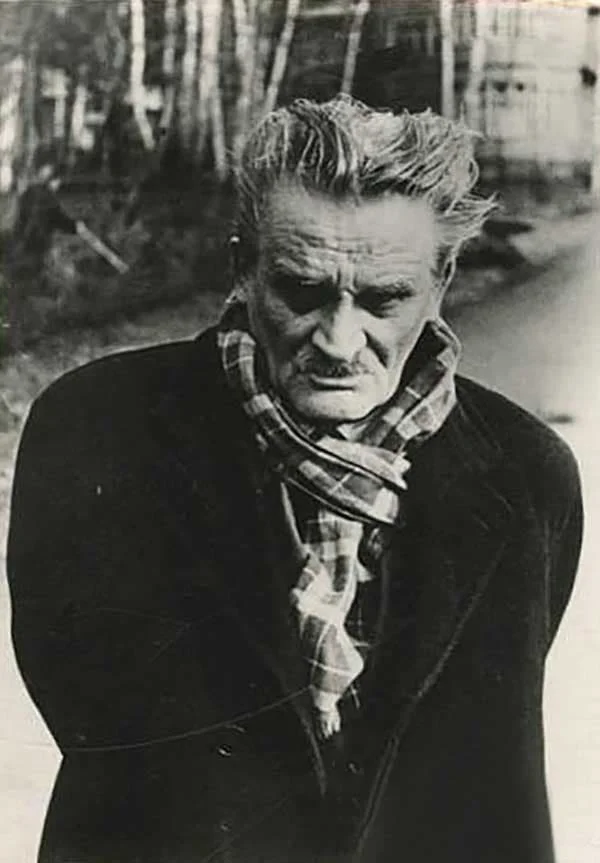
In the mid -fifties in the mornings, a low man with a sharp profile hanging over the upper lip and blue, with the significance of looking eyes, was walking at the writer's house on Pyatnitskaya Street. The wind fluttered his long gray hair. When he met someone from the residents of the house, he spoke and asked for three rubles for breakfast for himself and his wife. It was the writer Yuri Olesha.
He wandered on Pyatnitskaya - to the beat of his thoughts, stirring eyebrows, which the person who knew him called "gloomy", crumpled trousers, "a dirty jacket with broken elbows." The Fashion Cafe "National", which he was in the thirties, now in his life, he was no longer in his life, he visited only cafes and eates in the district. But in them all the waitresses knew him. Sometimes he stood at the booth of the shoe cleaner in Klimentsky Lane and spoke with him for a long time.
He lived with the hope that he would write a great book, and then everything would change. An expensive coat, a hat will return again, will come and take a telephone to his apartment, they will recognize him on the street, and he will be a slow nod, without turning his heads, respond to them. He told his friends that he would write a great book, but almost no one took these conversations seriously because he all the time made literary plans, but rarely fulfilled them because he drank because he was wandered aimlessly because he was sick because he had the appearance of a rumpled person whom he took his life and dragged on a bump. "I did not really believe that the book would be written." (A. Gladkov)
But he, however, wrote it, this book without a name, which Shklovsky called “Not a Day without a line,” and Olesha himself called this pile of pages in swollen folders that had to be sorted after his death - “Words, words, words ...”.
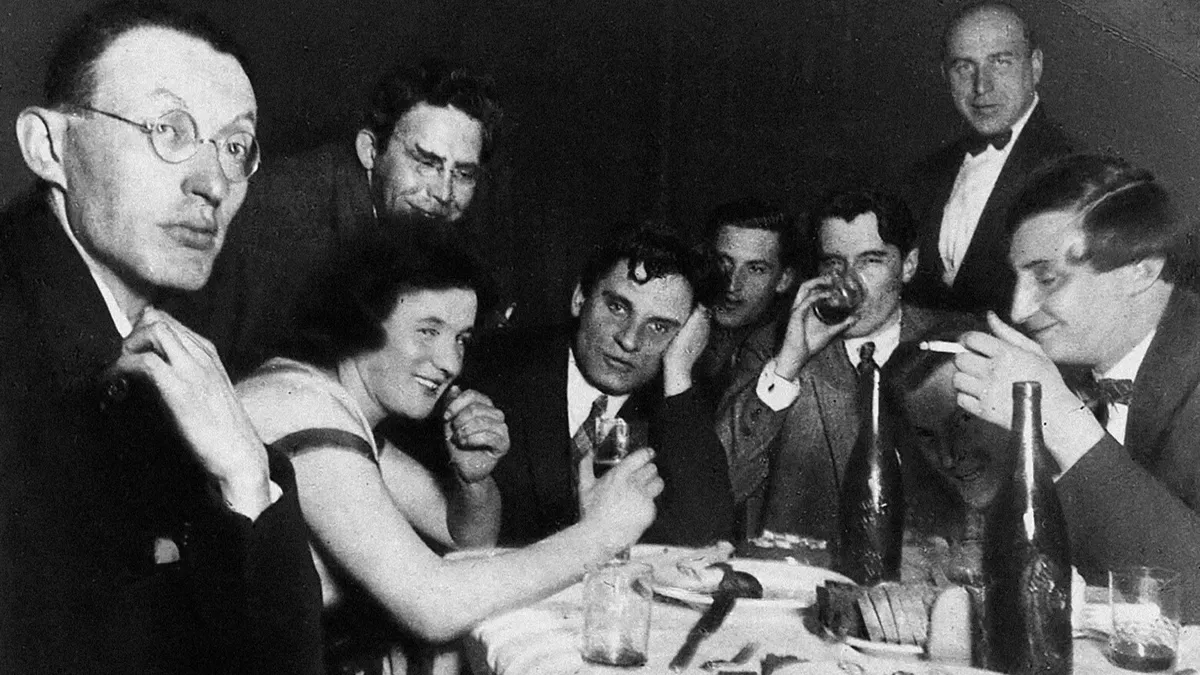
People, who in the thirties, who came to the National Cafe below Gorky Street, always forced Olesha there. He seemed to sit there for days, weeks, months. On a chair next to him is an old portfolio, on the table a pack of cigarettes and a box of matches. One. Then friends sat down at his table, and a noisy conversation began. Then the friends left, and he again sat alone in an empty cafe. If they greeted him, he slowly nodded in response. "The writer in the restaurant should be inaccessible."
Friends with whom he exchanged sharpnesses and paradoxes in a fashionable cafe overlooking the Kremlin disappeared. Everyone knew what happened to them, but no one spoke about it. The Russian dandy Stenich was killed. The football player Andrei Starostin was imprisoned. Prince Dmitry Petrovich Mirsky disappeared - died near Magadan. Meyerhold was taken and beaten with a rubber stick. Did Olesha know about the stick? Unknown.
On two turns in Litgazet on January 26, 1937, articles of Soviet writers were published-responses to the second Moscow process, according to which Pyatakov, Radek, Sokolnikov, Serebryakov, Murals, and only 17 people were held.
“Those who are now judged were a direct agent of fascism ... They attempted to be on Stalin. On a great man whose strength, genius, the bright spirit are directed to one concern - care for the people. Bastards, miserable people, spies, ambitious people, envious people wanted to raise a hand on the one to whom the people said: you made me happy, I love you. This said the people! The attitude of the people towards Stalin gives rise to the same excitement in the heart as art gives rise to! This is a song!
We, artists, must especially brand this bastard.
Shame and ingloring, an inglorious end awaits them.
Nobody and nothing will prevent the people from living, winning, achieving happiness! All his enemies will be destroyed! "
So Olesha wrote.
On February 2, 13 people were shot.
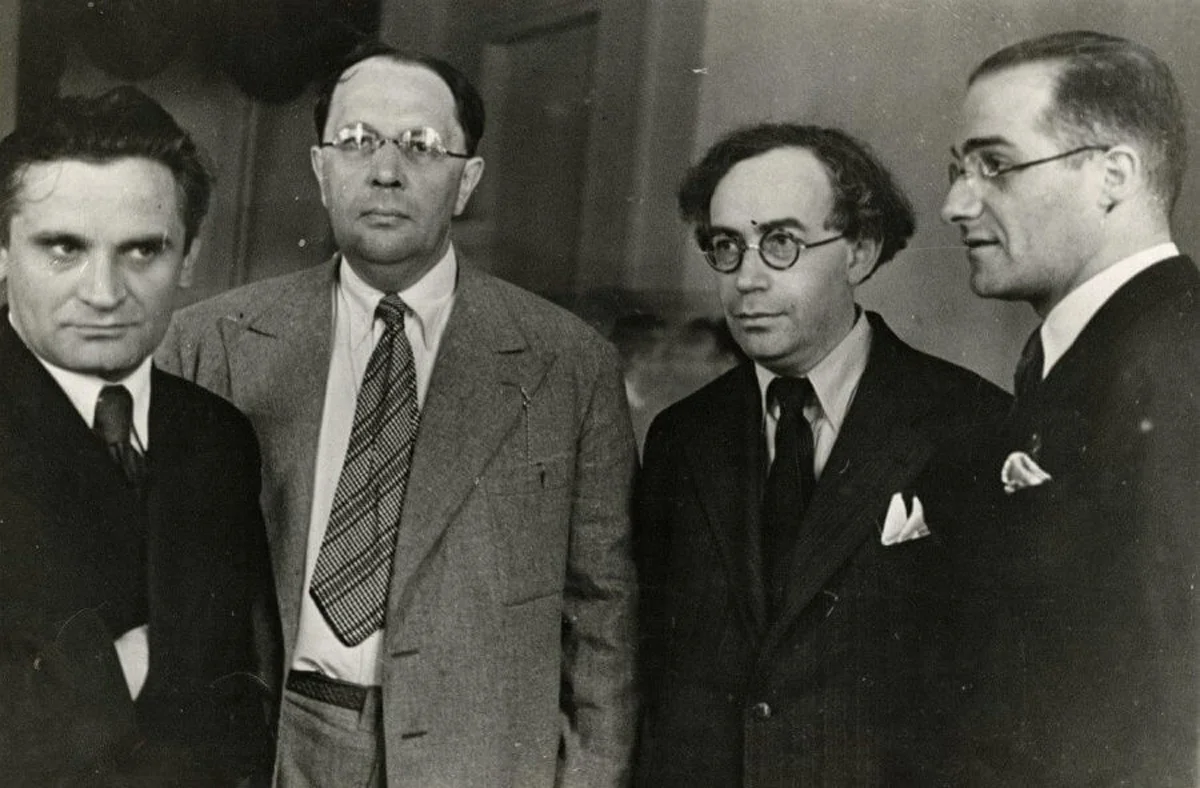
During the war, he was in Ashgabat, from where he wrote: "I never thought that the Most Has the Central Asian beggar." When after the war he returned to Moscow, he had nowhere to live, because other people mighted his apartment. For days he walked the streets, and by the night he creeped in the apartment of his friends who who sheltered him to the sofa, lay on him right in his coat and pushed his hat on his face.
Perhaps at these nights, on a strange couch, in a hop, under an old impended cap, were his memories of childhood and strange fragmented thoughts about everything in the world - about dragonflies, about fish, about circus acrobats, about a Tif to his sister (whose grave he lost), about Delacroix, about anything ... childhood as a lost paradise. Odessa as lost happiness. Everything went away, and everything remained there, in the soft warm darkness of oblivion. Close your eyes on the sofa, like on a boat, swim to where the sea splashes in the dark and the night lights of your beloved city burn.
He called the memory "non -existent space." And year after year -
We do not know when he started, but we know that he finished on May 1, 1960, when he died-he made very significant things from this non-existent space: pebbles, sparkles, emeralds, diamonds, pearls. He recorded excerpts and fragments, not knowing how to put a book from all this. After all, the book is heroes, plot, chapters, and here is no plot, but only notes, shreds, excerpts.
He was sitting in the reception of the Union of Writers, secretaries silently passed by him, and he was offended because he considered himself a great writer, Sholokhov himself was singible and Kataev himself loved him, and they: “They don’t even greet me!”
All of them wrote the correct, condo novels with plot lines and production conflicts, but it is not. His world was fragmented, devoid of integrity. Life crashed into fragments ... But at the same time, the restoration of life worked, collecting its fragments, pieces, scraps, fragments, abandoned in memory and preserved in it. Creation through decay. Does it happen?
“There is almost nothing to write about. Of course, I could write novels with the characters, as Lev Tolstoy or Goncharov wrote, who, incidentally, broke into non -painting, but I would have to do it dull.
Time to smolder. "
Then he, of course, is talking. Like Tolstoy, he could not, and like potter -
Same. Then Olesha, who was proud and even boasted that he was a writer, and even what - he doesn’t see point blank and does not even closely understand what he was talking about. Tolstoy wrote not “novels with the characters”, Tolstoy stubbornly, frantically told the truth to people and about people as he understood it. Oleshi had no truth, except for the fact that the literature was lowered from the Central Committee. But in Soviet literature, a writer who is waiting for instructions from the Central Committee is a bad writer, and a good one who smells tomorrow's instruction.
Nowhere he said that he understands all this, yes, maybe the Soviet writer Olesha did not understand this. Once, having drunk, he called Nadezhda Mandelstam and "cried on the phone for a long time that everything was tired of the line." She -
Not Soviet, although she spent all her life in the Soviet cage, she looks at him from a different angle, from another system and sees it in the cold light: “Some, selling, dropped a tear like Olesha ...” But she had the right to be ruthless, this was the right to ensure her axis and her whole life of a grassy fugitive.
What is the essence of modern cinema and so fascinating the modern consumer of clips - action, injection, discharge - for Olesha in his last book did not matter. He talks about the acrobats, who should jump from a tall mast in a groove with water, talks about a crowd waiting for a jump with the same feeling with which the ancient Romans were waiting for the fighting of the gladiators, tells how the jumpers are theatrically hugged before jumping, as if saying goodbye for the last time in their life - details, details, lively memory - but there is neither action nor discharge. Olesha no one will jump anywhere. There will be no jump, it is cut off the edge of the page and is not included in the episode. It is not important. Only feeling and expectation is important. Feeling to wait. Thus, it pumps the voltage that does not discharge. The reader leaves the excerpt unsatisfied, and without recognizing the main thing.
So he has all the time: they go to football, but there is no football itself, he says that he saw a green beam in the steppe, but there is no ray in the story. He writes about time, but does not speak the main thing about time - the main thing is hidden by the silence. Oblivion? We don't know.
Apparently, he himself was not sure that he writes and where these scattered pieces of memories lead him, otherwise where does it come from: “Now I can’t even have a direct thought, as it appears from this passage”?
It is not without reason that Odessa forever disappeared at the Barzhansky store in Old, forever disappearing twice in its scraps and fragments. They were so great that the boy Yura saw the arrow jump in the next minute. And a tired, gloomy person with a sharp profile, forty years later sitting, having drunk, in a race on Pyatnitskaya, thought about where that line, after which the child is made by the adult, the past is real ... where the minute passes per minute?
After graduating from the gymnasium, he was going to go to Europe on a bicycle. But suddenly the world exploded the First World War. And he did not go anywhere. From that moment on, his life no longer belonged to him, it was sculpted by time, or rather, terrible people in French and with stupid faces of dogma and executioners, but he didn’t think so, he could not think, because it was impossible to think so, it was impossible. He accepted everything, from the beginning to the end.
He lived as he could, sat in a cafe, ate, drank, spoke with his wife Suok, was silent with his wife Suok, participated in his meetings, signed that it was impossible not to sign, wrote what needed and what he believed - to shoot like a frantic dog, we will crush the Trotskyist reptile, how beautiful the Stalinist constitution is, how terrible the capitalist world will never be able to buy Eskimo in America. The child-and in the end went into himself, drowned in himself, in some ways black and deaf, long-loud, woeful-lick.
Olesha roaming around Moscow, who had not written anything that could be proud of in twenty years, became the sight of the city.
And in his silence, madness was pushed. Why are two eyes, but does someone look at me alone? I? Who is I?
“Lenin died - Leninism lives” - this is his line. “The Stalinist constitution secured the victories of the socialist revolution and all its great conquests. On the basis of the Stalinist constitution, we, citizens of the RSFSR, will choose our representatives in the Supreme Council. ” He is also. About the sailor of Zheleznyakov, who dispersed the Constituent Assembly and killed at the moment when he leaned out of the loophole of the armored train and shot at once from two pistols in two hands, he writes with sympathy. He was familiar with him. “The youth of my Soviet Motherland ... with all my soul is a communist ... against the enemies of the new life of the country” -
We find these and many other stamping not in his newspaper articles, but in those notes and excerpts, in that of his inner book that he wrote in the last seven years of his life.
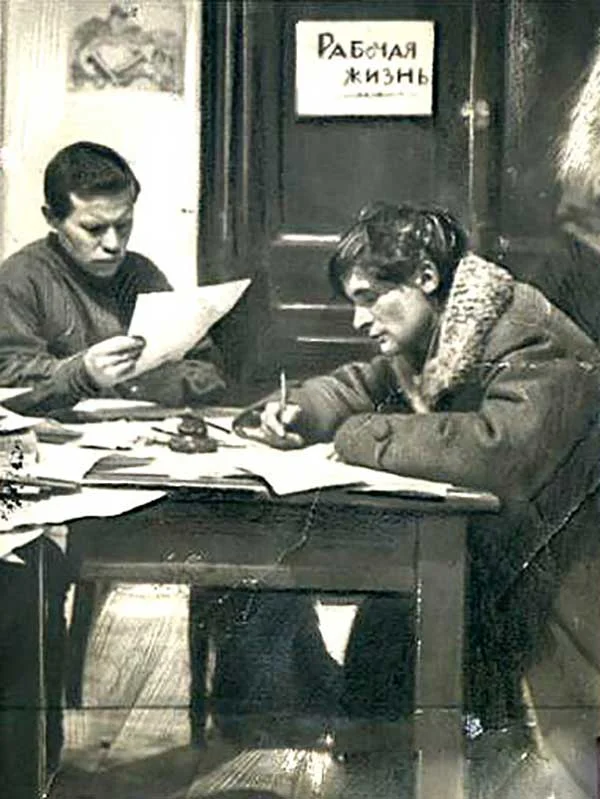
For Bulgakov, the scripture of the feuilletons in the "Hudke" was a torment and misfortune, and for Olesha the scripture of feuilletons in the "Gudka" (and besides, poetic, under the pseudonym of the chisel) was great joy, success and happiness. One wanted to leave Soviet literature (and ultimately left in his last secret book), the other did not think of himself outside Soviet literature, accepted its squalor for greatness, wanted to make a writer's career in Soviet literature, and to rise to its very top. But he could not, because he was too complicated and thin for all these sons, who smeared his fellows about the communists of six hundred pages. And therefore he was tormented by longing and thoughts that he had not come true.
In his huge collection of memories, sensations, comparisons, in a huge stream of memory and impressions there is everything from the sea to the sky, from circus to football, from the steppe to the city, from the descriptions of small Odessa shops to the descriptions of Moscow streets, everything is called to life tension of memory - everything
Only the horror of hell is absent.
Olesha once said to the historian Dmitry Mirsky, that “there was no ancient world,” and he in response was fluttered by Olesha with a cane on his back. Olesha remembered this. I also remembered how, having made peace, they ate chicken with the worldly and drank wine.
The chicken remembered well and wrote about him, and where the prince went - not a word about it. Prince Mirsky died at the camp under Magadan.
The main thing in its passages and fragments is absent, the main thing is not, hell is no, the time he has lived is consisting of lyrical sketches and spectacular metaphors, and he is proud of them and admires himself, such a strong, such a large writer who will show all them. He put this book on this book, it was his bet in a big game. He did not think of a secret literature - he was going to put a book one day for a common view as his man -made miracle, as a faceted diamond of his skill.
But when he drinks, when he wanders through the streets of Moscow, imagining himself Dante and telling his acquaintances that he would ever write a book (he didn’t write) about Dante, he would not see thirteen figures, who are leading a string and under the convoy to the dirty Lubyansky basement?
After all, he has such a strong, such good memory.
No, he doesn’t see, he doesn’t remember, he doesn’t know, he never knew, does not understand what you are talking about.
Hell - is it unknown where? Hell - does Dante have him? But not here, a kilometer from the high windows of the National Cafe, for whom Olesha in the thirties imposingly sat behind a cup of coffee?
The wind is in the face, a hat on my face, dreams, shadows and figures ... “It suddenly begins to seem to fall asleep and sleep, and I see a dream, and I still think that since then I have not woken up and these many years that have passed since then, all this is my dream.”
I wrote one script for two film studios-one of them will buy! “But not one bought it.” There was no money, he walked on Pyatnitskaya and thought if there was enough for newspapers if he bought two hundred grams of sugar. And when there was the money, he led his wife to a restaurant, where he ordered caviar and cognac, and on the way back home, in Zamoskvorechye, in the night Moscow he gave his wife a bill, and she threw them into the open windows of the basements and half -tunes that had been lost in a dream.
The camp and dissident Arkady Belinkov in his book “The Surveillance and Death of the Soviet Intelligent”, published fifteen years after the death of Olesha, exposed and destroyed him - a weak man and a mediocre writer. He simply destroyed and stood out with his foot on top, and spat, and threw a cigarette butt on the grave. And the rights are right ... But in his free letter without a plot, in his pile of passages and notes, he seemed to foresee another time torn to shreds when a classic romance became impossible for a reader for reading three minutes a day. Or he did not foresee anything, but simply repented before his life and was looking for something in it that once in her and left?
The main thing in his “words, words, words ...” no, but does he know about it? Through this black hole, through these shadows, once former people, through himself, who wrote a lot of Soviet nonsense, he steps over, or does not even step over, but simply passes through, as if the unprecedented, not existing, non-existent. Void in place of the main one.
But with longing and a painful hint that he knows this hole behind his back and a true price of himself, the line that he writes with his even round handwriting sounds: “I was not a warrior, not a man, a coward, a thinker, a good man, an old man, shit.”
A weak, suffering old man (in fact, he is not an old man, he is only 60) in a shabby jacket with extended elbows, with a neck, wrapped in a stunned scarf, he felt inside himself an athlete, which now expands his shoulders, pick up the air of the air - and a jerk will free himself, he will go out! But it will not work, because Olesha knew that only an armless torso, a stump, arms and legs were lost, his head drowned in a vibrant drunken dope, the athlete was imprisoned in the old man and would never break out of it. And the old man writes everything and writes his endless manuscript, consisting of passages that are not fitting with each other, puts everything and puts the sheets written out by even beautiful handwriting into the next folder.
He could be a wonderful writer, but trampled his life on brilliant paradoxes and table aphorisms that diverged around Moscow. He could write something large, significant, but all the years after the war he wrote scripts and newspaper rubbish for a long time, painfully and tiring, which he did not consider rubbish, for he was inside and agreed with him.
With the pride of the master, he said that he could write only Gogol, but time passed, and he remained the author of “envy” and “three fat people” written at the dawn of life when he was a sensational Odessa, who conquered Moscow.
He wandered, wandered, wandered around Moscow in a light demi -season coat in the December frost, went to warm up at the Soviet Champagne store on Gorky Street, where they sold the draft one and was poured on credit. He was well known there. "Don't leave me!" - demanded after the man who refused to drink an ice champagne with him, standing on a dirty, delayed floor in December. "Don't leave me!"