
Translated material
Why did we not succeed
Leonid Gozman*: Reflection from the lattice
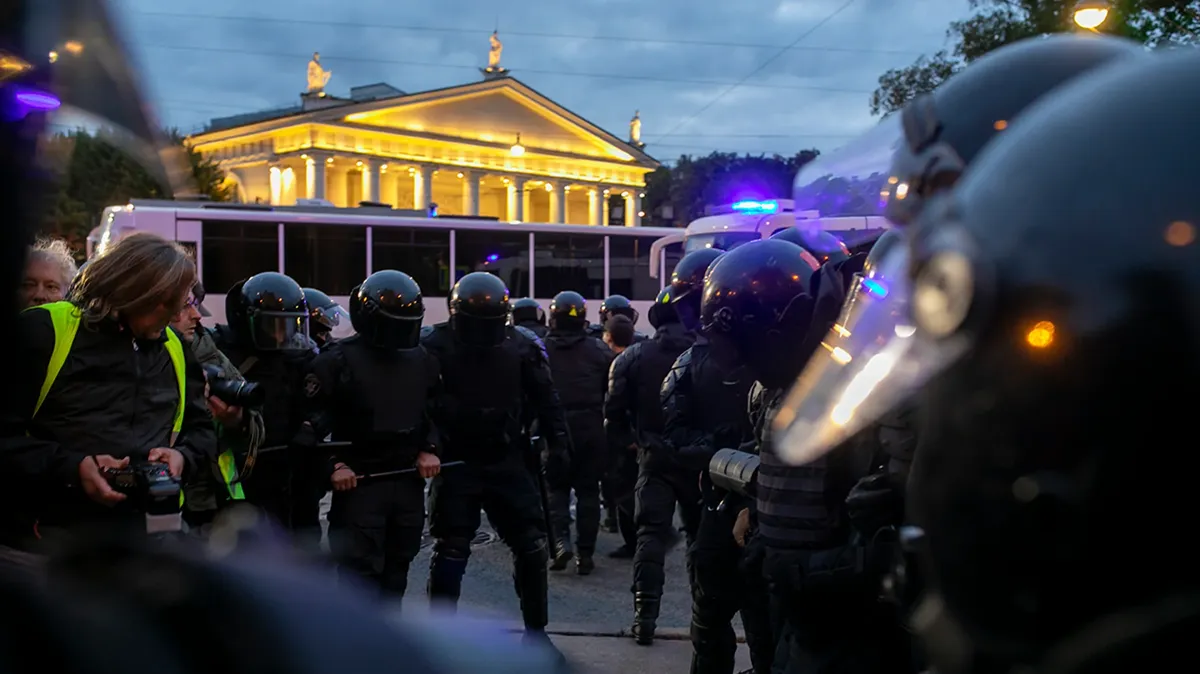
Prison is a great place for reflection. Especially when, as I am now, you do not know how many days or years you will have to sit, and indeed, will you ever come out of here.
So why did we not succeed? We are an active-opposition segment of a society that has achieved democracy, law and the European path. It didn't work out!
Moreover. Our forces are defeated. The organizers of the protests and many activists are either in prison or in exile, as well as the most reputable opposition ideologists and journalists. Russia, of course, will be free, but when and how it will happen, it is unclear.
Why did it happen? Many see the reason in the properties of our people themselves-slaves, they say, do not need freedom, in the history of the Horde, Ivan the Terrible, and also that Russia, due to its size, religion, climate, has some special, suitable for it and, of course, not a democratic political structure.
Such arguments are at least as many years as the dispute between Slavophiles and Westerners. However, talking about how much we differ from “them” (they live by law, and we are in truth) go back to the first millennium.
However, not a single evidence that the Russian (Russian) people do not need freedom, but, on the contrary, a whip is needed, no one cited. But the course and consequences of the great reforms of Alexander, economic behavior during the NEP period, the rapid development of the nineties and the successes of all waves of Russian emigration immutally indicate that our person is just as adapted to the conditions of freedom, behaves in this context as adequately as any other.
Talks about geography, climate, religion and others are not at all withstanding critics. Democracy in cold Finland, in huge Canada, in Orthodox Greece and not Christian India prove that there are no grounds to explain our failure with objective factors. In general, the tendency to exaggerate its peculiarity, the difference from others, is most often connected with the desire to explain its lag uninhabited for itself.
Therefore, you should not attribute our failure to the account of fundamentally uncontrolled natural or historical factors. She is a consequence of the actions of opposing forces.
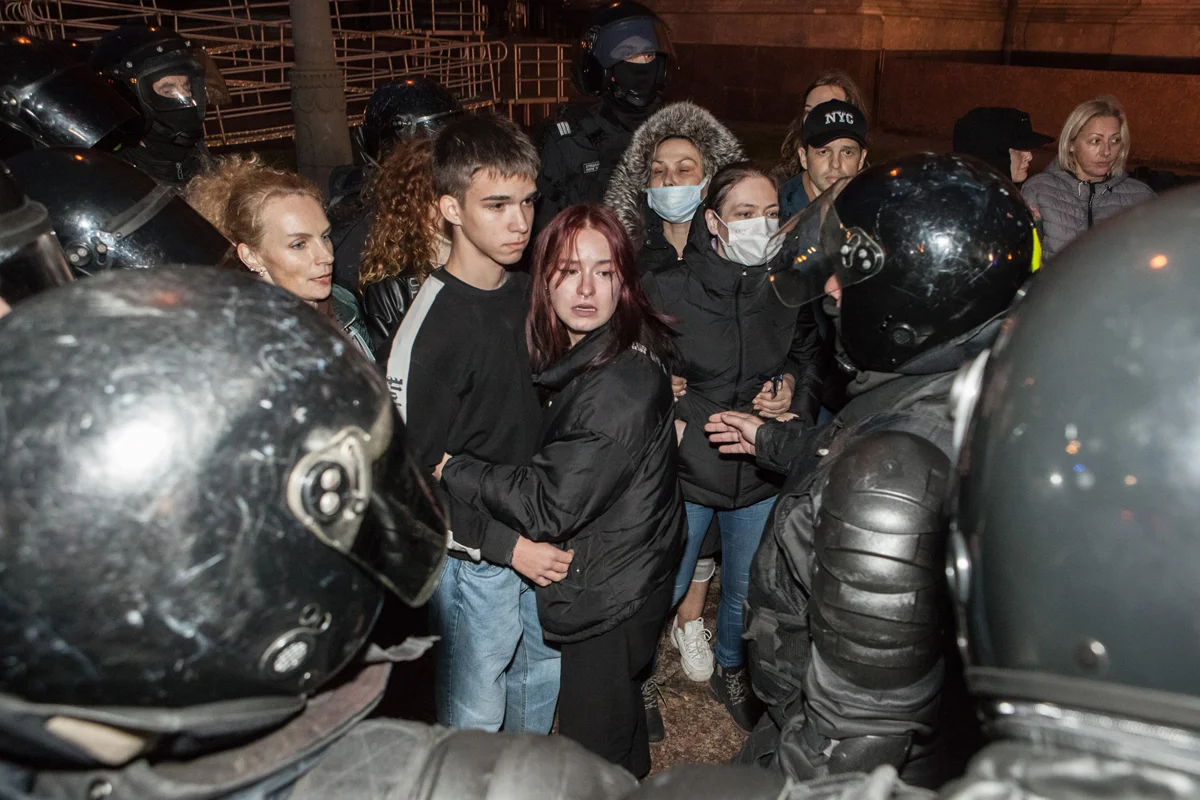
And here we must pay tribute to the authorities. We underestimated them, neither ourselves, nor the strength of the system. In an effort to maintain a position, in the fight against any threats, including from the democratic opposition, they were inventive, decisive and consistent, neglecting both morality and law. (Interestingly, in all other areas - in the economy, in international politics - they are extremely ineffective.)
But our task is not to analyze them, but first of all our actions, to understand whether our responsibility for the situation in which the country and we all ended up?
It is quite difficult to talk about the actions of the opposition. The democratic opposition consists of a huge number of very different people. Someone is united around the leader of Navalny, someone enters small organizations, there are-and there are many of them-lonely, following only their moral feeling. Accordingly, people who are obviously belonging to a democratic camp often often behave directly opposite. For example, some of the opposition participated in the elections, and part - condemned them for this and called on the elections to ignore.
Such a "scatter" is natural. Oppositionists do not go in line, they are united only by the desire for freedom and the rejection of the existing system.
The point of view is very common that everything would be different if the opposition could unite. I am not against unification, but I do not see that it would change. In the nineties and at the beginning of the zero and DVR (ATP), and Yabloko had their own factions in the Duma, it was not relevant to unite, but coordination. And then both fractions disappeared, but the structure of Navalny appeared. The existing small parties and groups that did not want to join it could, of course, unite among themselves, but this would not have changed anything. Yes, there were very worthy people, but all of them did not possess the hundredths of that political influence - and it can be measured by the number of people whom the political structure can bring to the street - which was possessed by Navalny and his team. Competitions for the lack of association are an attempt to explain the complex problem of the causes of defeat by simple, not very significant factors for which you personally do not answer - they, politicians, could not agree.
But the real opposition errors that had tragic consequences are, in my opinion, in the psychological sphere. These are mistakes in the perception of people and the country, the disadvantage of the image of the desired future and much more. Without pretending to be full, I will note only a few of them:
- Many of us accepted the fact of mass dissatisfaction with the regime (the fact of people support the assessments of the system that we gave in our speeches at rallies and in the media) for a political victory. They applauded us, agreed with us. Tens of millions of spectators watched Navalny's films, believing every word. The dedication of many oppositionists was admired by people far from politics. That is, a lot of citizens, at the level of emotions, supported the opposition, but this did not lead to political actions. The opponents of the system are everywhere, but this does not prevent many of them from voting for power disciplined.
The fact is that people who agree that what is happening in the country is terrible at the same time that it cannot be otherwise, that this is the only one for Russia, and perhaps for the world a possible order of things. Anti-plate emotions should have been supplemented by an effective refutation of these prejudices, a demonstration that another life in our country is possible, and it can be achieved so and such. Unfortunately, such work was not carried out for the mass public (this problem was discussed only with experts). And without this, people, having looked at vivid performances, resigning the facts of corruption and arbitrariness, sympathizing with the victims, returned to the usual way of life.
Huge damage caused wide, unfortunately, the arrogant in the opposition environment in relation to people who do not share our views or simply not ready to participate in an active struggle (however, this is more characteristic of oppositions of writing, and not acting). The point is not only about offensive nicknames that I do not want to repeat. The matter is in a real look at people from top to bottom, in the feeling that we, as the progressors of the Strugatsky, do good not with them, but for them. This is arrogance, even when it does not express itself directly, “breaks the screen”, causing natural rejection. There are denunciations and requirements from us, but there is no sympathy for the same as us, but deceived, fraught with propaganda, powerless and dependent. The love of fellow citizens does not come from us - not for the ideal, as they will become in the future, but to the real ones living with us in the same porch. And it turns out according to the apostle Paul: "If I speak human or angelic languages, but I have no love ..."
In social psychology, there is a concept - "a mistake of representativeness." Each of us is inclined to consider our own experience more representative than it really is. Conditionally: I know Chekhov, because two Czechs studied with me on the same course. The circle of communication of each of us, even those who are engaged in active political work, is inevitably limited and distorted compared to the population as a whole. We communicate with “our own” deeper and more intense than with “strangers”. Moreover, this can be seen from social networks, where we, choosing “friends” and blocking particularly unpleasant textures, create an artificial reality that we sometimes take for the real one. Or at a rally, when it begins to seem to us that everyone, the whole country, thinks like us. In general, our ideas about society are distorted. Naturally, but we must constantly make an amendment for this aberration of perception.
Unfortunately, people do this far from always, which affects the quality of political work. An example is a fairly common idea that some things do not need to be pronounced-“everyone understands everything,” or the opposite in terms of meaning, but existing at the same time: “It is pointless to say, they are still not able to understand anything.”
- And the most perhaps the main thing. We rightly accuse the power of having no image of the future, looking for him in the past. But our “desired future” is not well spelled out, in many ways it is only based on the denial of today's disgraces. There will be no falsification of elections, arbitrariness and torture, political persecution, there will be no terrifying corruption, there will be no confrontation between the civilized world and fraternity with dictators. And what will happen? This is stated deaf and not enough. Yes, there will be a real federation. Excellent, what else? Will Russia be a consistently secular state and what will be the role of the Church? Will Orthodoxy have formally fixed advantages? Will the Russian people preserve the status of a state -forming one? Will we strive in the EU and NATO? What will be the situation of Tatarstan, Bashkiria, Yakutia and other republics in the Federation? And a lot of other questions that are almost no answers and which are not even posed.
Moreover, speaking of the Russia that we want to see, we usually do not pay attention to the fact that our fellow citizens in it will be tens of millions of those who not only forced to vote for “EP”, but supports his own and Putin’s policy as a whole, is sincerely convinced that Crimea is ours, and the West, led by the States, wishes us to defend ourselves, forcing us to defend ourselves. We are talking about ordinary people who, due to poor education, passivity, dependence, life in the depleted information environment, accepted such an inadequate picture of the world in my opinion.
These people will have the right to vote in honest and transparent elections, they will teach children in schools and teach at universities, they will educate their children. And this is the base for coming to power legally - in the elections - a new dragon, they will call him, they need him. Base for a new public split.
Well, so that this does not happen, so that the dragon is not revived in a new guise, you need to talk with these people - not later, but now. We need to contact them, although many of them hate us. They need, so far from us today, to explain that what we want for the country for ourselves and in their interests that it is beneficial to both them and their children, that dictators deceive them, parasitizing on their fears, which themselves cause. And you need to see your brothers and sisters in these people, and not treat them as a foreign and dangerous mass.
At this stage, we lost. But if we understand and analyze our own mistakes, then there is a chance that those who follow us, which should be stronger than us, will not repeat them and win. And Russia will be free.
09/22/2022
Moscow. Special receiver No. 2
From the editorial office
One cannot disagree. Obviously, the time for the mistakes that must be fulfilled - and better late than never before.