
Translated material
Orban's rejection
Es deprived Hungary of part of European budgets. In response, the prime minister made concessions, but it seems that this is an attempt to win the time for a new round of wictering with Europe
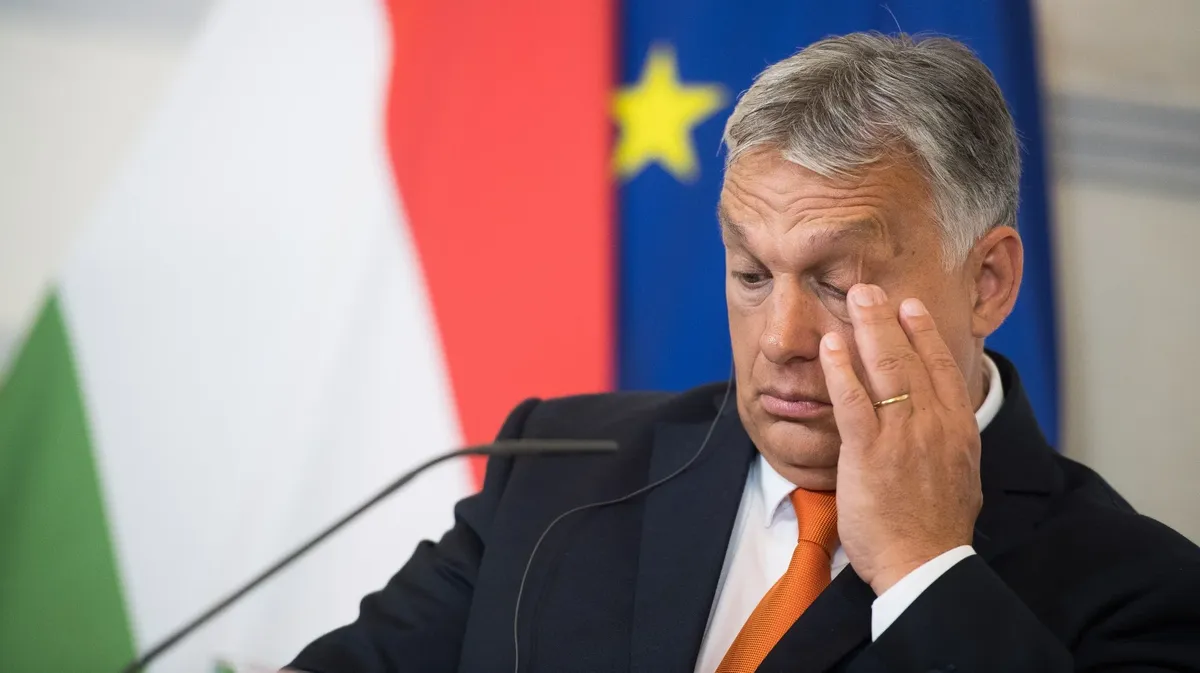
Over the past weeks, historical changes have occurred in relations between Hungary and the EU.
It all started with the resolution adopted by the European Parliament (EP), which states that among 27 EU members there is one country that is no longer democracy. The EP believes that the political regime in it is an “electoral autocracy”. “This is some kind of joke. It is not funny for us only because it is very boring, ”the Prime Minister of Hungary Viktor Orban commented by the resolution. In the legal sense, the adoption of this resolution neither EU nor Hungary does not oblige to anything, but at the level of the symbol and discourse it changes a lot. Including, based on this resolution, last Sunday the European Commission proposed freezing Hungary payment of 7.5 billion euros from one of the EU structural funds - a rallying fund. Such funds are a key tool for smoothing the economic and social inequality between EU member states.
The decision of the European Commission is not final, it should still be approved by the qualified majority of the EU countries, and in general the Hungarian government has two months to try to find a new compromise with the European Commission. But the resolution of the European Parliament, and the decision of the European Commission shows that Hungary almost did not have allies left within Europe. This time the slowly spinning administrative-political wheel of the EU gained serious turnover and is unlikely to be stopped, taking into account the fact that most states believe that Hungary is against the fundamental principles of the European community. The position on the Russian war against Ukraine also played an important role in this confidence: Hungary is more solidarized with Moscow than with the rest of the EU.
New rules for old rogue
For more than 10 years, the EU has been trying to force the Hungarian government to turn off the path of growing authoritarianism, which gradually turns previously the completely democratic political system of Hungary and the division of the branch of the authorities into formality. However, all this time, Viktor Orban skillfully came out of the water, taking advantage of the fact that the EU never had real tools in case the country, as a member of the community, is rolling into authoritarianism. Especially when the EU’s claims on this issue were at once to two central European countries: Hungary and Poland. The recent-famous seventh article of the EU agreement , according to which the Union can suspend at least certain rights of a member country due to a retreat from the norms and violation of European values, can only be applied if all other states vote for this.
The accusations against Poland and Hungary brought simultaneously led to the fact that Poland defended Hungary from this instrument, and Hungary - Poland.
However, the situation has changed due to pandemia. To reduce economic damage in the most affected EU member states, I decided to create a new recovery fund ( The Recovery and Resilience Facility ) by 750 billion euros. Donor countries, that is, those who would bring to this fund more than received, in return, put forward the requirement to develop a new rule for the use of budgets in the EU legislation-the “Conditionality Mechanism”, earlier “ Rule of Law Conditionality Mechanism ”). This mechanism would limit the budgeting of an EU country from common funds if it violates the rules of the European community. The decision on this may not be made unanimously; At least 15 EU countries will be enough, the population of which is at least 60% of the total population of the entire union.
For the first time, the European Commission began to develop the real use of this mechanism back in April, and exclusively in relation to Hungary, and not to Poland. As a result, this should allow the EU to freeze Hungary payments from a common budget, if it is established that violations of the rule of law may create the risks of the EU money opaque use by the country. For Hungary, “losses” will amount to more than 20 billion euros: it was this amount that was provided for it in the EU budget for 2021-2027.
In addition, funds from the EU fund mentioned above to restore the economy after coronavirus were already frozen for Hungary. In it, the amount of 7.2 billion euros is “blocked”. Legally, this fund eventually turned out to be not connected with the mechanism of the rule of law, but in practice this is not so: Hungary is the only country in which the European Commission has not yet approved the plan according to which this money can be spent. Poland has this plan approved, although payments on it have not yet begun.
Thus, Budapest deprivation of more than 25 billion euros only from these two sources can be quite significant: for comparison, the nominal GDP of Hungary in 2021 amounted to 184 billion euros.
Unsuccessful bet
In order to stop these actions of the European Commission, Viktor Orban since 2019 hoped to create a new union in the European Parliament with the parties of Euro -attacks, starting with the party Marine Le Pen from France, and Matteo Salvini from Italy, ending with the Polish party “Law and Justice”. But the EP elections did not justify his hopes, the EuroSceptics in the European Parliament remained in the minority .
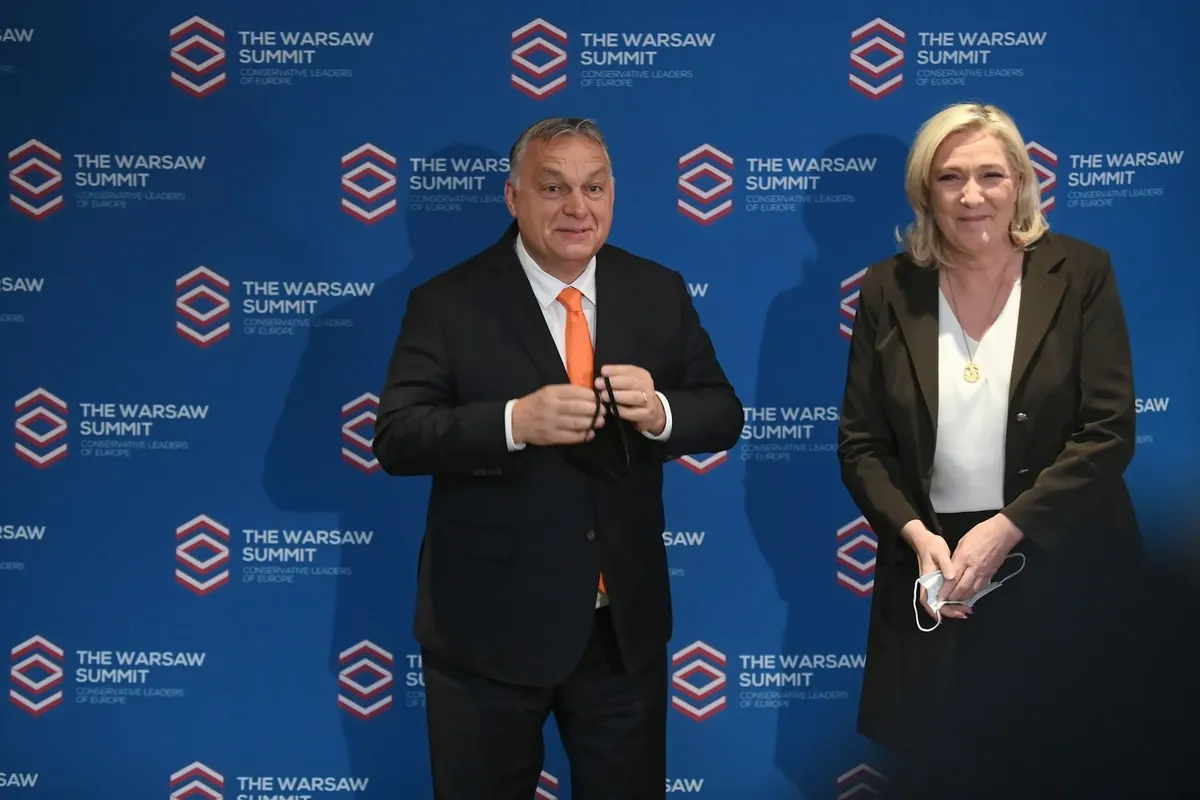
The ideological basis of this union was to be the political views of Orban himself. He believes that Hungary in his person protects the genuine values and forms of the existence of the early European Union, as a community of national states of federal Europe, from left -barn bureaucrats from Brussels, who have been dictating to everyone their rules in recent years.
According to Orban, in this shapeless Europe there are no nations, there are no Christian values, there is only "people mixed with migrants without a national character."
This mass does not have national identity, in connection with which George Soros, the famous political enemy of Victor Orban, and similar forces, can easily manipulate it.
However, with this position in his struggle, Orban, who 22 years ago was the deputy chairman of the European Liberal International, lost the old allies and did not acquire quite a lot of new ones. Even the Vishegrad group did not become a strong union of the Czech Republic, Slovakia, Poland and Hungary inside the EU, the split in which the war in Ukraine showed. Orban tried to please Moscow: he constantly criticized European sanctions, shifted responsibility for the war to Ukraine itself and the EU weakness. Hungary was even able to force the EU not to impose sanctions on Patriarch Kirill that, along with Orban’s refusal to condemn Russia for the crimes of her army in Bucha, the position of Hungary among the ideological ally, the Government of Poland, greatly undermined .
The economy is not amenable to slogans
Hungary in this war, warlike rhetoric against Brussels, as well as the gradual transformation of Hungary into an authoritarian regime - all this has accumulated and led to the fact that the country has become an outcast within the EU.
At the same time, Hungary, whose economy is only 1% of the GDP of the entire EU, strongly needs the financial resources of the European Union. Inflation in August of this year, in comparison with the same period last year, has already reached 16%, with an average for the EU, an indicator of 10%. The Hungarian currency (Forint) weakened in relation to the euro over the past 7 months by 13%. The news that Hungary can be left without funds from the EU strengthen distrust of the country and from investors. In this regard, state bonds are increasingly attractive, which means attracting loans in the open market will be more expensive.
It was not possible to save low prices for electricity and gas, although Orban promised his voters in the parliamentary elections this spring, that he would provide cheap gas thanks to the Union with Russia.
Four months after the devastating victory in the elections, the price of gas when the household exceeds the established consumption rate per month increased by 7 times. Due to the need to reduce gas consumption by a quarter, the temperature in public institutions in Hungary will be reduced to 18 degrees.
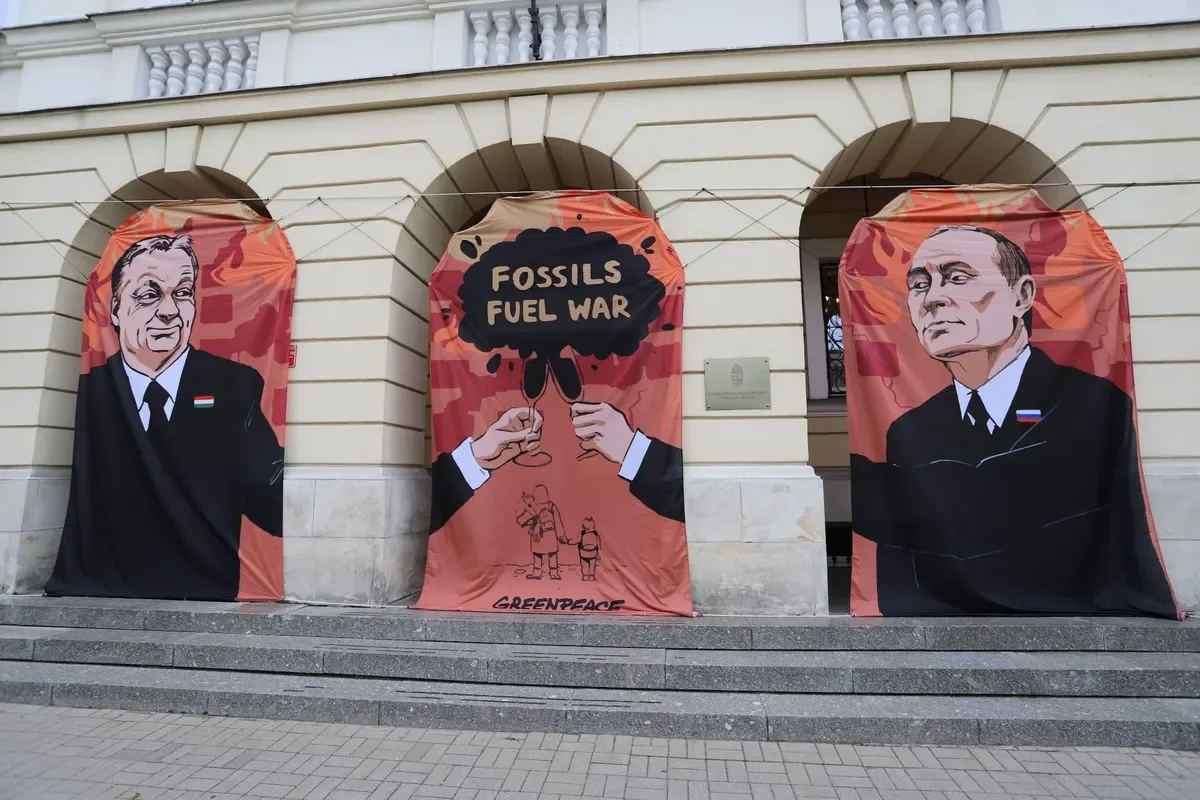
EPA-EFE / Zofia bichniewicz Poland out
Compromise or continuation of the quarrel
In these conditions, the Orban government tried to send a signal about the compromise of the European Commission, promising to fight against corruption in the field of state tenders. Budapest is going to create a new inspection with broad powers to control public procurement, which, as a rule, defeat companies close to the ruling party of Fides. Members of this inspection will be selected with the participation of EU representatives. This new state control body will even be able to influence the decisions of local investigative bodies, namely, to resume corruption investigations that they previously closed by them.
These actions of Orban, of course, do not indicate his defeat in the confrontation with the European Commission. Readiness for a compromise gave the Hungarian government time: the European Commission even suggested that the EU Council wait with the final decision on freezing money until November 19, probably hoping that by this time Hungary would accept at least some laws that could launch full-fledged reforms to combat corruption. The EU sent signals that by the end of the year can cancel the action of the rule of law in relation to Budapest, which will mean the possibility of transferring funds from the rallying fund (the same 7.5 billion euros this year, and 20 on the horizon until 2027). However, for this, Orban will have to make much larger concessions.
How much the Hungarian prime minister will really decide to return at least some elements of the supremacy of law and dismantling other elements of authoritarian power by their own hands is an open issue. The look at the previous 10 years of the relationship of Orban and the EU suggests that the chances of this are extremely low. At least the very last slogan of the ruling party of Fides, adopted to it at the end of this week - “we will fight” (“Harcolni Fogunk”).