
Translated material
Putin - a quirk of history, do not look for patterns
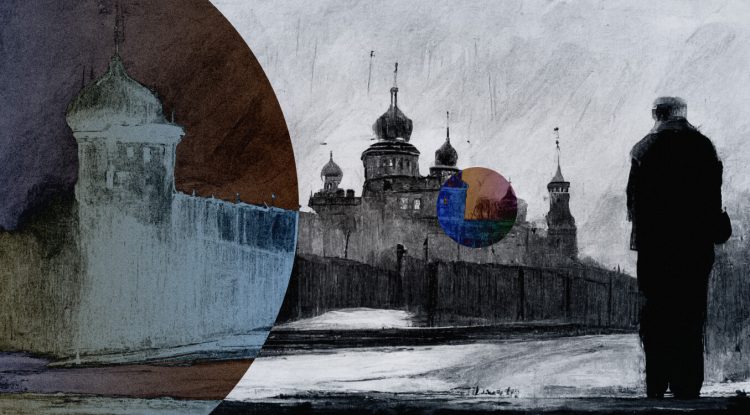
Historian Alexander Etkind argues with the political scientist and columnist "Cold" Grigory Voice
On September 12, the text of the political scientist Grigory Vilosov “ loyalty is not a vice ” was released in the “cold”, in which he explained why confidence in power among Russians and even identification with it is not something dangerous, but rather, even the other way around. Historian Alexander Etkind does not agree with this, and that's why.
In order not to miss the main materials of the "cold", subscribe to our Instagram and telegram .

In his recent article, the leading Russian political scientist Grigory Golosov convincingly refutes one long -standing reasoning, which became sad. Joseph de Mestr, the unsuccessful diplomat of Napoleonic times, said that every nation deserves the government that he has. In fact, writes votes, there are many examples of how the peoples became hostages of their governments. In a crisis in many countries, confidence in the government decreased to zero. The peoples understood that they deserve the best governments, and then coups and revolutions took place. It is difficult to disagree with all this.
But at the end of his article, the votes make another turn. In his opinion, such periods of distrust cannot be long, because "then it is no longer a national-state state, but an failed state like modern Yemen." It is difficult for me to understand this difference between “not the state” and “failed”. If the meaning of the reasoning is that the failed states are short -lived, then the example of Yemen - as well as Somalia, Syria, Afghanistan, or, for example, Venezuela, shows that in this state of universal distrust one can live for a long time. The American Institute of Fund for Peace, together with Foreign Policy magazine, ranks the states every year in terms of their level of their fragility, which I would translate as shaton (in the early years of this Ranking was called Failed State, then it was renamed). In the list of 2022, in the first place, just Yemen, in the last Finland, and Russia is 75 out of 179, between Bosnia and Benin. Today it seems serious underestimation. Nevertheless, all (except Bosnia and Herzegovina) European states and all developed countries are in this Ranking far beyond Russia. And, alas, many of the fragile or shaky countries of this list have been in their deplorable state for many decades.
But the votes mean something more. "The failed state, stretching throughout the north of the giant continent and stuffed with nuclear weapons, would have become a nightmare for all of humanity." This is yes, it is. But is it, this state, no longer became such a nightmare? The subjunctive mood in this phrase sounds strange. And further votes writes, again mixing modality: “The desire [of the Russian] population to trust its government and identify itself with its own state should not be considered as an innate disease. This is a resource that will ever be in demand for the construction of new Russia. ” That's right, if we talk about desire. But in this article, Golosov is about real sociological surveys in which people did not express their desires, but confidence in the government, what it is. Either these data are inaccurate, or the peoples do not understand what they really deserve. But, as votes writes, all these are time states.
In sociological surveys conducted at the time of the national crisis, you can believe or not, and there is still nothing to compare them with. But if we, together with the voice, want, “for Russia to come to normal national statehood,” then any signs of the popularity of the current government should become the subject of critical analysis. Otherwise, we will agree with the tired and cynical author of the St. Petersburg evenings, which could not reconcile his hostility against the Russian king with his own conservatism.
I write these things that are obvious to me, because I began to disturb the recent statements of Russian intellectuals, in which conservative notes unusual, unusual for these people sound. Yuri Saprykin, a famous journalist with views, which in Russia is called liberal, published a large material about the future of the country on the Polit.ru website. In fact, he sees an endless repetition of a traumatic state - more and longer than the same, because one can imagine nothing else at the moment of shock. The maximum of his expectations is Putinism with a human face.
I like that people are talking about the future: it means that not everything is lost. And yet I want a little more political imagination. The future can be much worse, or maybe better - and we do not know which one [the future is waiting for us] ... But on the quiet authoritarianism, which Saprykin writes about, the future will probably not stop; What was possible before the war became unrealistic after its beginning. There is a city in this vision, but there is no peace: neither pandemic, nor reparations, nor much more.
Why will the loser will certainly become “right -conservative” (and I evaluate the prognosis of Saprykin in this way)? Historical experience speaks the opposite. Remember what happened to the Russian Empire after the Crimean War and the Japanese War. Remember what happened to the Austro-Hungarian Empire after the First World War and Germany after the second. Remember what happened in the United States after defeat in Vietnam or, the latest example, in Argentina after the Falklands.
Putin's regime is a quirk of history that ends with an “operation” in Ukraine. This is the result of many accumulated accidents, as well as the structural weakness of the previous institutions of power. Do not list accidents: they have a diverse nature and will never be repeated again. Late Soviet and Russian institutions and their leaders bear constitutional responsibility for preventing the current development of events, but did not cope with the tasks. This corrupt and aggressive regime caused enormous damage to Ukraine, Russia and the world. Get mourn about the victims, investigate details, think about alternatives and bring them closer - all these are worthy, necessary things.
But the scale of the shocks that the Putin regime brought should not create illusions of its patterns or durability. To fall into such an illusion means to be under the influence of historical injury. The earthquake is also a big thing, but the tragedy is unlikely to happen again in the same place again. The magnitude of the historical event is not its duration, the scale does not mean repeatability. People are reasonable by nature, although not without exception. There are optical illusions to which the eye of an unprepared person lends itself to; But having figured out what's what, going and touching, a person again sees objects as they are.
The author’s opinion may not coincide with the opinion of the editorial office.