
Translated material
The pride of one actor
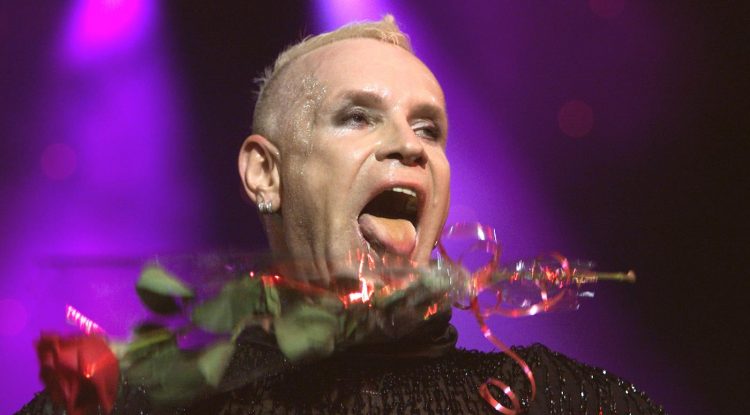
Boris Moiseev died. Andrei Shental explains how Russian sexual policy was reflected in the fate of the singer and dancer
On September 27, at the age of 68, Boris Moiseev died-a singer and a dancer, the first person on the Russian stage, who made a public caming out and declared his homosexuality. Moiseev sang songs about “strange love” and put extravagant shows that showed through state channels, but always refused to deal with any activism. His creative career largely embodied the paradoxes of public manifestations of sexuality in the post -Soviet era. At the request of the Cold, the artist and critic Andrei Shental explains what the uniqueness of the figure of Boris Moiseev for Russian pop culture is.
In order not to miss the main materials of the "cold", subscribe to our Instagram and telegram .
Boris Moiseev considered himself a "stranger." This is the definition with which he entitled his album 20 years ago - the most faithful characteristic of his personality and a creative career. The scandalously known to all Russian -speaking, recognized by others, the artist (k) Ami and the authorities, at the same time, was stranger and persecuted. Moiseev is either a curiosity or the error of the system that gave rise to it. Remaining somewhere from the edge, he gathered the light of the brightest sophists on himself-and shortly before his death he again began to attract the attention of musical critics of the new generation. In order not to repeat what they said, I will limit myself to public - and therefore political - aspect of his identity.
Moiseev began his career at the end of the Soviet Empire - with all its rocky redundancy, pouring over the edges of the official puritanism of houses and palaces of culture. In the bureaucratic and deerotized choreography of the 1980s, he introduced liberated sexuality, plastic sensuality and outright homoerics. It was he who, as part of the “Expression” trio (along with Lary Khitan and Lyudmila Chesnulyavichyut), complemented the scenic feminism of Alla Pugacheva to the missing halo of Quir aesthetics. At a time when the Criminal Code was still an article about sodisting, and homosexuality only gained its discursive expression on the pages of the press, Moses, like Nizhinsky once, made stage plastic and costume, densely tightening the body, a medium in public manifestation of protest sexuality and non-formed gender identity. And his image of Katboy (for example, in the excerpt “ Red-haired Cat ” from the film about Pugacheva “Came and I speak” in 1985), who was ahead of the subculture of Furri and Pappy Play, looks bold even in the era of Tiktok and Kay-Pop.
In the 1990s, Moiseev became one of the main motors of the sexual revolution in Russia, mixing late-generation to the westernized aesthetics of the new generation. As he himself recalled, the biological age no longer allowed the artist to compete with young performers (recall Shura, Nikita or Oscar - Moiseev was suitable for their fathers). Nevertheless, it was he, the fragment of the Soviet pop, was the most radical, becoming the first to openly talk about his sexual orientation. In his legendary interview with “arguments and facts”, even more frank confession, Yaroslav Mogutin in the yellow newspaper “More” and other publications of that time, Moses not only made an official caming out as a bisexual and a non-bureau, but also raised the topics of social discrimination and pharyssets of the ruling elites.
With the light hand of Moiseev in the musical business of the mid-1990s-early 2000s, hints of homo and bisexuality, transgenderness and fluid became a popular commercial technique. But the performers, indicating their otherness, were heterosexual and cisgender (for example, “tattoo” or “guests from the future”). The homosexual artists and artists themselves, on the contrary, preferred to hide their identity so as not to throw a shadow in their career. Perhaps, only Moiseev during the “long 1990s” continued to consistently mix on stage femininity with masculinity, to sing the attraction of a man to a man (Blue Moon, 1997) and even push others to public recognition (“Forgive me, mother, 1995).
However, the Ephemism of the Blue Moses used the noun, but as an adjective, which has already become out of use. That is, he pointed to the property, and not the essence of his lyrical heroes and doubles. In addition, the artist did not apply it to people: in both of the above songs, he appeals to distant astronomical objects. If you follow this logic, homosexuality is not characteristic of a person from birth and is not even his personal choice, but as if it is brought from the outside. If other authors, flirting with the topic for commercial purposes, was devoid of real experience, and therefore vulnerable to perceive it as “fashion” or “trendy”, then in the case of Moiseev, homosexuality could be easily perceived as an external threat. Which made it profitable for propaganda. In subsequent years, we saw how “gender freedoms” conquered in the 1990s would easily turn out to be a soft force in a geopolitical value war.
By the mid-2000s, a heteronormative turn was planned in the Russian pop music, which is followed by all performers and performers without exception. So, for example, pronouns indicating a homosexual attraction (from early zemfirs and “night snipers” to “guests from the future” and “tattoo”) are replaced by the binary opposition “he is it” - or gender labeling of lyrical heroes_in is simply exhausted from the texts. The secret pact concluded between the state and the musician (K) Ami guaranteed the latter the right to freedom of private life, prosperity and security, if any difference and unconventional desire remained behind a continuous fence. Following the new politics, Moiseev in his interviews also began to dodge, deliberately confuse the audience and publicly deny both his homosexuality and non-warrior, referring to gender-neutral and universalist concepts like “man” or “love”. However, it should be admitted that with all this, he never played heterosexual and did not campaign for traditional values.
A gradually important discursive instrument of Putin’s neoconservative policy - including gender and sexual policy - is a ban on denotation. That is, a ban on calling an object with what it really is. A little later, he will lead to the Potemkin villages, the military New Year and the silence of the creative elite. In the case of sexuality and gender identity, he initially implied an inevitable conflict: it was precisely the possibility of naming and self-knowledge that LGBTK moves. The practice of a camming-out implies public recognition of its own homosexuality or non-bureaucracy, and pride-carnival manifestation and collective affirmation of otherness. It is no coincidence that, despite the relatively herbivore until recently, the persecution under the Law on Gay Propaganda, camming outs are completely excluded from the official public field, and the pride remains forbidden for another 90 years .
But having come out of Chulan, it is no longer possible to go back. Moiseev remained the last open, legitimate and recognized gay on the stage of a radical regime. And his stage shows turned out to be a kind of LGBTK parade-the only possible Pride of one actor in this country. In this sense, the long presence of Moiseev in the media space of the 2000s and 2010s seems to be some kind of logical systemic error. Although the “Blue Moon” could serve as an empauerment for men who had discovered their homosexuality at a late age, she was never a gay gimm, as Wikipedia writes about it. The target audience of Moiseev is, of course, not at all a LGBTK community, but above all, housewives and pensioners. It seems that any of his fans, in words, hating homosexuals, transgender people and generally gender freedoms of the West, warmly accepts Borya with all its differences, features and oddities.
And here an inevitable play of words arises - the transformation of denotation into detonation: as if recognition of reality through the language could lead to undermining this regime. Moiseev was a soaked powder barrel, adjusted to the regime, which did not have time to explode. But, being an insoluble contradiction, it was also an organic part of this system. Of course, he can be criticized for adaptability, but he cannot be refused courage. It is difficult for me to imagine a similar phenomenon in some Western democracy. After all, the liberal mainstream of the LGBTK movement is always an attempt to integrate, that is, the struggle for recognizing the difference for the sake of including it in the general democratic legal system. Moiseev never called himself “gay” (one of the options for reading the English word Gay - good as you) because he did not strive to normalize. Instead of confining to "his", he called himself "stranger." Its assimilation in any regulatory (including a homonormat) system was possible only through its disintegration. In this sense, he may have been more radical than his Western counterparts.
The author’s opinion may not coincide with the opinion of the editorial office.