
Translated material
Why do people allow themselves to be slaughter
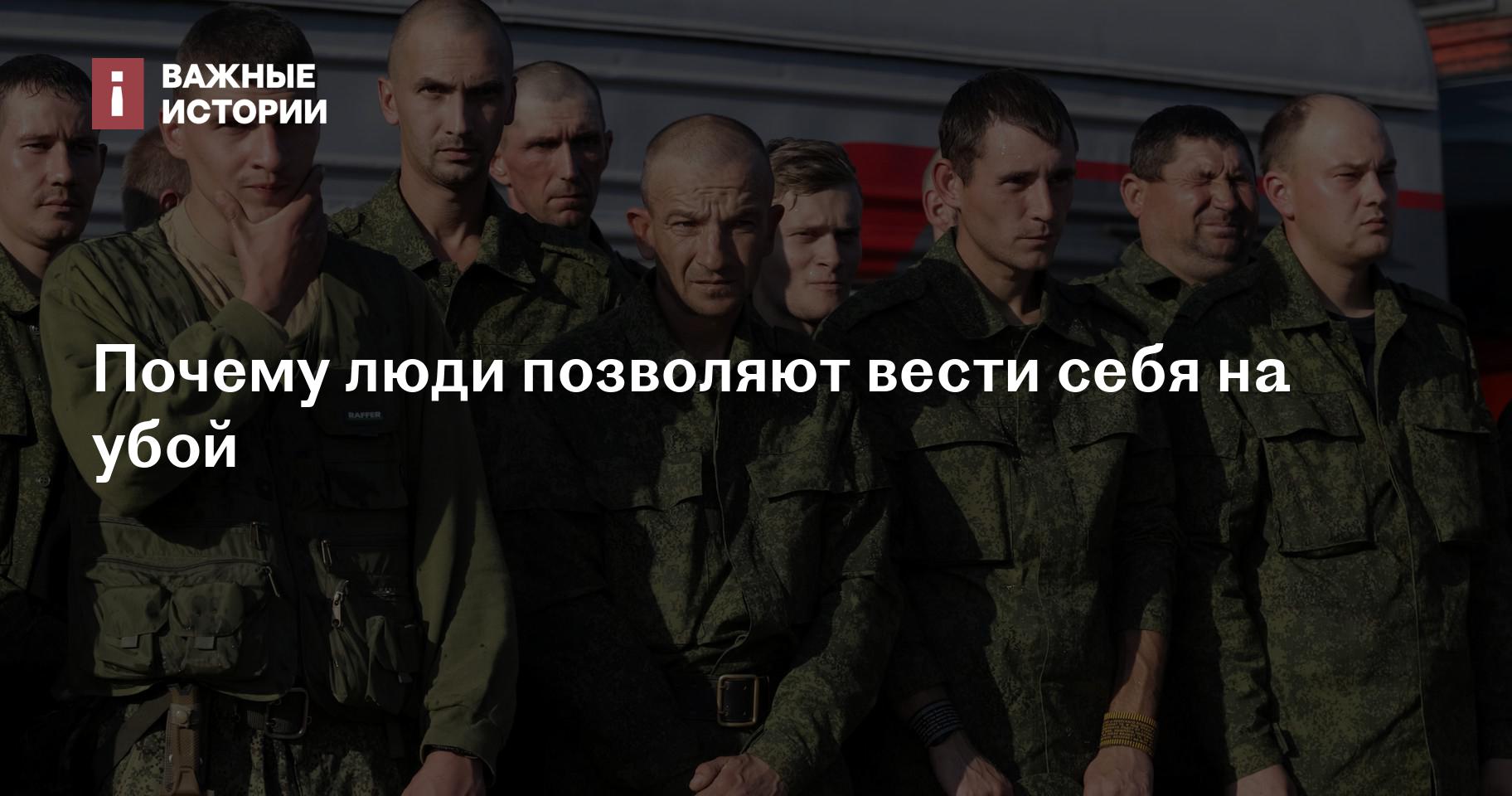
The beginning of mobilization announced by Vladimir Putin divided men and women who did not support the war, but subject to call, into two groups: some are hiding in every possible way or even leave the country, while others do nothing to avoid the presentation of the agenda, and having received it, dutifully go to the military commissariat to go from there to kill and die. From the outside, this behavior seems completely crazy, but this is only at first glance. The biologist and scientific journalist Irina Yakutenko explains what deeply embedded features of the work of our brain make people come irrationally, including with a serious risk to life.
Once a useful tool
Assessing the actions of other people, by default we try to proceed from logical prerequisites, rationally weighing the possible positive and negative consequences. And therefore, we are perplexed when people do obviously to the harm: after all, a person, just like us, should be obvious that his actions do not lead to anything good. This approach seems to be realized by itself: for a long time even scientists-economists professed it, who built their models of the development of the economy based on the premise that people always act reasonably, trying to maximize their own benefits. To their surprise, such models categorically poorly predicted reality: it turned out that the absolutely rational Homo Economicus is completely different from a real person who constantly makes disadvantageous decisions, guided by emotional impulses or obeying the “bugs” in the work of thinking.
Such bugs in the sciences of the brain are called cognitive distortions, and from the middle of the 20th century, when the experts seriously engaged in their study, they discovered many such mental failures, systematized and explained their nature. One of the pioneers of cognitive distortion studies were American psychologists Daniel Caneman and Tver Amos. Kaneman’s book “Think slowly ... decide quickly” (the name of which would be more accurately translated as “quick and slow thinking”) it makes sense to read to everyone who was wondering why someone, for example, he himself acts so illogical. In history with sending to a very likely death for ideas that a person does not support at all, cognitive distortions play a very important role.
But before we analyze the main mental bugs that make people meekly wait for the agenda, discuss what the nature of these distortions is and how it happened that they are so radically determined by our behavior. The main reason that the errors of thinking often replace the actual thinking itself is that it is difficult to think. Logical reasoning, building chains of evidence, planning, attentive analysis of situations, search and assessment of arguments require a huge amount of energy. When scientists from the UK forced volunteers to carry out tasks requiring constant concentration, while measuring the level of glucose in the blood, they found that the brain -reflecting brain literally sucks sugar from the bloodstream.
In the modern world, features, formed for centuries, turned into bugs. And a person performs clearly unprofitable actions, or not at all aware of why he does this, or bringing some slurred explanations in the spirit of “Well, how else?”
In addition to the tremendous energy intensity and time -cost, thinking is an uncomfortable and tedious process, so it is not surprising that the brain is trying to avoid it if possible. To do this, he worked out what in English is called Shortcuts, lighter bypass tracks. Why run a clumsy thought machine when you can make a decision quickly and effortlessly, based on any characteristic features or hints? Over millions of years of evolution, such bypass paths have been formed for many different processes: from recognizing the silhouette of a tiger in a mishmash of color spots to an instant assessment of an approximate amount of something. Moreover, the conscious part of the brain, the one that we associate with our personality, does not even realize that some decision was made not because it is correct, but due to the automatic operation of one of the bypass paths. We either do not think at all why we did this, and not otherwise, or post -facts invent explanations that are not related to the true reasons for our choice.
In a large part of cases, such quick automatic solutions turned out to be true or at least not fatal. In conditions when the surrounding world and the incentives coming from it for millennia have remained approximately constant, and it was often necessary to respond without hesitation, the cognitive circuit system was a useful tool that gave the evolutionary advantage: those who quickly made the right decisions compared to those who had to reflect on each step, received a head start and advance of their genes in a series generations. As a result, the brain of each of us is constantly based not on logic, but on all kinds of quick ways.
Like any other universal algorithms, such bypassed decision -making ways give a satisfactory result only in part of cases. Moreover, since the modern world is radically more complicated in comparison with the prehistoric era, the percentage of situations when following automatic reactions leads to irrational acts also increased many times. In other words, those who are once profitable by the roundabout paths turn into cognitive distortions. In the situation with people consent to the war for alien ideas, this is often the case: the illogical behavior becomes the result of the “work” of several cognitive distortions at once and the person performs clearly unprofitable actions, or not at all realizing, but why, in fact, he acts, either citing some slurred explanations in the spirit “well, how else?”. Below we will analyze the main of these distortions.
Preference for the deed of Act
In English, such a bug is called Omission Bias, and this term describes our preference in a situation where both the action and inaction bear possible negative consequences: to consider the consequences of inaction less harmful than the consequences of the action. This bug was very clearly manifested at the planetary level during the pandemic of Covid. People knew that infection with coronavirus could lead to serious illness and death. At the same time, they heard that vaccinations also have side effects. At the same time, they must go and make themselves or their children themselves, and a meeting with the virus is only a theoretical opportunity, it is possible that it will not take place at all. In the case of complications from vaccination, a person will have no one to blame, except himself, that is, the entire fullness of responsibility will fall on him. None of us likes to be responsible, especially when it comes to life and health, so people preferred not to vaccinate, hoping that they would carry them and they would not become infected with SARS-COV-2.
Considerations that the likelihood of complications from vaccination is negligible both in itself and in comparison with the risk of the serious consequences of Covid, and that meetings with the virus, given its distribution, are almost impossible to avoid, they were not taken into account: people are extremely poorly able to evaluate probabilities. This is another bug of our brain that has evolved in a world for millions of years where such a thing simply did not exist. As a result, a lot of people died, infected with Covid without immune defense that vaccination gives.
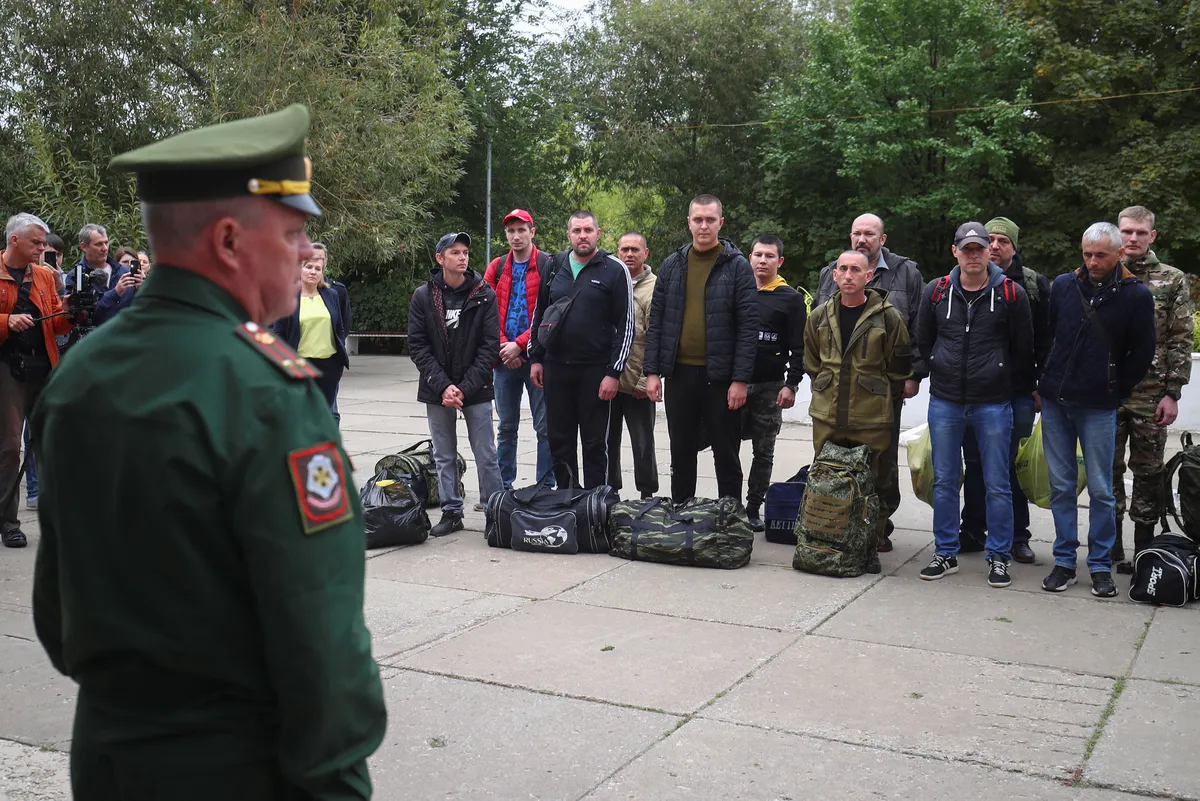
Exactly the same mechanism works in the case of mobilization. Both the appearance on the agenda and the departure to the front, and the evasion of the call bear significant risks: in the first case, this is the probability of being wounded or dying (we will take the need to kill other people here), in the second - the opportunity to get a fine and/or go to jail. At the same time, evasion requires active actions from a person: to leave for another region or abroad, quit work, part with the family. That is, the future in any case turns out to be foggy, and if a person is caught, then he is guaranteed to receive punishment. Mobilization seems only to the option: maybe they will call, or maybe not, but if they still call and send to the front, then maybe I will survive. Moreover, the last argument is very significant because of the other two distortions: reassessments of the probability of positive outcomes and the wrong overall picture of what is happening.
Reassessment of the probability of positive outcomes
In English, this bug is known as Optimistic Bias, or the bias of optimism. People tend to think that bad things can happen to them with a lesser probability than good ones. By asking volunteers questions about the future, scientists have found that a significant number of people are sure: for them, the risk of becoming a victim of a crime is personally less than the population as a whole. Many smokers believe that they have less chance of getting lung cancer than other smokers. Beginners of Bangee-Jamping believe that they are less at risk of injuries than the rest. Traiders are convinced that they will not go bankrupt, trading on the exchange.
The bias of optimism works for both positive and negative events, but for negative it is more pronounced. In other words, people significantly more often believe that they will not get into a car accident than that they will win in the lottery. Joseph Brodsky expressed our conviction of his own well -being in the famous line "Death is what happens to others." Thanks to this distortion, people can do everyday business, and not constantly worry about self -preservation. Confidence that everything will be fine globally, gives people the motivation to get involved in long -term projects like the birth of children, building a house or building a career. On the other hand, due to the not-based underlassry conviction that everything is somehow formed in the future, people neglect preventive measures and demonstrate risky behavior. The result-the first place among the main causes of mortality around the world has been holding cardiovascular diseases for many years, the risk of developing which is radically reduced with the right lifestyle or at least a timely visit to the doctor and fulfill his recommendations (although other cognitive distortions play an important role for our global inability).
Faith in its own uniqueness
As numerous experiments show, most people believe that they are more competent in fulfilling a variety of tasks than a typical representative of society. For example, 88 % of American and 77 % of Swedish drivers are sure that their driving level is higher than average. Moreover, half of American drivers include 20 % of drivers who drive the most safely in the group. Swedish motorists were more modest: half of them are sure that 30 % of the most cautious drivers belong to the number. Obviously, all these statements are mathematically impossible, that is, a huge percentage of drivers significantly overestimate their own abilities.
Moreover, the lower the competence of a person in a particular business, the higher he is inclined to evaluate his own skills. This phenomenon is known as the effect of Dunning, Kruger, and it is explained by the fact that in the absence of knowledge and experience in some field, a person does not even understand how badly he really copes with the task. As a result, people who have never been to the front cannot soberly evaluate how little they are actually ready for survival in conditions of hostilities. And the belief that they cope with many everyday tasks are better than the rest, inspires confidence in them that they will somehow adapt and survive on the contact line. This, in turn, reduces their fear of sending to war.
Incorrect common picture of what is happening
An important condition for at least somewhat relevant to assess the probability of certain events is the correspondence of the picture of what is happening in our heads and actually. If a person believes that the earth is flat, he is absolutely sure that, having gone to the ocean, say, to the east, you can’t come to the same point from the west after some time. If a person believes that there is not a war with a significant number of victims, but a military operation, and it takes place entirely according to plan, except with small roughnesses, its assessment of possible risks of injuries and death is significantly reduced.
Even if you do not take outright lies or silence, the form of presentation of the same information has a decisive effect on how we perceive it. All for the same reason - our brain categorically does not want to think, therefore it prefers to form a picture of the world based on a brief squeeze, and not on a thorough analysis of all existing facts (which, strictly speaking, is impossible in full). In cognitiveness, this is called the effect of Framing, Framing Effect. Kaneman and Tverski described it back in the 1980s, showing that in the hypothetical task of choosing between two drugs for mortal illness, people more often choose a more risky treatment option if they focus their attention on possible deaths without the use of this tool. But if, when describing the task, concentrate on lives saved when using a less dangerous, but also less effective drug, people will prefer not to risk it. If in the description of the economic program to focus on the fact that it will allow 90 % of people to maintain jobs, it will support much more people than in a situation when the program promises 10 percent unemployment.
The war for most people is not among the topics of the primary significance - but about the prison that threatens the refuseniks, many know firsthand
In 2009, scientists from Nottingham University checked the effect of fraim in practice. 93 % of graduate students gathered to participate in the scientific conference paid for the registration fee in the first days after the start of receiving documents, if the letter with a description of the procedure indicated that a fine is imposed for the late submission. If the letter reported that for early registration the participants will receive a bonus when paying (a fine from the first letter option), only 67 % of graduate students submitted documents at once. The graduate students are financially and not only financially dependent, so the fear of the fine and possible proceedings with the authorities spurred them to send all the papers as early as possible.
In the same way, if the war is presented as a certain not very dangerous, but even a fascinating and even heroic event, which will make it possible to achieve very significant and important goals for the country, it will agree to go to it much more people than in a situation when it looks not just meaningless, but murderous for the future of the country and people living in it, moreover, with huge risks to die or get severe injuries. And if the first point of view is broadcast everywhere, then in order to find the second, it is necessary to make efforts, and often also have special skills like using VPN. A huge percentage of people does not know how and does not want to do this, as a result in their picture of the world, the war does not look so terrible, which means that the decision to go there does not seem complete madness.
In addition, as we just discussed (and as shown in many studies ), people have rather superficial ideas about a significant part of the phenomena, especially those that they personally do not encounter. Such ideas, if a person does not specifically work to get adequate information, consist of fragmentary information, stories of acquaintances, what was in the most affordable sources, for example, in a television program or a telegram channel that all your acquaintances read. The war for most people is not among the topics of paramount significance - but many people know about the prison that threatens the refuseniks or at least significantly more than about the war. Even people who never sat, in one way or another, are aware of what is happening in correctional institutions, they know about torture, humiliations and stigmas, which remains after returning “from there”. As a result, such people can be afraid of prisons and “problems with the police” more than the front, although the chances of losing their lives and health in the war are obviously many times more than in places of imprisonment.

Learned helplessness
All the mechanisms described above are normal manifestations of the work of a healthy psyche. But sometimes people agree to go to more than likely death simply because they were weaned to resist and do not believe that their actions are able to change anything. Such a pathological state is called learned helplessness, and it was first described by the American psychologist Martin Seligman in 1967. The scientist conducted experiments with dogs, which were planted in tight containers and shocked. Some of the animals could stop the torture, pressing the nose on a special lever. Другие же не имели возможности контролировать происходящее, хотя поначалу, как и звери из первой группы, отчаянно пытались сделать что-то.
Во второй части опыта Селигман пересадил животных в другой контейнер, посередине которого была низкая перегородка. В одной части этого контейнера собаки ощущали разряды тока, в другой им ничего не угрожало. Почувствовав удары, собаки из первой группы очень быстро перепрыгивали перегородку и дальше сидели в безопасной части контейнера. Те псы, которые до этого убедились, что повлиять на ситуацию невозможно, не пытались перебраться за перегородку, а лежали и скулили, покорно ожидая следующего разряда.
Можно сказать (и именно это предполагает одна из основных теорий, объясняющих этот феномен), что выученная беспомощность — слом здоровых механизмов психики из-за длительного пребывания в невыносимой ситуации полного отсутствия контроля над мучениями. Второе объяснение в некотором смысле противоположно первому: оно гласит, что длительные неприятные воздействия, на которые мы не можем повлиять, не дают нам обучиться контролю. Но какая бы из гипотез ни оказалась в итоге верной, практический итог от этого не меняется: если люди (а опыты, пусть и менее жестокие, показывают, что мы реагируем аналогично собакам) долго находятся в ситуации, когда они никак не контролируют сваливающиеся на них неприятности, многие могут потерять всякую мотивацию противостоять им.
Можно предположить, что часть призывников, особенно из депрессивных регионов, где разительно выражено неравенство и произвол власть имущих, давно разуверились в том, что их действия способны хоть на что-то повлиять — особенно когда против них работает вся государственная машина. С другой стороны, «специальная военная операция», как минимум та, которую показывают в телевизоре, может представляться им своеобразным приключением, неплохой альтернативой унылой и безнадежной повседневности, в которой нет никаких перспектив.
Зависимость от социума
«Ну как же я не поеду / не отправлю на фронт своего сына? Что скажут соседи?» или «Все пацаны знакомые едут, а я что?» — такие аргументы можно услышать во многих интервью с реальными и потенциальными призывниками. Зависимость от мнения окружающих и неспособность противостоять давлению общества, неважно, гласному или негласному — типичный сюжет произведений классической литературы, в которой такое поведение неизменно осуждается.
Но несмотря на недовольство писателей, социальность и социальная зависимость — неотъемлемая составляющая человеческой природы. Это утверждение давно не вызывает вопросов у ученых: множество исследований показывают, что общество влияет на самые разные аспекты не только нашего поведения, но также на мысли и убеждения, которые мы привычно считаем исключительно собственными. Мы отдаем предпочтение вещам, которые нравятся тем, кто нравится нам, и стараемся избегать вещей, которые по душе тем, кого мы не любим. Нам больше нравится та музыка , которая популярна у нашей референтной группы, хотя без социальных подсказок мы выбрали бы другую. Когда рядом есть еще кто-то, мы с меньшей вероятностью поможем жертве преступления или человеку в беде. В группе других людей мы ведем себя агрессивнее , чаще рискуем и меньше вкладываемся в общее дело. Иначе говоря, общество значительно влияет на нас, и не учитывать этот фактор как минимум недальновидно.
Соседи, друзья и родные составляют важнейшую часть не только привычного мира, но и самоидентификации, конфликт с ними равнозначен потере базовых основ существования, не говоря уже об ожидаемом социальном осуждении
Еще в середине 1950-х американский психолог польского происхождения Соломон Аш показал, что человек в буквальном смысле готов не верить своим глазам, если так считают другие. В знаменитых опытах Аша доброволец сидел за столом с другими людьми, которые якобы тоже были добровольными участниками эксперимента по проверке зрения. Присутствующим показывали карточку с тремя нарисованными линиями очевидно разной длины и просили сказать, какая из них совпадает по длине с линией на второй карточке. Ошибиться было сложно — в контрольных опытах, когда угадывающий был один, точность ответов приближалась к 100 %. Однако в группе «добровольцев» все по очереди называли неправильную линию — очевидно более короткую или более длинную, чем линия со второй карточки. Когда очередь доходила до единственного реального участника, в значительном проценте случаев он тоже давал неправильный ответ. В среднем доля неверных ответов составляла 36,8 %. Если мнения «добровольцев» относительно длины линий разделялись, испытуемые чаще давали верный ответ. Если же все присутствующие указывали на неправильную линию, процент тех, кто находил в себе силы пойти наперекор обществу, оказывался минимальным.
В ситуации, когда давление исходит не от незнакомцев, а от относительно близких людей, сопротивляться еще сложнее. Соседи, друзья и родные составляют важнейшую часть не только привычного мира, но и самоидентификации, конфликт с ними равнозначен потере базовых основ существования, не говоря уже об ожидаемом социальном осуждении, которое крайне тяжело переносить даже очень устойчивым людям. Чтобы избежать всего этого, даже если такое желание не проговаривается на сознательном уровне, люди соглашаются ехать на фронт, хотя не поддерживают войну или никак не относятся к ней, боятся, не хотят убивать других людей и так далее. Потом они, возможно, пожалеют о своем поступке, но в моменте негласный прессинг слишком силен, чтобы противиться ему. Классический пример такого подхода описан в рассказе Ивана Тургенева «Муму».
External factors
Помимо когнитивных искажений и различных психологических факторов, решение ехать воевать может быть банально связано с тяжелым материальным положением. Участникам боевых действий обещают выплачивать хорошее даже по меркам Москвы жалованье, во многих регионах такие деньги и вовсе считаются баснословными. И если у человека нет работы и перспектив найти ее, если на его попечении находятся дети или немощные родители, если его семья давно живет за чертой бедности без перспектив когда-либо выбраться из этой категории — поездка в Украину может представляться доступным вариантом вырваться из этого мрака.
What to do
Сочетание всех этих — и многих других — типичных для нашего мозга когнитивных искажений, а также действие внешних факторов радикально влияют на мировосприятие людей, не протестующих против отправки на фронт. С их точки зрения такое решение является логичным и непротиворечивым, а другие варианты, наоборот, представляются затратными или даже неприемлемыми. Это имеет смысл осознать всем, кто задается недоуменными вопросами в духе «Как они могут так поступать, это же очевидное безумие?». Это безумие в картине мира вопрошающего, но у тех, кто прямо сейчас едет на сборы или готовится получить повестку, картина мира может быть совершенно иной. Чтобы повлиять на их решение, нужно расширить представления человека о происходящем, и проще всего это сделать, используя сильные эмоциональные стимулы: рассказ об ужасах войны, желательно с иллюстрациями; описание того горя, которое ждет близких после получения известия о смерти; оптимистичное, насколько это возможно, описание будущего человека в случае решения убегать.
Узнайте первыми о самых важных историях в странеТакие эмоциональные зарубки могут создать в представлениях человека еще один «центр притяжения», который будет задавать направление мыслей и поступков. Но вероятность успеха в любом случае не слишком высока: пропаганда, весьма умело манипулирующая бесхитростными, но зато ясными и сильными эмоциональными маркерами, годами создавала картину мира, в которой отъезд на войну является правильной опцией. Бедность и неравенство, с одной стороны, внушение, что твои действия ничего не решают, пресловутый негласный договор не лезть в политику в обмен на то, что государство обеспечивает стабильность или ее видимость — с другой. Всё это тоже годами формировало предпосылки для того, чтобы люди безропотно соглашались пожертвовать самым дорогим, что у них есть, — жизнью — ради мутных идей, придуманных незнакомыми им людьми с неясными целями. Но в любом случае без понимания истинных механизмов происходящего вытащить человека за пределы порочной парадигмы, в которой безумные решения кажутся логичными, невозможно.