
Translated material
Go with the "world"!
Why do foreign banks continue to abandon the Russian payment system
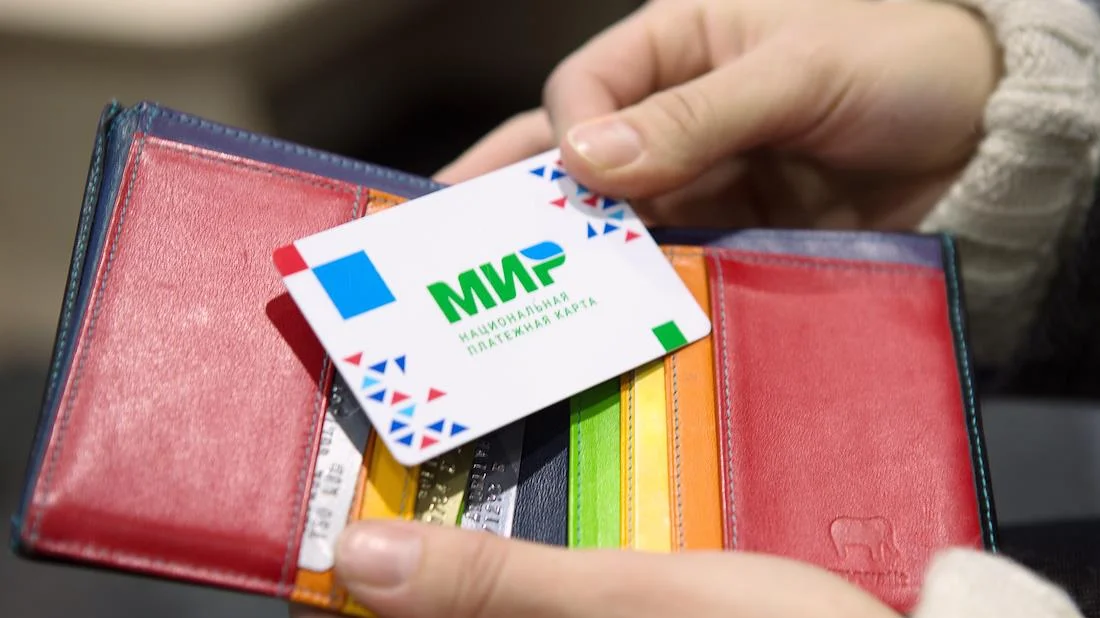
After Visa and MasterCard stopped serving Russian clients against the background of the situation in Ukraine, the Mir payment system became the easiest of the Russians who remained for the ways to use money abroad. Unlike the cards of the Unionpay Chinese payment system, which to arrange in Russian banks were many times more difficult and more expensive, “Mir”, although with interruptions, worked in 11 countries. The cards were not accepted in all payment terminals, but at least it was possible to find an ATM to withdraw cash in local currency. The possibility of receiving cards was also worked out with Iran, Cuba, Egypt and Venezuela.
The situation began to change shortly before the announcement of partial mobilization in Russia: foreign banks began to massively refuse to use the "world". “New Gazeta” - about why this happened and where the Russian payment system still continues to work.
Close loopholes
Large Turkish banks Isbank and Denizbank stopped working with the Russian Payment System “Mir” on September 19. The decision on the suspension of cooperation was made due to possible sanctions against those who contribute to the use of the “peace” outside of Russia.
The US and the European Union exerted pressure on Turkey, fearing that the work of the Russian payment system abroad contributes to the bypass of Western sanctions, the Financial Times wrote .
“We need to close the loopholes,” said the source of the publication, participating in negotiations between the EU and the USA. He emphasized that Türkiye is the main “loophole”.
On September 15, the US Department of Finance announced that it is ready to impose sanctions against those who are involved in the entry of sanctions by Russia, including cooperating with the National Payment Card system (NSPK), which acts as the Mira operator. On the same day, the US Ministry of Finance submitted the head of the NSPK Vladimir Komlev to the sanctions list.
Soon, in addition to Turkish banks, the use of the Russian payment system was completely suspended in Uzbekistan, as well as in some banks of Kazakhstan and Vietnam.
The suspension of the work of Mira in Uzbekistan is explained by technical reasons, but the date of resumption of service is not reported.
Then there were reports that the Mir card does not work in Armenia, but the Central Bank of this country said that no restrictions were introduced.
On the territory of Turkey, Russian cards could be used until the evening of September 28. Then the last three Turkish banks - Ziraat Bank, Vakifbank and Halkbank - refused to cooperate with the Russian payment system.
Alternative "World"
Due to the cessation of the Russian payment system, not only Russians, but also the tourism sector suffer from Turkey.
According to the Turkish newspaper Sabah, representatives of the Turkish tourist industry wondered how the Russians would pay in stores and restaurants outside the hotels. If there are no problems with paying for tourist vouchers-they, as before, can be paid by rubles through aggregators and travel agencies, then due to the lack of working bank cards, the expenses of Russians can be sharply reduced, the Sabah leads the fears of representatives of the tourism industry.
Losses can be significant, because in 2022, on the Mir card, the Russians spent $ 500 million in Turkey, the newspaper quotes bank data.
Therefore, in Turkey they plan to launch a system of deposit maps for Russian tourists - “ticket cards”, which will operate during rest in the country, found Sabah. Russians will be able to pay for such a card with rubles in Russia along with tourists, and then use it to pay for purchases and services.
The sources of the Turkish edition of Aydinlik also reported that the Aydinlik publication will also be presented to Turkey in Turkey. The creation of a new payment system was discussed at a meeting of President Recep Tayyip Erdogan with officials and other officials on September 23, the publication wrote.
Such an alternative will be at the hands of Russian travel agencies, as Mir allowed the Russians to book housing on their own. Now they will be forced to contact tour operators more often,
I am sure the coordinator of the CIS countries of the tour operator Pegas Touristik Orhan Sankara.
Other restrictions
Obviously, restrictions on the work of the “Mira” abroad will be influenced not only by Russian tourists, but also to those who urgently left due to the announcement of partial mobilization. Now the “world” can still be used in eight countries -
In Belarus, Armenia, Kazakhstan, Vietnam, Kyrgyzstan, Tajikistan, South Korea and very limited in the UAE. As well as on the territory of unrecognized Abkhazia.
The NSPK constantly talk about plans to develop the presence of a payment system in other countries, but experts interviewed by Kommersant believe that the US warning about possible sanctions for cooperation with the “world” can not only slow down the expansion of the geography of the acceptance of Russian cards, but also completely stop cooperation with the Russian payment system.
Other ways of withdrawing money from Russia were also threatened.
So, the Unionpay card can not be issued by Russian banks that have fallen for sanctions (for example, Sberbank, VTB, Alfa-Bank), and those cards that have already been issued have not been working abroad since April.
The Chinese payment system refused to work with such banks due to the risk of secondary sanctions. Unionpay, like the “world”, does not work everywhere, and mainly in those countries where Chinese tourists often drive.
Unionpay has only ten, mostly not very large Russian banks, and, for example, Tinkoff never issued such cards. Among the banks that Unionpay are issued, the lowest cost of service for Solidarity is 2500 rubles a year for a ruble card, and 30 euros at the expense of euros. Due to the great demand for Unionpay cards in Solidarity in Bank Branches, large lines.
In addition, according to Bloomberg and Coindesk , the European Union
It plans to include in the eighth package of sanctions the ban on the use of European cryptocurrency services by Russians through which you can withdraw money from Russia to a foreign account.
Back in April, the European Union forbade the Russians to store more than ten thousand euros on cryptocurrencies. The largest crypto -streak of Binance obeys these conditions.
If restrictions on the use of cryptocurrency services for Russians come into force, then it will become even more difficult to withdraw money abroad. Among the most common, online exchanges will remain, the use of which carries the risks of account blocking, as well as the services of international money transfers. They also have many disadvantages: from the terms of transfer to restrictions on the number of withdrawn funds per month.