
Translated material
Russians are increasingly buying crypto dollars to take money from the country
So in the crypto community they call money produced by states: American dollars, euros, Russian rubles and other money.
This is a cryptocurrency ticker - a short name for a display on exchanges.
The name comes from the English phrases Peer to Peer or Person to Person.
Russian ruble and cryptollar Tether
In the base of the CoinmarketCap portal, more than 20 thousand different cryptocurrencies are represented.
For example, through Tinkoff, Rosbank and St. Petersburg Bank.
If the total amount of the deposit does not exceed 1000 crypto dollars
After the start of the war in Ukraine, the interest of Russians in the cryptollars grew up - with the help of these assets, leaving the country can bypass restrictions on the removal of currency and its export abroad. “Partial mobilization” could increase the demand for cryptollars even more.
"Paper" was a guide for crypto dollars. Read how to buy and sell them, where to store and what risks are here.
Cryptollars are a type of stablecoin, cryptocurrencies with a relatively stable course. Now we will explain everything
Since 2009, when the first cryptocurrency was created, these assets have been distinguished by very high volatility - price variability. This feature of cryptocurrencies illustrates the schedule of the exchange rate of bitcoin . For example, in September 2020, the cost of one coin was about 10 thousand dollars, by the beginning of 2021 Bitcoin rose to 40 thousand, and at the end of January 2022, the price dropped to 30 thousand dollars. Thus, in five months, the price fluctuations of bitcoin reached 300 % - in the classic stock market, such a dynamics is almost impossible.
On the one hand, the volatility of cryptocurrencies is beneficial for investors - successful investments allow you to quickly increase their own capital. On the other hand, in such conditions, risks also increase, therefore, in the mid-2010s, stablecoins were developed-cryptocurrencies with a more stable course, the quotes of which are tied to the value of other assets. For example, the prices of cryptocurrencies Pax Gold , Tether Gold and Digix Gold are tied to gold prices.
But most often, stablecoins are tied to the courses of ordinary, fiat currencies. The first stablecoin of this type - Tether ( USDT ) - was created in 2015, having tied his course to one American dollar. Tether cost graphs show: the creators of cryptocurrencies managed to achieve price stability. Only once - in March 2015, immediately after launch - the USDT price fell to 57 cents. A significant increase in cost was also observed only once, in July 2018: then Tether quotes rose to $ 1.32. Usually, the USDT rate balances around the mark of one dollar, deviating from it by a maximum of several cents.
Other stablecoins were later created - for example, the USDC from the Center or Busd consortium from the largest Binance exchange. These cryptocurrencies show approximately the same dynamics, deviating from the course of one US dollar only slightly. Nevertheless, it is Tether that remains the largest stabelcoine for capitalization - the market value of all tokens released into circulation. According to the CoinmarketCap portal, the total USDT market capitalization is now almost $ 68 billion, and Tether is inferior to only two cryptocurrencies in this indicator: bitcoin and Ethereum.
How are cryptocurrency prices tied to the dollar rate? ↓
The most common way to stabilize the course of stablecoins is to provide them with those assets, to the quotes of which currencies are tied. For example, if Tether Limited has released 1 million USDT, its accounts should have a similar amount - 1 million US dollars. The full security of dollar stabiblcoins raises questions from experts (read more about this at the end of the material), but the USDT market courses are not yet reflected.
Later, other methods of binding were invented - for example, the so -called lord, when the stability of the course is achieved through the management of the total number of stablecoins. This approach is similar to the actions of the Central Bank for monetary issues, it is used by the creators of Neutrino USD and some other cryptocurrencies.
After the outbreak of war in Ukraine, cryptollars have become widespread by Russians leaving for other countries. With the help of these cryptocurrencies, many currency restrictions can be circumvented
In the spring - against the background of the collapse of the ruble and economic problems - the Central Bank introduced a number of currency restrictions, many of which are acting today. At the same time, many countries have imposed sanctions against the Russian economy.
Here are what rules and restrictions are valid today: ↓
- Visa and Mastercard cards issued by Russian banks work only in the Russian Federation. The geography of the Mir payment system is seriously limited , and problems also arose with the design of cards of the Chinese UnionPay system.
- Cash dollars and euros can be purchased in banks and exchangers, however, the number of currency is limited: financial organizations can sell only the currency that has entered the cash desks since April 9, 2022. Thus, it is often difficult or impossible to acquire large amounts in foreign currency.
- Foreign currencies in banks or exchangers are seriously different from the official courses of the Central Bank and the cost of currencies on the Moscow Bill. For example, on the afternoon of September 29, the cost of cash dollars in the St. Petersburg branches of Sberus exceeded 75 rubles, and in some exchange points of the city, the American currency amounted to about 68 rubles. At the same time, the official dollar exchange rate for this day was 58.45 rubles, and on the Mosbirzh in the morning and during the day the maximum currency exchange was 58.94 rubles.
- The withdrawal of currency from bank deposits and accounts is also limited. Citizens are given out only the money that was credited until March 9, 2022, while the total withdrawal should not exceed 10 thousand dollars. You can also take out abroad no more than 10 thousand dollars.
- Similar restrictions are valid for non -cash transfers through systems that do not require the opening of foreign bank accounts - this is, for example, the Golden Crown service. Within a month, with the help of such services, more than 10 thousand dollars cannot be transferred abroad.
- You can transfer up to $ 1 million to foreign banks on accounts in foreign banks, but there are legal subtleties here: for example, Russian tax residents must notify the authorities to open such accounts.
- Problems adds to the disconnection of many Russian banks from the SWIFT system . Financial organizations still connected to the system tightened the conditions of cross-border translations: for example, Tinkoff transfers currency only to Armenia, as well as some banks of Uzbekistan and China.
In these circumstances, the process of moving to other countries for Russians is seriously difficult for Russians, and cryptollars can be the only way to quickly transfer large amounts abroad - for example, money from the sale of real estate.
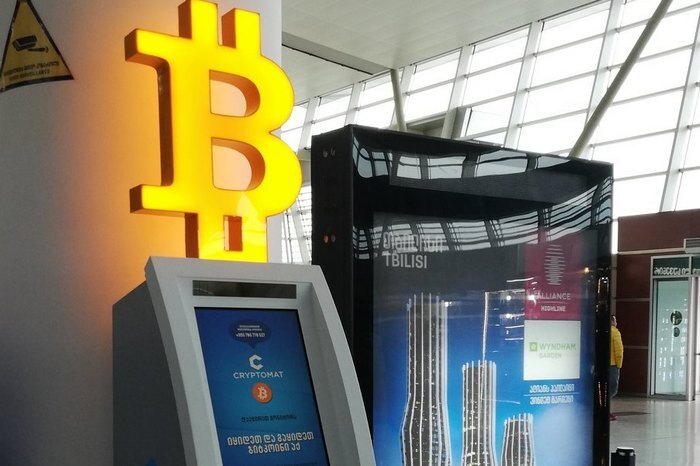
The mechanism is simple. The Russian leaving the country acquires USDT or other stablcoins for rubles, and after arriving in the country of appointment, he sells them again - for dollars or local currency. You can sell cryptocurrencies on P2P platforms that streamline trade between specific people. In Armenia, Georgia and other countries, there are also cryptomats - devices that exchange cryptocurrency for cash. You can find the nearest terminal using the Coinatmradar service.
The commissions in cryptomats are higher than with a P2P train, so experts advise not to use crypto meters to exchange large sums. “Exchange through cryptomats is a fairly expensive pleasure, the commission will be from 3 to 8 %,” said the founder of the PBC cryptoconsulting agency George Paliani.
The mechanism for withdrawing money abroad was described by other well -known media , and at the Vinsky forum for independent travelers, a separate topic is devoted to the use of cryptocurrency abroad. Experts noticed the growth of the interest of Russians in cryptocurrencies in the spring. As the Commercant's co-founder, the Encry Foundation, told Roman Nekrasov, in March the demand for them grew “three to five times”, and the buyers showed the greatest interest to stablecoins: Tether and other cryptocurrencies tied to the dollar rate.
“Partial mobilization” could even more increase the demand for stablecoins
There are no complete statistics on the volume of trading of cryptollars for rubles in open sources, however, the Investing portal presents data on a pair of RUB-USDT from the Exmo exchange and P2P platform of the Binance exchange.
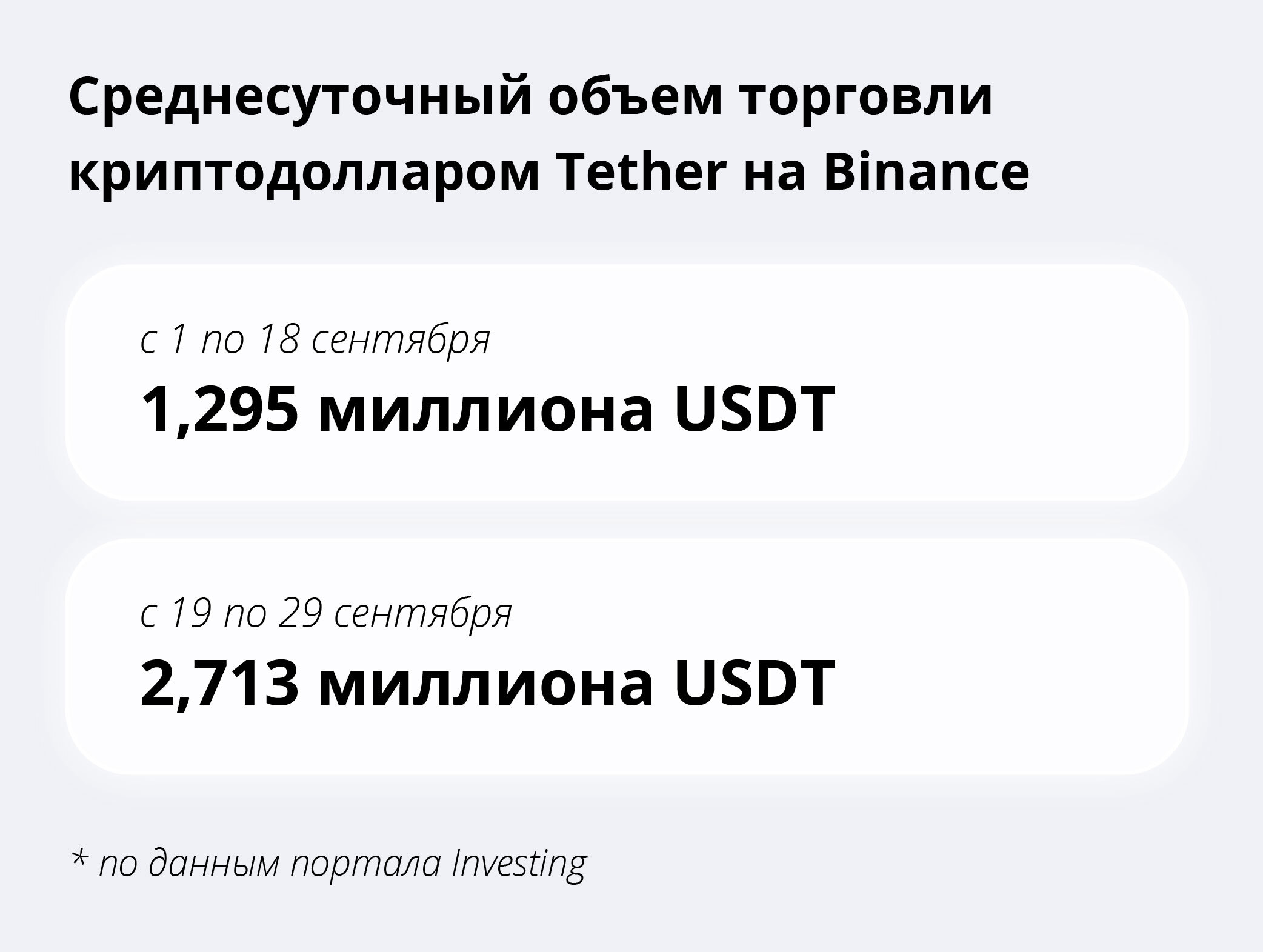
Judging by this statistics, after the mobilization declaration, the demand for cryptollars grew up. For example, on Binance, after September 19, the average daily trade volume of USDT has increased more than doubled to the indicators of the first half of the month.
Another indirect evidence of demand growth is an increase in spread, the difference between the dollar exchange rate on the Moscow Bill and the cost of dollar stabilcoins on crypto -streaks.
We explain in more detail what a spread is and where did it come from ↓
Spread - an exchange term formed from the English Spread (scope). It is used to indicate the difference in quotes: for example, the difference between the price of the sale and purchase of any asset.
In this case, the spread means the difference between the market exchange rate of the dollar on the Mosbirzh and the cost of crypto dollars on Binance and other exchanges. In a normal situation, these indicators were approximately equal - so, on February 1, 2022, USDT was even cheaper than a dollar on Mosbirzh ( 76.3 rubles against 76.86 rubles ).
However, after the start of hostilities in Ukraine, the Central Bank limited the turnover of foreign currencies - for example, you can buy dollars and euros at the exchange rate through any brokerage application, but you will not be able to withdraw them to a bank account, since the currency was purchased after March 922. You can purchase dollars in banking applications, but there the rate is already different from the exchange. So, on the afternoon of September 29, it was possible to buy dollars at Tinkoff Bank for 61.35 rubles at the exchange rate of 57.34 rubles.
In these conditions, people who would previously buy dollars on the Moscow Bill or in banking applications turned to cryptocurrencies, and the same spread arose between quotes.
“Paper” calculated spreads based on open statistics from the Investing portal: here you can find the story of the Cryptodollair Tether's quotes according to the Exmo exchange, and here is an archive of the weighted average exchange rates of the dollar to the ruble. Against the background of mobilization, the spread grew: for example, at the beginning and at the end of August, it was 4-5 %in the corridor, and on September 19 the difference between the courses was 4.32 %. At the end of September, the spread seriously increased: from September 26 to 28, for example, it ranged from 9.3 % to 10.67 %.
Such an increase can be explained by high demand for crypto -dollars.
Before buying crypto dollars, you will need a special wallet. They are different
All cryptocurrencies are stored on special wallets, stablecoins are no exception. Cryptic shoes are software and hardware, the choice between them depends on the goals of users.
Hardware wallets are special devices that provide the so -called cold storage of assets. This means that the device does not have a constant connection to the Internet: communication is carried out only at transactions, which increases storage safety. The most famous manufacturers of hardware cryptocurns are Ledger and Trezor . The cost of their devices is from 69 to 249 euros. There are other manufacturers - for example, Safepal sells hardware wallets for $ 50 . Some companies deliver wallets to Russia, these devices can also be found in domestic marketplaces .
Program wallets are less safe, but, as a rule, they are free. In addition, they support more different cryptocurrencies, and their interfaces are better perceived by users. Program wallets can be mobile applications, web services and even extensions for browsers-for example, Metamask wallet can be installed on the Google Chrome family browsers.
In a separate category of software wallets, the so -called caste -dimensions are distinguished. In their case, a third party is responsible for storing personal data and other information - for example, a cryptocurrency exchange. All registered users of Binance and other trading platforms receive exactly caste -dedicated wallets. Their security is lower than that of non -codial software storage facilities like Metamask: users can lose access to their funds as a result of hacker attacks, it is also possible to block accounts on court decisions and as a result of sanctions . On the other hand, Castodian - a company responsible for the safety of funds - can restore access to the wallet if, for example, you forgot the password. If you forget the data for entering the non -castodial wallet - software or hardware - the cryptocurrency on it will be lost forever.
Another advantage of castodial exchange wallets is a low entrance threshold: for example, users of exchanges do not have to understand the difference between different blockchains. But long storage of significant funds on exchange wallets can be unsafe.
Want to deal with blockchains after all? In short, explain what ↓ it is about
Blockchain is a system of information blocks on the basis of which cryptocurrencies work. There are a lot of cryptocurrencies themselves, there are much less protocols for them.
Tether cryptollar is available on different blockchains , which differ in the speed of transactions and their cost. You need to be extremely careful when translating into other wallets. If you accidentally send a USDT to a wallet in another protocol, all assets will be lost irrevocably.
Understanding these nuances in trading through the Binance P2P platform is not necessary.
Most often, Russians acquire Tether and other cryptocurrencies on P2P turrets
The most popular trading platform for the Russians is the world's largest Binance crypto-rope-after the start of the war in Ukraine, the company stopped receiving payments from Russian banks, but P2P-trade is available to users from Russia. Before implementing transactions, it is necessary to go through the verification procedure and provide the exchange for personal information.
With the help of this service, sellers and buyers interact directly, and Binance facilitates transactions and protects transactions, performing arbitration functions. You can purchase USDT cryptollars and other cryptocurrencies on the Binance P2P platform for different currencies, each of which has its own payment methods.
For example, transactions in rubles can be paid using the applications of some Russian banks and electronic payment systems: Qiwi , Payer , Advcash and others. Money is transferred to the seller through a bank or payment system, after receiving it, the seller sends you cryptocurrency, and the target is the guarantor of the transaction.
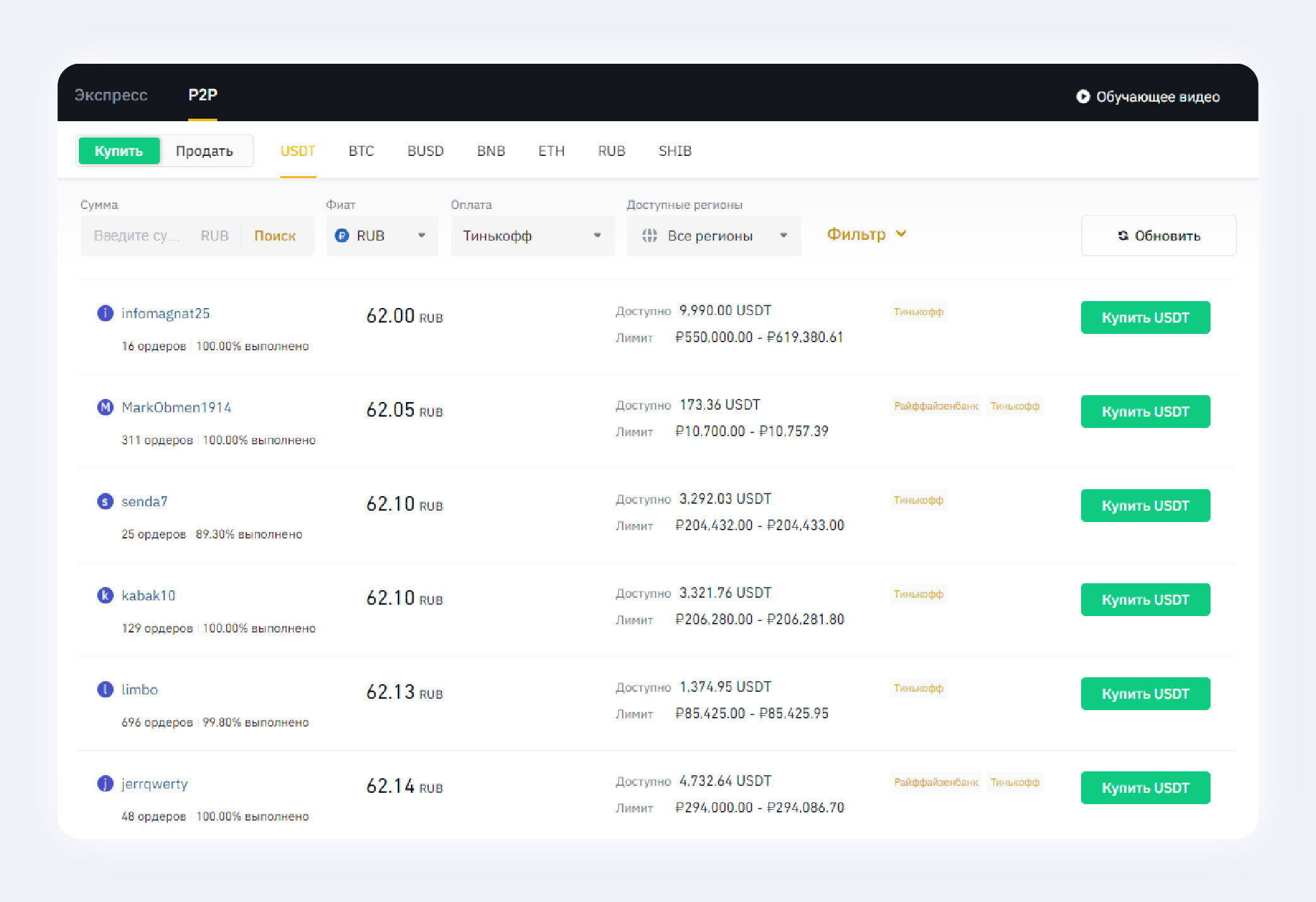
On the afternoon of September 30, it was possible to purchase USDT with payment through Russian banks for 62.1 rubles.
What should you pay attention to with P2P trading? ↓
Near the nicknames of sellers there is information about the number of orders and the percentage of the executed orders. The higher both of these indicators, the better.
In addition, it should be borne in mind that all proposals have limits: sellers indicate both the maximum number of crypto dollars sold and the minimum amount of the transaction.
Other large crypto -tanks do not accept direct payments from Russian bank cards - for example, the Paper correspondent could not replenish the FTX exchange either from the ruble or the dollar card of Tinkoff Bank. According to some reports, the Exmo exchange is still accepted from ruble cards-on the website of the Ruble Visa and MasterCard site are indicated as possible means of payments. And in April, representatives of EXMO told RBC Crippot that the company did not intend to limit access to Russians: the exchange even created a separate site for users from Russia, Belarus and Kazakhstan.
Stablecoins can also be an investment tool
Cryptollars can be interesting not only to Russians moving to other countries, but also by investors remaining in Russia. An important rule of investment is the diversification of assets, that is, investing in different tools, industries and markets. Diversification can be currency: many Russians kept their savings in different currencies to avoid losses due to changes in courses.
The free circulation of dollars in Russia is limited now, and the new US sanctions can affect the national clearing center (NKC), reported The Wall Street Journal. In this case, dollar calculations on the Moscow Bill can become impossible, representatives of the Central Bank explained . If the sanctions against the NCC are introduced, stablecoins tied to the dollar rate can become an alternative to the American currency in the portfolios of private investors.
Cryptollars can also be invested - for example, Binance exchange now offers users deposits in USDT at 8 % per annum . The size of the rate can change over time, but interest on foreign exchange deposits in Russian banks is still much lower : usually they do not exceed 0.5 % per annum, and many financial organizations, in principle, abandoned deposits in dollars and euros.
At the same time, investors need to remember possible risks - to store large sums in cryptocurrency safer on third -party (non -exchange) wallets, and further tightening of sanctions is not excluded. Coindesk and Bloomberg reports that the European Union can close all Russians access to cryptocurrency services registered in the EU.
Experts consider such a scenario quite realistic. По мнению старшего юриста компании Tomashevskaya & Partners Михаила Жужжалова, криптовалютные площадки в этом случае откажутся от предоставления услуг, но позволят россиянам перевести свои активы на сторонние криптокошельки. «Как правило, условия пользования сервисов в этом случае закрепляют, что криптоактивы будут перечислены их владельцу, однако нельзя исключать ситуаций, когда владельцы столкнутся с проблемами», — пояснил он изданию «РБК-Крипто».
Впрочем, даже в случае блокировки россияне смогут пользоваться децентрализованными криптобиржами — например, Pancake Swap . Такие сервисы не могут изъять средства клиентов в силу своей архитектуры: пользователи совершают все транзакции с помощью собственных кошельков, которые не контролируются биржами. Некоторые из бирж также предоставляют возможность инвестирования криптовалют, хотя механизм начисления процентов там сложнее, чем на Binance.
USDT и другие криптодоллары остаются рискованными активами. Прецеденты обрушения котировок стейблкоинов уже были
У криптодолларов много преимуществ, однако они остаются сравнительно рискованным активом — как и любые другие криптовалюты. У экспертов и аудиторов неоднократно возникали вопросы , связанные с обеспеченностью стейблкоинов реальными деньгами.
В 2019 году компания Tether — эмитент этой криптовалюты — заявила , что денежными средствами и ценными бумагами обеспечены только 74 % USDT, выпущенных в рыночное обращение.
Кроме того, рынок уже видел пример обрушения курса стейбкоинов: весной 2022 года рухнули котировки криптовалюты TerraUSD (UST), привязанной к курсу американской валюты. The cost of this asset for a long time ranged in the region of the $ 1, but on May 10 the rate began. A few days later, the cost of Terrausd has fallen to 12 cents, and now the exchange price of this asset is only 3 cents.
Фото на обложке: კრიპტომატი•Cryptomat/ Facebook
What else to read:
- Акции «Яндекса» и Ozon с начала войны подешевели на 73 %. Почему российский фондовый рынок уже неделю падает, а рубль нет ?
- Акции, золото или биткоин ? Куда вложить деньги, чтобы спасти их от инфляции.