
Translated material
The Nobel Prize for Medicine was received by Neanderthal Researcher and the discoverer of a new type of people
We explain what the unique discoveries of Svante Paabo are important for medicine
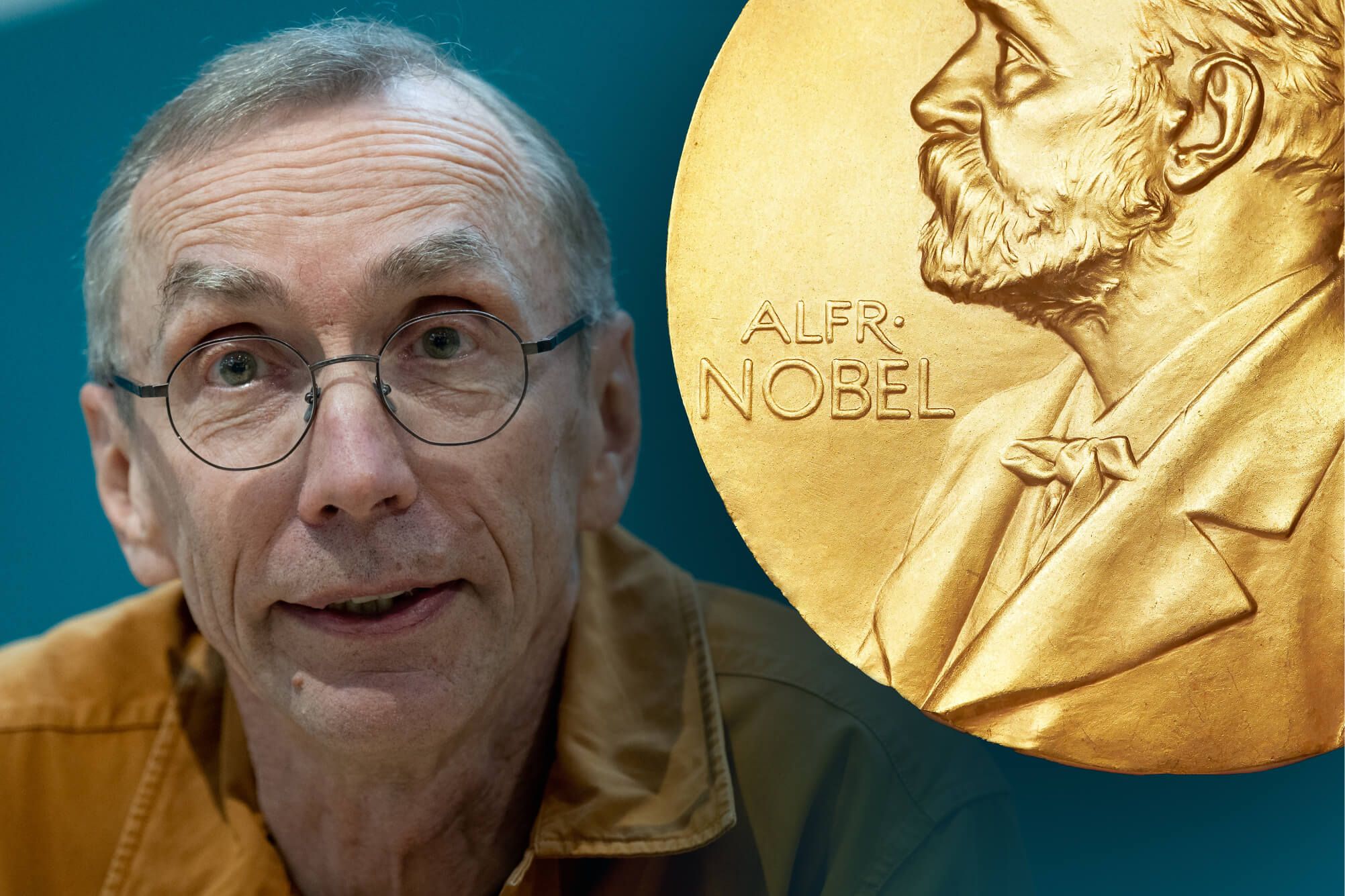
The Nobel Prize in Physiology or Medicine in 2022 went to Svante Pääbo, sometimes his surname is transliterated as PEABO) - if not a person who created a whole field of science, Paleogenetics, then, of course, the decisive contribution to it. Paleogenetics studies and reconstructs the genomes of organisms living in antiquity (or integral species), and therefore its connection with physiology and medicine at first glance seems very stretched, even by Nobel standards. But in fact, there is a connection, and quite strong - albeit not as obvious as, say, last year's discoverers of pain receptors.
Svante Paabo was born in 1955 in Stockholm. From childhood, science has been interested in him - however, it was not at all medicine, as one might think, but the history of the ancient world, primarily Egypt. In his book “Neanderthal. In the search for disappeared genomes ” , translated into Russian and released by Corpus in 2018, Paabo describes the origins of children's hobby:
When I was thirteen, my mother took me to Egypt, and since then the history of Ancient Egypt brought me to a lively thrill. But when I began to engage in it seriously at the University of Uppsala in my native Sweden, it became completely clear that all these pharaohs, pyramids and mummies were nothing more than youthful romantic hobby. I did homework, I taught hieroglyphs, I knocked out historical dates and facts, I even pissed for two summers in a row over the catalogs of clay skulls in the Museum of History of the Mediterranean in Stockholm and I could have been able to work there, I really have a desire to become a Swedish Egyptologist.
In the museum, I noticed that in the first summer, and in the second, the same people did the same work ... and even more - they went to dine at the same restaurant, always at the same time; They always ordered the same food, at dinner, the long -known Egyptological riddles and the same boring academic gossips invariably squinted. And I decided that Egyptology is too slow for me. Not so I imagined my professional life. I wanted something delightful, consonant with the world that I saw around. ( Translation from English Elena Naimark )
The hobby of Egypt quickly changed his disappointment, and in search of something more “delightful” Paabo entered the medical school at the University of Uppsala. Here he received the first experience of communicating with real, living patients and decided that he liked such work much more “Egyptological riddles”. However, after graduating from the University, Paabo still took a step away from practical work and decided to first defend the dissertation. The theme of his work was adenoviruses - the very ones that are now known to everyone as the vectors of genetic information in adenovirus vaccines - “satellite V”, J& J and others. Paabo was interested in the influence of one of the proteins synthesized by these viruses on the immune system - it is important for understanding the laws of development of an unpleasant, albeit not very terrible disease with adenoviruses.
However, the Nobel laureate Paabo did not become at all for this early, “purely medical” work. For the Nobel Committee, his children's hobby for mummies turned out to be even more relevant, because it made it possible to make a real breakthrough in the understanding of the "prehistoric history" of mankind.
If you move away from the laconic formulation of the committee and explain the essence of the Paabo contribution is slightly more expanded and simple, then the bonus was given for two sides of his many years of work:
- technological, that is, the development of methods that allow you to extract DNA from bones with an age of thousands and tens of thousands of years;
- Anthropological, that is, for those discoveries that these methods allowed to make.
The most important among these discoveries are the following:
- reading the genomes of the Neanderthal (first one representative of this species, and now several);
- The discovery of the Denisov man - which would be completely impossible without new methods of paleogenetics;
- A new understanding of how all these people - Denisovites, Neanderthals and modern sapiens - correlate with each other in terms of kinship
Paabo learned to cleanse the genomes of ancient people from "garbage". Without this technology, we would know much less about Neanderthals and Denisovites
First about technology. It is quite difficult to explain what exactly the contribution of Paabo is here - this is the totality of practices, procedures, methods of verification, and in general it is difficult to formalize the ability to “make” where nothing comes out in the wrong hands.
It would seem that reading the human genome is now a routine, there is nothing complicated in it as to be worthy of the Nobel Prize. You can order sequencing in almost any large commercial laboratory, and for not the biggest money - it is enough to rub with a cotton swab against the inside of the cheek, lower it into a test tube with a solution and give it to specialists.
But working with ancient DNA differs from the routine reading of genomes in the same way as reading this text on the screen - from reading the half -stroke birch bark letter or barely preserved piece of clay tablet. In all cases, the subject of interest is the text itself, but its safety can be very different, and, accordingly, the complexity of reading can be not comparable. The DNA content in the ancient bones with which Paabo had to deal with thousands and millions of times less than that will be on the tip of a cotton wool before sending to the laboratory. It is often literally about single molecules. But the point is not only in quantity - the quality of this DNA is also fundamentally different, because in thousands of years its “text” is very distorted, and some “letters” simply disappear or even replace with others.
However, the analogy with birch bark letters is not fully accurate, since it does not convey one of the main difficulties with which the Paleogenetics have to deal with is the risk of pollution. When you work in an archaeological excavation, you have no risk of confusing an ancient birch bark letter with written yesterday or a dozen years ago. But when working with an ancient DNA, this happens all the time: a huge proportion of the genetic material that has to be removed from the ancient bones comes from bacteria and viruses and - this is the worst of all - is introduced by the researchers themselves. And since paleogenetics work with insignificant amounts of DNA of people who were very similar to us in everything, such pollution is very difficult to detect and eliminated.
To understand how important this is the problem, it is enough to turn to the fate of early paleogenetic works, even the works of Paabo itself. Very often, among the ancient genetic material, modern traces made were mistakenly made during analysis. The merit of the current laureate and its many employees is the ability to get rid of such garbage and reliably reconstruct ancient genomes at a constant risk of error, as well as create a double, versatile check.
If it weren’t for Paabo, people would not soon be able to read the genoms of Neanderthals - and the existence of the Denisovites might not have learned at all.
The Paabo method helped to open a new type of man - thanks to just one tiny find
By the mid-1990s, when Paabo began to closely engage in the genetics of ancient people, such a thing simply did not exist. Genetics was called science that studies modern people (based on the study of family trees and DNA). The study of their ancient ancestors was limited to the analysis of anatomical differences in the structure of bones, the study of parking or tools. The idea that, according to a fragment of a bone in the size of two rice grains (it was precisely the same from the first Denisisian found) you can install a blood group, the eyes of the eyes or color of the hair of its owner seemed impossible.
But gradually this area went to the current state. First, Paabo and his colleagues aimed at studying mitochondrial DNA - it is a tiny fragment of the genome that contains a little information, but it is many times duplicated. If in ordinary chromosomes each gene is presented in the best case in two copies (from the father and mother), then mitochondrial DNA is inherited only from the mother - but each cell falls on a hundred or even a thousand mitochondria, which means many copies of the same small ring molecule.
In 1997, Paabo managed to make the first breakthrough in the paleogenetics - to extract, propagate and read fragments of mitochondrial DNA obtained from the Neanderthal bones found in the middle of the 19th century in Germany, using the recently invented PCR method. Regarding even tiny mitochondrial DNA, it was a very small fragment - only 379 separate “letters”. However, for such a discovery, the efforts of two laboratories were required, each of which worked independently to exclude the possibility of similar pollution.
This work was followed by a few more - they were made on other samples of Neanderthal bones. By 2006, the number of Neanderthal “letters” read over a million. By this moment, the next technological revolution took place in the DNA reading technology, which allowed it to read it with small fragments, but in very large quantities. Paabo adapted the technology to create its own method of reading individual DNA chains, which made it possible to improve sensitivity.
By 2010, for the first time was completely read by the Neanderthal genome - just one such person - but this concerned not only the mitochondrial part, but of all three billion “letters”. For the first time, anthropologists had the opportunity not only to compare the anatomical structure of extinct and modern people, but also to compare their genetics. In the same year, Paabo, together with Russian archaeologists, Anatoly Derevyanko and Mikhail Shunkov, managed to do something even more amazing - to open a new type of man, having “in his arms” only a fragment of the phalanx of the little finger, the very size of two rice grains. She was found in the Denisova cave in Altai, from the name of which a new look received its name.
Medusa already wrote in detail about how it was possible to make this discovery and how later, already in 2019, this work made it possible not only to study the genome, but the reconstruction of the appearance of the Denisovites. It is even better to read the history of this and previous discoveries in the presentation of Paabo himself in a book published in Russian.
Having referred to these texts, we still repeat one thing-the discovery in 2010 of a new type of man became possible only thanks to the development of the PAABO of working with ancient DNA (primarily for the study of Neanderthals). If this technology did not exist by the time of excavation, most likely, we would not have learned about Denisovites at all, because the “classic” anatomical anthropology in the event of such a tiny find is powerless.
How do Neanderthals, Denisovs and modern people relate to each other? We know about this, including thanks to the Paabo
Paleogenetics allows you to answer the question of which of different types of people to whom is a relative and how the resettlement of mankind passed. In the most laconic form, the answer sounds like this. All modern people on the one hand, and Denisovs and Neanderthals on the other are two nursing groups. Our last common ancestor lived about 700-800 thousand years ago in Africa. Then the ancestors of the Neanderthals and Denisovites settled Eurasia, and the former occupied the territories west of Altai, and the latter - to the east and south. Although the populations, apparently, were very intersected, they were divided into two species.
Significantly later, about 70 thousand years ago, the ancestors of all modern Neprikans left Africa and (apparently, in the Middle East) partially mixed with Neanderthals. As a result, all the people traditionally living outside Africa, the descendants of this population, retained about 1-2% of Neanderthal traces in the genome. Some of them moved further to the southeast and mixed with the Denisovites there-the traces of their genes were preserved by the Melanesians, whose genome of which Denisov origin has up to 6%.
What happened all this time in Africa is a big riddle. There is reason to believe that there were also other extinct species of people there, but so far none of them could be found: DNA in the local climate is destroyed especially quickly and so far the paleogenetics is powerless before reading genomes from the continent.
What do these studies give for physiology and medicine?
First of all, the material base for comparison. It allows you to look for a physiological role in genetic factors. Already now there are at least two examples of the influence of the genetic characteristics of extinct species of people on the physiology of a modern person.
Firstly, in 2014 it was found that the Denisov features of the options for one of the genes (EPAS1) help modern Tibetans adapt to a sparse high-mountain air.
Secondly, literally last year, the Paabo group established that the Neanderthal inheritance is directly related to the severity of the Covid course-there are non -anderthal variants of several genes that weaken or, conversely, worsen the course of the disease in the infected ones.
What do his Russian colleagues say about the Paabo Award?
Mikhail Shunkov, Corresponding Member of the Russian Academy of Sciences, Master of Archeology of the Stone Age of the Institute of Archeology and Ethnography of the SB RAS:
I am very happy for our colleague with whom we have been cooperating for a long time. This is a well -deserved reward. As an archaeologist, I can say that those methods and development that were made by Svante Paabo and the international team, which he leads, opened completely new horizons for us archaeologists. Thanks to them, we can determine the species of fossil people not only on the basis of the analysis of the morphology of bone remains. Indeed, in the case of research in the Denisova cave, the remains are single and, in addition, have very small sizes, which means the indefinitely of their morphology. For such anthropological finds, it is impossible to restore the appearance of a Denisov person.
But this can be done on the basis of analyzes of ancient DNA even a microscopic anthropological find. The development and development of these methods not only led to the opening of the third, previously unknown fossil type of ancient person, but showed that some of the species coexisted, crossed together, and made a noticeable genetic contribution to the genome of modern man, in particular, influencing his immune system.
Svante Paabo often came to our Denisov cave, we have been working closely with him for many years. Paleogenetic studies are a huge part of the interdisciplinary work that we are conducting along with representatives of different fields of sciences: paleozooologists, chemists, palinologists, paleobotachins. Such studies are conducted not only on the materials of the Altai caves, Svanta explores the DNA of an ancient person, analyzing anthropological finds from around the world. And I am very glad that we are one of the active participants in these works.
Alexander Ershov