
Translated material
"Sleep on the ground, many have no money, food has ended"
Ukrainian refugees for days wait for checks on the borders of Russia with Estonia and Latvia
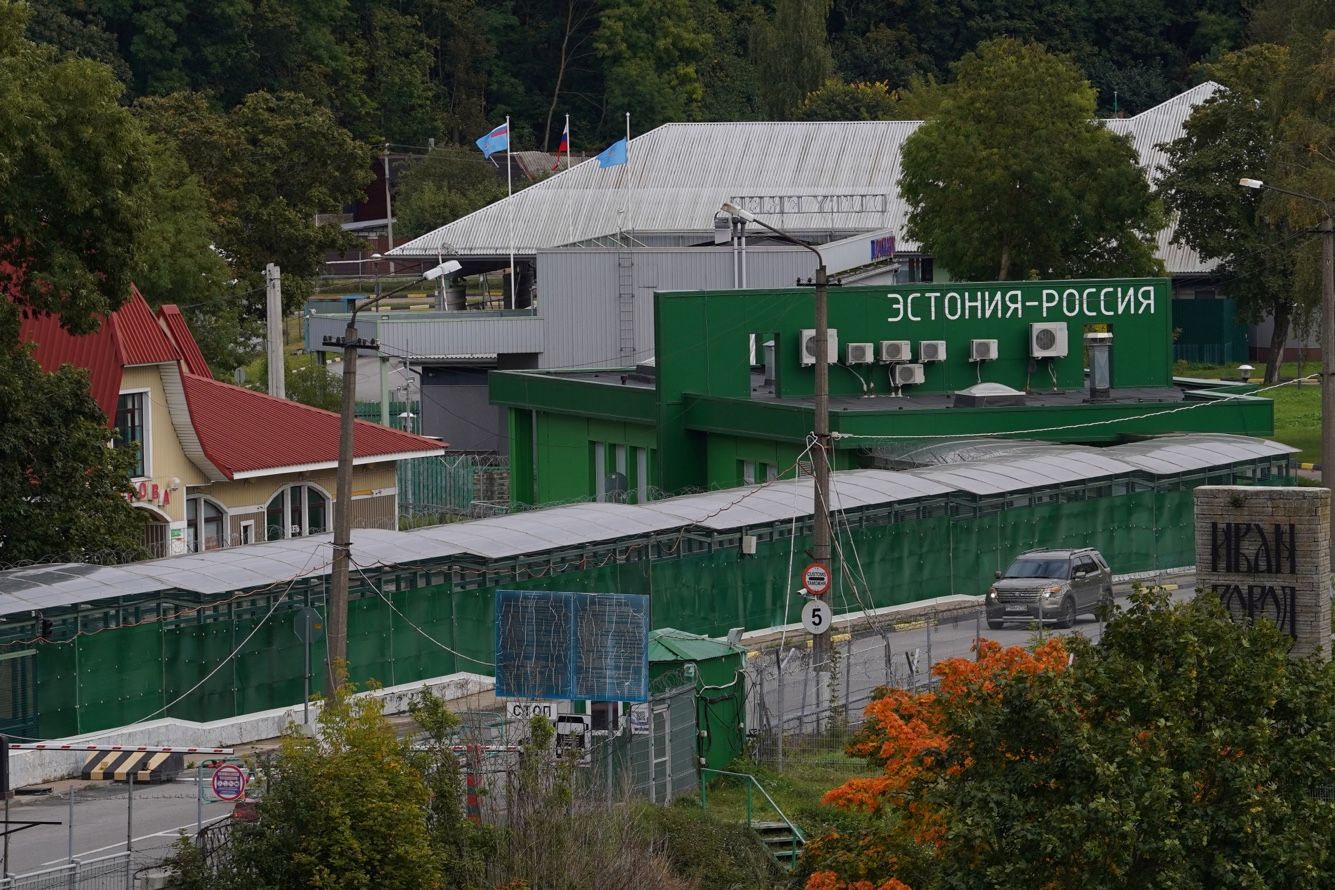
On the borders of Russia with Estonia and Latvia, huge lines of people who are trying to leave for the European Union were formed. They mainly cost Ukrainian refugees. According to eyewitnesses, Russian border guards are very slowly conducting inspections and do not let people into the checkpoint, despite cold weather. People have to live on the border for several days, spending the night right on the street.
The lines on the borders of Russia with Estonia and Latvia began to form in the second half of September, and by the end of the month they “reached the climax”, writes Fontanka with reference to volunteers that help refugees. According to the publication, this situation has developed at all the ground border crossings of the Leningrad and Pskov regions.
“On the checkpoint of the queue of 3-7 days, hundreds of people. They sleep on the ground, many have no money, food has ended. On Kunichina Gora is more than 200 [person]. She asked people right in front of the barrier [closest to the checkpoint] - they stood for more than six days [Woman with two children]. In Shumilkino , it seems to me that there are already more than 1000 [person]. Ours are not only missing, but they do everything very, very slowly. And it seems that they are mocking, ” said one of the eyewitnesses.
At the transition of Ivangorod - Narva, the situation is similar: refugees spend more than a day in anticipation of the border passage. Most have no food, water and minimal amenities. The temperature on the street at the end of September did not exceed 13 degrees in the afternoon, and at night dropped to 7 degrees.
Delfi writes that refugees get to the border on the buses where they are planted, after which they spend several days in the open air. People have to sleep on cardboard, pallets or oilcloths.
Journalists talked with a woman whose elderly mother was stuck at the border point of the loss . According to her, at the beginning of October near the checkpoint there was nothing but a “tent tightened by polyethylene” and “a rug on which you can lie”.
Yesterday [October 1] they were unloaded from the bus, they formed in a group of 15 people. At about 21:00, a group was held at number 71, and today number 76 cannot go from seven in the morning. Mom will again have a night on the street ... There is a round -the -clock store there, but it works only until two in the morning, they huddled on the floor yesterday, and then went to everyone in the cars. In the morning, the man started to bask in his passenger car for a couple of hours.
Later, the interlocutor of the journalists said that volunteers came to the border - they set up tents and began to distribute hot drinks and cookies. Then she said that the group in which her mother was located was kept by the barrier at the checkpoint. According to her, people asked the border guards to let them into the building, because it was cold outside, but they answered that it was not supposed.
Eyewitnesses said that at least two people died in lines: an 80-year-old woman at the border point of the loss and an elderly woman at the Kunichichin Gora checkpoint.
“Here is such hell is now on the borders, and in this hell people ... Refugees wrote that two elderly women had already died in line. The KPP of the Russian Federation misses several people per hour, ” wrote a volunteer of a non -governmental organization Rubikus on Facebook , which helps refugees.
Diana [the name changed], who left for Riga, told reporters that Russian border guards are practicing a “collective punishment”: if someone near the checkpoint goes beyond the line that cannot be crossed, the line stops and does not miss anyone for several hours.
She also said that there were many elderly in the queue at Shumilkino, people with disabilities, pregnant and newborns. Some had to sleep on the floor at the gas station.
“It's just a concentration camp. Fraternal love in action, ”said Diana. She added that on the other side of the border, Estonian volunteers were waiting for them: “There is already a room for Ukrainian refugees with food, hot drinks and sleeping places. There is nothing on the Russian side. ” Diana passed the border on the night of October 2.
The volunteer of the non-profit organization “Friends of Mariupol in Estonia” informed Delfi that Russian border guards were issuing about 50 Ukrainians per day, which is why people “surrender their nerves”.
“On the Russian border, people yell, and anything. I can’t vouch, but our wards saw how a person inflicted a injury to himself-he cut his throat with a glass, ”she said, adding that at the border point in Narva they began to unfold buses with refugees due to“ too large queue ”.