
Translated material
Go through the forest
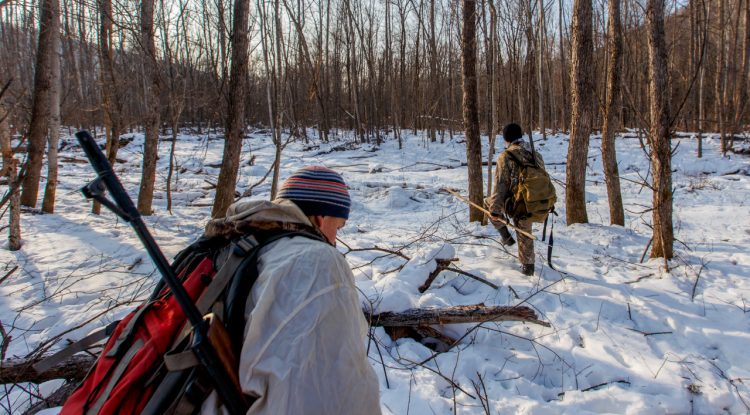
In Russia, even men from indigenous peoples are mobilized. They leave the military commissar for hunting and fishing
In Russia, according to the 2010 census, 47 indigenous peoples live. All of them are facing the disappearance. During the mobilization of the Vepses, the Udegeans, Itelmen and many others, the summons also began to come - and now they are hiding from the call in forests and lakes. "Cold" tells how this happens.
In order not to miss the main materials of the "cold", subscribe to our Instagram and telegram .
On the shore of Lake Onega, about an hour and a half drive from Petrozavodsk, there used to be a Veps national volost. Now two local rural settlements-Sheltozero and Rybrek-are still the territory of the compact residence of Vepsov, the northern people, who settled in these places in the first millennium of our era. As of 2010, a little less than six thousand veps lived in Russia.
Vepses are officially recognized in Russia to the indigenous people. According to the federal law, the so -called peoples who live in Russia and have less than 50 thousand people on its territory. As a rule, representatives of these peoples live on the lands of their ancestors and retain the traditional lifestyle, economy and crafts. Russian legislation guarantees small peoples a number of special rights: for example, use lands in places of their traditional residence and receive compensation for damage to their original habitat due to industrial activities. Separately, the legislation prescribes the right to replace military service with an alternative civil service.
As the lawyer Anastasia Burakova explains, to pass the AGS, representatives of the small peoples need to write a statement, indicating as a reason belonging to their people. There are no mandatory documents that could confirm this, but, as a rule, there is enough birth certificate that indicates the nationality of the parents, and registration in the territory from the list of places of traditional residence of indigenous peoples. AGS of representatives of small peoples takes place on the same traditional economy in which they usually work.
Separately, an alternative civilian service during mobilization in the legislation is not prescribed, added lawyer Alexander Poruk. But in 1996, the Constitutional Court determined that this right can be used, regardless of whether there is such a law or not, because it is enshrined in the Constitution. “Cold” is not known about cases when mobilized representatives of indigenous peoples tried to use the right to AGS.
A little more than 400 people live in the fishing now. After the mobilization announcement, according to an independent journalist, author of the From Karelia with Freedom telegram channel, Valery Potashov, they tried to hand over 24 men there. Among them were the husband and the girl of the local resident of Maria ( the name was changed at her request ). As she told the “cold”, many men immediately “fell ill” and did not appear on the agenda. Potashov adds that some villagers refused to take the summons and went into the forest. The relatives of Mary were eventually sent home from the military registration and enlistment office, saying that they were not suitable for mobilization criteria. When a bus for mobilized arrived in the village on September 26, only four people were taken away.
According to Potashov, the bus did not go to the neighboring sheltozero, because there was no one to carry from there - although he lives twice as many people there than in the fishing. According to the local resident of Inna ( the name was changed at her request ), when a list of surnames for mobilization came to the local administration, "the guys immediately found out who was on the list, turned off the phones and went into the forest." The employee of the military registration and enlistment office, who was trying to hand the agenda to men, replied that they were not at home: "Where did he go, we did not know."
“I will say this: people will not say anything to you,” Inna says. - We have Vepsa and Karelians here - all people are closed, they are also afraid. Those who went into the forest support their families. If they want to get away from mobilization, they will leave. ”

The usual thing
“I say:“ Go into the forest, do not argue [with military registration and enlistment offices] - it is useless. ” The reason can be invented: the season or, there, to have a hut, to dig a garden, ”says Pavel Sulandziga, head of the Raed Little North, Siberian and Far East of the Little East of the North, Siberia.
By nationality, he is an Udegean - this is a small people living in the Far East; Now the Udegeans are less than one and a half thousand. According to Sulandziga, the main fishing of his people is hunting, so every Udege family has its own hut in the taiga, and some also have a garden that allows a long time to live in deaf forests, where you can only get in a boat.
The editor of the Rossiye Peoples website Dmitry Zhezhkov, Itelman by nationality (Itelmenov is just over three thousand, they live in Kamchatka), told the cold that in his immediate environment, two people had already been fishing so as not to take the summons. They can not return home for months - and long -term departures for fishing are practiced in peacetime. “It is easier to go to the forest to the indigenous peoples than city residents, because this is a familiar business,” Zhezhkov explains.
According to Sulendzigi, the agenda came to 26 to his fellow villagers (of which at least 12 Udegeans) from the Primorsky Red Yar. In the Khabarovsk Territory, six orchards were mobilized (people related to the Udhegians; less than 600 people are left). In the village of Andryushkino in Yakutia, according to Zhezhkov, the summons came to six local residents: three Yukagirams (a little more than one and a half thousand) and three Evens (people related to Evenks, there are 21.8 thousand in total).
“There is no official statistics, everything is in chaos,” says Zhezhkov. “Judging by the messages, mobilization touched all villages where the indigenous peoples live.” At the same time, activists do not believe that the authorities specifically set the task of “catching natives”: rather, the fact is that rural residents mobilize more than urban ones, and more than two -thirds of indigenous peoples live in the villages. Moreover, most often-in depressed areas where there are no jobs and developed infrastructure: they are afraid to protest and even talk with journalists and human rights activists because they risk losing at least some work.
"Lurk, do not lean out and wait."
All the interlocutors of the “cold”, represented in this material under their own proper, emigrated from Russia for political reasons and are in the International Committee of the indigenous peoples of Russia, created in February 2022.
Since 2016, Pavel Sulandziga has been living in the United States and is waiting for political asylum due to threats from the FSB; Then his Batani Foundation was recognized as a “foreign agent”. Dmitry Zhezhkov emigrated in 2013, when the government began to counteract the work of the Association of the indigenous peoples of the North, Siberia and the Far East, in which he was vice president, and advanced more loyal people into its leadership (now on the website of the Association, for example, the Zarossia banner ). Andrei Danilov, who defended the rights of the Sami in Russia, was repeatedly detained and arrested for his activities, so on the eve of the war he went to Norway. More than 50 thousand Sami live there (in Russia there are less than two thousand of them).
All three continue to maintain ties with Russia. “I know how the indigenous peoples live in Russia, more than those who are there now,” says Sulandziga. According to him, representatives of small peoples from different regions constantly turn to him: for example, on environmental protection in their places of residence.
Now the International Committee of the Indigenous Peoples of Russia helps them escape from mobilization: they advise and help to leave the country. According to Sulendzigi, American universities are going to highlight scholarships for the indigenous peoples of Russia. About how exactly human rights activists help them to leave Russia and which countries, the interlocutors of the “cold” refused to speak, but they admit that there are few people who want to leave. “We are not believed that we can help,” says Zhezhkov. “The authorities are crushing people, they say about us that we are Western spies sold by the CIA.”
There are also no data on how many men from the indigenous peoples in the war with Ukraine. Zhezhkov is known about the death of only two military personnel: one Nanai (there are 12 thousand people in total) and one Chukchi (15.9 thousand). According to him, even such losses and even the mobilization of several dozen people are a huge damage for small peoples.
“We have been living on these lands for thousands of years,” Danilov summarizes. - Do you know how many Putins were in our lifetime? Therefore, the tactics are this: go into the forests, hide, do not lean out and wait. ”
Photo on the cover: Udege hunters in the taiga. Primorsky Territory, January 2016