
Translated material
The future will show the dish
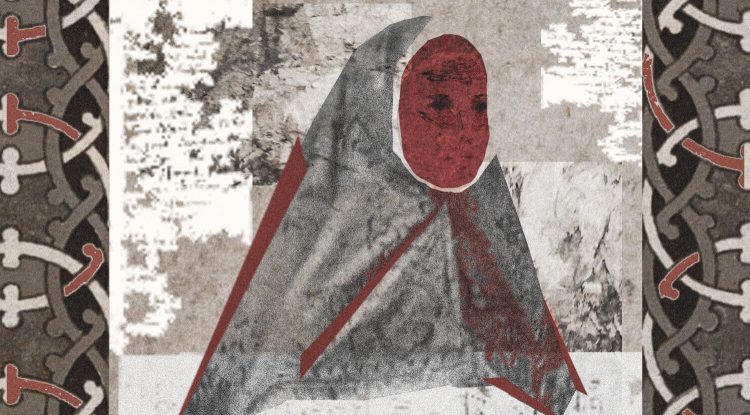
In the Time of Troubles, the fortuneteller Daria helped the boyars and princes make plans for life. She was burned alive
The concept of “witch hunt” is traditionally associated with Europe and America - however, in Rus' there were also their sorcerers, healers and fortunetellers, and they were also persecuted by law. Especially for the “cold”, the historian of Ancient Russia, the author of the telegram channel “ Russian Chronicles ” and Twitter “ Russian Chronicles without context ”, Vladimir Korshakov tells the story of the peasant woman Daria, whose career of fortunetellers coincided with the era of the change of royal dynasties, great hunger and political shocks.
In order not to miss the main materials of the "cold", subscribe to our Instagram and telegram .
June 30, 1646. In Moscow there is a hot summer. Despite this, in one of the Moscow chambers people are sitting in expensive, sewn with gold fur coats. These are boyars: their fur coats are not just clothes, but a sign of power and status. Boyars work: a crime is being investigated, the most important interrogation of the accused is underway. Investigators - a noble Muscovite, a distant relative of the tsarist educator Ivan Vasilievich Morozov, Prince Peter Pronsky and Kolnikiy Boris Pushkin - carefully listens to the words of a blind gray -haired woman.
“And I was with Prince Boris Troekurov,” says the old woman.
Duma clerks, specially divided into this process, carefully creak with feathers, in a hurry to fix each word of the under investigation (it is from their records that we know how he went and what it was said on it: “questioned speeches”, interrogation protocols, and other documents have been preserved). The boyars are uneasily exchanged among themselves: it is not just about an influential person, but about the close relatives of the reigning family. Boris Troekurov’s mother was a aunt of the late king Mikhail Fedorovich, the father of the now reigning Alexei Mikhailovich Romanov.
But the words have already been uttered and recorded in the protocol. Ivan Morozov orders to call Boris Troekurov to the confrontation of the stolnik (stolnik is a court rank for young heirs of boyar clans). In the case, a witness appears again - and maybe the suspect - a princely kind. But they judge a simple peasant woman - Babyza Darits from the village of Volodyatin, in the Suzdal district.
The phenomenon of a shaggy man
Half a century before this interrogation, Daria (Daritsa is a diminitive, a diminutive form of the name that was used in official documents, when it came to peasants) lived the usual life of a young peasant woman and was unlikely to think about communicating with the powers of this world. By that time, she, apparently, was already married. As often happened at that time, the children died from this marriage in infancy: the son lived a year and a half, and the daughter - only two weeks.
It still could have improved, but a serious illness for a long time dumped Daria from his feet. At some point, as she later remembered, she went to church to ask for a cure-and there she had a vision: an old shaggy man who said that now she could and should predict the future to people. Some time later, the vision continued: the same man and the same shaggy woman came out of the water and started a conversation with Daria.
When they are interrogated, Daria in the hope of mitigating the sentence will say that the devil sent her a vision, but she hardly thought so when she began to recover. The peasant women could see the images of shaggy men and women leaving the water on the icon of the Epiphany in the Volodytinsky Church. In the water of the Jordan, at the feet of the baptized Jesus, in the ancient Russian tradition, the personification of biblical reservoirs were depicted : the Dead Sea, the Jordan itself, and sometimes its two origins. It is these personifications that suspiciously resemble Daria “Old Man” and “Cosmatian wife” described by Daria. After the vision, Daria was recovering.

One way or another, the peasant took the advice of shaggy creatures seriously - and began to guess. She chose a salt for this - a substance that in the magical representations of the Slavs has cleansing and sanctifying properties. Having scattered salt on the dish, Daria peered into it and saw pictures of future events: from emotions (crying or laughing figures) to the stage - for example, a thief runs away with the stolen one, and the victim of the robbery runs after him. By these visions, Daria tried to determine the past and future of her customers.
Daria was an ordinary illiterate peasant. Of course, she could not consider herself a saint, but judging by the description of her initiation in fortune -tellers and by the method of prediction, she did not think that she talked with demons - recognition could be a result of torture. Rather, the experience of recovery along with religious impressions (Daria will remain a believer Christian all her life) led her to the belief that she came into contact with some neutral spirits of nature. A similar experience in acquiring supernatural abilities is well known, for example, among the indigenous peoples of the North of Russia. So, in Nganasan people often become shamans, having survived a serious illness. The similar story of the descendant of the shaman about how his ancestor “became friends with the disease, went with her somewhere to the ends of the earth,” Ethnographer Andrei Popov recorded in Taimyr.
Of course, the canonical rules of traditional Christianity condemn the fortune -telling as a sinful occupation. But in the so -called People's Orthodoxy there was a place for magical manipulations. “A peasant woman, reverence for St. Nicholas the Minor and at the same time producing various manipulations, in order to protect himself from a witch, does not worship the two gods, but has his own attitude to one and the other world,” explained the ethnographer and linguist Nikita Tolstoy, who studied folk Orthodoxy. “These relationships, in her view, are not contradictory, they naturally complement each other.”
Daria's illness and unexpected recovery attracted the attention of fellow villagers to her. Her predictions began to be in demand - and soon not only the villagers, but also the inhabitants of neighboring villages began to turn to her. The fame of the fortuneteller contributed to the time itself.
Gadalka of Prince Golitsyn
In 1584, King Ivan the Terrible died. The result of his reign was the impoverishment of the majority of the country's population: first-due to oprichnaya terror, later due to the grueling Livonian war. The heir to Grozny, Fedor Ioannovich, according to contemporaries, had poor health and preferred prayer and church services to state affairs. The country on behalf of the king was ruled by the boyar Boris Godunov, the brother of the queen. At the same time, Fedor Ioannovich did not have heirs. The whole country was in a situation of uncertainty and expectation of changes-and such situations always contribute to the demand for the supernatural (we can recall the popularity of sorceresses and psychics in Russia of the 1990s).
However, in more calm times, the witches, fortunetellers and sorcerers had enough work. The annals are mentioned by witchcraft practices (and punishment for them) already in the first centuries of the history of Rus'. These punishments were not regulated by any single legal document. In Rus', translations of various Byzantine norms that forensic witchcraft were known. For example, Ekloga 726 - a brief compilation of Byzantine laws, popular among the eastern and southern Slavs - provided for elimination of the head with a sword for sorcerers and healers, who "communicate with demons to the harm." At the same time, in the “Questioning of Kirik”, an authoritative collection of answers of the Novogorodsky Archbishop Nifont to questions about pastoral practice compiled in the first half of the XII century and later used throughout Rus', it was recommended to appoint pagan ministers (Magi) from only three to six weeks of epamia.
In practice, the people often evaluated the danger of witchcraft independently, without looking back at any documents. So, in 1227, the Novgorodians burned four Magi, accused of harmful witchcraft ("Goro"). The church authorities did not take part in these events, and the chronicler of the archbishop wrote: “They accused them of the camps, otherwise God knows [is it true].” However, even despite the risk of severe punishment, witchcraft often turned out to be an extremely attractive way for a medieval person to somehow influence his life or find out the future.

Apparently, the results of the fortune-telling Daria impressed her customers-and at some point, not only peasants began to appear among them, but also noble people. According to the fortuneteller herself, at some point one of the close actual ruler of the country Boris Godunov turned to her, wanting to find out if he would become the king. The dish showed: it will. After that, Daria was sent into custody - and released only after the prediction was fulfilled.
Around then, fortune -telling became the main profession of a peasant woman. The troubled time came - and the political crisis associated with the fact that the Rurikovich dynasty was interrupted, aggravated by economic. In the early 1600s in a row, they turned out to be lean-tens of thousands of peasants, among whom was Daria, lost the opportunity to live their work on Earth. Many could not pay taxes, the so -called great hunger broke out - when in Moscow people, according to the memoirs of contemporaries, ate cats and dogs.
All this to Boris Godunov, whom the people already suspected of organizing the murder of the throne of Demetrius, did not add all this. Soon, an impostor appeared, who declared himself a miracle of the surviving Dmitry Ivanovich. The difficult period of constant wars for the Moscow throne began. Anxious, mysterious, lurking dangers was not only the future, but also the present. It was at this moment that the peasant woman Daria invited one of the most influential, successful and ruthless politicians of that era - Prince Vasily Vasilievich Golitsyn to work with a professional fortuneteller. Perhaps this career rise was associated precisely with the prediction that Daria gave relative to Boris Godunov.
In 1604, Golitsyn successfully led the troops of Boris Godunov-including defeating the candidate’s army of the applicant for the throne of False Dmitry at the Battle of Novgorod-Seversky. After the death of Boris Godunov, Golitsyn went over to the side of the impostor and in 1605 personally organized the murder of the son of Boris, the sixteen -year -old Tsar Fedor. A year later, when False Dmitry has already settled in the Kremlin, Golitsyn became one of the leaders of the conspiracy against the new king. After the murder of the impostor, the boyar Vasily Shuisky was elected to the throne - and Golitsyn became a commander with him.
The adventure of the prince did not end there. In 1610, Golitsyn, along with other boyars, overthrew Shuisky and became part of the Provisional Boyar Government, which was later nicknamed "Semiboyarshchina." He claimed to become the next king, but during a diplomatic trip to Poland in 1611 he was captured, where he lived the next eight years, after which he died.
Daria probably lived under Golitsyn until his departure to Poland (it is not known reliably). From the prince she had a metal dish left on which she wondered at that moment. When her benefactor was captured, the peasant woman, apparently, returned to her native village. Now many rich and noble Muscovites knew her, who were ready to bring Daria to the capital and settle at home for the time while her services were needed. And they were necessary even when the troubles ended and the new Romanov dynasty reigned on the Russian throne: its first representative, Mikhail Fedorovich, was elected to the reign in 1613.
Verification purchase
Of course, Daria’s customer requests were not limited to predictions of the future. Someone wanted to bewitch a man with love spells, someone-to cure a patient close. But the peasant adhered to specialization, originally chosen to her - only fortune telling and only on salt. And although the clients were generously paid to her, she did not become rich. Firstly, consulting the boyars and merchants in Moscow, she still considered it a mandatory for herself to accept the Krestyan neighbors in Volodyatin. Secondly, remaining a believing Christian, she invested earned in the decoration of the rural church of the Archangel Michael. In particular, Daria bought a bell for the church in a fold with two other residents of the village.
Daria’s frequent trips to Moscow, of course, did not go unnoticed by the clerks of Gavrilova Sloboda, which included Volodyatino (the peasants from the royal possessions did not possess freedom of movement and all the travels outside their native places were to agree with the clerks appointed from the palace). At the same time, the clerks did not interfere with the fortuneteller and, probably, themselves resorted to her services (however, during the investigation they denied that they knew about the profession of Daria, and stated that they did not allow her to visit Moscow). This went on for many years, until in 1638 Grigory Nechaev turned to Daria for help - the clerk of the order of the Great Palace, which included Gavrilov Sloboda.
Nechaev asked Daria to find out where his book stolen from him. The fortuneteller said that the book is with Tatar, who lives in the same courtyard as the clerk itself. After that, Nechaev ordered Daria to arrest for witchcraft and put under custody. Apparently, this was a provocation by Nechaev or, as employees of the criminal investigation department call it today, a verification purchase: the clerk was personally convinced that Daria offers fortune-telling services. What was actually the fate of the book and whether it disappeared at all, it is unclear from the case file.

Initially, Daria was put in shackles, but because of her age (the fortuneteller it was already about 70 years old), she began to have health problems from heavy iron shackles, and as a result they were removed. Later, the accused, accompanied by a special official, was sent “to repent” to the monastery of the Resurrection of Christ on the banks of the northern Shaksna River - now it is the territory of the Vologda region. There Daria stayed for about a year, strictly fasting and visiting by order of the abbess of the monastery all church services.
A year later, Daria returned to Volodyatino. How and on what grounds this happened is unknown. One way or another, the fortuneteller took up the old. The noble Muscovites and ordinary Suzdal peasants still turned to her. An attempt to help one of them and turned into a repeated court for Daria.
The monastery peasant Simonok Tarasov from the village of Obradevo turned to Daria with a request to tell me who robbed his house. Daria pointed to a neighbor Simonka, Ermolka Lazarev. Without thinking twice, Simonok filed a complaint with the authorities of the Novospassky Monastery to the neighbor - and substantiated his arguments by the expert opinion of Daria. However, the monastery authorities were not ready to rely on the certificate of the fortuneteller - and the complaint together with the applicant himself was sent to the order of the Great Palace with a request to investigate the case of fortune -telling among the royal peasants (and Daria was just that). The investigation began.
Fire, water and whip
To detain Daria, the younger minister of the order of the Grand Palace arrived in Volodyatino. However, there was no suspect house: she went to Moscow to work for the nobleman Roman Akinfeev. Such an investigation was already beyond the boundaries of the powers of the order: he could investigate crimes only against his peasants. The case was transferred to the Boyarsky Duma. The Boyar investigation led to the results that none of the boyars, in general, wanted.
Daria readily began to hand over all her customers, hoping that cooperation with the investigation will allow her to avoid higher measures. Clients from among the peasants and archers were of no interest, but among them were the boyars and even a family of the monarch: the princes Mikhail and Savely Kozlovsky, the boyar Boris Repnin, who consistently occupied the posts of the head of several orders, as well as the stolnik and Prince Boris Troekurov. It turned out that the fortuneteller was usually called to the houses of the nobility when the fathers of the family became ill: their wives or other relatives tried to find out what would happen to the breadwinner of the family.
The judicial practice that developed in the Moscow state suggested that not only the sorcerers themselves, but also their clients were subject to punishment. The most severe punishments, of course, were suffered by minor customers of Daria. Simonka Tarasova, with whose complaint the investigation began, was sent to exile to the outskirts of the Moscow state in the newly built new Oskol. There I had to go there, Distributed Sotnik, Prokofiy Nosov, who served as a clerk in Gavrilova Sloboda. Two relatives of the Kozlovsky princes, who invited Daria to their husbands, were fined 50 rubles, but the fine was immediately canceled. Prince Troekurov, on the other hand, referred to the fact that during the visit of the fortuneteller he was in illness and unconscious, as a result of which he avoided punishment at all.

Daria herself was tortured twice during the investigation. She was covered with her head, she was beaten with a whip, cauterized with fire and doused with water to bring to life. Detailed testimonies did not help her in softening the sentence - the fortuneteller was sentenced to burn alive. The only message was the opportunity to confess before death to the priest - a special order about this was sent at the place of execution of the sentence.
Daritsa was at a turning point in the history of the struggle against witchcraft in the Moscow state. The strengthening of the power of the monarch, combined with the development of ties with Western Europe, where the systematic persecution of witches was carried out for a long time, led to the fact that witchcraft from the category of sins, redeemed by church repentance, was finally transferred to the category of serious crimes. Через два года после казни Дарьи, в 1648 году, вышел царский указ, запрещавший колдовство. Еще через пять лет было введено единое наказание за колдовство, гадания и хранение запрещенных книг — сожжение в деревянном срубе.
По подсчетам историка Валери Кивельсон, за период с 1600 по 1760 год сохранились материалы около 500 процессов по делам о колдовстве. Смертный приговор выносился примерно в 15% случаев — всего казнили около ста человек, одной из которых стала крестьянка Дарья. Наказание ее было особенно суровым: ведьмам и колдунам чаще отрубали голову.
Некогда густонаселенное село Володятино, где гадалка принимала соседей, существует в Ивановской области и сейчас. По переписи 2010 года в нем жили всего 52 человека. Деревянную церковь Михаила Архангела, колокол для которой покупала Дарья, в 1800 году заменили каменной церковью с колокольней. В советское время ее закрыли, а колокола уничтожили. В 2018 году по инициативе группы местных жителей храм снова был открыт и сейчас восстанавливается.