
Translated material
Political structures are not needed? Horizontal does not work?

Political structures are not needed? Horizontal does not work?
We are looking for answers in the theory of the organization of the Brazilian theoretician and activist Rodrigo Nunes
On January 25, 2024, Doxa was recognized as an “unwanted organization”.
If you are in Russia or plan to return to it, you can not replace our materials on social networks, refer to them and publish quotes.
Read more about what is possible and impossible, read in the cards .
“In historiography, the violent element of great protest movements is often ignored [...] You can’t advise people who are naturally killed, to protest against this peacefully, hoping that the executioners will change their minds?” - Activists from “anti -war sickness” in the post on the mythology of non -violence and diversity of resistance tactics write . In DOXA, even before the Russian attack on Ukraine, the text on the same topic was conceived - about power and strength, on how to choose adequate forms of organization and methods of resistance, analyzing the distribution (or hypercondentation) of power in each particular case.
This is a text-word, but at the same time a review of the book Rodrigo Nunes. Neither Vertical Nor Horizontal: A Theory of Political Organization (Verso, 2021). “Neither vertical nor horizontal. The theory of the political organization »Rodrigo Nunes. And the main thing is the leadership for everyone who consists in a politically active association, whether it is the editors of the media, NPOs, an informal group, an art team or even a state institution. The task of the leadership is to give tools to analyze situations, and not instructions on how to act. The main idea of the book is the assertion that it is necessary to act differently, and one ideal sample according to which you need to check yourself does not exist. For example, for such a sample you should definitely not take non -violent resistance or - this is the main subject of Nunes' analysis - horizontal. But at the same time, not all means are good and some strategies must be actively excluded.
Maybe the war does not have to analytics in such details that Nunes calls to consider. But, in our opinion, his tools allow you to ask sharp and contradictory, and therefore important questions:
-To what “strong” stands, but what is it worth not to join in order to fight against others, even more “strong”? With whom we could not unite before the start of the war, but we see the point of unit now and why? - How will the war change the idea of the idea of a nation as an instrument of power? When is nationalism - a source of imperial aggression, and when is the basis of resistance to it? What is effectiveness, and what is the danger of using a nation as a tool for the formation and maintenance of community? - When exactly your skills, experience, opportunities are most in demand: during active hostilities or when the situation goes to the (inevitably protracted) phase of reconciliation , pronouncing, and redesigning cultural norms? What can you do to improve the situation right now and how can you prepare for those tasks that still have to be solved?
These questions seem critical now and will remain important for a long time. But in addition, the theory of the organization allows you to rethink the very idea of importance (or Urgency, such a word is often used in anti-war and other political statements, calls, and even more often in OPEN-collars). About this at the end, but to start with what, in fact, the organization is.

Editor
Editor
Richard KropotkinIllustrator
Illustrator
Lizon ZhikhrePublication
July 4, 2022

Organization is a special case of self -organization. I think this beginning is confused, because usually we, on the contrary, understand “self -organization” as a special case of the organization. It seems that self -organization is such an ideal organization that was not created by order from above and does not obey orders from above, but works and makes decisions thanks to the voluntary participation of equal members.
But in such our usual ideas, a number of problems are already visible, with which Nunez works further. For example, self -organization does not obey orders from above, but it is forced to obey the laws or power structures, even if their actions are illegal? But can we call a team self -organization, in which there is still an internal hierarchy, formal or informal, and can we imagine a team in which the internal hierarchy is completely absent?

We talk about Russia's military invasion of Ukraine, protests and repression. We believe that now, when dozens of media have closed or ceased to cover the war, access to independent information is more important than ever.
In order to resolve, or rather productively reforming these issues, Nunes goes from understanding (in itself) as a form of the team to understanding (in itself) as a collective process.
Self -organization is a process of interaction that in the world never stops. Its effects depend on how participants affect each other. The interaction within the process includes “both“ local ”solutions [of all participants in the system] and attempts [of any of the participants] to determine the behavior of the system at higher levels.” The organization, in turn, assumes that some elements of the system “find themselves in the role of those who initiate and directs such actions that create conditions in which others can join the actions, supplement them or add something above them.” The organization is a "launch of local activities and the construction of strategic connections between them."
Nunes, and after him, we are also interested in the political organization . He formulates a key question for theorists and practitioners of a political organization: how to collect and direct collective energy so that this leads to systemic political changes? Spoiler: The answer depends on the context. So, you need to learn to analyze the context and ourselves in details - but Nunez offers tools for this.
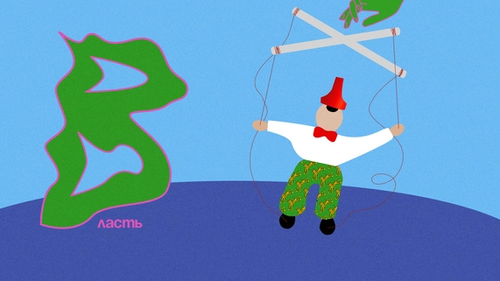
Power: Potentia and Potestas are two forms of power, that is, forces that many of us are used to being afraid. We are afraid of strength, and therefore strive to move from the concentration of power in the same hands to its redistribution, scattering.
Nunes argues with an extremely negative attitude towards power, formulating a key political question: “How can we gain enough strength (authorities) to overcome and neutralize” external obstacles to freedom - for example, “police repressions, blocking of communication, propaganda distortions of facts, neglect of institutions and political elites, not to mention the inertia of existing economic structures”?
Returning the power of the positive meaning, Nunes shares “power to act by itself ” (Potentia) and “power to force others to act” (Potestas). The police, the army, sometimes the press, the authorities at work can force others-they have power-Potestas. Each of us separately has power-Potentia, but, of course, it is not enough to contrast itself with the power-Potestas. But when individuals form a team, their power-Potentia can increase. It may decrease if attempts at joint actions are drowning in endless discussions, disputes, inability to make a decision, but more on this. The main thing is that "a political subject, thus, is always a team."
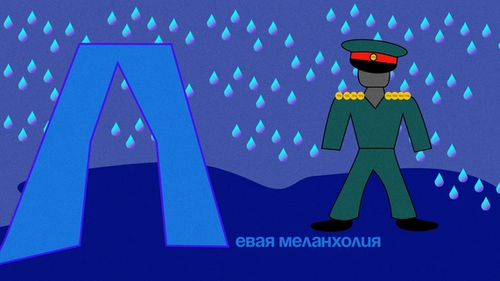
Left melancholy is a feeling that you may experience right now when you read this text. And if you don’t even experience, be sure there are readers who have experienced, so you must find out about it.
“Organization is a field of traumatic experience,” Nunez says. It means by this personal experience from unsuccessful attempts to act together and a number of historical injuries. Firstly, the Soviet experience of the party organization led to repressions and the fall of the regime, which was far from the theoretical ideals of socialism and communism, and in the end was completely reborn into global neoliberalism. Secondly, protests such as OCCUPY did not justify hopes that developed the micropolitan logic of the student movement of the 1960s, experimenting with network technologies, making decisions during assemblies and other ways to build ideal small communities, and not a party.
Completing these two historical lines (1917 → 1968 → 2011, with an intermediate stop at the beginning of the zero - an alterglobalist movement), Nunes and left melancholy also divides into two types. Melancholy, according to (Freudov) definition, suggests the presence of an ideal that cannot be achieved and which is just as impossible to abandon. In the first case, the ideal is a strict, but fair party organization. In the second - many local groups in which there are completely no hierarchy and contradictions between participants.
But moreover, as Nunez notes, the left melancholys of the first type of all political troubles of the present are accused of the second -type left -handed melancholy and vice versa. It sounds abstract, but here is a certain example of you: the statements of some Russian activists, politicians, cultural workers and media that among other activists, politicians, cultural workers and media “serious policy is replaced by maximalist and at the same time petty moralism, oriented to the wrong ideal of the most polite person ”. Is this from the article by Artemy Magun on Medusa entitled “Where came the“ New Ethics ”? And how much is it left and totalitarian? ” And approximately the same argument can be found in the article of the political theorist Ilya Budraitkis “How to read Fisher in Russia:“ Vampire Castle ”in the midst of boring dystopia.”
Nunes also has an idea how to overcome melancholy - in my opinion, working. She will return us to a conversation about power, about subjectivity and political action.
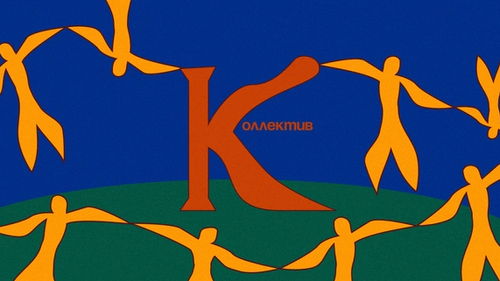
The team and the totality are different ways to act together for the sake of a common goal. Everything is clear with the team: you are united around one or several ideas, set up or intuitively groping up the decision -making procedure, distribute or do not distribute responsibilities, argue or support each other in the process, well, and then your actions either have a result or not.
The totality does not imply unification and a common goal. But we often forget: even if there are those individuals or groups around us that do not share our values, the effects of their actions can still be good for us. And most importantly, these effects must be taken into account by forming your strategy. It happens that we are contriving to each other and the effectiveness of actions is reduced. But it happens that our actions feed each other, even despite the fact that we act separately. And this is a thought that can help in moments of despair and loneliness.
Example? When Lufthansa launched 18 thousand empty flights over Europe at the peak of Omicron’s distribution, so as not to pay simple aircraft at airports, someone on Twitter reacted hopelessly ridiculous and obvious meme: “What kind of well I am, that yesterday I washed all the plastic packages again!” Nunez checks all his ideas, applying to the environmental crisis. He sees in overcoming the environmental crisis that only political task that can really be considered universal.
So, it is obvious that in order to avoid critical indicators of global warming not in theory, but in practice, it is impossible to choose one single strategy. The actions of groups (activist associations, corporations, etc.) coexist with the actions of individuals (noticeable activists, just people who wash plastic, etc.). The effects of collective actions coexist with the effects of aggregate actions, one affects the other.
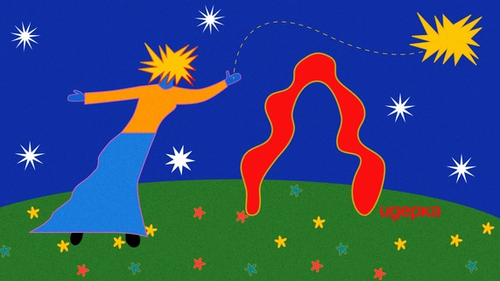
Leader_ is the part of the system followed by others/everyone else. Nunes argues with the widespread desire to build a community in which there are no leaders. He unfolds an argument about the inevitability of leadership in the unusual side: there is always someone who sets an example and invites to join, and the rest refuse or agree. At the same time, Nunes indicates the situational of leadership: at different points in time, different elements of the system set an example.
Nunes offers the term “distributed leadership”, which describes such dynamics: different members of the group set an example for other participants, making new initiatives, thereby they constantly change group behavior if the group really responds. “To be good as a leader_ka, respectively, it means first of all to be a good listeners_ii.” And one more thing: “The leader_ki is, at the most elementary level, those who set the direction (Direction) of the general movement. And only then others can recognize them - or not to recognize - the director_ki (Directors). "
Nunes also emphasizes that for the sustainability of the group, stable “organizational cells” (or even more precisely - “organizing nuclei”, Organising Cores) are often needed. And at the same time, the task of the group and the cells themselves is to ensure that their presence increases the power-Potentia team, but do not have power-Potestas inside it.
Organizational cells naturally arise during collective processes - in response to their increasingly complex requests. The formation and stabilization of organizational cells depends on the combination of factors such as:
- the availability of resources (free time, experience, social capital),
- abilities (skills of interpersonal communication, tactical thinking, the ability to look from several points of view),
- external recognition (prestige, authority, “contact person” status), functional diversification (specialization),
- Network and group dynamics (the principle of preferred accession, centrality, personal ties, political community, trust, common interests).
All these forces, without a doubt, also work on the exception of [other participants in the organization from its center], even if [those who enter the organizational cell,] did not have such an intention. But at the same time, the activity of organizational cells is necessary in order to maintain the work of the association in between moments of high visibility like assemblies and demonstrations. Organizational cells often accept work, the need to fulfill which others are not even aware, especially in a situation where more and more people are connected to the unification, and the degree of involvement varies greatly.
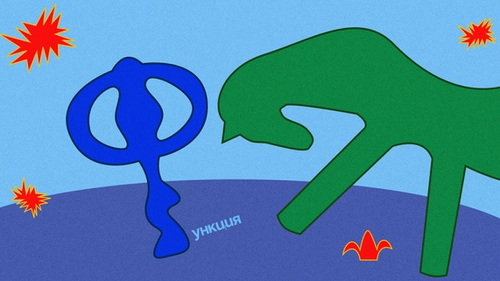
A function is a word that needs to be used instead of the word “position” (“position”, pop). Any system involves functional differentiation - that is, the joint actions of different participants with various interests, abilities, capabilities.
Nunez turns to the idea of “four roles in social activism”: these are negotiators (intermediaries between social movements and state power), defenders (those who personally intervene in the situation, supporting the victims), functionaries (or organizers), rebels. But he complements it, indicating that all parts of any system do not have a fixed role, but can, depending on the circumstances and needs, perform one of these functions necessary to achieve results.
Thus, an appeal to the idea of a function allows Nunes to propose an interesting critical argument against an identity politician. Identity, that is, the position, often becomes an idol. Around it, unification and definition of oneself is possible, but it is far from always possible an accurate action in specific circumstances. To determine yourself or the team through a function is, on the contrary, it means the first thing to correlate yourself with context and understand what impact on it is now necessary and possible.
It is even more important that Nunez proposes to consider as the functions of “leadership” (see above) and “avant -garde”. Turning to the term “avant -garde”, Nunes criticizes and updates Marxist ideas about the “working class in the forefront of the liberation movement”. He compares the performers of “avant-garde function” with the “false nozzles of the amoeba, which help it groping the path [and move not only forward, but in all directions]”. That is, the performers of the avant-garde function are felt and offered areas in which you can move, but whether the initiative is supported-depends on collective and aggregate effects.
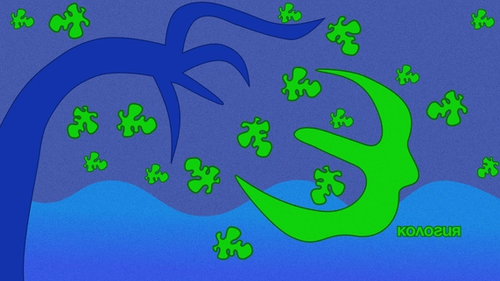
Ecology is both a way to think of the world and the main problem of modernity. Let's talk about both meanings.
Firstly, the main message of Nunes-you need to think environmentally when building your own individual and collective strategy. That is, it is important to understand what place we occupy among everyone who acts simultaneously with us. Who confronts our actions, who supports them, who does the same? What is nobody capable of except us?
Speaking of the ecology, Nunez significantly clarify the popular and even, probably, the idea of the “network” organization, which is usually opposed to vertical or party. In fact, any organization, that is, everything is in nature, is a network, but the networks are arranged differently. Nunes attracts the mathematical theory of networks and shows that fundamentally significant parameters, which determine the potential efficiency, the influence of actions inside the network, are not only the number of connections of one node (that is, the minimum element of the network) with other nodes, but also
- the amount of communication of one node with nodes, which has many connections;
- The number of node ties is not just with other nodes, but with clusters, groups, inside which the effect can spread rapidly. The "networks" are difficult to organize.
Secondly, I repeat, the ecological crisis becomes a litmus piece of paper to test all the ideas that Nunes offers in the book. This is one of its strongest analytical moves - abandoning the concept of teleology, that is, ideas about linear historical progress for predetermined purpose, Nunes at the same time denotes a point in the future, which can become a collecting lens for everything that happens in the present. If humanity does not want to die and finish off the planet, then the main task now is to amended in such a way as to prevent the peak values of global warming. And in order to sex, and you need to develop the organization tools.
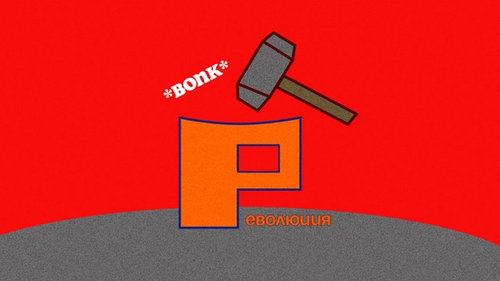
The revolution is an “unconvincing, implausible, unthinkable” event today. The foundations on which the idea of a revolution in the 18-20 centuries formed and kept, collapsed. Few people now believe that history is moving to a pre -predetermined ultimate goal. The belief in the existence of a class or other social community, which is destined to become a revolutionary subject, also seems doubtful. Finally, the most problematic Nunes considers the understanding of the revolution as an event (Event) of a “radical renewal” - that is, the establishment of a social order in which everything will not be the same as before.
In order to prove his thought, Nunez analyzes the discourse about the revolution and shows that now “revolutionary” is increasingly called political actions that are actually limited in scale and effect, whether it is micropolitan experiments or even large, but still localized communities in Mexico or Kurds in Rozhava. In other words, samples or achievements are called revolutionary, which would previously be considered parts of the revolution, but not a revolution in general, which means the idea in a crisis.
Therefore, Nunes proposes to consciously and finally abandon the understanding of the revolution as an inevitable event, and to move on to thinking in terms organized systemic changes. He insists that the revolution on the horizon does not inspire, but blows the ability to evaluate the actions that can be taken now: how good, how bad the results will they lead, will they help to achieve more equality and more freedom? Nunez always turns to thinking to a comparative degree, and not in excellent.
We talk about Russia's military invasion of Ukraine, protests and repression. We believe that now, when dozens of media have closed or ceased to cover the war, access to independent information is more important than ever.
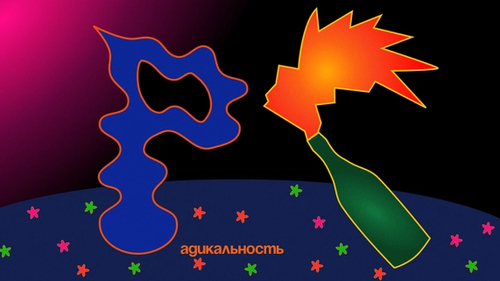
Radical and appropriation are concepts that usually contrast each other, but they can complement each other. Conservative and centrist forces more often turn to the idea of “appropriateness”, accusing left-wing activists and politicians of insensibility in relation to the context (and the appropriateness in English sounds like fitness-fitness, and this is an additional layer of Nunes Samoiria). However, Nunes’s position is serious, and he agrees with criticism of “radicality” as a fetish in his own way. In the last chapter, which is called “radically relatively: the problem of relevance”, it comes to the most concentrated formula of political action: not “act in the specified framework [context], but to influence these frames in such a way as to change them”.
However, insisting on the need for different strategies in different contexts, Nunes emphasizes: “The world that combines [fits] many worlds cannot be a world that combines all worlds, since the existence of some worlds is really incompatible with the existence of other worlds. Some things must be actively excluded.”
Throughout the book, Nunez refers to the word “papillary”, “compatibility” (compossibolyity). It can be used to analyze alternative strategies that other groups or individuals realize in parallel with ours: are they compatible with our existence? If so, how to supplement these strategies with your own? If not, how to resist them?
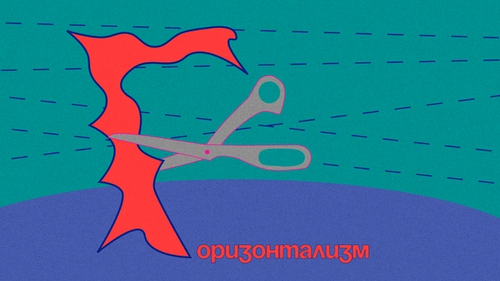
And finally! Horizontalism is a single -rooted word with the one that I decided for the sake of experiment and testing the theory of Nunes never to use in the text above. In my opinion, the main shocking and at the same time deeply thought out Nunes gesture is to create such an analytical apparatus to describe the organization, which will allow you not to turn to the ideas about “horizontal”. Over and over again, he repeats the idea that the idea of “horizontality” as an ultimate goal, the maximum good clouds the look at the real structure of our political life.
And the real structure of the world, in my opinion, is best explained by the idea of a real opposition. Usually, by opposition, we mean the following relations: either A, or not A. But this is a logical opposition. And the real opposition is A and B that affect each other and interact, contact and change each other. The organization is about how to find the correct proportion, the correct combination: for example, a combination of tools that we are used to correlating with “horizontal” and “vertical” methods of work.
Fear of being is not enough horizontal deprives us of, in fact, the ability to act, and it is impossible to be quite horizontal at all. “A completely flat system is a network in which no large -scale chains of effects can start; The complete absence of a leader_OC is possible only in a situation where the nodes of the chain do not affect each other at all, ”Nunez writes.
He directly calls horizontalism - precisely as an obsessive idea of the only permissible but unattainable horizontal - the source of "anxiety, paralysis and depreciation." If you, like me, have ever experienced these feelings during organizational work or are experiencing them right now, then I hope the tools from the book and this review will help you overcome them. And, conversely, the analysis of all that many vectors and initiatives, of which the struggle is now tailored, will not become a source of despair, but will help to find its place in this struggle.
Other materials
"Socialism of platforms"
How to democratize social networks and why you can’t just take and everything is nationalized

You can't even imagine us
Why modern politics need "random people"

New ethics and spirit of capitalism
How to make discussions about the culture of cancellation meaningful

Sid Meier's Postcolonial Theory

How computer strategies turned imperialism and colonialism into entertainment

Mythical copy
How did we consider copyright property?
