
Translated material
"In Russian diplomacy, the propaganda of the Soviet type has been established"
Former diplomat Boris Bondarev, who opposed the war, wrote an article for Foreign Affairs - about the "breakdown with reality" in the Ministry of Foreign Affairs
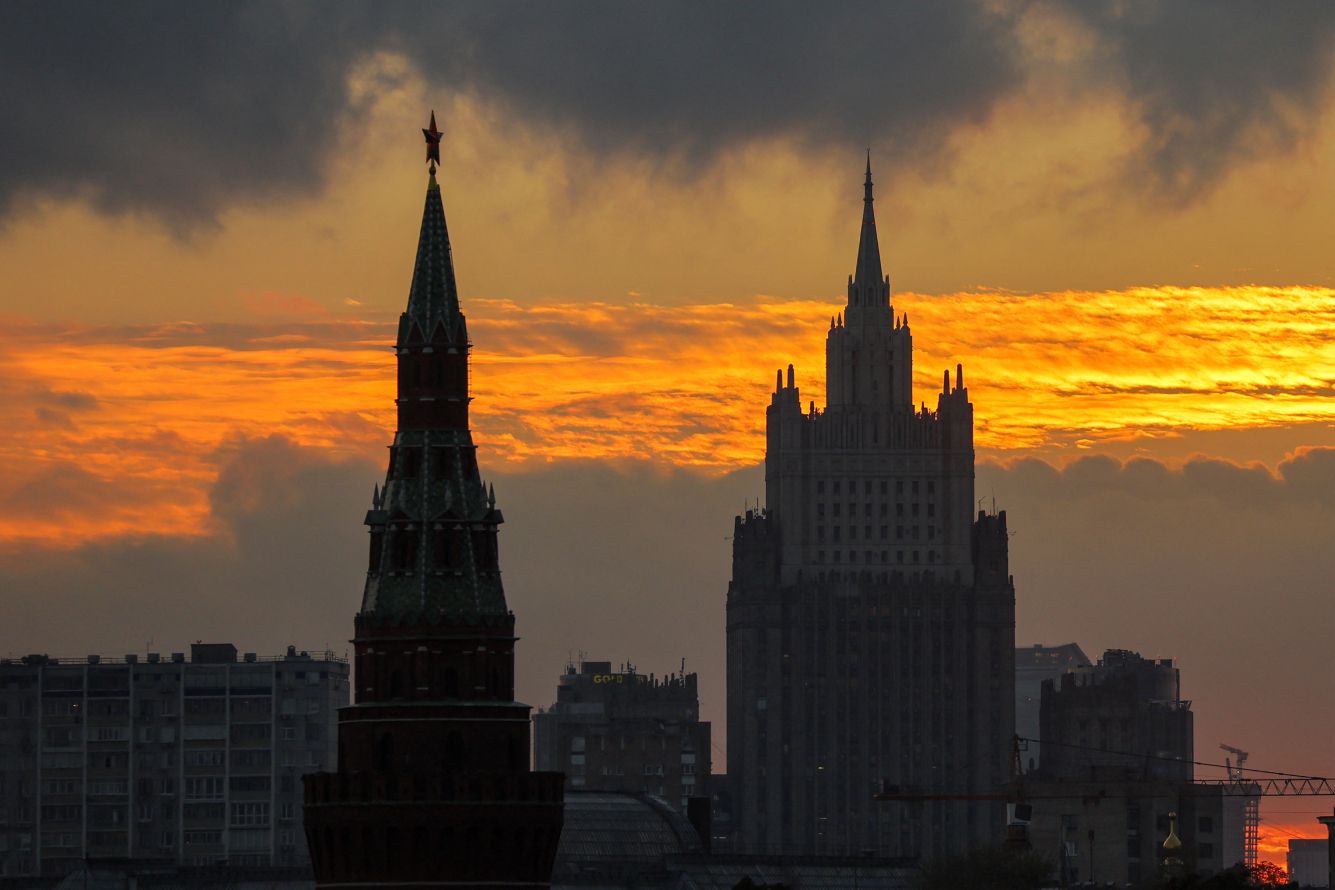
Former adviser to the Russian Federation at the UN in Geneva Boris Bondarev, the only Russian diplomat who publicly resigned due to the invasion of Ukraine-wrote an article for the American magazine Foreign AFFARS. It is available in Russian and English . In the article, Bondarev tells how the Russian Foreign Ministry from diplomacy turned to propaganda and complete subordination to the Kremlin. Here are excerpts from this text.
About the promotion of the Foreign Ministry
I entered the service of the Ministry of Foreign Affairs in 2002. Even then, critical thinking was not welcomed there, and during my work the rhetoric of the ministry became more and more warlike.
For many years, Russian diplomats have been forced to resist Washington and protect the foreign adventures of their country - to protect with the help of lies and nonsense. We were taught to turn to pompous rhetoric and without abode to transfer to other countries what the Kremlin told us. But it ended in the fact that foreign countries were no longer the only target audience of this propaganda. Under its influence, our own leadership fell.
I tried to reduce damage. When my bosses wrote drafts of warlike notes or reports, I persuaded them to soften the tone, discouraged them from militaristic speech and constant references to our victory over Nazism. But the general meaning of our statements - both internal and external - became more hostile, our authorities entered aggressive statements there. The propaganda of the Soviet type finally established itself in Russian diplomacy.
About the annexation of Crimea
In my colleagues, the annexation of Crimea caused a different reaction: someone has alertness, someone has approval. Both I, and many of my colleagues thought that it would be more profitable for Putin to turn Crimea into an independent state: it would not look so aggressive - and that means it could be better “selling”. But subtlety to Putin is not peculiar. The independent Crimea would not allow him to gain the glory of the collector of the "traditionally" Russian lands.
About the Donbass
The creation of a separatist movement in the Donbass and the occupation of this East Ukrainian region was a puzzle cleaner. These events, which occurred mainly in the first third of 2014, did not cause such mass enthusiasm in Russia as the annexation of Crimea, but here the indignation of other countries was ensured. Many employees of the ministry did not share enthusiasm for Russia's actions, but none of them dared to express dissatisfaction with the Kremlin. My colleagues and I decided that Putin captured Donbass in order to distract Ukraine, prevent her from turning into a serious military threat to Russia, not to allow her to cooperate with NATO. But it is unlikely that one of the diplomats told Putin that, helping the separatists, he actually pushes Kyiv closer to his opponents.
About Western sanctions
As a specialist in export, I understood that the economic restrictions imposed by the West [in 2014] are seriously harmful to the country. The Russian military industry depended greatly on components and products produced in the West. The sanctions unexpectedly cut off us with access to these products - and as a result, our army became weaker than it seemed to the West. But although my team understood how these losses affect the military power of Russia, Midov’s propaganda did not bring this information to the Kremlin. We see the consequences of this ignorance in Ukraine today: sanctions are one of the reasons for the failure of the invasion.
About the poisoning of the Skripals
My department dealt with issues related to chemical weapons, and we assured for a long time that Russia was not involved in the poisoning of the Skripals. I did it sincerely. But the more Foreign Ministry denied our responsibility, the more I doubted. We said that the crime was not committed by Russia, but presumably Russophobic British authorities in order to tarnish our impeccable international reputation. Of course, Great Britain was absolutely to kill Sergei, so that Moscow’s statements seemed not to be full -fledged arguments, but a miserable attempt to distract attention from Russia and shift guilty to the West: this is often done by the Kremlin propaganda. In the end, I had to recognize the truth: the Russian authorities were responsible for poisoning. Many in Russia still deny that Moscow was to blame. I know how difficult it is to understand that criminals are managing your country, ready to kill out of revenge.
On the poisoning of Navalny
The diplomats who composed the fables received complete approval from the authorities, their careers went up. Moscow wanted to hear what she was hoping for, and not what was really happening. This was understood by all our ambassadors - and an unspoken competition began, who overdoes whom.
Propaganda became even more wild when Navalny was poisoned in August 2020. Diplomatic dispatches amazed me. In one Western diplomats, they called "driven predators." In another, they crucified about the "seriousness and indisputability of our arguments." The third reported that Russian diplomats “suppressed the western“ miserable attempts to raise a voice ”in the bud. This behavior was both unprofessional and dangerous. The normal Ministry of Foreign Affairs should give leadership an undivided idea of the world so that politicians make informed decisions.
On negotiations with the West on the eve of the war
The breakdown with reality became even more dangerous in January 2022, when American and Russian diplomats met in the American mission in Geneva to discuss the NATO reformatting agreement proposed by Moscow. Our Foreign Ministry did not leave the topic of the alleged danger of the Western Alliance. At the same time, Russian troops accumulated near the Ukrainian border.
I received a copy of Russian offers. They shocked the imagination: among them were points obviously unacceptable to the West, for example, the requirement for NATO to pick up all the troops and weapons from countries that joined the alliance after 1997, among these countries, Bulgaria, the Czech Republic, Poland and the Baltic countries. I thought that the author of these proposals either prepares the ground for the war, or has no idea how the United States and Europe are arranged. No one understood how to go to the United States with a document, which, among other things, demanded from NATO no more new members. In the end, we learned that the document came directly from the Kremlin - which means no discussion.
About the work of the Foreign Ministry during the war
I was still hoping that my colleagues at least in private would express the alarm, and not just confusion. But many of them told me that they will willingly agree with the Kremlin lies. For some, this was a way to avoid responsibility for the actions of Russia: they could explain to themselves and others that they simply followed orders. I could still understand this. But I was much more concerned about that our more and more warlike behavior caused pride in many. Several times, when I warned my colleagues that their actions are offensive and this would not help Russia, they reminded that we had nuclear weapons. “We are a great power,” one of them told me. “Other countries should do what we say.”