
Translated material
Who instead of Putin? Nobody
About the main Russian trouble - and these are not fools and roads. Reflections on the Parliamentary Republic
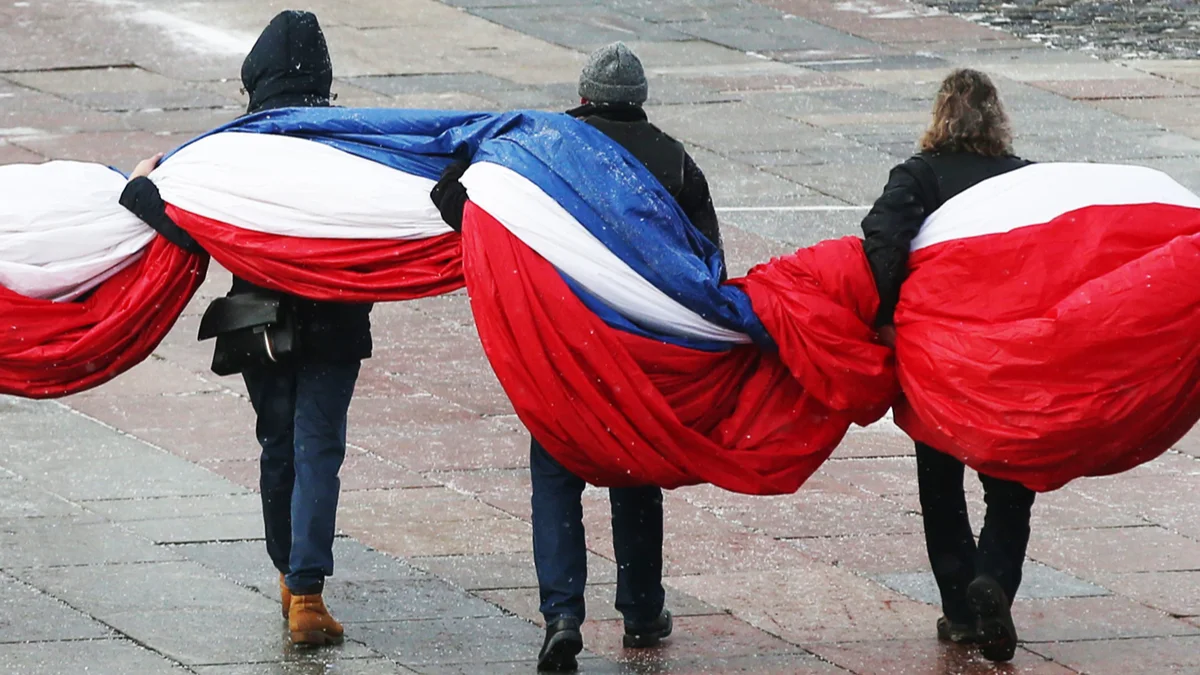
Regularly arising disputes about the future structure of “post -Putin” Russia are not at all theoretical, no matter how much the State Duma speaker Volodin and other devoted ones without flattery characters of the political scene identified Russia with its current president.
Sooner or later, the political time of both Putin himself and the political regime headed by him will end. And the question will inevitably arise: what next? What political system should be built in order, on the one hand, not to repeat the mistakes of the past, and on the other, get a chance in the future?
Thirty years ago, participants in the Democratic Revolution of 1989-1991 had neither an answer to this question, nor the experience of management, which could rely on.
In many ways, this led to the fact that political scientist Vladimir Gelman calls the “unworthy rule” in his book of the same name.
To the political system, which allows the ruling grouping not only to monopolize and maintain power, uncontrollably disposing of social resources, but also to organize interstate armed conflicts with serious and global consequences.
With all this, the constructed system is unable to solve the most important problems of citizens, since the authorities in it (more than once noted this in the “Novaya Gazeta”) is virtually independent of citizens.
The chain of responsibility for the effectiveness of public administration was torn: those who are in power, unlike the democratic system, do not answer citizens for the results of their work, because they are not afraid to lose power in the elections. And therefore they do not have any incentive for quality work.
And those domestic political barriers that in other countries stand on the path of “unworthy rule”, not allowing monopolizing power and resources, other than the ruling, political groups and political institutions (such as honest elections and an independent court) - over the past two decades, most of them have been destroyed or turned into imitation.
Why did it happen? The most detailed answer to this question is in the article by Grigory Yavlinsky “Reasons”. I’ll only add that the institution of honest elections and political competition was destroyed, including with the active support of the most influential and “media” part of the progressive public - the most afraid of the “return of the Communists”. The fact that then the indestructible block of Chekists and officials came to power was slightly sobering them, but it was too late. And that exactly the same public supported the “authoritarian modernization”: conducting economic reforms when suppressing democratic institutions, with the concentration of power in the hands of the “presidential reformer”, which should not interfere with the “reactionary parliament”. When it turned out that the president turned out to be the reactionary (and the successor appointed by the “reformer”) - again, it was too late ...
And now - about “where to swim”, so as not to step on the same political rake again.
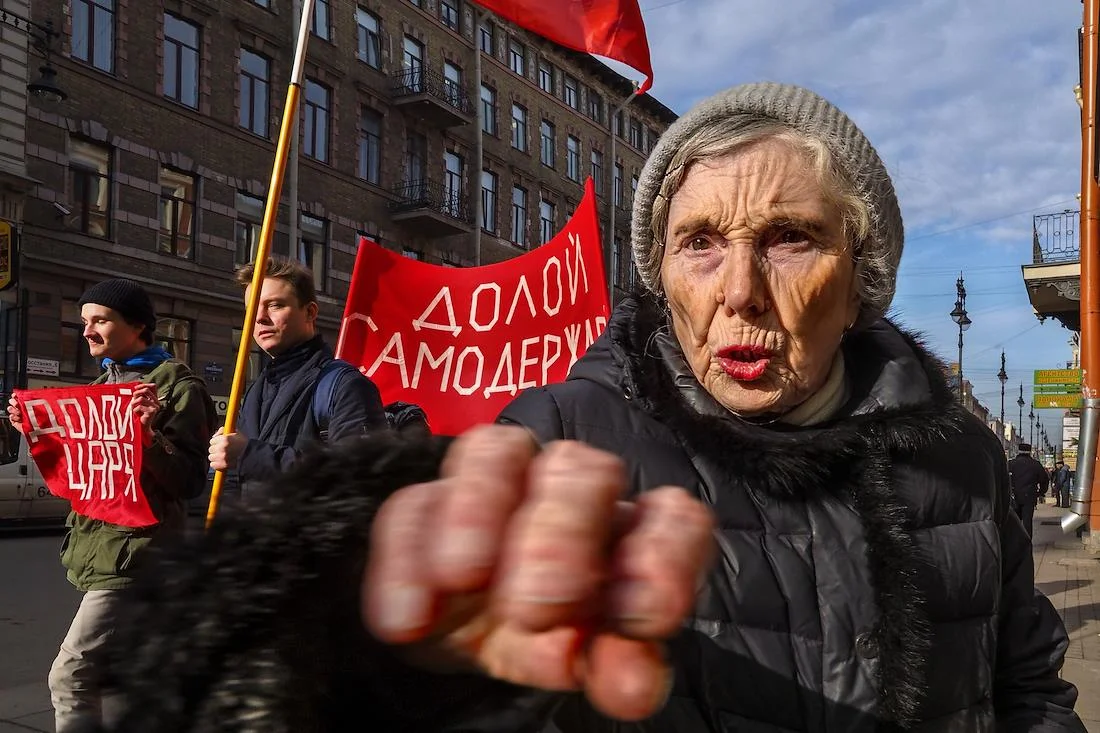
The general vector of movement is clear: in the direction of political competition and honest elections, the separation of powers and federalism, the legal state and the rule of the law, the independent court and free media, the termination of political repression and the abolition of political censorship, the European choice (including the violence in its extreme forms as a way of solving problems) and the abandonment of imperial ambitions.
However, as Russian practice shows, the designations of such intentions (and even attempts to build the relevant institutions) are not enough. Because all this does not work (or quickly turns into a fiction) in the autocratic "shell".
For the Russian autocracy is sole, not controlled and not limited to the power of a person who was headed by a political pyramid, no matter what last name he bore - and there is the main Russian trouble, and not at all fools and roads.
I rarely refer to my texts, but this time I have to. In January 2004, my article was published in Novaya Gazeta “Down with autocracy!” It said that it was this slogan that should become the main one for the coming years for Russian democrats, who must stop believing in political tales about the enlightened monarchy and and the will and to eliminate the autocracy as a political institution.
Then it was perceived by many as political fantasies. Then about the need for political reforms - and primarily a serious restriction of the presidential authority in favor of the parliament - they spoke more and more. And not only opposition politicians, but also the most authoritative experts - such as Lilia Shevtsova.
And then, more and more often, the thought began to sound not only about political reform, but also about the radical change in the political system: abandoning the presidential republic either in favor of the Presidential-Parliamentary or in favor of the parliamentary (I will say right away that my position over the past decades is precisely the same: only a parliamentary republic!).
The last in time by the performance of this kind was the column, transferred to Washington Post by the team of Alexei Navalny on his behalf and published on September 30. In it, he calls for a parliamentary republic-although just four years ago in his program it was a question of the Presidential and Parliamentary Republic with the restriction of "some powers of the president." Assuring that after the end of the USSR, “both the democratic public within the country and the then Western leaders made a monstrous mistake, agreeing to the model of the presidential republic proposed by the Boris Yeltsin with the huge powers of the leader.”
Well, as for the public: by no means all she agreed with this.
The “apple”, for example, was then criticized by many of those who called themselves a democrat, precisely for not supporting the concentration of power in the hands of Yeltsin and his right to ignore the laws “in the name of reform”.
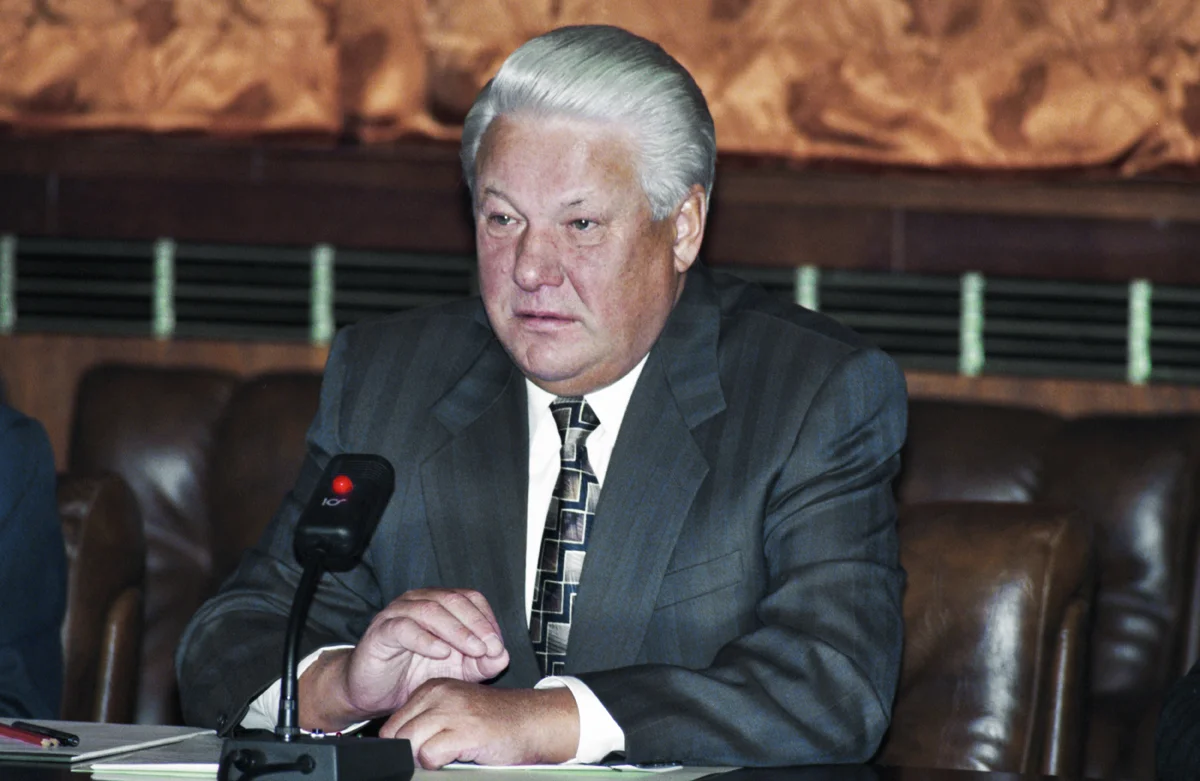
And for what did not support the privatization of “according to Chubais” and financial stabilization in the spirit of orthodox monetarism.
If we talk about Western leaders, then they were completely indifferent to the model of the political structure of Russia - if only (more than once he heard it from Western politicians) “stability was ensured”.
Therefore, they supported Yeltsin during the October Constitutional Revolution in 1993, and during the First Chechen War with many victims among the civilian population, and during the 1996 presidential elections with their mass falsifications, and during the successor operation ...
But back to the parliamentary republic, which (contrary to the assertion of Navalny that “this was never in Russia”) we already had - in 1990-1991. And she worked very well.
The government was formed by parliament, it was controlled, and the chairman of the parliament Boris Yeltsin could not make sole decisions - he needed the support of the parliamentary majority, and he was forced to go to negotiations and compromises in order to carry out this or that law or personnel decision. As, in fact, it happens in parliamentary regimes. And in the same way, power was arranged in the regions, including Moscow and St. Petersburg: a representative body elected by citizens, forming the executive power and controlling it.
The problems began precisely when, at all levels, starting from the very top, they decided to introduce one -headed - as a simpler and simpler way to make decisions, not requiring tedious (sometimes) discussions and consultations.
And they moved to the presidential model whose key drawback is that coalition is impossible in the elections (with the rarest exceptions), and the winner receives everything. Then he behaves accordingly: believing that the received credit of trust allows not to take into account the explicit opinion, except for its own. Or the opinions of those whom he himself selected for listening.
The parliamentary model does not just have a place for different political forces and the opportunity to create coalitions. In it, neither the head of the parliament, nor the head of the government has a idea of himself as the “most important boss”, which is surrounded by all subordinates, obliged to comply with orders, and not discuss them. And in it there is also a “protection against a fool”, a mechanism for correcting errors, changing or canceling incorrect solutions. Because of this, there are crises in the countries of parliamentary democracy (with the departure of the government, with early elections), but there are no disasters ...
In December 1994, the secret decrees of President Boris Yeltsin began the “counter -terrorist operation” in Chechnya. She is the first Chechen war. If in Russia, a parliamentary Republic, it is unlikely that the parliament is even the same as the Russian Congress of People's Deputies (it is up to the entire term) or what was the State Duma in 1994 with the presence of a wide variety of political forces-would authorize this “operation”. And at least this would be accompanied by fierce disputes with an unpredictable result. Well, in the Presidential Republic, the start of the “counter-terrorism operation” learned the post-fact-and the parliament, which means that society did not have any legal opportunities to change something.
Yes, the design of the parliamentary republic is not without its shortcomings. But she - unlike the presidential - is much less subject to authoritarian transformation.
And it provides for carriers of the authorities much less temptations-because the space for sole solutions is sharply narrowed in anyone's benefit.
And to the natural question: "Do you really want to give the current State Duma the right to form a government?" - I can give a natural answer: the current one - no, I don’t want to, but the Duma, chosen with a parliamentary model and in an honest election, will be fundamentally different. Including because citizens, realizing that they choose power (when each party goes to the polls, announcing whom he will appoint to the government) will be different about their vote.
Of course, only the transformation of the presidential republic into a parliamentary is not enough. We need a very serious "perestroika", using the terminology of the era of Mikhail Gorbachev.
It is necessary to rejection of National-imperial thinking and dreams of the revival of the collapsed empire, nuclear threats and militaristic statements.
The absolute priority of human rights and freedoms is necessary - and the obligation (enshrined and now in the Constitution, but not fulfilled) to base all decisions and actions of the authorities on these rights and freedoms.
It is necessary to refuse to represent the state as a subject with its own interests and from the priority of the state over society and personality.
Judicial reform and reform of local self -government are necessary.
And much, much more.
Then - there is a chance for a better future. And it is very important not to miss him.
If the system remains the same, if the question is enthusiastically discussed: "Who instead of Putin?" - So life, for the most part, will remain as it is.
Moreover, some “Putin 2.0” will very quickly arise, only with another environment, other favorites and other distribution of goods and resources among “their own”. But with the same desire to declare the enemies and “national traitors” of those who dare to argue with him.
Therefore, the answer to this question is this: no one should be instead of Putin.