
Translated material
At least the right not to grow
Belarusians took the only international opportunity to complain about their power. Russians - get ready
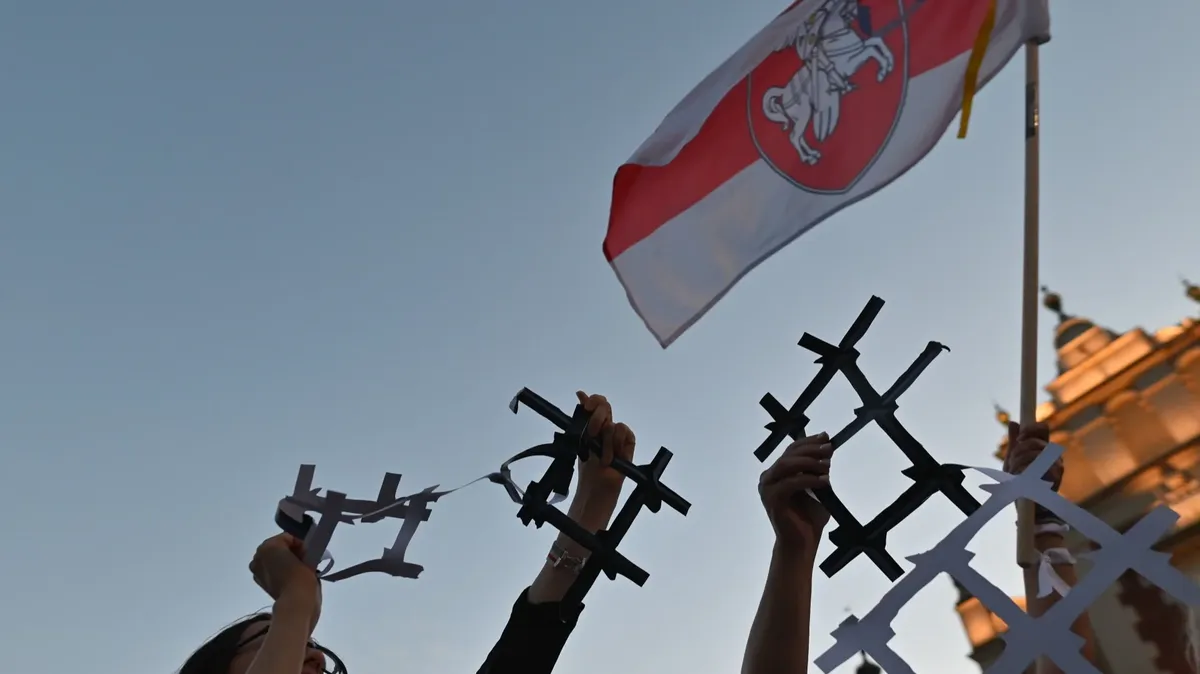
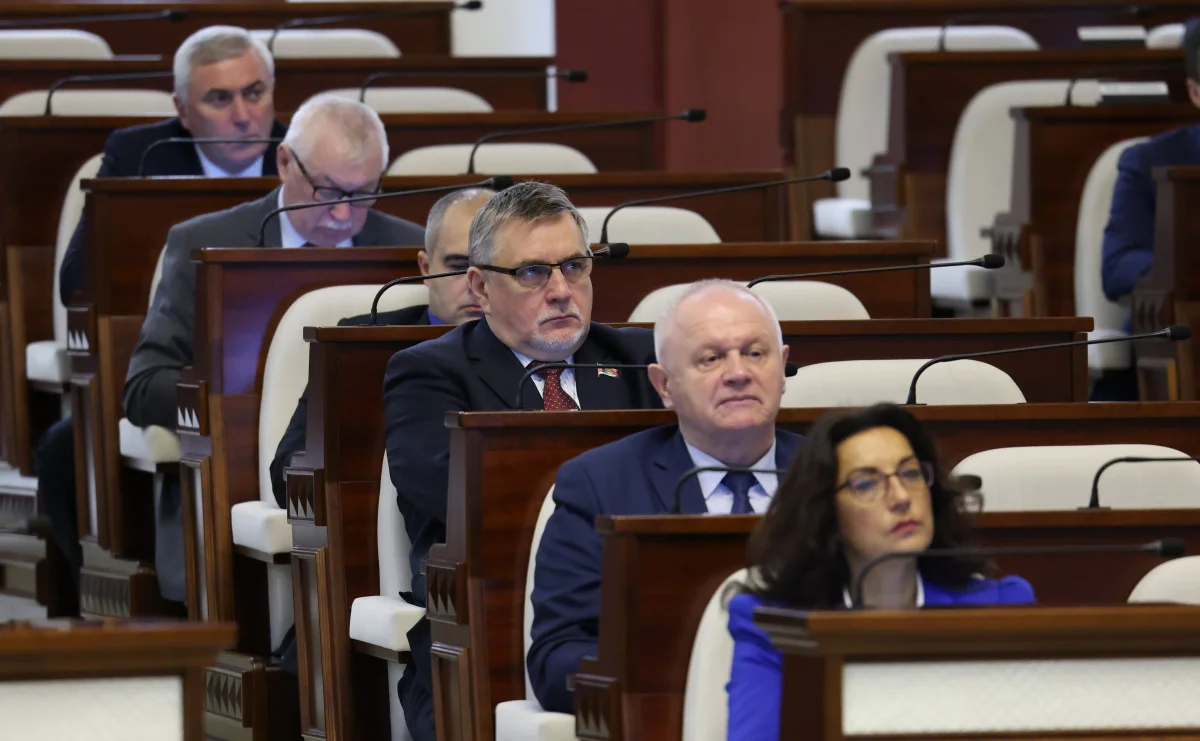
Bureaucratic formulations are always boring, but not scary: “Senators at the tenth session of the Council of the Republic of the National Assembly of the Seventh convocation approved the bill“ On denunciation of the Republic of Belarus of an optional protocol to an international package on civil and political rights ”. Well, they denounced some kind of optional protocol. Optional means optional, we know this from school years. You can not go to the elective, unlike the lesson. In fact, it was thanks to this protocol that the Belarusians had the right to individually contact the UN Human Rights Committee. They have no more, thanks to the senators.
Instead of the ECHR
The fact is that Belarusians never had other options to declare the arbitrariness of the authorities. While the Russians filled up complaints and lawsuits by the European Court of Human Rights and received court decisions, which were also executed by Russia, Belarusians could only envy them. Belarus has never been a member of the Council of Europe, and the road to the ECHR for citizens has always been closed.
Rather, the hope that the country will be included in the Council of Europe was immediately after gaining independence. In 1992, the Parliamentary Assembly of the Council of Europe assigned the status of a specially invited Belarusian parliament. In 1993, Belarus applied to the Council of Europe, but after the 1996 referendum (when Alexander Lukashenko changed the constitution and dispersed the parliament), the application went to the urn, far from the electoral, and the status was suspended.
As it turned out, for 25 years. So in the history of the ECHR there is not a single case of the appeal of a citizen of Belarus. Under power, Lukashenko will not be.
But the Pact on Civil and Political Rights, adopted by the UN in 1966, was signed under the Bolsheviks - the Belarusian SSR - in 1968, and ratified in 1973. The pact differs from the universal declaration of human rights in that the fundamental rights and freedoms of people are not only declared there, but also the obligations of the member states to comply with human rights are clearly spelled out. It is clear that for many world regimes that signed and ratified the pact on civil and political rights, it is only a paper that has no legal force and does not bind anyone. The pact is now ratified in 174 states, including in North Korea, and in Iran, and in Zimbabwe. So "everyone signed - and I signed." He, of course, does not give any hope of observing human rights.
But the optional protocol to the Covenant on Civil and Political Rights enables citizens of the countries that this protocol ratified to apply to the UN Human Rights Committee in case of violation of their rights. It says : “The state, a participant in the pact, which becomes a participant in this protocol, recognizes the competence of the committee to accept and consider messages from persons subject to it, who claim to be victims of violations by this state participating state, set forth in the package.” At the same time, statements from citizens of those states that have not ratified this protocol are not accepted, even if the pact itself is signed and ratified by them. That is, the ratification of the protocol is the door that the state opens to its citizens to appeal to the Human Rights Committee. This door was opened by Stanislav Shushkevich in 1992, when the young independent republic ratified the optional protocol. After 30 years, the door closed, the opening was walled up, and the wall was covered with mold.
UN for both of yours at home
On October 19, during the adoption of the bill on the denunciation of the optional protocol, the senators and the Midovites invited to the meeting said that over the past decades the UN Human Rights Committee arbitrarily expanded their powers and that now he is actually engaged in interference in the internal affairs of Belarus. The Deputy Minister of Foreign Affairs, Yuri Ambrazevich, argued that the position of the UN Human Rights Committee is now completely diverging with the fact that he is declared in the Pact on Civil and Political Rights, and his further activity for Belarus is futile. The head of the Commission on International Affairs, Sergei Rachkov, seemed to sincerely said that Belarus has always fulfilled all international obligations regarding the observance of human rights, that she continues to advocate international cooperation in this area and always - always! - listened to the recommendations of the Communist Party. But since the UN has now politicized the issue of human rights, and the Communist Party went far beyond its authority, Belarus cannot agree with this. “We,” said Rachkov, “took various actions in order to find a mutually acceptable solution, but they do not hear us. Therefore, Belarus makes a decision on the denunciation of this optional protocol. ”

We will be honest: for officials, deputies, Lukashenko and his family and wallets, this will not change anything at all. Because the decisions of the Communist Party of citizens are only advisory in nature.
The Communist Party does not consider criminal cases, does not revise sentences and certainly is not able to cancel them. The European Court of Human Rights, most of the complaints in which, until recently, made appeals from Russia, also cannot cancel the verdict of the National Court, but may recognize the fact of violation of the European Convention on Human Rights and prescribe compensation for moral damage. The amounts varied: from 26 thousand euros, which in different years of the ECHR awarded Boris Nemtsov and Alexei Navalny, who filed complaints in connection with a violation of the right to freedom of assembly, up to almost 2 billion euros in the Yukos against Russia case . The more complaints and decisions, the more noticeable to the budget. Moreover, non -fulfillment of the decision of the ECHR may be the reason for the exclusion of the state from the Council of Europe.
And many naive hoped: maybe the authorities would think and understand that it is cheaper not to pay compensation, but simply not to plant innocent, not to beat, not to torture. Those naive, maybe they would say something today, but nothing. On March 16, Russia was expelled from the Council of Europe, and from September 16 it ceased to be a member of the European Convention on Human Rights. Russians can no longer contact the ECHR. And until yesterday, they, like Belarusians, had only one option to declare their rights: appeal to the UN Human Rights Committee. Now Belarusians cannot go there either. The Russians can so far. Although, judging by what is happening, Russian officials with deputies very soon, on the model of the Allies, will denom the optional protocol so that they cannot be sent to Schroeder to be excess paper. So it’s time for the Russians to hurry.
From personal experience
My family has its own case - appeal to the UN Human Rights Committee. And the solution is, here it is, on the UN website, and the printed house lies. It has not changed anything. And it should not. As in an old joke, "this is for later."
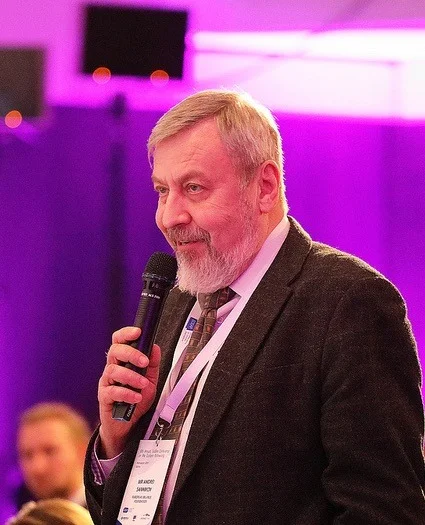
My husband Andrei Sannikov, one of the leaders of the Belarusian opposition, in 2010 was a presidential candidate. On the day of elections, he, like all other candidates, was arrested. In prison, my husband spent a year and a half. He was subjected to torture and bullying. He was very lucky with a lawyer - wonderful Marina Kovalevskaya. Even when Andrei was sitting, Marina told me: “I decided to prepare a complaint to the UN Human Rights Committee.” Then, when the husband came out, the work on the complaint, which eventually made up more than a dozen pages, they continued on the wild. A complaint to the Communist Party is a special genre, and not the easiest. But by the summer of 2012 she was ready.
The next stage is the filing of a complaint. There are three options: mail, fax and e-mail. Since at that time the husband (a lawyer, by the way, too) were under a round-the-clock “outdoor” and wiretap, they agreed that the complaint and the attached package of documents (oh, what were miraculous documents! For example, the answer to the lawyer’s complaint to the colony to the client: “Sannikov A.O. did not give sufficient evidence that he needed legal assistance”) will be sent directly to the right Geneva, to the Communist Party, from Vilnius with diplomatic mail of one of the embassies.
The lawyer Marina was able to take out the package only on the second attempt: the first time the Belarusian border guards said that she was prohibited from departure from Belarus, since she was evading calling for military service in the army. The second time the lawyer left forever: with her husband, child, a letter about receiving a master's scholarship in Harvard - well, with a complaint in the Communist Party at the same time. By the way, Marina Kovalevskaya is now working as a lawyer in New York. Plus one brilliant lawyer in America, minus one in Belarus.
My husband’s complaint was registered with the UN Human Rights Committee in July 2012. The decision was made in 2018. The consideration took six years.
The decision of the Human Rights Committee says that Andrei Sannikov became a victim of illegal imprisonment, and in prison was tortured. Members of the committee called on Minsk to conduct a thorough impartial investigation of accusations of torture and bring guilty to criminal liability. They also announced the need to repay Sannikov’s criminal record and give him compensation. Belarus should also take measures to prevent such violations. Experts regretfully noted that, despite the duty of the countries to cooperate with the committee, Belarus did not take any part in the consideration of the Sannikov case.
It would seem, a natural question arises: so what? Well, they admitted that they tortured a person and illegally kept in prison a year and a half. Well, a printed solution lies at home - and what, is there a feeling of deep moral satisfaction? Of course not. The Communist Party is not applied for this.
Of course, the Human Rights Committee cannot award compensation or recognize the verdict of the National Court illegal. No, the purpose of appeals to the CPC is completely different. Each decision that Belarusian officials wipe, without reading, each package of documents, each registered complaint is a brick for the construction of the future palace of justice, in which political sentences will be canceled over the past quarter centuries. As Chechenka Zainap Gashaeva gathered a video archive of two wars for the future tribunal, so we, Belarusians, are building that palace of justice.
The denunciation of the optional protocol left a mountain of bricks from that palace. But the Belarusians are patient. We will start first.