
Translated material
Science is the most entertaining
The preface of Naum Kleiman for the book "Study about Eisenstein and Pushkin"
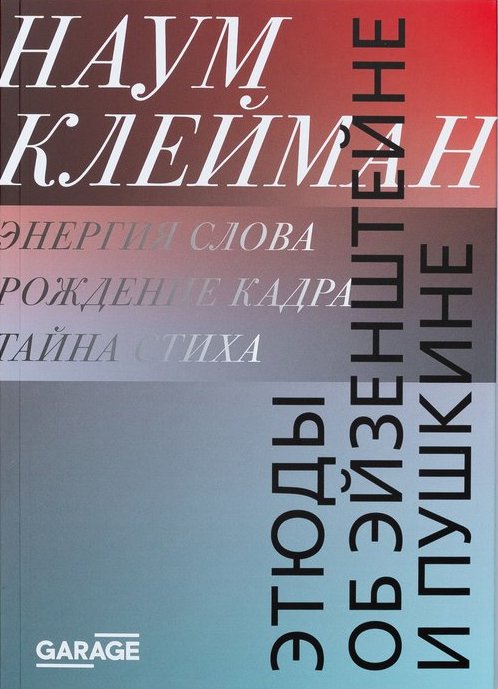
The Garage Museum of Modern Art has published a new book by Naum Kleiman “Studies about Eisenstein and Pushkin” - a great collection of “Analytical Etudes”, which have been written for fifty years. With the permission of the publisher, we publish a preface to it, in which Naum Ikhilievich introduces the reader to the basics of film -text and tells why, many years ago, among other things, began to engage in gunshill.Starting from February 24, 2022, we were all in the face of the advancing barbarism, violence and lies. In this situation, it is extremely important to preserve at least the remnants of culture and support the values of humanism - including for the sake of the future of Russia. Therefore, the editorial office of Gorky will continue to talk about books, reminding our readers that the world remains in the world and fiction.
Naum Kleiman. Studies about Eisenstein and Pushkin. M.: Museum of Modern Art "Garage", 2022. Content
 The reader guessed, of course, that in the title is the second part of Pushkin’s aphorism: “To follow the thoughts of a great man is the most entertaining science.” In the Arap of Peter the Great, aphorism is found in the story of what and how the little Ibrahim Hannibal studied: the emperor allowed him to attend his meetings with his close associates. In the discussions of the affairs and problems of the state, the future great -grandfather of the poet comprehended the opportunity to ask questions and reflect in search of answers.
Outside the story, aphorism has gained many interpretations and use. Behind him is a slow, attentive reading with desire to get deeper into the meaning of what was written. He is remembered, trying to comprehend the logic of the development of the idea, concept, and the purpose of the work. The success of the story in the biographical genre is ensured if it does not come down to the presentation of life facts, but the thoughts of an outstanding person should be behind the reader to observe the birth of projects and creations, comprehend the origins and consequences of deeds ...
In art of history there is a discipline that literally corresponds to Pushkin’s aphorism. In philology, it is called textology and briefly defined as the science of the history of the text. This story implies the formation of a plan from the idea and the first sketch to the completion or termination of work, options for lifetime and posthumous publications and - wider - the fate of the work for centuries. Different copyright editions and changes, censorship and editorial interventions are studied (sometimes with the participation of the author himself, more often against his will), wounds inflicted by cruel time, and attempts to heal them.
The term "text" is understood widely and refers not only to literature. In the visual arts, this term determines all visual manifestations of creativity - from primitive petroglyphs and ancient sculpture to video art and installations. The architecture includes not only buildings, but the ensembles of buildings, adjacent parks, natural or urban landscapes ... The analogue of textology in music applies to the opuses of composers and folklore, on the records of various interpretations ... In the movie, textual analysis is addressed to all forms and stages of individual and collective creativity: from literary scenarios and directorial developments, sketches scenery and costumes, operator explications and shot frames to different versions of the whole film in its aesthetic and technical parameters ...
The ultimate goal of textologists is to provide the reader, the listener, the audience with access to the original: the work should be perceived in the entirety and accuracy of the author’s creation, without extraneous distortions. As a result of studying and finding, it becomes possible not only to restore the work, healing damage from exposure to time, but also to reconstruct it, identifying and eliminating the distortions of the original from censorship interventions, from the advantage of the customer or from “help” of well -wishers who believe that they are better than the author understand the requests, needs and tastes of the public.
It may seem that textology is a purely applied discipline, necessary only for good publication and high -quality demonstration of works of art. Meanwhile, she often opens up previously unknown meanings and updates perception, and sometimes leads to a reassessment of the place and role of creations and the creators themselves in the history of culture.
There are many cases of misunderstanding of innovative ideas by contemporaries - their rejection of creators who overtook their era. How much fate in art was crippled by blindness and deafness of proofans, the prejudice of experts and colleagues! How many masterpieces were not recognized in time!
But no less dangerous is the notorious textbook gloss on a recognized classic. The admiration of contemporaries often does not exhaust the author’s plan, does not convey the semantic completeness of the work. Fouring over the years in the likeness of axioms, the early estimates and characteristics begin to interfere with direct perception: we see not the creation of an artist, but the surviving interpretation of the former, albeit a very authoritative interpreter.
Meanwhile, over time, the classic is able to open in a new way. It seems to absorb the experience of history, and figurative systems once created by the masters turn to us by the parties, previously not seen or not understood.
Of course, this is not always due to the radical revaluation of geniuses forgotten for centuries - the awareness of their true significance in culture, as happened with Andrei Rublev and William Shakespeare, Domenico Teotokopuli, nicknamed El Greco, and Johann Sebastian Bahu. The perception of those works that are not forgotten and even studied in secondary schools is constantly being specified, expanded, expanded, enriched.
That is why historians and theorists of art need respectfully, but without dogmatism relate to the interpretations of predecessors: it is necessary to appreciate their insights and understand the conditionality of conclusions by the context of the era, the general level of science and the subjective attitude of the researcher. It is necessary to return to recognized creators and creations: unprincipled to contact sources and preparatory materials, drafts, options and different editions, to recognizes the authors themselves, the testimonies of their friends and associates. Reviewing the process of embodiment of the plan and its result, you can see and understand the meanings shown by history.
Fate gave me an introduction to textology while studying at the Faculty of Faculty of VGIK. In 1958, 10 years after the death of S. M. Eisenstein, a ban was lifted from the second series of Ivan the Terrible. The film caused fierce disputes. Even the critics that were benevolent to the director could not believe that he consciously went to the denunciation of brutal tyranny: they claimed that Kramol involuntarily, contrary to the intention of the master, gave rise to his natural talent. Other humanities outraged the deviations from the facts of history. Some filmmakers were annoyed by the “wrong” form from the standpoint of a screen life: open conventionality in the image and plot action, in the characters and the appearance of the characters, in gestures and intonations of actors. The stylistics seemed archaic against the background of that recognizable “realism” and subjectively colored “lyricalness”, which during the period of the thaw replaced the demagogy and the praise of the “cult” cinema.
The film shocked me emotionally and struck me successively spent through all the elements of the spectacle by a transformation that could not be inadvertent. Feeling the need to understand the plan of the picture, I chose the “formidable” for the term paper and asked the department of filming with the admission to the Central (now Russian) State Archive of Literature and Art, where the Aisenstein archive was stored. According to the rules of that time, work in TsGALI was allowed to graduate students, sometimes diplomats, but not third -year students.
- Why don't you go to Atasheva, the widow of Sergei Mikhailovich? She has many more papers from his archive, ”Gita Solomonovna Averbukh, head of the History of Soviet Cinema, suddenly suggested. “I'll call Peres and introduce you.”
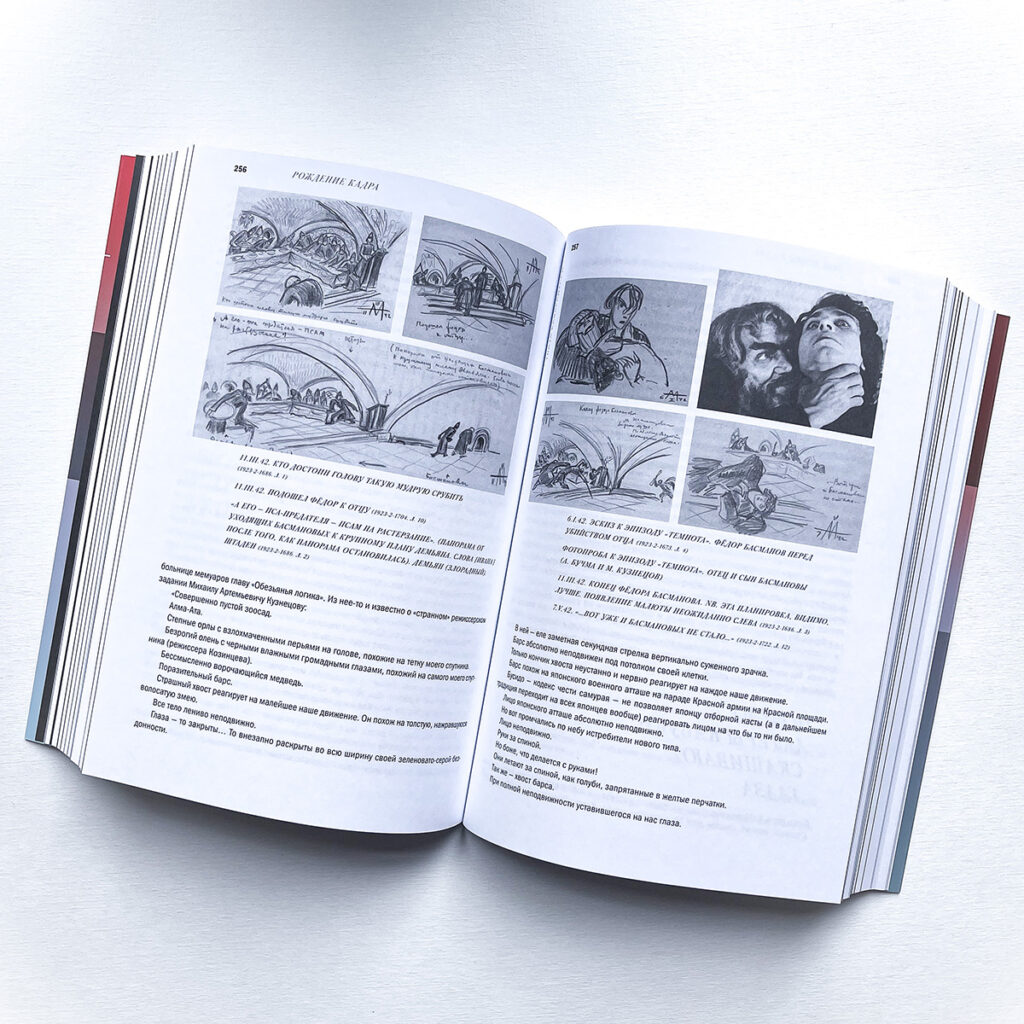 Naum Kleiman. Studies about Eisenstein and Pushkin. M.: Museum of Modern Art "Garage", 2022
The bell turned out to be a ticket for life. To the first visit to Peres, Moiseevna to Gogolevsky Boulevard, I saw sketches and notes to “Ivan the Terrible”, only a small part of which was then published, and realized that their study was a matter for many years. By the second parish, I was prepared by the manuscript of the theoretical book “Negro -Indian Nature”, on which Sergei Mikhailovich worked when the “Terrible” was still starring. The course work naturally grew into diploma: I tried to state the theory of cinematographic polyphony, which determined the spirit, system and style of the “tragedy about the Russian Renaissance of the 16th century”, on the example of the film and not yet published by Eisenstein’s book.
In 1961, the editorial board of the future six -volume work of Eisenstein, headed by Sergei Iosifovich Yutkevich, entrusted me with the publication in the second volume of the heads of the incomplete book “Installation” (1937). Then, together with Leonid Kozlov, a graduate of the philological faculty of Moscow State University, who came to Peres atasheva a year earlier than me, we began preparing the text of the “indifferent nature” for the third volume. Since then, for six decades, together with Russian and foreign colleagues, I have been taking part in the publication of books and articles, drawings and documents from the immense archive of Eisenstein. Not only new publications change the overall picture of the director and creative path of the director, theorist, graphics, teacher - many of his ideas, aspirations, projects began to be otherwise perceived in the changing panorama of history, in the opening contexts and relationships of the 20th century, in relations with the heritage of past centuries and in utopian aspirations to the future.
In the domestic department of the State Film Fund, where in the same 1961 I began to work after graduating from the institute, one of the types of scientific work was the restoration of pre-revolutionary and early Soviet films received from the Film Film of VGIK, from the country's studio and rental warehouses. Many ribbons were stored incomplete, in different copies there were lacked different frames, scenes and entire parts, there were no interpreters, the film was in a deplorable technical condition. Knowing my involvement in the editorial board of the six -volume, the head of the department Konstantin Pavlovich Piotrovsky entrusted me with the reconstruction of the mute films of Eisenstein, starting from the most famous and, as it turned out, the most distorted - the battleships "Potemkin". " His negativity returned to the USSR from Germany to be transported according to the requirements of the censorship there, not a single copy in the author’s installation has been preserved.
There is no place to describe the problems and difficulties that we then encountered, trying to return all the cut -off shots to the film. At first, we made mistakes and inaccuracies due to the underdevelopment of film textology-from the unconsciousness of its principles and laws. Only on the eve of 1975, when the film was performed for 50 years, Goskino and Mosfilm accepted the proposal of the Eisenstein creative inheritance commission to restore and release the version of the Bainstoor voiced by music. We finally managed to write out old copies from foreign movie archives. Filling a double-nonsense double for almost all the once lost personnel, we tried to return the author’s installation of the picture. But then it was not possible to fix something. Only by 2005, our Munich colleague Enno Pataalas, having discovered a full narrow -minded copy of the film in Britain, inserted the last missing images, restored the credits in genuine graphics, and returned the epigraph twice replaced by censorship.
Comparing the installation in different copies of the film and trying to understand which one is closer to the original, you involuntarily wonder about the author’s plan. Even in the State Film Fund, then on the Mosfilm, I now and then found in Potemkin the motives and topics that did not fit into the Procrustean bed of the established interpretations of its meaning and style. Since the premiere at the Bolshoi Theater, we have been assured that the "battleship" calls for the revolution, sings it and teaches it. The same interpretation based on the material of the events of 1905, the “subversive” film was prohibited in many states, or censorship demanded to soften it, cutting out and crossing personnel. The more fully during the reconstruction, the image turned out to be, the more precisely its editing order was built, the more clearly it became that the film brings a completely different news from the screen to life.
However, it was immediately caught by the most insightful viewers. One of them was the most prominent film critic and screenwriter of Weimar Germany Willy Haas. In a review of Potemkin, printed by Film Kurier magazine on April 30, 1926, immediately after the premiere in Berlin, he argued:
“Strict observance of the only, completely universal, completely universal motive; But not what the Americans are understood by the “motive”, that again there is a story, a plot, and that is a completely universal motivation that permeates the flesh and blood of each person, even even the darkest. This is present here. It is called: Contracing Crust, fulfilled by hatred, fraternizing in this ecstatic riot against gray, crushed, constrained existence. Is there something in common with communism? Hardly. Communism is discipline. The essence of this motivation can be used with the same success against communism. This is probably not a propaganda Soviet film, and if it was conceived as such, then it failed as such. It is made of the matter from which every rebellion is made. And each person in some kind of fold of his heart is a rebel against coercion. Therefore, each person, without exception, could creatively participate in the creation of such a film. ”
In 1975, I did not know this article. But classes in the text of the film itself - each mounting gluing, each frame and any movement in it - pushed to similar conclusions. And when the magazine “The Art of Cinema” on the eve of a half -century anniversary invited me to write about the “Bestensis”, I brought to the editor, not very hoping for publication, the textual study “I must raise my head”. To my amazement, the editor-in-chief of the magazine Yevgeny Danilovich Surkov, who usually mercilessly ruled the articles, made the only amendment-replaced the name with “only 15 frames”, and the sketch appeared in the 3rd issue for 1976.
However, the idea of the approximation of textological rules and customs in the cinema did not give rest. This concerned not only the reconstruction of films, but also the publication of the theoretical, memoir, journalistic heritage. The arbitrariness of editors, publishers, compilers of collections was often a consequence of not evil will, but immaturity of film textology as a full discipline. The experience of the sciences of "senior" arts, in particular philology, could help us. In the science of literature, Pushkinism was the most developed and authoritative in Russia.
Sergey Mikhailovich Bondi, the largest authority in the field of Pushkin's textology, led a seminar at the philological faculty of Moscow State University. Robeya to ask him for permission to attend classes, I made my hare into the old building of the university on Mokhova in the hope of hearing recipes for textual wisdom. The professor revealed the volume of Pushkin and read two academic hours - with almost no explanation, only repeating some words or poems with different intonations - the second chapter of Eugene Onegin. In conclusion, he pronounced a maxim that sounded something like this: "Pushkin must be read slowly and carefully - and you will find from him what you need." After a pause, having chewing his lips thought, Bondy added: "And something else unexpected!"
This was, as soon as it became clear to me, the main wise lesson of the seminar in textology. But least of all, I could then assume that I myself would from time to time to engage in the manuscripts of Pushkin.
In 1977, the book of Anna Andreevna Akhmatova “On Pushkin” was published. The article “Pushkin and the Nevsky seaside” was printed in it with an analysis of the passage “When sometimes a memory ...”. In his text, Anna Andreevna recognized the signs of the Onegin stanza, and this textological observation hurt my curiosity. At that time, my colleague and comrade Alexander Tarkhov worked on comments on Evgeny Onegin for the “School Library” of the Publishing House “Fiction”. He often went into the scientific and memorial office of Eisenstein, where I worked, and we exchanged opinions about many mysteries of the novel in verses. In a conversation with Sasha, an idea arose to look at the photocopy of the autograph of the “mysterious passage”, stored in the literary museum of A. S. Pushkin.
The poet’s black manuscript seemed simply inaccessible to reading, and I equated the textologists who deciphered it, to the wizards or at least the great forensics. But visually, my eye, brought up on looking at the films, was amazed at the two details of the autograph:
- The drawing at the end of the sketch - a boat under a high sky on calm water - did not correspond to the penultimate verse, which was deciphered and printed as “Wave weather ” ;
- The end of this verse (the word read as a wave) was clearly rhyme graphically with the last word of the next, the final verse - “shuttle”.
I can now admit in the cases of disciplinary violations of the working day: sometimes I came to the museum of A. S. Pushkin and learned to disassemble the poet’s handwriting according to the manuscripts of famous poems. It partly justifies me that in the stagnant years “upstairs” decided that “too many Eisenstein was published” - his unpublished texts could occasionally printed only in periodicals or in academic collections.
Осенью 1977 года я рискнул выступить на конференции в Большом Болдине с сообщением о возможности несколько иначе, чем принято, читать и понимать загадочный отрывок, заново вынесенный Анной Ахматовой в поле внимания и изучения. Благожелательная реакция пушкинистов и публикация этюда в «Болдинских чтениях» поддержали мои текстологические опыты с автографами поэта. Не претендуя на смену профессии и оставаясь, как большинство россиян, читателем и почитателем Пушкина, я убеждался в том, что в его творениях все еще ждут нашего внимания неразгаданные тайны.
Мое глубокое уважение к текстологам-пушкинистам не поколеблено и по сей день, несмотря на множество вопросов и даже недоумений, накопившихся за почти полвека учебы у них. Благодаря их кропотливым трудам и вдохновенным прозрениям многослойное море пушкинских рукописей, включая трудночитаемые черновики, стало доступно читателю.
Сергей Михайлович Бонди изложил в книге «Новые страницы Пушкина» фундаментальный принцип текстологии:
«Задача исследователя — не успокоиться на буквальном воспроизведении „наброска“, но проникнуть в его смысл, вскрыть замысел. Это задача трудная, но необходимая.
Сейчас текстолог, даже прочтя все отдельные слова черновика, не может считать его вполне прочитанным, если он не понял смысла и значения в общей связи целого всех вариантов, всех слов и обрывков слов. Просто прочесть — мало, надо понять, истолковать прочитанное».
Случалось не раз, что интуиция ученого, вернувшегося к автографу давно известного и многажды изданного текста, преодолевала господствующее мнение, то есть привычную и потому кажущуюся бесспорной трактовку, и новое чтение текста давало возможность приблизиться к замыслу поэта. Рассеивалась тьма незнания, связанная с неразборчивостью букв и многократной авторской правкой — следствием невероятной вариативности пушкинской работы со словом. Или же высветлялась мгла полупонимания — результат не только инерции устарелого восприятия, но и, по определению Ахматовой, «головокружительной краткости» и не менее головокружительной емкости текстов Пушкина.
В редкие свободные часы я обращаюсь к пушкинским черновикам, стараясь расшифровать слова рождавшихся стихов и смысл правки поэта.
Текстология кино — дисциплина, столь важная для его истории и теории, — до сих пор все еще нуждается в разработке и обобщении накопившегося в разных странах опыта.
В этой книге собраны свидетельства моей учебы — текстологические этюды об Эйзенштейне и Пушкине. Но оба имени стоят рядом вовсе не только потому, что много лет я занимался параллельно, хотя и в разной степени, творческим наследием Сергея Михайловича и Александра Сергеевича.
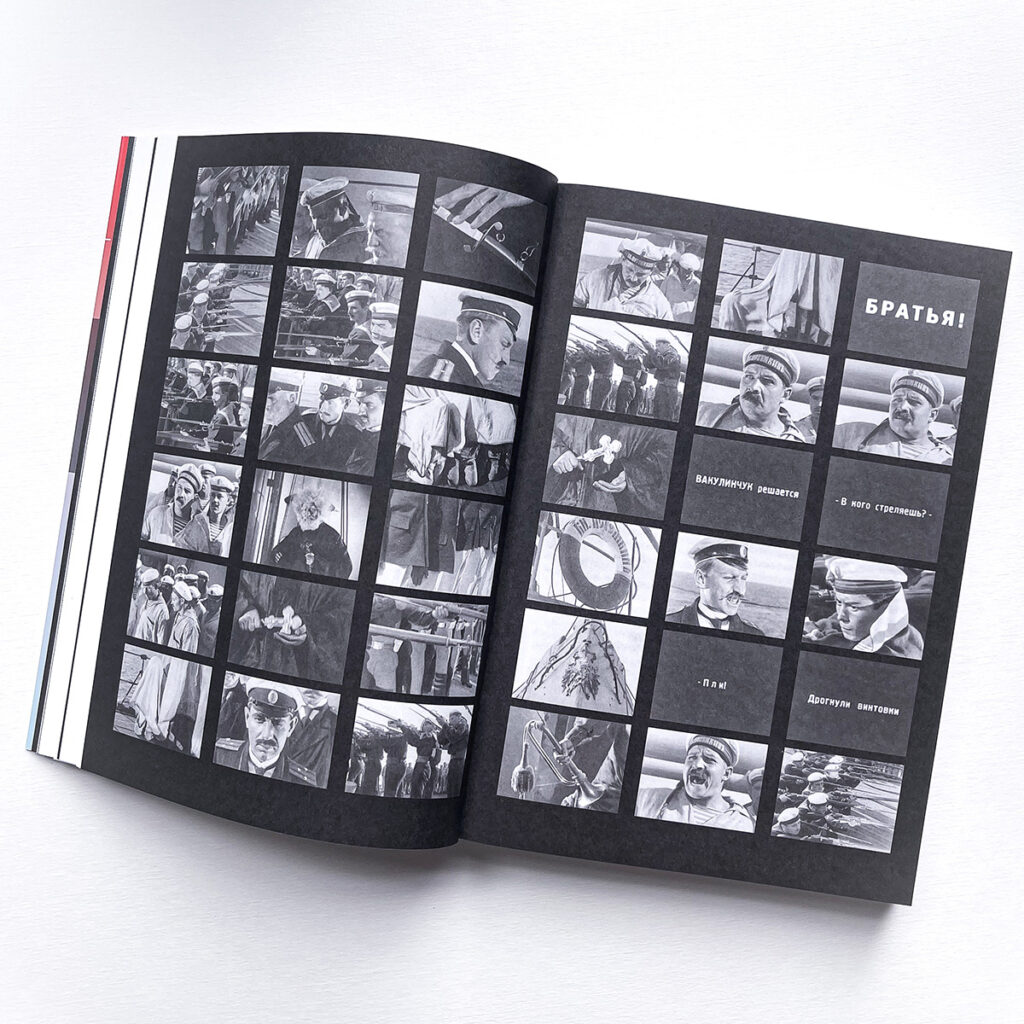 Naum Kleiman. Этюды об Эйзенштейне и Пушкине. М.: Музей современного искусства «Гараж», 2022
«Эйзенштейн и Пушкин» — тема обширная и значимая для нашей культуры вообще и для кинокультуры в частности. Она была затронута мной в статье «...Начнем с Пушкина», которую в феврале 1987 года напечатал журнал «Искусство кино». Позволю себе изложить здесь несколько ее основных положений.
Естественен вопрос: зачем соотносить двух художников, на первый взгляд столь разных, что их сопоставление представляется произвольным, а кое-кому и кощунственным. Дабы прибавить славы одному или чести другому?
Ни Пушкин, ни Эйзенштейн в прибавлениях не нуждаются.
Но, если быть откровенным, сложилось парадоксальное положение. Внутри нашей культуры нелепо доказывать величие Пушкина, но все еще необходимо обосновать «законнорожденность» Эйзенштейна. За рубежами России Эйзенштейн признан как один из полномочных послов ее культуры, но приходится объяснять, почему именно «Пушкин — наше все», когда есть Толстой, Достоевский, Чехов...
Прежде чем объяснять, не худо бы самим уяснить, в чем и как продлевается, преображаясь, культурная традиция — особенно при переходе из одного искусства в другое.
Проблема эта волновала самого Эйзенштейна. В 1944 году в Алма-Ате, параллельно со съемками «Ивана Грозного» и работой над книгой «Метод», он начал статью «Советское кино и русская культура».
Вряд ли случайно, что в наброске предисловия к ней первое имя в ряду национальных гениев — Пушкин. Поэт подразумевается тут еще чаще, чем упоминается. В конце предисловия — отчетливое эхо пророческой речи Достоевского на открытии памятника Пушкину: Эйзенштейн повторяет мысль о «всемирной отзывчивости» как о признаке подлинной национальной самобытности и залоге ее мировой общезначимости. И если бы нам пришлось ограничиться только этой чертой передовой российской культуры, генетически восходящей к Пушкину, — никто не смог бы отрицать, что она проявилась в Эйзенштейне во всей полноте и чистоте.
Однако принадлежность Сергея Михайловича к роду Пушкина сказалась, конечно, не только на таком обобщенном уровне.
24 мая 1942 года режиссер купил в Алма-Ате академический сборник 1941 года «Пушкин — родоначальник новой русской литературы» и, видимо, в тот же день читал его. На странице 287, в статье Бориса Викторовича Томашевского «Поэтическое наследие Пушкина», он отчеркнул карандашом слова:
«...случаи обращения к темам и мотивам Пушкина в самых разнообразных формах (цитат, реминисценций, вариаций, так называемых пародий, продолжений и окончаний незавершенных произведений) наблюдаются на всем протяжении русской литературы до наших дней и свидетельствуют о жизненности пушкинских произведений, составляющих одну из составных частей литературного богатства, входящего в сознание каждого русского писателя. Рассматривать эти явления надо в порядке изучения индивидуального творчества каждого писателя, унаследовавшего от Пушкина тот или иной запас литературных впечатлений, отразившихся в его творчестве».
Эйзенштейну ли было не знать, что пушкинское богатство давно вышло за пределы словесности и что в его собственных постановках, не говоря уже о его лекциях и статьях, множество сознательных, полуосознанных, естественных, как дыхание, «цитат, реминисценций, вариаций» из Пушкина. Художник не обязан публично анализировать истоки своих решений. Если Эйзенштейн постоянно возвращался к постанализу собственных постановок, то не из эгоцентризма, а от невнимательности критиков. Незамеченными оставались даже лежащие на поверхности переклички с общеизвестными пушкинскими образами. На некоторые режиссер сам указал, многие все еще ждут осмысления.
Прерву пересказ давней статьи, дабы покаяться в собственном нерадении: у меня руки так и не дошли до подробного исследования или хотя бы беглого, но системного изложения генетических связей творчества Эйзенштейна и Пушкина.
Представленные в настоящем издании этюды о «Броненосце» и «Иване Грозном» лишь упоминают некоторые из экранных мотивов, коренящихся в пушкинских образах.
Другая постоянно волновавшая Эйзенштейна тема — Пушкин и кино. Именно так он хотел назвать книгу, начатую в 1939 году. В предисловии к ней обозначена цель изучения пушкинских творений:
«Нужно учиться читать.
Научиться надо этому, чтобы писать. <...>
В кинописи ответственность растет несказанно.
Величие Пушкина. Не для кино . Но как кинематографично !
Поэтому начнем с Пушкина».
Проблема «Пушкин и кино» — органичный «синематизм» («киношность») образного мышления поэта и его мастерства, равно как анализ поэтического строя в кино, — тоже не были целью этюдов, вошедших в этот сборник.
Непредубежденно читая рукописи и публикуемые тексты Пушкина, я стремился лишь осваивать навыки текстологии, что, безусловно, снабжало опытом и ориентирами в анализе фильмов Эйзенштейна. Но меня не могли не радовать переклички режиссера с поэтом: не всегда цитаты и реминисценции, а часто — проявления общности творческих тенденций. Они не были случайны. В наброске от 4 сентября 1944 года была намечена Final ditto («Заключительная мысль») статьи «Советское кино и русская культура»:
«Не заимствование, даже не столько явственное влияние, сколько единство духа, непрерывность внутренней традиции, единого органического развития».
Соседство этюдов об Эйзенштейне и Пушкине под одной обложкой, надеюсь, позволит читателю почувствовать это единство духа художников одной культуры.
Должен назвать имя еще одного поэта, ставшего для меня поводырем в текстологических лабиринтах: Данте Алигьери.
В том же 1975 году, когда я работал над первым из этюдов о «Броненосце» — «Надо поднять голову», — для комментария к одной из книг Эйзенштейна мне пришлось читать «Пир» ( Il Convivio ) Данте. В этом трактате, написанном в 1303–1306 годах, утверждалось, что истинное произведение искусства в принципе многосмысленно и требуется многократное обращение к нему для понимания и усвоения многослойного авторского замысла и его воплощения.
Первый человек Нового времени, Данте перенес на восприятие светского искусства те требования, которые предъявлялись средневековыми богословами к толкованиям Священного Писания:
«...Надо знать, что писания могут быть поняты и должны с величайшим напряжением толковаться в четырех смыслах. Первый называется буквальным [и это тот смысл, который не простирается дальше буквального смысла вымышленных слов — таковы басни поэтов. Второй называется аллегорическим]; он таится под покровом этих басен и является истиной, скрытой под прекрасной ложью... <...>
Третий смысл называется моральным, и это тот смысл, который читатели должны внимательно отыскивать в писаниях на пользу себе и своим ученикам. <...>
Четвертый смысл называется анагогическим, то есть сверхсмыслом или духовным объяснением писания; он остается [истинным] также и в буквальном смысле и через вещи означенные выражает вещи наивысшие, причастные вечной славе... <...>
Объясняя все это, смысл буквальный всегда должен предшествовать остальным, ибо в нем заключены и все другие и без него невозможно и неразумно добиваться понимания иных смыслов, в особенности же аллегорического. <...> Поэтому невозможно достигнуть познания других значений, минуя познания буквального. <...>
А потому, если другие смыслы, кроме буквального, менее понятны, а они, как это вполне очевидно, менее понятны, — было бы неразумным приступать к их обоснованию прежде, чем будет обоснован буквальный».
Рекомендации Данте я применил к реконструкции «Броненосца», в котором мы старались восстановить «буквальный уровень». И вдруг рассмотрел сквозь них эпизод на юте, о котором писал статью. Меня поразило, как точно и полно Дантово четырехуровневое толкование раскрыло смыслы композиции Эйзенштейна. Оно оказалось столь же эффективным при анализе примеров из каждого акта и фильма в целом. Оно же убедительно объясняло назначение и образность полифонической структуры «Ивана Грозного».
Совет «сурового Данта» помогал мне и в осознании строя и смысла хорошо знакомых нам, как мы полагали, пушкинских произведений. Знал ли Александр Сергеевич Дантов «Пир»? В любом случае тут решающую роль играли те же «единство духа, непрерывность внутренней традиции, единого органического развития» — на этот раз мировой культуры.
Впрочем, спустимся с классических вершинок на толкучий рынок нашего времени. В его изменчивой атмосфере дело, не сулящее значительной прибыли и скорого успеха, нуждается, как парусный корабль, в попутном ветре. И тут на помощь, как мифический владыка ветров Эол, приходит благожелательная поддержка родных, друзей и коллег. Без нее было бы невозможно не только издание, но и само написание моих статей. Составившие этот сборник этюды посвящены тем, с кем мне посчастливилось обсуждать предположения, идеи и сами тексты. Но помогавших вниманием, подсказками, критикой гораздо больше — перечисление имен заняло бы очень много места. Трудно выразить словами мою благодарность им. Здесь я поименно назову лишь тех, кто помог издать эту книгу. Реальностью ее сделали директор Музея современного искусства «Гараж» Антон Белов, шеф-редактор издательской программы музея Ольга Дубицкая, менеджер издания Марина Сидакова, редакторы Ирина Щеглова и Антон Парамонов, дизайнер Анастасия Орлова и координатор типографского цикла Данила Стратович.
Я искренне благодарен и Вам, любезный и требовательный Читатель.
Вполне сознаю дискуссионность многих из высказанных мною гипотез и трактовок. Вы вольны пройти теми же путями и прийти к иным выводам о замыслах и творениях Пушкина и Эйзенштейна.
Смею заверить, что следование за мыслями великого человека не уступает по занимательности ни научному познанию тайн природы, ни работе знаменитых следователей и дешифровщиков, ни чтению детективных романов и просмотрам приключенческих фильмов.