
Translated material
How grain from Ukraine becomes “Russian” and enters the international market
The main thing from the Financial Times investigation
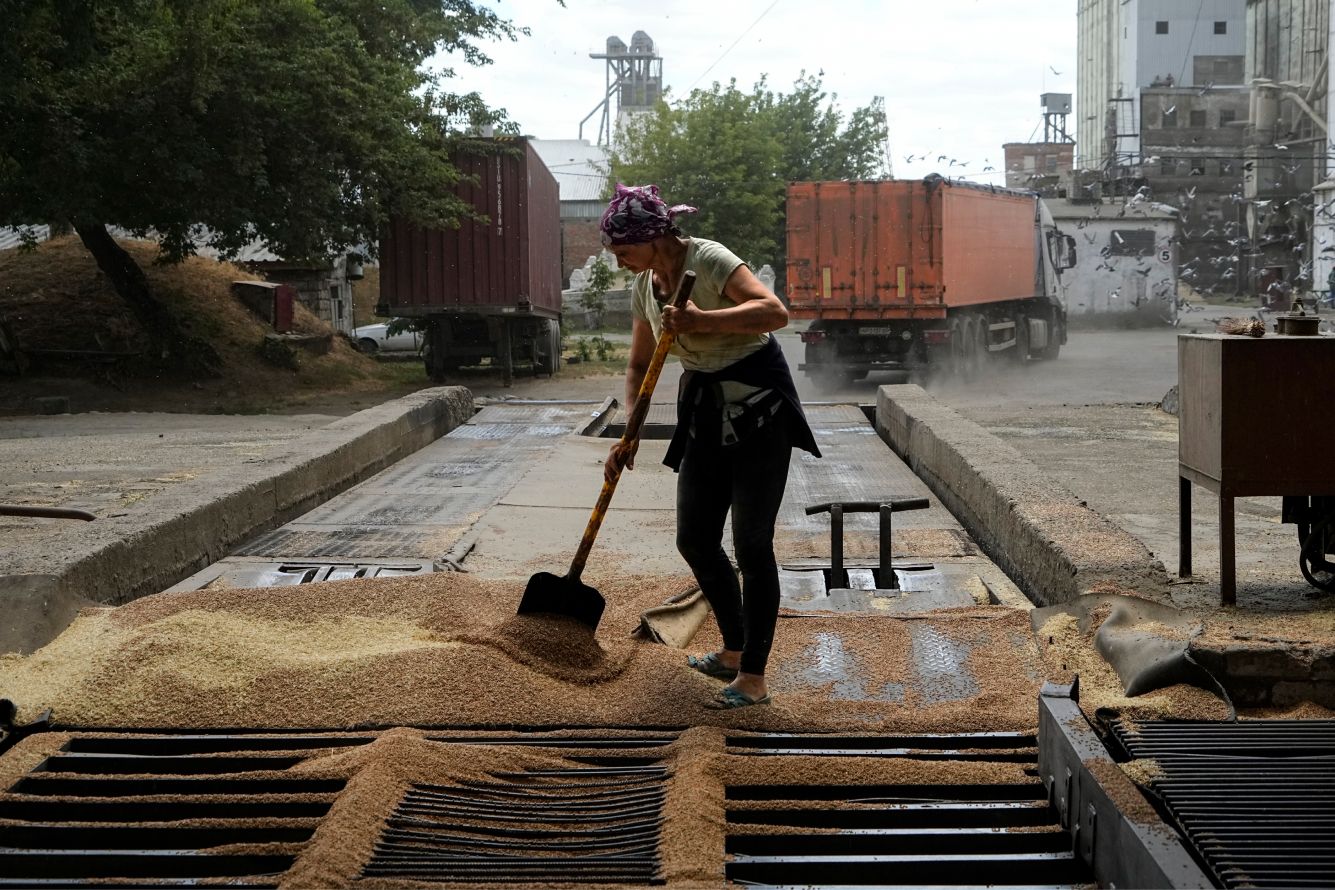
On October 29, the Russian authorities announced a temporary exit from the so -called grain transaction with Ukraine, in which grain from Ukrainian ports on a safe corridor fell on the world market. However, the agreement did not concern all Ukrainian grain: all the last months, exports also continued with territories annexed by Russia. In particular, from the Zaporizhzhya region - one of the agrarian centers of Ukraine. The Financial Times (FT) newspaper, on the example of just one such delivery - a batch of barley weighing 2.6 thousand tons from the port of Berdyansk - spoke about the details of gray schemes used by entrepreneurs and the authorities of the annexed areas for the export of grain.
Operator who is not in the registers
In the center of the entire scheme, the FT, which was tracked by the “Military-Civil Administration” of the annexed part of the Zaporizhzhya region, a company entitled “State Grain Operator”, led by entrepreneur Nikita Busel, the owner of two boutiques and a network of fashionable coffee houses in the regions of Central Russia (the publication failed to receive his comments).
Despite the fact that Evgeny Balitsky reported on the creation of the company "Head of the Administration" a few months ago (including the purpose of selling the remnants of the previous harvest with a volume of more than a million tons), she did not find any traces of registration of the state grain operator in the Russian or Ukrainian register of FT legal entities.
The report on the establishment of the company noted that it will work as an agency under the “military-civil administration” and buy grain from local farmers for resale for export. All profits were planned to be allowed again into circulation to support the occupation authorities. How this scheme of work has changed after the annexation of part of the Zaporizhzhya region of the Russian Federation is unknown to the publication.
However, even before the annexation, the scheme was only a cover for the trading of grain of farmers who refused to cooperate with the occupation authorities. FT was told about this by several entrepreneurs and managers whose agribusiness was expropriated by the pro -Russian “administration”, and the supplies of goods were sold by the state grain operator. Farmers simply have no choice: they are offered either collaboration activities or business deprivation, one of the interlocutors stated.
One way or another, the state grain operator continues active work. In August, from the annexed territory of the Zaporizhzhya region, according to the "Military Civil Administration", five thousand tons of grain per day were exported by rail, another one and a half to two thousand-according to the automobile. Most, apparently, was exported through the ports of the annexed Crimea. But there were alternative routes - and about one of them FT tells in detail.
A ship that is not on radars
The same batch of barley at 2.6 thousand tons was issued for sending from Berdyansk on August 13. From the documents studied by FT, it follows that the party took on board the Powell Balker under the flag of Syria. It was the Syrian vessels that began to regularly go into the annexed Ukrainian ports in recent months-while most other carriers were afraid to participate in gray export schemes due to the risk of sanctions.
Moreover, Powell was not formally in Berdyansk: on August 10, the ship simply turned off the transponder and disappeared from the radar in the Kerch Strait (where it was on July 31), and on the 15th returned to them in the same area, but with a load on board.
This cargo, as follows from the official version of the participants in the transaction, hit the Powell not in Berdyansk and without the mediation of the state grain operator, but in the Kuban port of the Caucasus - being before the geos from Togliatti by the Russian company. Its owner Igor Pozhidaev rejected FT accusations in trade in Ukrainian grain, but did not provide evidence of Russian origin. At the same time, he assured the journalists that he had all the necessary documents.
According to the publication, the legal cover of the transaction was completed by the end of August, when these documents - about fake origin and grain route - were ready. The barley was “cleaned” for export and purchase by foreign traders, for example from Turkey.
Grain who does not have a buyer
In early August, Akbaru Asgarov, who owns the construction company Northwest Group Yapı in Istanbul, called his acquaintance from the Geos. Despite the fact that Asgarov has no experience in the grain business, the interlocutor invited him to find a buyer in Turkey under a batch of barley with Powell.
According to the entrepreneur, he was told that grain is from Novorossiysk. On September 3, Powell arrived at the Turkish port of Samsun. By that time, Asgarov found a buyer ready to pay 380 dollars per ton. But barley prices collapsed at the same time - and the potential buyer left the transaction. Asgarov also refused to participate in it as an intermediary. One way or another, he said, he did not suspect that grain could arrive in Turkey from Ukraine.
After the failure of the transaction, Powell moved along the Black Sea coast of Turkey, towards the city of Sinop. On September 10, the ship again turned off the transponder, and when it appeared on the radars a few weeks later (again in the Black Sea water area), there was no load on board.
Those who eventually acquired a batch of barley remained a mystery. As FT notes, Turkish buyers today at least be afraid to openly buy grain from Russian companies due to the risks of conflict with the Ukrainian authorities. The newspaper only found out that the Turkish port of the hop was the likely final final point of the ship's route with the load of Ukrainian grain near the border with Georgia.
The fact that such “rumors” interfere with trade with Turkey, Igor Pozhidaev from “Geos” also stated by the publication. He also assured that all the information collected by journalists is a fake. After that, the FT checked the statement of the Russian entrepreneur about his version of the Powell route using satellite pictures - and did not find confirmation. But the same pictures showed that the ship, very similar to the Syrian balter, entered the port of Berdyansk on August 13.