
Translated material
Som on a summer night
How Russians are mastered in Kyrgyzstan and how they relate to them here
Well, life went: until recently, you left the pure Moscow entrance, walked along the marked Moscow streets, bought fresh vegetables in the store at the house, looked at his future house in renovation and did not even think that all this was for workers from Central Asia. Maybe you were grateful to these people, but VTsIOM would not let you lie: almost half of the Russians (44%) was not grateful, and belonged to the migrants of Nevazhnetski. And now - welcome: one appeal of the president - and you are already a tourist, or a migrant in Central Asia.
Since the end of September, about 40 thousand Russians have arrived in Kyrgyzstan. Most, as in the case of other directions, went here "with tourist purposes."
Someone even broke unscheduled-probably simply could not resist the autumn views of Issyk-Kul and Jeta-Oguz. But in the 2019 Dopandemium, only three thousand Russian tourists visited the republic.
You can state: Russian citizens are finally imbued with the calls of the Motherland to "rest" in friendly countries. Moreover, friends need to help, and many are already thinking of seriously putting up their skills in practice here: start working and investing in the Kyrgyzstan economy with money - even the apartments are watching.
The correspondent of "Novy" went to Bishkek to find out:
How Russians are mastered in Kyrgyzstan;
What difficulties are faced with and what advantages they find for themselves;
And what the locals think about what is happening.
Disclaimer: the names of some heroes are changed at their request
Part 1. Save it
"They said at work: you need to leave"
Russia has no land border with Kyrgyzstan, and therefore the flow of “tourists” here was not as numerous as in Kazakhstan or in Georgia. But since it is necessary to get on an airplane, and the cost of air tickets on the 20th of September exceeded 100,000 rubles, it can be said that there were many quite wealthy Russians who often have specialty in the market.
According to the Russian Association of Electronic Communications, from February to September this year, Russia left about 70 thousand workers of the IT sphere. There are no accurate data on the number of ITSHNIKS who left the country after September 21, but according to the head of the ANO “Information Culture” Ivan Begstin, we can talk about 100 thousand people. According to the Ventra HR-Holding study, Russia may lose 31% of IT specialists.
Nikolai Simonov-Devops Engineer in one of the system-forming Russian banks.
“My work is to deliver the product to the client,” he explains. - The developer, after he wrote the product code, sends it to the storage system. I take this code, bring it to the test environment and ultimately write my part of the code to prepare the product for automated delivery to the client.
Despite the fact that the bank, in which Nikolai works, system-forming and IT specialists should have armor, some of the employees still received summons for mobilization.
Simonov says that at work, his decision to leave was supported.
- We were even told that we need to leave. Prepared all the necessary documents and certificates. Only among my acquaintances at work, the people left Russia twenty.
Supported Nikolai’s decision to leave the country and his wife. As soon as the president of September 21 ended his appeal, Simonov began to look for tickets.
- When I chose flights, tickets from Moscow to Bishkek cost 8 thousand rubles. After 40 minutes, when I bought them, they were already worth 11 thousand. My colleague, who bought tickets an hour and a half after me, took them for 16 thousand. Well, the next day, prices have gone for 100 thousand rubles, ”says Nikolai. - Kyrgyzstan was for me one of the most obvious options for moving, because here you can be 30 days without registration, and having issued it, just renew this registration every six months without leaving the country: it is enough to agree with the owner of the apartment, and you can stay here as much as you need.
In Bishkek, Nikolai and his colleague rent a two -level apartment with three bedrooms and a spacious hall combined with the kitchen. Waiting for another programmer. After September 21, housing rental prices here took off to the Moscow level: for Luxovaya, by local standards, the apartment of Simonov and his comrade pay $ 1200.
- It turns out that $ 600 per person, and when the third arrives, it will be $ 400. This is quite acceptable to us, ”says Nikolai.
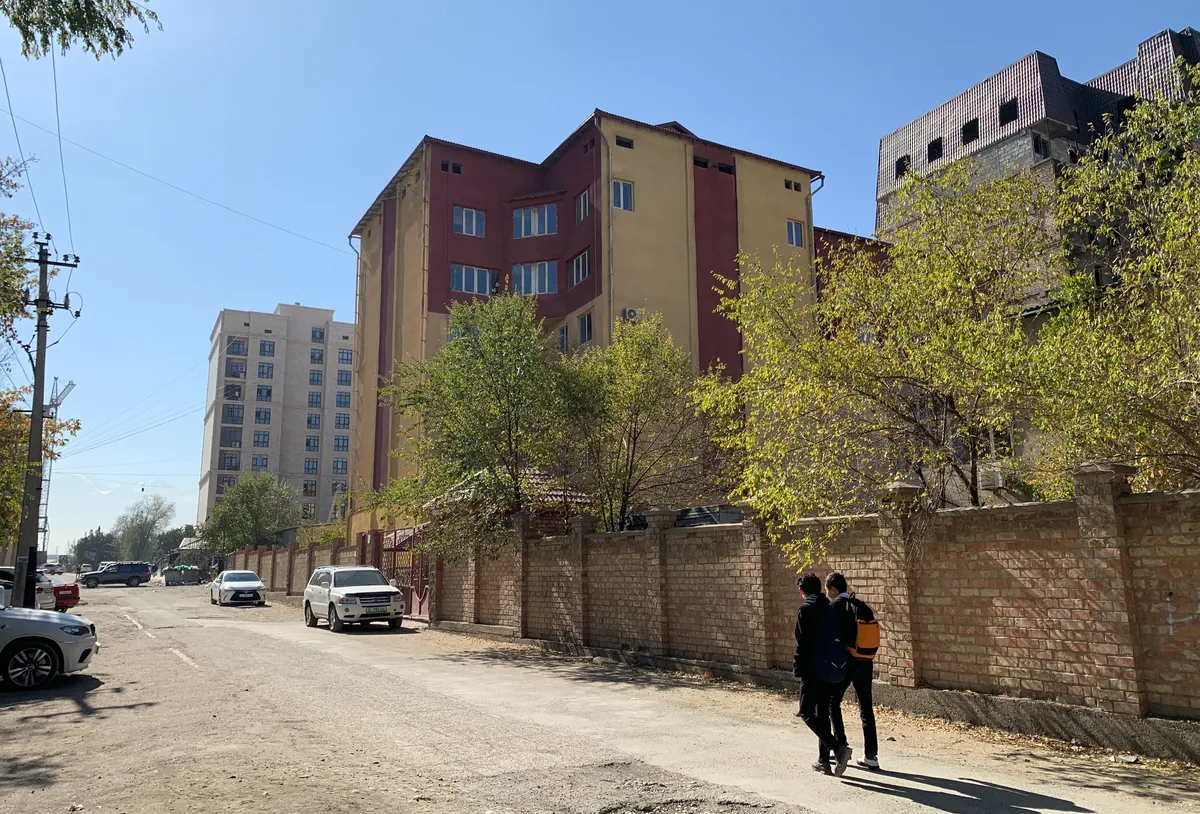
The cost of renting a one -room apartment in Bishkek can now start from 18 thousand soms (13.5 thousand rubles) and reach 163 thousand soms (123 thousand rubles). “Twes” are delivered at a price from 30 thousand to 204 thousand soms (from 22,620 to 153,816 rubles). The Russians prefer to rent a liner, cooperate for this through Telegram chats .
Nikolai says he thought to leave after February 24, but did not dare.
- Because it seems that this whole situation did not directly concern me. At work, everything was stable. And in the summer there was such a period when a lull also occurred in Ukraine. Then I thought that everything was already ending. But now it turned out that no ...
Simonov himself, by the way, served in the army, was a cook. He says that he had recently seen a video in which the girl of one of the mobilized, who also served as a cook, said that her young man was appointed a grenade launcher.
“But we simply do not have the necessary preparation,” Nikolai notes. And he adds that on October 9, unknown people knocked on the door of his Moscow apartment, the wife did not open. The neighbor later said that they came from the military registration and enlistment office.
Simonov says that specifically for the IT specialists of the Ministry of Economic Commissions of Kyrgyzstan, has developed a program “Digital Nomad”, in which IT-Schools from Russia, Armenia, Moldova, Azerbaijan, Belarus and Kazakhstan are allowed to be in the country without registration and use accounts in local banks. A similar opportunity is provided to their close relatives: parents, spouses, children, brothers and sisters. It is only necessary to provide an employment contract at the employment center confirming that you are working in IT (no matter what country) and a certificate of income for the year.
“But is it beneficial to Kyrgyzstan?” I ask. - After all, you will develop digital products for another country, receive money in another country ...
“But we will spend this money here,” Nikolay retorts. -Yes, and the IT market of Kyrgyzstan itself is still very small, its potential for growth is huge. Maybe one of our guys will want to develop it.
Nikolai admits that he will return to Russia if the conflict in Ukraine is over, but he will not threaten the left. And the return of emigrants to the country would be economically beneficial, because not only their money will return, but, more importantly, minds. But so far, a more likely Simonov seems to be the prospect of staying in Kyrgyzstan or at all - to leave for the United States. Away from what is happening.
"Only large companies will remain"
Anastasia Nekrasova and a young man came to Bishkek on September 23. Both programmers, she is a Backend developer on Python.
- We decided to leave, because I was very stressful for a young man. After Putin’s appeal, the information began to circulate that the borders would be closed. And in the "scoop" nobody wants to. Therefore, we decided that we need to at least wait out what is happening.
- So you did not leave forever?
“There are two of us, and we need to come to a compromise.” I would have left forever, but my boyfriend has not yet tore Russia from myself. He hopes that everything will end quickly and it will be possible to return.
Anastasia says that until recently, they "spun in their IT-world."
-And it was even clear that the IT sphere developed, created interesting products, and went somewhere in a positive future. The Internet quickly spread, and the business saw in this possibilities for ourselves. We really had a cool IT, which made convenient services for people. Take the same delivery of products from stores: five years ago there was none of this, but today there is Sbermarket, Scooter - many very convenient services, ”she says. - In Russia, it was quite possible to live if “in the house” hide. And it was even possible to improve something around you. But after February 24, the question arose before me: "What is our future?" I do not see him. There is only one life, I want to live it normally.
Now, according to Anastasia, the prospects of the domestic IT are vague.
- Apparently, only large companies such as Tinkoff, Sberic, Yandex will remain in the country. Maybe they will have some small contractors. But again: if these contractors mobilize developers, then how will they function? Imagine the situation of an entrepreneur from whom a specialist is taken away, and he already scored orders ... Even until February 24, a good tester took four months in IT hiring, and the developers could be sought for six months. Now everything has become worse. I think that in the end, a monopoly market will be formed in Russia, in which there will no longer be the previous variety of decisions and ideas.
Relatives of Anastasia reacted to her decision to leave with understanding, although some of them support what was happening in Ukraine. All of them also worried about her young man.
In Kyrgyzstan, Nekrasov and her boyfriend took off the “Eurodvushka” for $ 1000 per month.
- And this is the apartment in which the owners lived themselves. They just have the opportunity to leave for relatives and earn extra money to rent their housing. And now in Kyrgyzstan it happens massively: people rent their apartments to the Russians, and they themselves move somewhere. Honestly, I can’t imagine that I would rent my apartment to someone. But it is very good that the locals are going to this step, because without it the rental market would be even less, and the prices of apartments would be completely cosmic.
In Kyrgyzstan, Anastasia and a young man plan to stay at least three months: you need to change the passport. According to her, in the first wave of mass departures from Russia, in February-April of this year, people waited for the replacement of documents for about two months. Further plans are still unclear: maybe they will go to Armenia, or maybe to the UK.
- I really like people in Kyrgyzstan: for all the time there are no strange views, no negative reactions to our address. When they drove with a taxi driver from the airport, he said that after a military conflict with Tajikistan they had 150,000 refugees and that it was in the traditions of their people to accept people running from such conflicts.
Part II.
"We understand you"
Bishkek is surprisingly quiet, low -rise and green. Only on the central prospectus Chui the movement seems to never stop, but turn off it to the next streets - you can meet only a dozen people in an hour. And this despite the fact that the capital of Kyrgyzstan is a millionaire city.
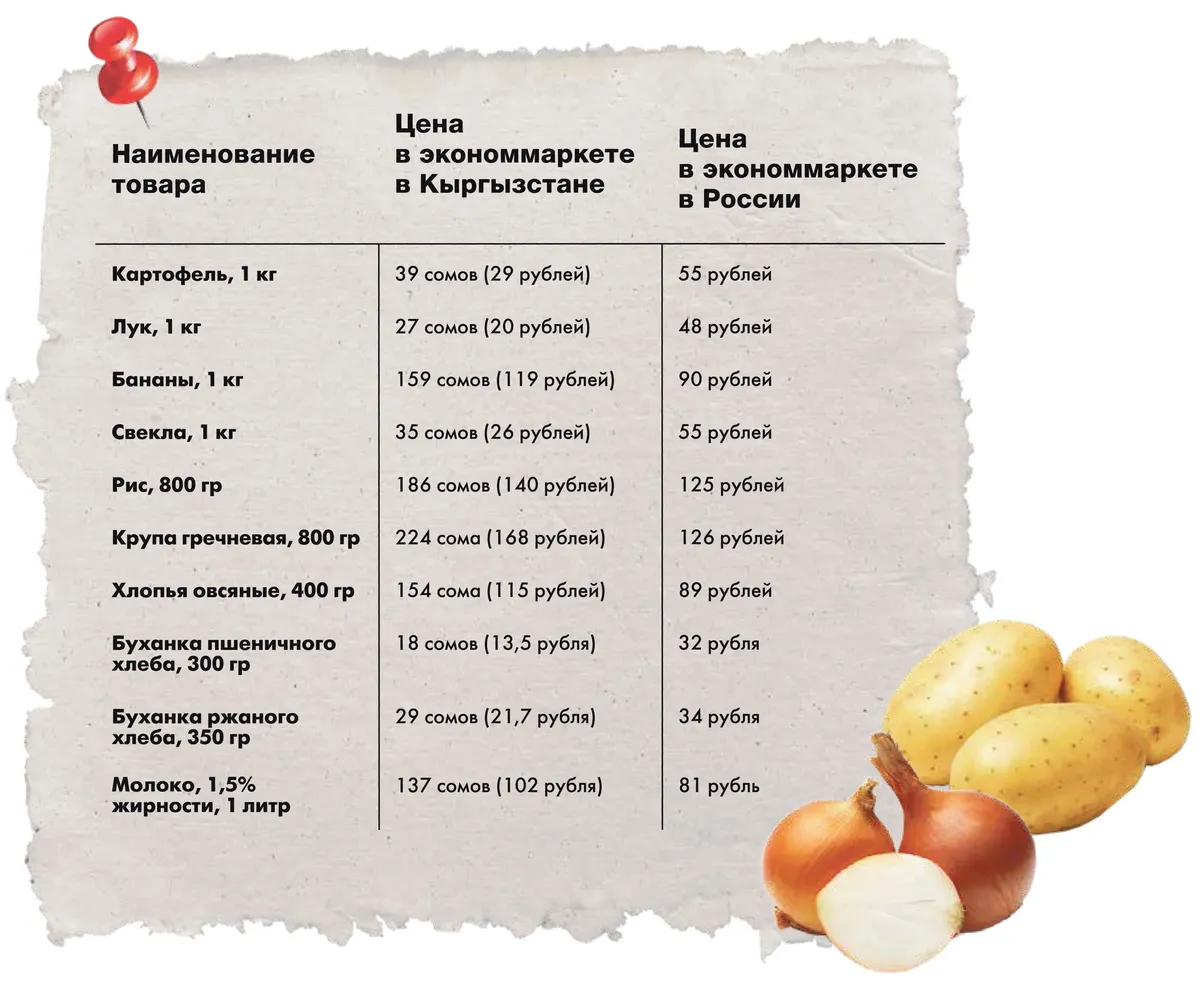
Not example for other megalopolis familiar to Russians, Bishkek is also very inexpensive: yes, the prices for apartments have taken off since the end of September, but the travel in public transport, as it cost 13 soms (9 rubles 76 kopecks), and it costs, the taxi will take away anywhere in the city for about 120 rubles. And the prices in stores are low.
On the bench by the dining room, where you can take soup and Sams for 100 rubles, two local ones come to me. One of them seems to be Alibek.
- From Russia, brother? He asks.
- Yes.
- Do you feel bad there?
Silently spread my hands.
“I read that it’s bad,” Alibek continues. - They take everyone, right? Tell me: why does he need it?
“I don't know,” I say.
Alibek asks if I arrived in Bishkek for a long time, and having learned that only 4 days on a business trip, she is offended.
- Why did you decide to stop in Kazakhstan? Kyrgyzstan is better, I say exactly! Here is warmer, here is cheaper. Kyrgyz people are hospitable.
“But Kazakhs too,” I remarks. -As for the “cheaper”: because of the Russians, after all, you have the prices for housing as they grew up-every three, probably.
- Everyone understands that these are not Russians, these are our prices, local prices. We are very good about the Russians, every third man went to Russia to work. Me too. Now I won’t go until everything will calm down for you. We understand you very well.
In four days in Bishkek, local residents came up to me three times and every time they said the words of support. Meanwhile, in the media, the topic of mass emigration of Russians in Kyrgyzstan is discussed not without fear:
“According to official statistics, about 40 thousand Russians arrived in the country after the beginning of [special operation]. We treat them very well. There were no excesses. But the economy of Kyrgyzstan is not ready to accept new people. <...> We could take advantage of the moment when many foreign companies left the Russian Federation, and call them to themselves, help them settle here. But they did not do this, ”the former deputy of the Parliament of Kyrgyzstan, Omurbek Abdyrakhmanov, told Vesti.kg.
“The influx of people from Russia will not be pulled out, there will be a very strong anthropogenic burden on the Central Asian republics,” political scientist Mars Sariev agrees with him.
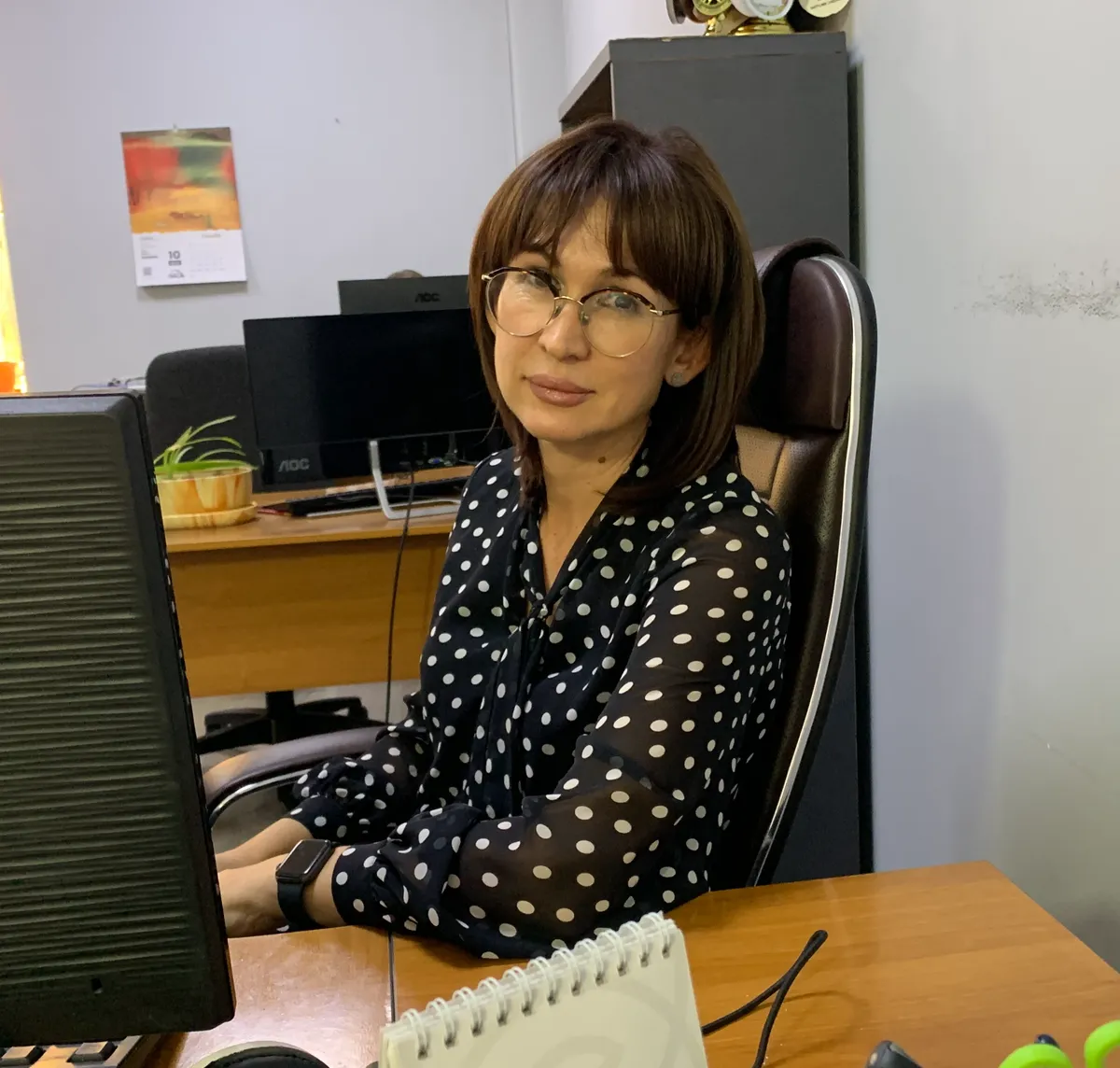
With the chief editor of the independent publication kaktus.media, Natalia Timirbaeva, we meet in the editorial office, where an urgent meeting gathers a few minutes before my arrival: they just offered to close the “cactus” in the national parliament, as well as the Kloop and Azattyk publications - because they supposedly “pose a threat to the statehood of Kyrgyzstan”. The proposal, however, received conflicting reviews of parliamentarians, many of which supported independent media.
“Those who initiate this can not even decide for themselves: either we serve the Americans, or to the Kremlin,” Natalya laughs.
Speaking about Russian migrants, she notes that the Kyrgyz government officially did not voiced its position.
- Much fewer Russians came to us than in Kazakhstan. There is no such critical mass with which “you need to do something” and which the government should react to. Individual deputies really said that
The influx of people from Russia can threaten, but the threat is not political, but, let's say, infrastructure. Because our cities are developing not too fast pace, and may simply not have enough strength to serve the newly arrived population.
Timirbaeva notes that Kyrgyzstan adheres to neutrality in the issue of “special military operation” - both at the government level and at the mood level in society.
-Someone on one side, someone on the other. But, as far as I see, people are still more interested in our internal problems. After all, we also have problems on the border ( this refers to the conflict with Tajikistan. - I. Zh. ), She says.
Timirbaev says about the attitude towards the Russians arriving in Kyrgyz society that it is “of course, different”, but mostly calm.
-We really have a very loyal people, and the Russians themselves are not strangers: in every family, probably, there are people who have worked or work in Russia, someone even has Russian citizenship. And then, this is in our genetic memory - to accept people who are in trouble: remember the deported peoples, remember the dispossessed people. The Kyrgyz people accepted them and saved many.
Part III.
Ticket Crimea - Kyrgyzstan
Little where in Bishkek you can find as many Russians as in local cafes. It is not surprising, because even a person who has a very average salary by Russian standards can afford pilaf for 150 soms (112 rubles), stuffed pepper for 60 soms (44 rubles) or mammar soup for 130 soms (97 rubles).
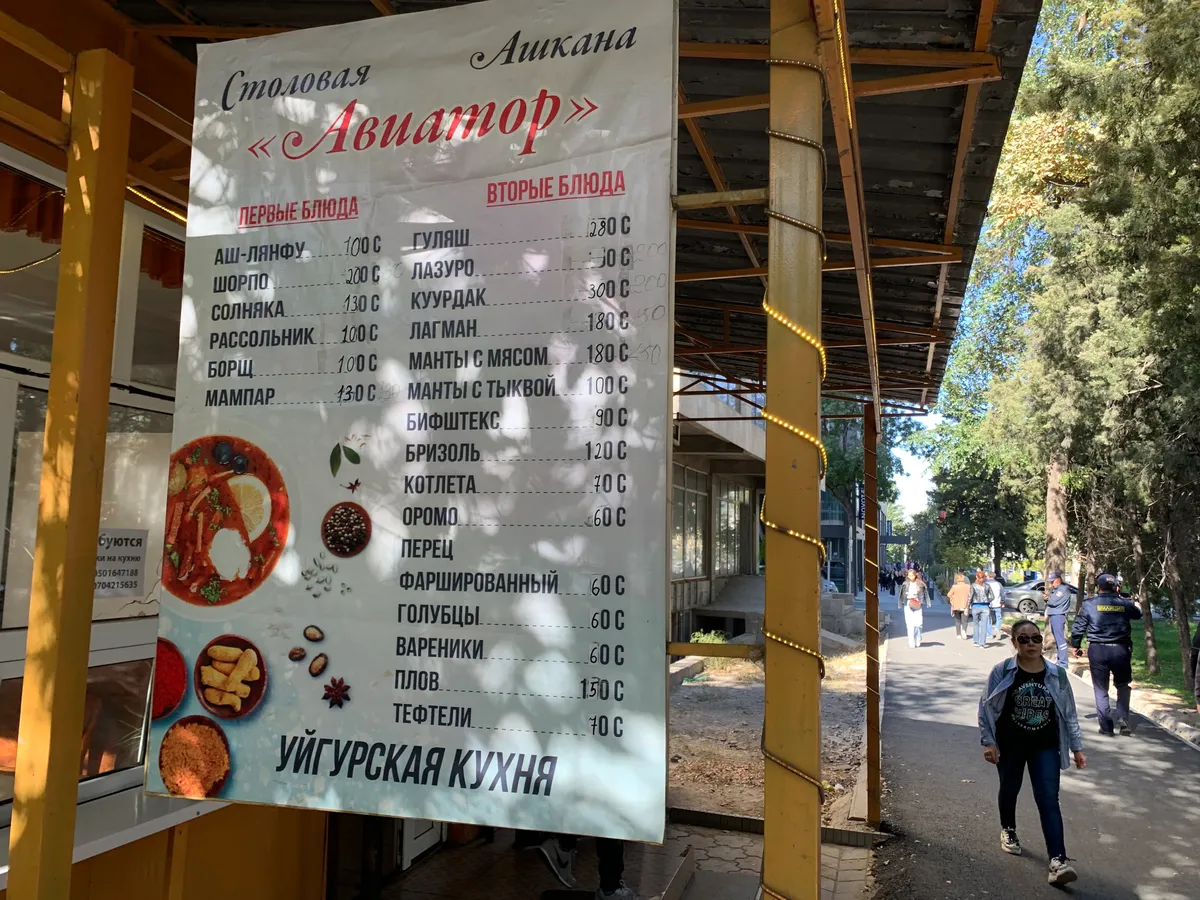
At the next table I hear the conversation of two men and quite soon I understand that they came to Kyrgyzstan from Crimea. I ask them to allow me to get hooked.
Sergey and Cyril - from Sevastopol. Sergey is a philologist, Cyril is an engineer-builder. They were familiar even before the relocation.
“I left Crimea on September 29 and arrived in Astrakhan,” says Cyril. - On the same day, crossed the border of Kazakhstan, and then went here to Bishkek. A funny situation happened on the border of Kazakhstan and Kyrgyzstan: I handed the border guard a Ukrainian passport ( many Crimeans still have Ukrainian documents. - I. J. ), and he asks me: “Where is the mark about the entrance?” She really was not there, because I entered Kazakhstan on the internal passport of the Russian Federation. Began to explain the situation to him, showed a Russian passport,
He took both my documents, looked at me with surprise and said: “These countries are fighting each other ...” I: “Yes.” - "And are you a citizen of both?" He just could not believe that this could be.
I ask if in 2014 the Crimeans could predict that the events that unfolded on the peninsula will lead to the tragedy of 2022.
“I was not a little to politics,” Cyril answers. -In 2013, I got married, in 2014 I had a child. I understood that it was necessary to somehow raise the family, and then the hryvnias began to change to rubles, the dollar went to heaven, and I did not even have my own housing. At the same time, I planned to leave for Russia earlier, so what happened in 2014 was perceived by me as fate. Nothing foreshadowed trouble.
Sergei also says that the Crimean Spring to think that such a large -scale conflict would not give between Russia and Ukraine.
“If you remember, there were even statements from Ukrainian high -ranking persons that Crimeans, they say, were“ always such - traitors. ” И на Западе говорили, что Россия, конечно, понесет ответственность за Крым, но нужно понимать, что едва ли этот вопрос решится иначе как образованием нового Северного Кипра ( государство, признанное только Турцией. — И. Ж. ). Тогда, весной 2014-го, казалось, что все Крымом и ограничится. Даже когда потом начался Донбасс, я и мои знакомые думали, что России-то он не нужен — ну зачем? Политически там все отнюдь не так однозначно, как в Крыму. Economically? Уголь — у России хватает своего угля, который к тому же залегает неглубоко и добывать его выгоднее, чем донецкий. Metallurgy? Россия не знает, куда сбывать свой металл — его просто очень много. Коксохим? То же самое — у России все это есть. Я был абсолютно уверен, что Донбасс реинтегрируется в Украину. И вплоть до 24 февраля даже подумать не мог, что начнется [спецоперация].
В Севастополе, по словам Сергея, к СВО отношение неоднозначное: многие поддерживают проведение «спецоперации», но не столько в силу личных убеждений, сколько в силу того, что их родственники и знакомые оказались на передовой.
— Город-то военный, — замечает Сергей. — Одна моя знакомая написала серию постов в поддержку «СВО». Потом мы случайно встретились в городе, и я ей задал вопрос: «Почему ты это пишешь?» И она расплакалась. Сказала, что у нее родители военные, много друзей военных, кто-то уже погиб, и она просто не может высказаться против, потому что это будет предательством по отношению к ним.
Сергей говорит, что пока не знает своих дальнейших планов. В Кыргызстане ему нравится.
— Отношение здесь очень радушное, тебе всегда подскажут и помогут. Никто из россиян пока не жаловался мне на негатив — даже откровенные мудаки, которые, приехав спасать свою жизнь, включают в магазинах и кафе «взыскательного клиента», даже эти люди не сталкиваются с грубостью. Вообще-то меня давно подкупали простота и открытость кыргызов. Помню в нулевых, когда тут скинули очередного президента, в «Коммерсанте» вышел репортаж Михаила Зыгаря из Бишкека. Там из разграбленного торгового центра выходит мужик с телевизором, видит его и зовет: «Эй, пацан, заходи, там еще есть!» С тех пор я мечтал попасть сюда. Не потому, что мне хочется стащить телевизор, а вот из-за этой инклюзивности. Поэтому когда в Бишкеке незнакомые люди ко мне обращаются «брат», это не коробит, как в России.
Но главное, что удивляет, думаю, любого россиянина, оказавшегося здесь в таком же положении, как азиатские мигранты в Москве и Питере, — это просто то, что с ним коммуницируют.
Потому что ведь в России мигранты и местные живут в параллельных мирах. Они могут ехать рядом в автобусе, выбирать бок о бок одежду в магазине, но они не общаются, не обмениваются репликами, шутками. А тут такого нет.
При этом Сергей все-таки надеется вернуться в Россию. А вот Кирилл говорит, что, напротив, готов при необходимости даже отказаться от российского гражданства и планирует вывезти из Крыма семью.
Часть IV.
На последние
Александру Неверову 19 лет. До начала СВО он учился в колледже на юриста, но 24 февраля вышел на пацифистскую акцию, и его отчислили. В Бишкек Александр прилетел 28 сентября из Санкт-Петербурга. Родственники не только поддержали его решение уехать, но и дали денег на билет, который обошелся в космические 150 000 рублей.
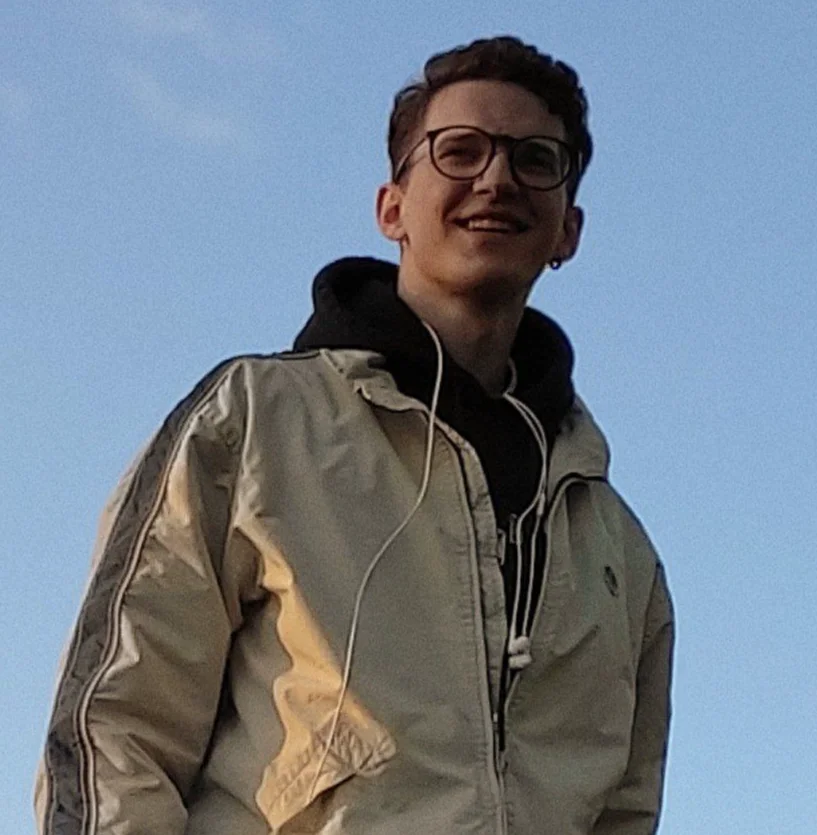
— Я Кыргызстаном начал интересоваться еще задолго до всех событий. Смотрел много видео об этой стране. Она интересная, — говорит Неверов. — Поэтому вопрос, куда лететь, передо мной не стоял. Прилетел я, правда, в никуда: в Кыргызстане мне негде было жить, не было знакомых, не было вообще никакого плана действий.
Помогли ребята, такие же эмигранты из России: пригласили к себе на пару дней. Затем мы с ними нормально заобщались, и в итоге я до сих пор живу у них.
Договорились, что буду платить 6000 сомов ( 4 500 рублей. — И. Ж. ) в месяц за место в комнате, в которой живут три человека. Всего в нашем частном доме живет четырнадцать человек.
Сейчас Александр пробует искать работу в Кыргызстане. Один день отработал официантом в отеле Sheraton, но решил, что это занятие ему не по душе.
— Вакансий в Кыргызстане очень много, но зарплаты, по сравнению с российскими, все же маленькие. В среднем предлагают 15 000 сомов ( 11 200 рублей. — И. Ж. ). На эти деньги жить сложно, поэтому я планирую или найти работу на удаленке за рубежом, или открыть свою тату-студию, потому что нанесению тату я тоже учился. Еще есть вариант поступить в Американский университет в Центральной Азии — оплачивать обучение за свой счет я, конечно, не смогу, но думаю, что мне по силам стать стипендиатом.
Чем обернется массовая миграция россиян в Кыргызстан — пока неизвестно. Но уже известно, что для Армении эффект оказался сугубо положительным: власти страны заявили, что в 2022 году ее ВВП вырастет на 13% за счет притока граждан РФ. «Талантливые, хорошо образованные люди переезжают в Армению, что может иметь длительный эффект», — заявил председатель Центробанка страны Мартин Галстян.