
Translated material
"You will go and you will dwell the wounded." How doctors run from mobilization abroad and how it threatens patients
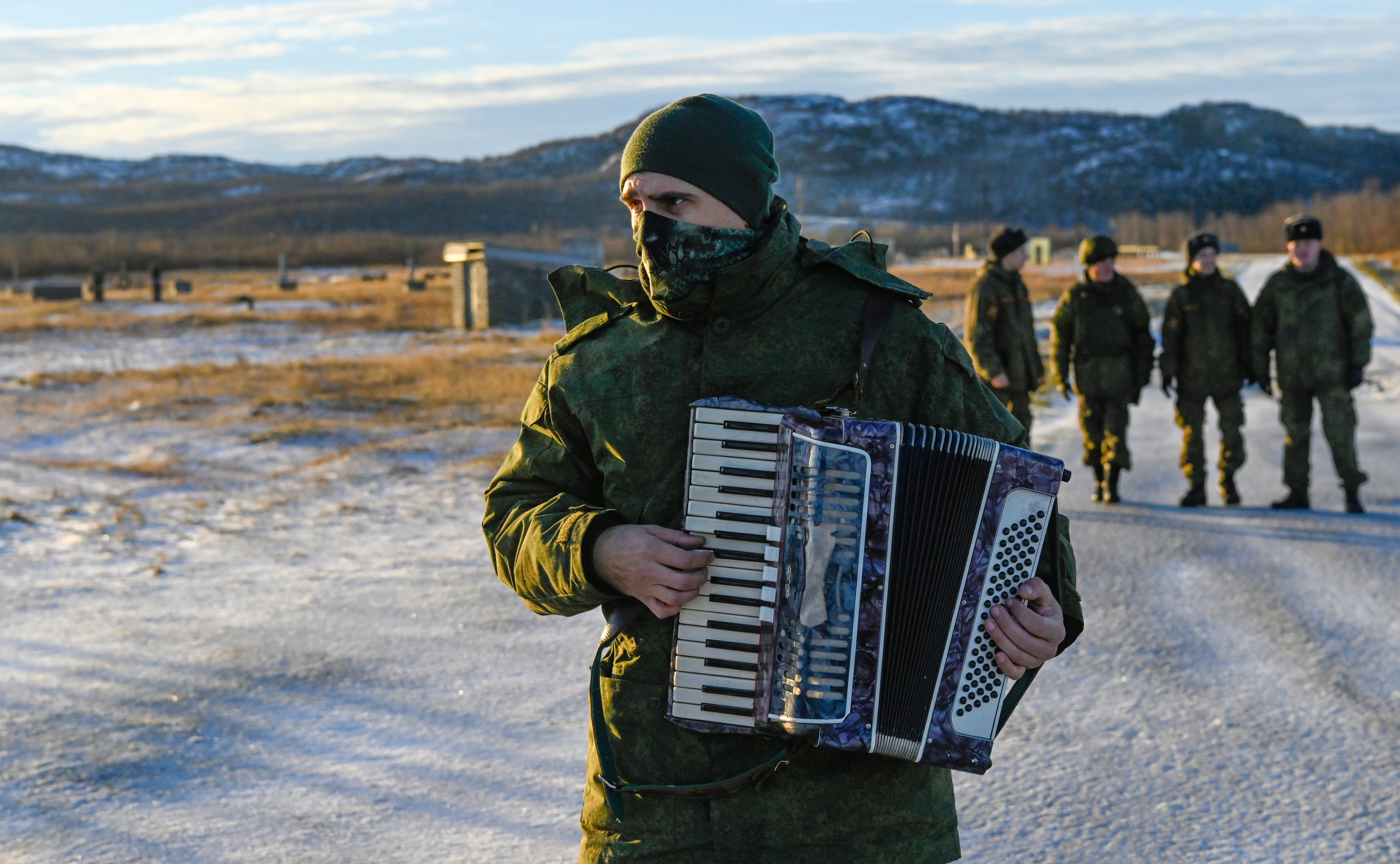
The promise to mobilize no more than three thousand Russian doctors in practice turned into a real flight of doctors and nurses. Emergency paramedics and narrow -profile specialists leave are leaving. And even the owners of private medical centers. Why do not doctors want to die in the war when their work will finally begin to respect in Russia, and what to do to patients, whom there is now no longer treated?
Source : "Layout"
"I suggested that I would go to the front line"
23-year-old Artyom Davydov (the name changed at the request of the hero) from Arkhangelsk stood up for the next daily duty the day after the declaration of "partial mobilization". The ambulance paramedic rode in fear in fear that the personnel officer would give him a summons.
- My girlfriend is also a doctor, and she was also in shock. We did not really understand what to do next, given that we are military liable for military workers, ”Artyom recalls.
He was not handed the agenda at work. But Artyom did not stop nervous, although his older colleagues reacted more calmly to mobilization.
“Some said:“ Why be afraid, go and you will dwell the wounded, ”says Artyom. “But I'm not a therapist, but an ambulance paramedic.” In the fighting zone, I will be the first to come in handy: I will not be sent to the hospital in the rear, far from the line of contact.
A few days later, Artyom quit an ambulance, took the train tickets and in mid -October went to Kazakhstan. Together with him, his girlfriend and several male friends went. Artyom left his favorite work in his native Arkhangelsk, an apartment in a mortgage and two cats that relatives had to be transferred.
“If I were alone, I probably would not have left,” says Artyom. “But my girlfriend encouraged me to move, she wanted to keep our life, family and feelings.”
The young paramedic calls the help of people a matter of his whole life. Recently, Artyom says, he had to work for two. There were constantly not enough doctors, and paramedics became the main in the brigades. “We have not learned how to appreciate the cadres, and enthusiasts who literally live at work are pulling medicine,” Artyom believes.
According to the independent union of doctors "action", in the ambulance in Russia there really is not enough up to 50% of employees.
“I would assess the real shortage of personnel for an ambulance one and a half to two times,” Andrei Konoval said in the summer of 2022. In total, in the Russian health system, according to the Ministry of Health, 26.4 thousand doctors were not enough at the end of 2021.
Whether Artyom can continue to help people in Kazakhstan - he does not know. There is no confidence that he will be able to easily get a job in his specialty. Now he submits documents on Russian education for nostrification (the procedure for legalizing educational documents of foreign states), from time to time publishes his resume in the chat "Relocation of doctors to Kazakhstan" and plans the first interviews. Artyom says that he is ready for the first time to work and not in their specialty. He does not think about returning to Russia in the near future and does not know if he can ever return at all.
The promises were not confirmed
On the first day of mobilization, the Russian authorities hastened to reassure that she would affect the doctors slightly.
The deputy chairman of the State Duma Committee on Health Protection Badma Bashankayev told the medical newspaper that there will be no more than three thousand mobilized doctors and medical workers. True, since then it has never officially reported how many doctors and doctors really received summons and went to the front.
Bashankaev argued that armed forces are needed primarily by graduates of military medical universities, doctors with experience in hostilities, as well as civil surgeons, anesthesiologists and traumatologists. “Doctors who have no appropriate preparation or experience in the conditions of hostilities will not be required,” the deputy emphasized.
The next day, the head of the State Duma Committee on Health Protection Dmitry Khubezov, and completely said that "only 300 health workers are planned to participate in his own." He added that “pulling out the last doctor from the remote area, leaving the population without medical care,” will not be.
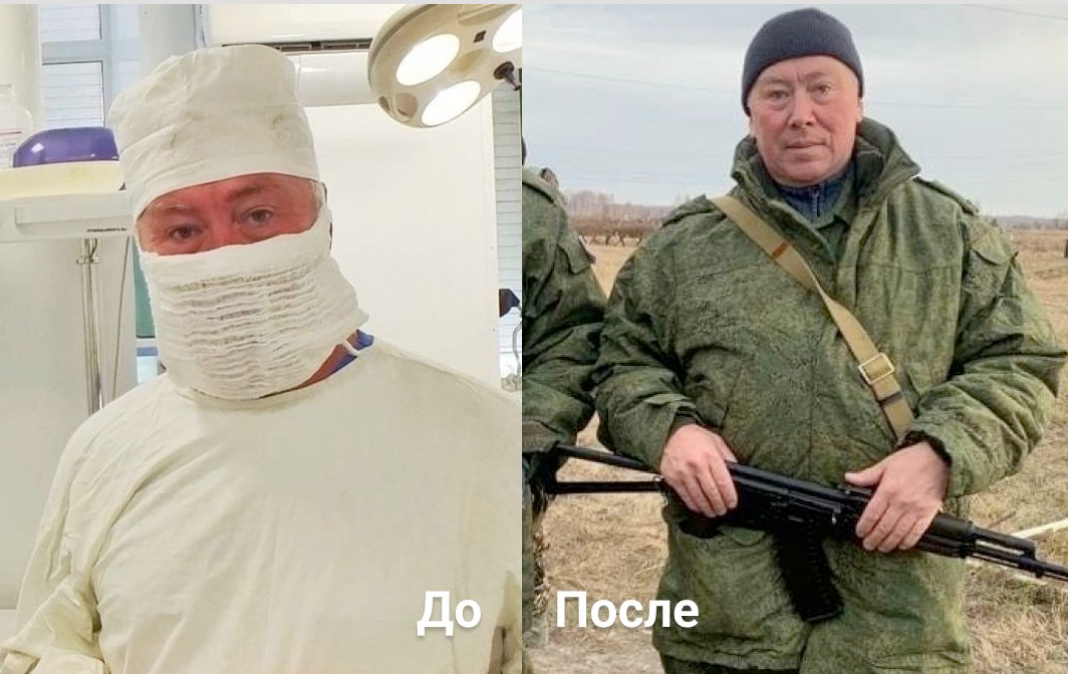
In Sterlitamak, Akhmet Abubakirov, the only child’s neurosurgeon, was mobilized. Photo from the telegram channel "Akbuzat - Civil Law Movement"
But on September 22, the first five doctors - anesthesiologists, surgeons, traumatologists were taken from the hospital in Transbaikalia, ”says a doctors' colleague who wished to maintain anonymity.
“The whole community perfectly understands the deficiency of anesthesiologists in a civilian, and even more so,” she said. - Anesthesiologists and coronavirus were worth its weight in gold, but now even more so. They no longer become.
To the question of how the hospital will work without valuable specialists, she replied: "Here, as always - from the extreme to the extreme, there is densely - here is empty. The youth will attract again. One experienced doctor will remain in any case, he will lead."
In the Sverdlovsk region on the same day they came with the agenda to the 59-year-old head of the surgical department of the city hospital No. 1. He was immediately fired from the hospital, and on September 23 he was sent to military training. The doctor had a chronic kidney disease, a history of cancer, he did not see one eye. True, after the complaints of the surgeon’s family, he was returned home.
Perm mobilized the children's anesthetist-resuscitator Maxim Brehach. He did not evade mobilization, but there was no one to replace him in the regional hospital, and he had three children and an unemployed wife left at home. As a result, his relatives, friends, colleagues and governor of the region spoke for the return of Brehach.
- The company commander called me and announced that the reservation had come to me. For thought for twenty -five minutes. But for myself, I already decided everything. If here such a number of people is afraid for my fate and wants to return me back ... I said that I am returning, ”Brehach quoted Life.
The Sterlitamak also mobilized the only children's neurosurgeon Akhmet Abubakirov, who was working in the local GKB No. 1, was reported on October 29 by the Akbuzat civil rights movement. The hospital and patients of Abubakirov ask the leadership of the city and the republic to return the specialist to the workplace, otherwise "providing qualified emergency and planned medical care in the profile of neurosurgery for the children's population [is] under threat."
In the first two weeks of October, HeadHunter analysts recorded increased demand for temporary health workers. Experts explained this by the need to replace mobilized employees for the period of service. Mobilized doctors should retain jobs, but at this time their employment contracts are suspended and there is an opportunity to pay a salary to an accurate specialist. The mobilized doctors themselves pays the Ministry of Defense - depending on the "salary in military rank, military position, prone of the length of service and for special conditions of service."
Another study - the lack of personnel in connection with partial mobilization - conducted the Action Medicine service, 499 respondents took part in it, 80% of which work in state medical organizations. Only 7% of doctors reported that vacancies in their institutions are opened due to mobilization of colleagues. Whereas 53% of respondents believe that vacancies are opened due to dismissal of employees of their own free will. These dismissals can be "in one way or another associated with partial mobilization, because some health workers left the country after dismissal," suggests the leading expert of the "Action of Medicine" Natalya Zhuravleva. Surgery, neurologists, neurologists and resuscitators, therapists and pediatricians, as well as operating, procedural and precinct nurses, will become scarce specialists, will become survey participants in the near future.
"Everyone I trust, left"
The deputies of Bashanakev and Khubesov in their telegram channels claim that among the Russian doctors there were many volunteers who wished to go to Donbass. But in general, the attitude of the medical community to mobilization is rather ambiguous. According to a survey of the “doctor’s guide” application, which 3318 people passed, only 14.7% of civilian doctors support partial mobilization of health workers. At the same time, a quarter of all respondents opposed mobilization.
Experts and human rights associations who advise Russians on emigration and mobilization, it was difficult to say how many health workers left for military training or left Russia due to mobilization. But the interest of doctors in emigration is visible in the growth of thematic online communities.
In the Border Control channel, where Russians reports on crossing the border of the Russian Federation, from September 21, by the time of publication, more than 150 reports appeared that doctors crossed the border.
Telegram-chat "Relocation of doctors in Kazakhstan" has grown from the day the partial mobilization is announced from several hundred to 5.2 thousand participants. Chat administrator Alena Ivanova (her name changed) created it in May, planning a move.
- At that time, my family and I chose between a relay in Kazakhstan and Azerbaijan. I was born and lived in Kazakhstan until 15 years old, and my husband is an ethnic Azerbaijani, so they thought where it would be better for us to go, ”Alena explained. - I am a doctor and for myself was looking for information on how to confirm the diploma. Then I realized that you can try to unite people like me.
There are fewer participants in a chat dedicated to the relocation of doctors to Azerbaijan, because it is more difficult to confirm the diploma there, and the language is necessary for work, says Alena, who administers this chat. But the two-time influx of participants since September 21 was in this telegram community, says its creator.
The Russian oncologist, the founder of the Foundation "Not in vain", the Higher School of Oncology and the Private Clinic "Ray" Ilya Fomintsev confirms the interest of doctors in moving to Kazakhstan, Uzbekistan, Armenia and Georgia. Fomintsev explains this by the fact that there is “the same education as in Russia”, and it’s easier to confirm medical qualifications than in other countries. Finding a job in Europe, the USA, Japan or Israel is definitely more difficult for a Russian doctor, he says.
“There you need to re -hold in essence, there is a completely different education system, it is fundamentally different, and this applies to all developed countries,” the oncologist said.
Fomintsev himself moved to Israel in the spring of 2022 - after persecution for participating in an anti -war rally (in fact, he did not even participate in that rally - he was detained on the approach to the venue). The growing problems of Russian patients with cancer are felt now, he says.
- Patients who need to choose an oncologist very often contact me. And I personally already encounter a situation when it is impossible to advise a specialist because many have left, ”says Fomintsev. - Over the past week, 5-6 people turned to me, and three times I could not say anything, because on this occasion all the doctors I trust, left.
The head of the Dawn Clinic, candidate of medical sciences, Alexei Paramonov, in an interview with Pravmir, said that many of his familiar oncologists have already gone abroad: "And I am afraid that they have not left for a while. There are many such examples. The best personnel who are in demand on the world market will simply leave. Not even dozens of doctors have left, this is already closer to hundreds."
The fact that "in the war with cancer there will be no one to fight," patients are also worried. The President of the Association of Oncological Patients "Hello" Irina Borovova wrote in her telegram channel that "it is very important in the process of mobilization not to" expose "the field of medicine-oncology in need of personnel": "Without radiologists, medical physicists, cancer, chemotherapists, it is impossible to get treatment."
The founder of the private multidisciplinary network "Clinic Fomin" Dmitry Fomin called an irreparable loss for the clinic, the care of employees caused by mobilization.
“In the medical business, the doctor is a business lawn, and if a doctor with his own patient flow leaves, it is impossible to restore this in full,” he told Vademecum after leaving several specialists.
Kadrov was not enough to mobilize, the co -chair of the trade union of medical workers "Action" Andrei Konoval adds.
“The main damage, which has not yet been blocked by no mobilization and emigration, has been inflicted on a long -term“ optimization ”and underfunding,” says Konoval. - Under these conditions, the departure of even one doctor is a serious loss for a particular medical institution, settlement or district. We see in our practical work the situation in the field: both acute deficiency and overloads are terrible.
"I would know that it would be so easy, I would move earlier"
Every day in a chat about the relay of doctors in Kazakhstan, new vacancies appear, and the medical media ask questions about the nostrification of diplomas, exams, and finding housing.
Representatives of Kazakhstani medical centers and clinics assure that good doctors in the country are needed and that there will be no big problems with legalization. Major workers from all over Russia are interested in whether someone crossed the border with the obtained agenda, how much ophthalmologists earn, whether neurologists and surgeons are required. Among the participants in the chat, not only ordinary doctors, but also those who were heads of departments in the State Clinics and directors of medical centers.
Anna Egorova (the name changed) led the hospital in Yekaterinburg. She left, but almost all of her colleagues remained in their places.
“Doctors in Russia are quite apolitical, and those who worked in the 90s, and these are most of the doctors over forty years old, will remain. They don’t want to go to the front. That is, they don’t support the war, but they are more important for them to stay at their workplaces,” Anna is sure. “Therefore, they simply continue to work in the Russian Federation, they are mostly leaving for young people - it’s easier for them to evaluate the prospects of the future. It grows on the remaining. "
It was not difficult to find a job in Kazakhstan Anna.
- I am a neurologist, the treatment protocols are the same, the principle of evidence -based medicine is one, there is no language barrier, at least in the north of Kazakhstan. I would know that it would be so easy, I would have moved before, probably, ”she says.
The head physician of the medical center in the Vladimir region Sergey Belov (the name changed) moved to Kazakhstan, because "as a doctor he is against any deaths."
- I am the head doctor in my medical center, I am the owner, but the military commissar decided that I had to go to Kherson to the front line! - Sergey is indignant. - In Russia, there were not enough doctors, and now there will definitely be less. Smart, qualified specialists, the color of the nation are running. I look at those who request places in Kazakhstan, and it’s a shame for me: they left, and far from the fact that they will return. But their training, experience and specialization have been spent years and years.
According to Sergey, patients in Russia will definitely "feel additional problems" - "they were before, and now they will aggravate."
Dermatologist Ekaterina Ptitsyna (the name changed at the request of the heroine) and her dentist's husband found the beginning of mobilization on vacation abroad with tickets home, to Kaliningrad, the next day. The first thought was not to return and wait.
- But the husband said that he would not be called, that he did not serve and only limitedly suitable for health. We returned to Russia, on September 23 we read the news about how mobilization was held, and on the 24th he already bought a ticket to Yekaterinburg to get to Kazakhstan from there, says Ekaterina.
She joined her husband in mid -October: for several weeks in Kaliningrad, Elena was engaged in the sale of a car, renting an apartment, and preparing documents for emigration.
From childhood, Catherine dreamed of becoming a doctor, graduated from a medacademy in the Urals, worked in state -owniers, combining with a reception in private centers, and "loved to make patients beautiful and healthy."
- And on the duty of service at the very beginning of my career, I sat at the draft commission at the military registration and enlistment office. I know these people, you don’t need to deal with them at all, ”she recalls.
The military commander does not care, Catherine, a dermatologist in front of him or a dentist, because according to the military ticket, all these are doctors.
-If someone attacked our country, I would stay and show all the necessary medical care. But in this case, our country is an aggressor, we attacked another country, and what should we protect in such a situation? What help should we provide? Therefore, we left.
Now the spouses are in Astana, are engaged in nostrification of diplomas and plan to work in Kazakhstan in a specialty.
“All our difficulties are temporary,” Catherine hopes. -A month later, when we confirm diplomas and find some permanent apartment, everything will be tired.
Doctors, says Catherine, is needed in Kazakhstan, and "no one inserts sticks into the wheels, because they understand everything and no one exacerbates everything." In Russia, she does not see the future, at least her: "Who will be the last to turn off the light."