
Translated material
Kremlin diet
How Russia is blackmailing the whole world by hunger and why the “grain transaction” is still under threat: the study of Novaya Gazeta Europe
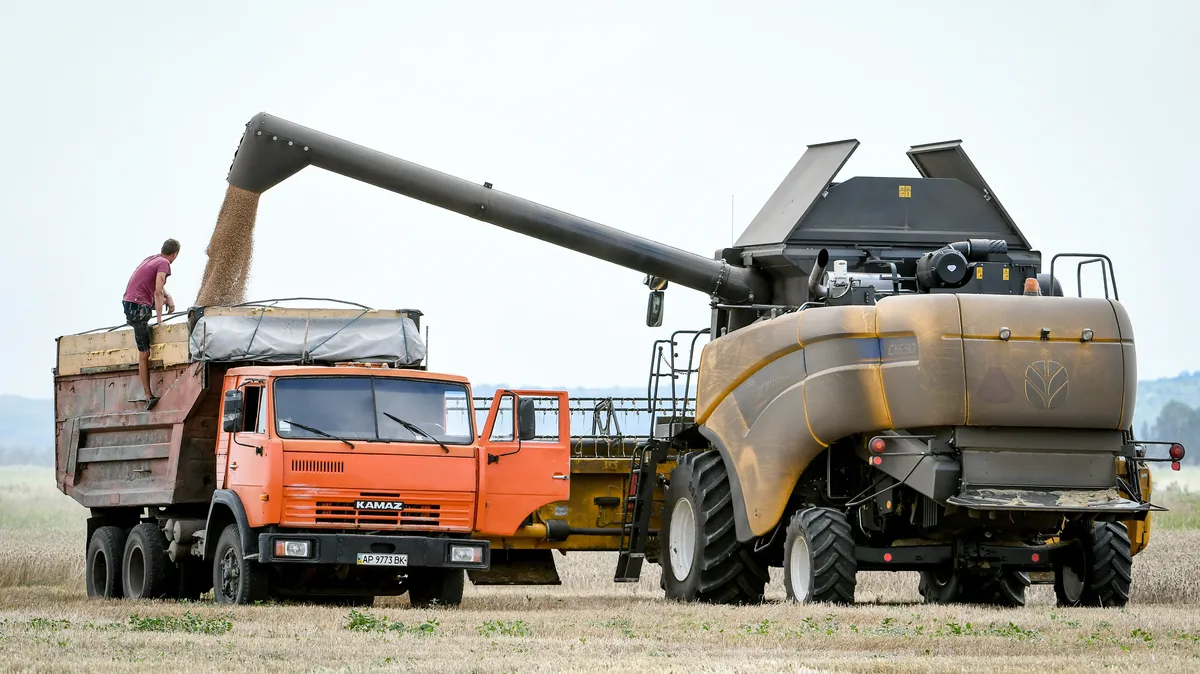
The war caused a record for 30 years to increase food prices around the world. The “grain corridor” helped to stabilize them, according to which Ukraine - one of the largest exporters of wheat - was able to take out 10 million tons of grain from blocked ports from August 1. For Putin, the “grain transaction” is one of the levers of pressure on the rest of the world: Moscow more than once threatened to get out of the agreement, delayed the court inspections and this time emphasized that she reserves the right not to guarantee the safety of the “grain corridor” after November 19 - the end of the transaction. How the Kremlin threatens the world with hunger and what will happen next with the export of wheat-read in our date research.
With the outbreak of war, the Black Sea ports of Ukraine were in military blockade. A country that produces 10% of wheat consumed in the world and 15% corn has actually stopped supplying grain. In the granaries, 18 million tons of last year’s crop were blocked.
Already at the end of February, world food prices went up and in March reached a record level over 30 years. 47 million people, according to the UN, were on the verge of hunger.
In July, under pressure from the UN, Russia still decided to conclude a “grain deal”. Four sides - the UN, Russia, Ukraine and Türkiye - agreed to create a safe sea corridor for passage of vessels with grain of three Ukrainian ports for a period of 120 days with the possibility of automatic extension.
Already in the second half of May, grain prices began to decline and by July fell by about a quarter: from 400 to 300 index points according to the International Grain Council.
- Prices began to fall in May. One of the factors was not the deal itself, but the expectation of its conclusion, since the market lays the price, focusing on future events, and not the past, ”comments the agricultural expert Andrei Sizov.
A decrease in prices for the main food products as a result of the transaction, according to the UN assessment , indirectly saved about 100 million people from extreme poverty.
For August - October, more than half of the reserve of 18 million tons managed to export from the ports of Ukraine, and in October, the volume of export was almost completely restored.
What went wrong
Having concluded a “grain transaction” in July, Russia received a lever of pressure on market prices for food, and through it - to the world community using blackmail to withdraw from the agreement.
Already in September, Russia first spoke about the possible exit from the transaction. The Permanent Representative of the Russian Federation at the UN stated that the Kremlin was counting on the cancellation of restrictions for Russian grain export, and Putin suggested thinking about the blockade of ports.
On October 12, Moscow again announced the threats of the breakdown of the agreements by sending the UN Secretary General Antoniu Guterrish a letter demanding to achieve the export of Russian grain and fertilizers. “We are not against deliveries, but this transaction should be equal,” the representative of Russia in Geneva commented on Reuters agency.
What Russia is achieving
In the text of the “grain transaction”, we are talking only about the export of grain from Ukrainian ports. However, Russia went to sign the contract, first of all, in order to weaken sanctions for export of its own grain and fertilizers. On July 22, the Russian Federation and the UN signed a memorandum of "mutual understanding in Russian export of agricultural products."
The sanctions were lifted, however, due to the restrictions that cover banking operations, insurance and transportation of goods, grain export and fertilizer from Russia did not resume. According to the Foreign Ministry, “7-8 million tons of Russian fertilizers and raw materials sufficient for food production for 100 million people remain blocked on transshipment terminals.”
Moscow needs to be exported more than ever. By the end of the year, according to the Ministry of Agriculture, Russia will collect the largest crop in its history - 150 million tons of grain. Meanwhile, in the summer, the export of Russian wheat collapsed by 22%, and Russia may encounter a shortage of storage capacities. The Ministry of Agriculture has already proposed to replace up to 500 thousand tons of Ukrainian grain with its own free of charge.
As a result, almost immediately after the transaction was concluded, Russia began to blackmail the world by its non -transmission for the next 120 days.
In parallel, ships checks in Turkey began to drag on. By agreement, each ship should be checked by the International Inspectorate so that the board does not deliver illegal goods or people. If in August the inspection of one dry cargo took an average of less than three days, then in September - almost nine, and in October - more than thirteen.
How the terms of verification of courts from Ukraine have grown
The average number of days from sending a vessel from Ukraine to the end of the inspection in Turkey

Source: UN
On the morning of October 29, Ukraine attacked the Black Sea Fleet in Sevastopol. In response, Russia finally decided to realize its threats and left the transaction - in 20 days of its expiration. Putin accused Kyiv of using the corridor to strikes ships in Sevastopol. Grain prices immediately jumped .
However, contrary to the Kremlin’s desire, Russia's exit from the transaction did not affect the movement of ships in the Black Sea. On Monday, October 31, a record volume of cargo was sent from Ukrainian ports - 354 thousand tons. And on November 1, Turkish President Recep Tayyip Erdogan said that grain exports from Ukraine will continue, despite Russia's exit from the agreement.
On November 2, Russia agreed to resume the work of the corridor of the post -fact, the supplies did not stop.
Whether the blockade will continue
The “grain transaction” ends on November 19, and the participants have yet to agree on its extension.
Russia warned that the signing of a transaction without its participation does not guarantee the safety of the corridor. The next stage of the escalation - if it happens - is a direct collision of the ships of Russia and NATO or an attack by a peaceful cargo ship. Otherwise, Russia will no longer be able to manipulate the food market.
- Now the most realistic script seems to the output of those vessels that are already in the Black Sea. At the end of last week there were about a hundred. What will happen next is an open question, ”explains Andrei Sizov.
In 2023, according to UN forecasts , for the first time in two decades, people will consume less grain products. In the risk zone - the poorest regions. The EU, NATO and the UN warn that the disruption of wheat supply will provoke not only rising prices in the world, but also the food crisis in “starving countries”.
In addition, the “grain transaction” is necessary for Ukraine itself - the country where GDP in 2022 fell by 30%. Last year, the export of wheat and corn brought to the country's budget $ 10.5 billion. And in this - it has already allowed to raise the volume of Ukrainian exports to record values from the beginning of the war.
In addition, the export of wheat is an opportunity to unload filled storage facilities for a new crop. According to forecasts , it will exceed 53 million tons of grain, which is three times higher than the needs of Ukrainians. However, analysts expect that the next year Ukrainian exports will not be able to reach the pre -war level, and wheat and corn will continue to accumulate in storage facilities.
It is impossible to redirect deliveries on land. Before the war, Kiev exported 90% of grain by sea - such transportation, according to Andrei Sizov, is much cheaper and faster.
- One of the key obstacles is the Russian track. Its width is different from the European one. You cannot load wagons in the Odessa region and send them to Romania: you will have to either change the composition or wheeled pairs on the border - this is a very long time. Deliveries go on land, but it is impossible to increase them.
According to Sizov, all large grain exporters benefit from the blockade of Ukrainian ports. The main competitor of the grain of Ukraine is Russian wheat: its share in the world market reaches 18%.
Against the backdrop of the expectations of a record crop, prices for Russian wheat became the lowest in the Black Sea region. And although the number of exporting companies, ready to cooperate with Russia, was halved, next year the volume of wheat exports, as analysts expect, will still return to the pre-war level.
Infographics editor: Artyom puppnikov