
Translated material
READING HADE in Italy
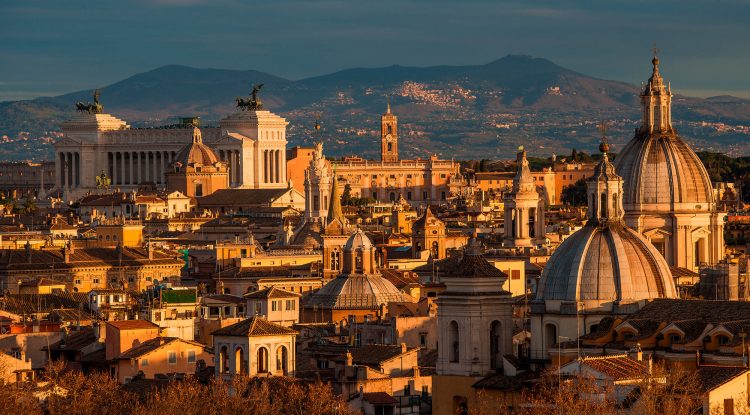
We figure out how to overcome the bureaucracy, is it possible to find a job and how much does it cost to move
Italy is not the easiest country for immigration. There are 20 regions on its territory - with different local laws, prices, dialects and culture. “Cold”, along with the Italian lawyer, Cindy Lacha, figured out what visas are available to Russians, how to get a residence permit and settle in the country.
In order not to miss the main materials of the "cold", subscribe to our Instagram and telegram .

Visas and residence permit
You can get to Italy according to two types of visas: Schengen (C), which allows you to be in the country for up to 90 days, and a national visa (D) for a longer stay. You can go to them in a visa center in Russia: there are departments in different cities that are suitable for you here . The current prices for consular fees can be found here .
Types of a national visa d
- Working and freelancer visas . To apply for these visas, first you need to get a work permit. This can only be done on condition that your activity falls into the quota established this year on foreign workers. The list of quotas is published (Decreto Flussi) once a year on different dates, professions are changing every year, as well as the number of quotas. You can track them on the website of the Ministry of the Interior. Even if you have already found potential work in an Italian company, you still need to track quotas together with your employer and have time to quickly apply, because there are not so many places.
- Student visa . It is issued if there is an invitation from the university, that is, if you have already arrived and now, in order to come to the country of training, you are on a visa.
- Visa for reuniting the family . It can be requested by spouses, direct descendants who have not reached the age of 21 or are dependent, and relatives in the upward line: parents, grandparents.
- Pension visa (Residenza Elettiva) . To get this visa, it is not necessary to be a pensioner. It is important to provide a document confirming the earnings over the past year - it should be more than 31 thousand euros - and observe the condition that you will not work in Italy, but passive income in the same amount will remain.
Suitable for rental property, shares or debt securities, income from financial and commercial activities, pensions, annuity, shares in investment funds. Revenues that do not belong to the applicant can be taken into account only if it is provided by a family member.
-Visa for startup entrepreneurs . The special committee will evaluate the innovation and implementation of the project, in addition, it is necessary to confirm that you already have funds in the amount of at least 50 thousand euros for its development.
- Golden visa . For those who want to invest in the Italian economy. There are four options: to invest 250 thousand euros in a startup, half a million euros in an Italian company, a million euros into charitable projects or two million euros to state bonds.
For working, pension and startup visa, it is required to confirm the place of residence in Italy-an agreement on the purchase or rental of housing. In addition, for the gold, working, freelancer and startup, you need to work permission (Nulla OSTA), which can only be obtained in the immigration department in Italy. Because of this, and in general, due to the large number of bureaucracy, we recommend finding an intermediary in Italy: for example, seek help from an immigration agency.
Mnog
You can make a residence permit only with a category D visa. For this, upon arrival in Italy, it is necessary to submit an application for it within eight days. There is temporary (residence permit) and permanent residence permit (permanent residence). Both options give the same advantages: the ability to travel around the EU, study, receive medical insurance, and so on. The action of a residence permit depends on the type of visa D (student - year, gold - two years) or on an employment contract. To apply for permanent residence, which is issued for five years, you need to live in the country for at least five years.
Usually from receiving documents to issuance passes from a month to three. After submitting the application, a check is issued that your documents are really under consideration. At the time of preparation, this check has the same force as a residence permit.
What documents are needed to submit an application for a residence permit?
- Fill out two forms in Italian, in which you need to answer general questions about yourself, real goals of arrival and what kind of residence permit you claim (for training, work, and so on). They need to be taken by mail in the Sportello Amico department.
- passport and visa D.
- A document on the place of residence (lease agreement).
There is still the opportunity to get a residence permit if you need international protection. Based on the laws of the EU, you can apply for it in two cases:
-You cannot return to your homeland, because there they can be haunted there because of religion, race, nationality, political views or sexual orientation;
-You cannot return to your homeland due to the threat of murder, prison, cruelty, armed conflict.
If this is your situation, you can miss the steps of preparing documents and go directly to the police department (Questura). There they will conduct a detailed interview with the causes, threats and how you got into the country's territory. After that, you will either be given refugee status, or refused international protection and deported if you are illegally in the country.
Bank cards
The most popular banks in Italy: BNL, Intesa Sanpaolo, Unicredit, Fineco, Bancoposta.
But the country's non -residents are almost impossible to open accounts in them: Italian banks do this reluctantly, so it is better to get a card with a residence permit. Also, accounts for non -residents are also unprofitable, because they are opened in the currency of the country of the resident and all transfers are converted: first, money (for example, your salary) will automatically transfer to rubles and only then to euros.

Housing
Italy has several free sites for finding housing: CASA and SoloAffitti . But the lease will be drawn up in Italian, and in order not to get confused in the documents, it is better to contact the realtor. Be prepared that the agent can request a commission for his work to 100% of the cost of monthly rental.
Housing prices, as elsewhere, differ depending on the location, infrastructure and attractions nearby. In Italy, they often rent a room in an apartment or even just a bed. The rental cost varies from 300 to 1,500 euros per apartment in an ordinary, non -prestigious area, where 300 is the cost of a room in a room, 500 euros per odnushka and further increasing. To rent housing, you need to confirm solvency (provide an account from the account, labor contract). When concluding the contract, they always ask for a deposit in the amount of the monthly rent, which is returned upon eviction.
It is cheaper to live in the south of the country than in the north, because the business is mainly concentrated in the north, the solvency of residents is higher, respectively, prices are rising. Also, the cost of utilities varies depending on the region: in the south, heating is included later - and it turns out, the more expensive the communal apartment. If the room has meters and temperature controllers, you can control expenses. But even if no one lived in the apartment for a month, you still have to pay about 60 euros.
The average prices for utilities in Italy for 2021, if you modestly use resources, is 155-200 euros per month. It can be assumed that prices this year will be higher in connection with the war and the economic crisis. Many Italians turn off the heating at night, and during the day they do not heat the apartment above 18 degrees. The signs with the text “Please turn off the water, save resources” are hung everywhere, so the country's residents take a shower very quickly and wash the dishes.
When choosing a place of residence, it is necessary to take into account the possibility of natural disasters. Italy is one of the two countries in Europe, where there are existing volcanoes, but they pose a much less danger than earthquakes. The last six -point earthquake occurred in October 2016 near the city of Norsia - this was the strongest earthquake in Italy over the past 36 years. Then, due to a series of shocks, 298 people died and almost 400 were injured. Earthquakes often occur in the southern regions - in a campaign and south.

Job
In Italy, the employer pays high taxes for employees, and for illegal immigrants there are very large fines, so if you do not have a residence permit and work permits, it will be very difficult to get a job. In principle, there are few vacancies: the unemployment index in the country is 7.8%, priority is most often given to local. The easiest way to get a position after studying at Italian University. Popular sites for searching for work in Italy: Indeed , Subito , Trovolavoro , Linkedin .
The wage depends on the region of residence and on the profession. In the north, there is more highly qualified work and, accordingly, higher than the salary. But in the south it is easier to get a seasonal job. On average, an office employee receives about two thousand euros monthly, work in the supermarket will be estimated at one and a half thousand euros per month. Workers in Italy are supported by trade unions and law, therefore, if you are arranged under the contract, it will not happen: they will not be able to dismiss you unreasonably.

Education
The average cost of training at state -owned at universities is two to four thousand euros per year, 16 thousand euros per year can reach private prices. In some universities, each student - it doesn’t matter whether a foreigner or a citizen of Italy - can apply for a partial or full scholarship covering the cost of training. An important factor for the approval of the scholarship is the level of financial security of the parents or student himself. For example, if the annual income of parents is less than 23 thousand euros, the student may be completely exempted from training fees.
A full scholarship may include the right to free accommodation in a hostel, free two -time meals in the dining room, and large discounts on travel in public transport. If the scholarship does not cover housing, a place in the Dormitoria per month will cost the student about 300-450 euros. Basically, dormitories are rooms for two or three places, often with their shower and toilet, access to Vifau and the kitchen on the floor.

Children
Italy has both public and private schools and preschool institutions. Only residents can get into them. The education system here has its own characteristics. From three to six years old - preschool training. This step is not mandatory, the parent can choose home schooling for the child. The secondary compulsory education is divided into three steps. Primary school - from the first to fifth grade. Further, the secondary school lasts three years. And then - a high school, in which he takes five years: the first two years are mandatory, and then at the request of the student. At the end of each stage, students need to take exams. The exam in high school is literally translated as a “maturity exam”, and its successful surrender gives the right to enter universities.
In some schools, you can find courses in English, many of these educational institutions help in the integration of foreign children: they conduct intensive classes in the Italian language and cultural events. In the classes of private schools there will be fewer students, here after lessons the teachers will conduct extracurricular activities. The cost of monthly education in a private school is about 175-350 euros.
In large cities like Rome, Milan, Turin there are foreign schools and preschool institutions, where a full course of training takes place in a foreign language. Children can enter such institutions at any age from three to 19 years. But the cost of such institutions is much higher - from 4 to 12 thousand euros.


Animals
Before entering the country, you need to collect all the necessary documents on the pet, put a chip and a rabies vaccine. It is better to start preparing the animal a few months before the planned departure. You can take no more than five animals with you. In Italy, there are no restrictions on the import of certain breeds of dogs, but, for example, in Venice it is impossible to enter with Rottweiler and Doberman, because they are considered dangerous. In the general Italian list of dangerous dog breeds there are 17 of them - according to the legislation of Italy, the owner must walk such a pet by no more than a month and a half leash, and carry in public transport to the muzzle. You can check the current restrictions here .

Prices
Supermarkets in Italy differ between the price level: for example, the Carrefour network is somewhat more expensive than Conad or Lidl, but buying products in the markets is more profitable.
Product prices in a regular supermarket:
bread - 1.5–2.5 euros;
Apples 1 kg - 2 euros;
pack of pasta - 1-3 euros;
liter of milk - 1–1.50 euros;
Coffee packaging in grains - 2–4 euros. Warm of 6 eggs - 1.5–2 euros;
Chicken 1 kg - 8–12 euros.
The cost of tickets for cultural events varies from the city to the city. But usually one day a month - on the first Sunday - anyone can visit all the museums of the city for free.

Transport
In Italy, even in the smallest town, you can get by train. There are two types of regional trains: italo, high -speed trains at prices above average, and Trenitalia, a cheap, but longer option. For example, the cost of a ticket on a high -speed train along the Florence -Rome route starts at 33 euros, and 22 euros for a regular one.
There are many low -cost airlines (Ryanair, Easyjet, Wizz Air) in European countries and Italy at low prices. The flights are carried out from large hubs and from the most popular places in terms of tourism, such as Rome, Milan, Palermo, Florence.
Prices for public transport in each region are different. For example, in Rome, travel in ground transport with possible transfers for 100 minutes will cost 1.5 euros, and in Bari for one ticket you will pay 1.2 euros for 90 minutes.

Medicine
Italy has a high level of healthcare. Emergency assistance is provided to any person - an Italian or visiting - free or at a very low price, depending on the manipulations.
To simplify the receipt of medical care and to reduce the cost of treatment, it is better to get medical insurance. You can get it in the nearest territorial health department of ASL (AZIENDA SANITARIA LOCALE), having with you identification documents, as well as allowing long -term stay in the country, and TIN. The insurance includes consolidating a family doctor who, at your request (after checking well -being), will be able to issue a prescription for medicines, which in Italy are mostly sold only as a doctor’s prescription. Also, with this card, you can claim free medicines or a good discount on them.
There are two types of medical insurance that depend on the purpose of your stay: mandatory registration in the National Health Service and voluntary. Mandatory insurance must be issued to working residents, self -employed, unemployed, as well as requesting international protection. Students, pensioners and a visa for family reunification can be issued voluntary. An annual fee for medical insurance usually starts from 400 euros. Students pay about 150 euros per year.

How much does it cost to move
There are no direct flights from Russia to Italy, so you will have to get through Turkey or Armenia. Tickets with several transfers will cost 20-50 thousand rubles. You also need to take into account the costs of documents for obtaining a visa and a residence permit. A modest life in the country of a family of two people will cost about 1700–2300 euros per month. But much depends on the region. An approximate assessment of the cost of life in Italy and other countries can be viewed on the Numbeo website .