
Translated material
Brown plague
A report from Volgograd, where 200 thousand inhabitants were drowned in feces for a week due to a breakthrough of sewage. Which, however, did not interfere with the march against Ukraine and the godfather
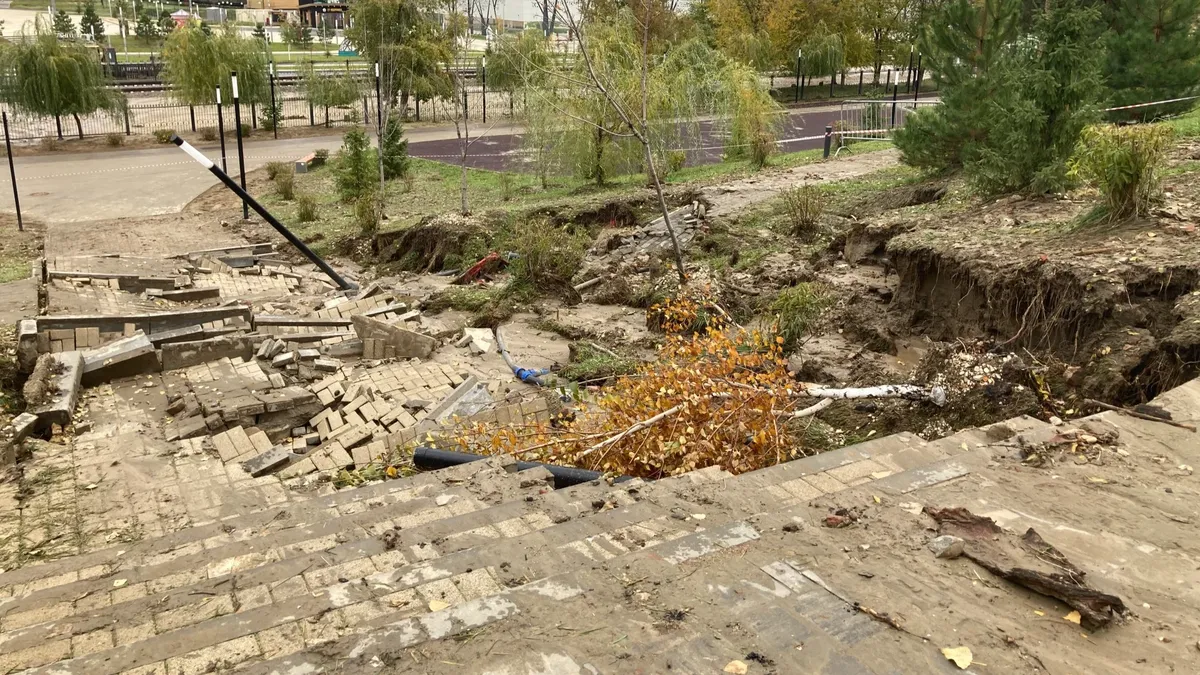
On the night of October 27, in Volgograd, a sewer broke out in the floodplain of the Tsaritsa River. The streets and yards near the scene of the accident were flooded with feces. Three districts of the millionaire city, in total-200 thousand people, chopped off in monstrous stench for a week and were left without water and heating. And November on the Volga is usually cold. In another area, gas and electricity were cut down. It is not known how much time fecal waters, drains from industrial enterprises and from several hospitals flowed into the Volga, and from it the Volgograd region and the Astrakhan region receives drinking water. The consequences of this disaster have yet to evaluate ecologists and doctors.
Happy holiday to you
When landing on a plane on Volgograd, two girls lively discussed how the weekend would spend the weekend in this city. Looking at their shoes, I began to read that federal television channels reported about Volgograd in recent days. On one, the city arose only in the news of the local branch, on the other was mentioned in early October in connection with the "historical reconstruction of the battles for Stalingrad." And there, at that time, the largest communal disaster in recent years, risking the environmental and medical disaster.
But tourists who flew to Volgograd to enjoy the sights were right. The Volgograd residents were still sitting without water, light, gas and warmth, and the authorities were already led to a “rally in support of a special operation”. They decided to combine it with the procession on the day of popular unity. The place of celebration had to be changed, because before they wanted to bring the procession to the floodplain of the Queen River, to the new square - the favorite brainchild of the regional authorities. But there it was still hung. We decided to celebrate the Volga embankment near the fountain, disconnected for the winter. It is unlikely that those who chose a place understood how symbolic the “dried” fountain looked symbolic these days in Volgograd.
The holiday began by the service in the same new-a year as built-the old Alexander Nevsky Cathedral on Lenin Street. From half past eight in the morning his yard was guarded by groups of employees of the Ministry of Emergencies and Cossacks.
“You look at the stripes,” the Cossack taught me in black and red Circassian, with a dagger, orders and medals. - We are the Kuban. And they are Don.
At the fence near the scope of the metal detector, young people in camouflage with the dressings of Patrol and with batons inspected the bags of the Orthodox.
“We were told that the terrorists would be,” the young patrol officer explained to me. - And we are with the Russian Guard. War? We support, yes. Our part in Melitopol is worth it. Nah, they won’t send us, they are not sent to conscripts. We are only afraid that we will come home, and then they will send it. Now they tell us: you will sign a contract - everything will be the best you have. Yeah, how ...
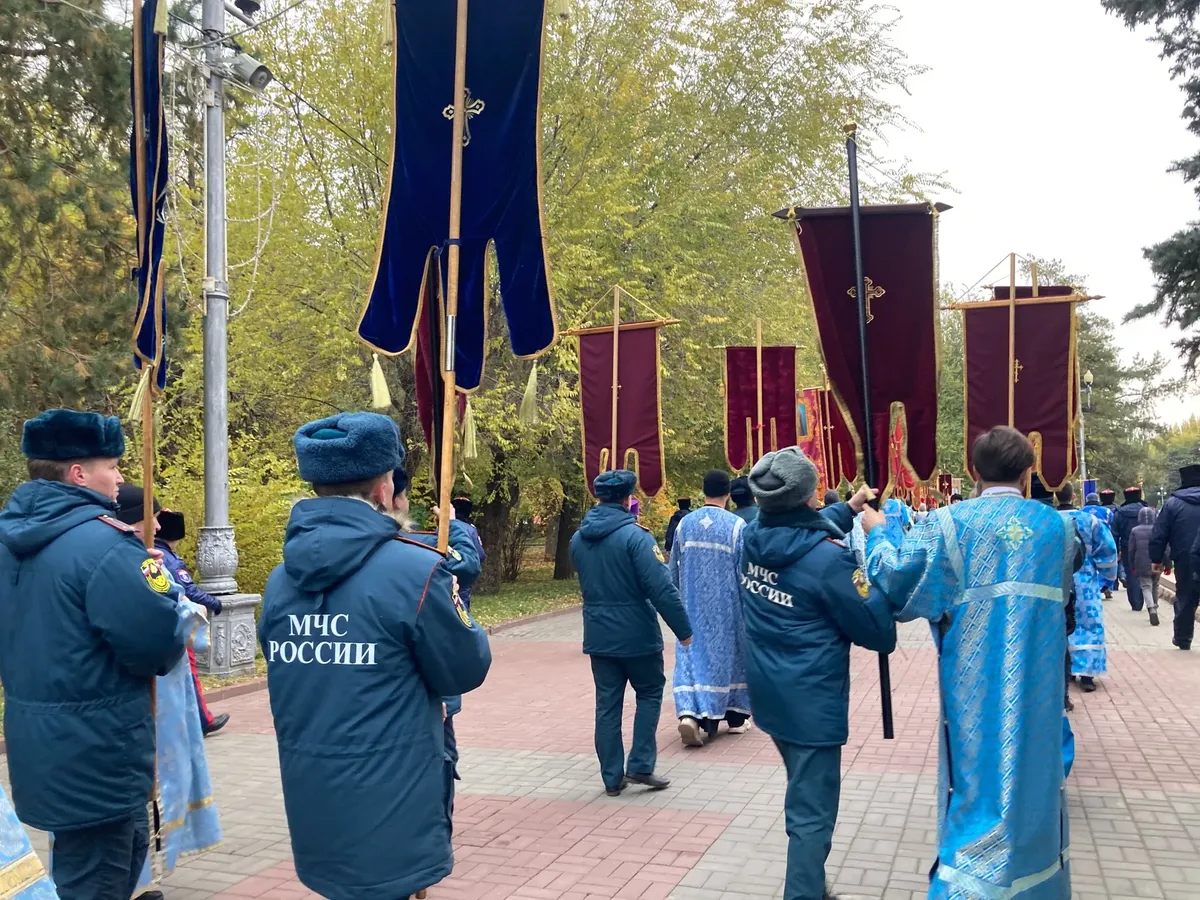
When the service ended, the priests with banners moved to the embankment with a dry fountain. The EMERCOM employees carried the banners, and the Cossacks guarded the column from the flanks. On the way to the parishioners, a priest with a silver bowl approached, another priest poured into a bowl of holy water from a bottle with a label “Volga Gift”. This water generously sprinkled people in the column.
“We have all the water from the Volga,” the priest explained. And then he reassured: - This is non -hazardous, the discharges went downstream.
“I thought you would say that the water is not dangerous because the saint,” I said.
- Of course, holy! - the priest realized.
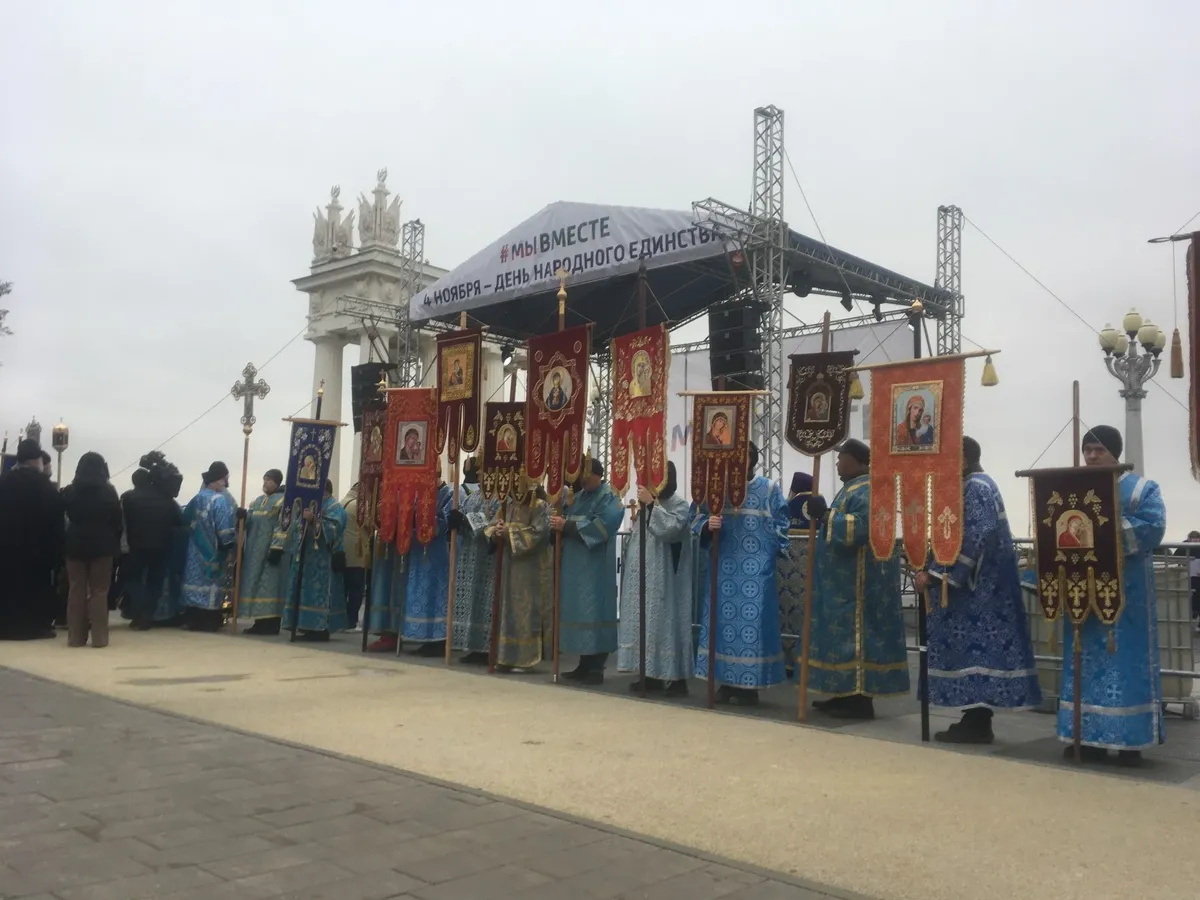
A scene was built on the embankment, priests stood in front of it, fencing off the spectators of the speaker. And he talked about the Great Troubles, which ended just on November 4 (historians call another date, but what's the difference).
“Today, Russia is opposed by the aggression of the collective West, our spiritual values are threatened,” the priest concluded his speech. - Happy holiday to you, dear brothers and sisters!
A bell ringing, sounding a background to congratulations, a verse. A pause hung, which was very asked for a disco announcement. And indeed, pops thundered in the speakers, a pair of entertainer in warm clothes ran out to the scene. The woman announced a pioneering voice that "our task is to protect the world." For some reason, no one attracted her for discrediting our army.
“I arrived yesterday, but there is no water at home,” the girl in glasses complained in the crowd of spectators, standing with her back to the stage and not listening to what they were saying there.
“We have not had almost a week for almost a week,” her friend shrugged. - I have this “holiday” now ... forced to go. At the university.
- Do you have water at home? I asked another girl.
“Oh, let's not arrange this demagogy,” she grimaced and turned away.
A dense peasant ran back and forth along a group of gloomy young people with the flags of “United Russia”.
- Guys, for the report, for the photo, get up beautifully! He conducted his hands. - Beautiful!
Young people shifted from foot to foot. It didn’t work beautifully.
In a dry fountain, a woman in a white jacket offered the flags of Russia, but no one took them for 300, 500 and 800 rubles. There was a column in St. George ribbons and with icons on his chest.
“We liberate the Fatherland within the boundaries of 1945,” grandfather, who called Eugene, explained to me. - The territories were illegally disconnected. The war in Ukraine is because Ukraine is an illegal state, it is part of Russia.
“In general, everything is part of Russia,” the woman corrected him nearby, Natalya.

- And if they do not want to return, then return by force, like Ukraine? I specified.
“Yes, yes,” Natalia was delighted. - Because in the Baltic states, NATO troops are standing. This is a controversial territory, so the NATOs must remove their troops.
- And the sewer should not be fixed first? I asked.
“We do not solve economic issues, but political,” Eugene was indignant. - We liberate the country. Here we become a rich country - then you can fix the sewer.
“First you need to defeat Kyiv and free our territories,” said Natalia. - All other questions later.
Water, heating, light and gas at this time were not returned to everyone, the sewer repair took a week.
"Bocharov stream"
In the evening of this holiday, the Volgograd activist Sergei Ostrovsky, who has been fighting for many years, as he himself says, with a communal lawlessness in the city and for maintaining a cultural heritage, led me to the place of disaster. We stood in the middle of a marvelous park with beautiful lighting.
“There is a place where the stock fountain from two areas - Voroshilovsky and Sovetsky,” scored Sergey up to the stairs in the Pakhmutova Square.
The concrete staircase is turned inside out and broken by a stream of feces, bursting out from under the ground. The grass here is still in some places covered with puddles of brown slurry, whipping from the breaks. And the smell is still worth it. Founding out of the bursting pipe, fecal waters rushed down first along the wreckage of the stairs, then along the road that became a new channel for them, and straight to the Volga. Later, this waterfall in the city of Ostryaki will be called “Bocharov stream” - by the name of the governor of the region.
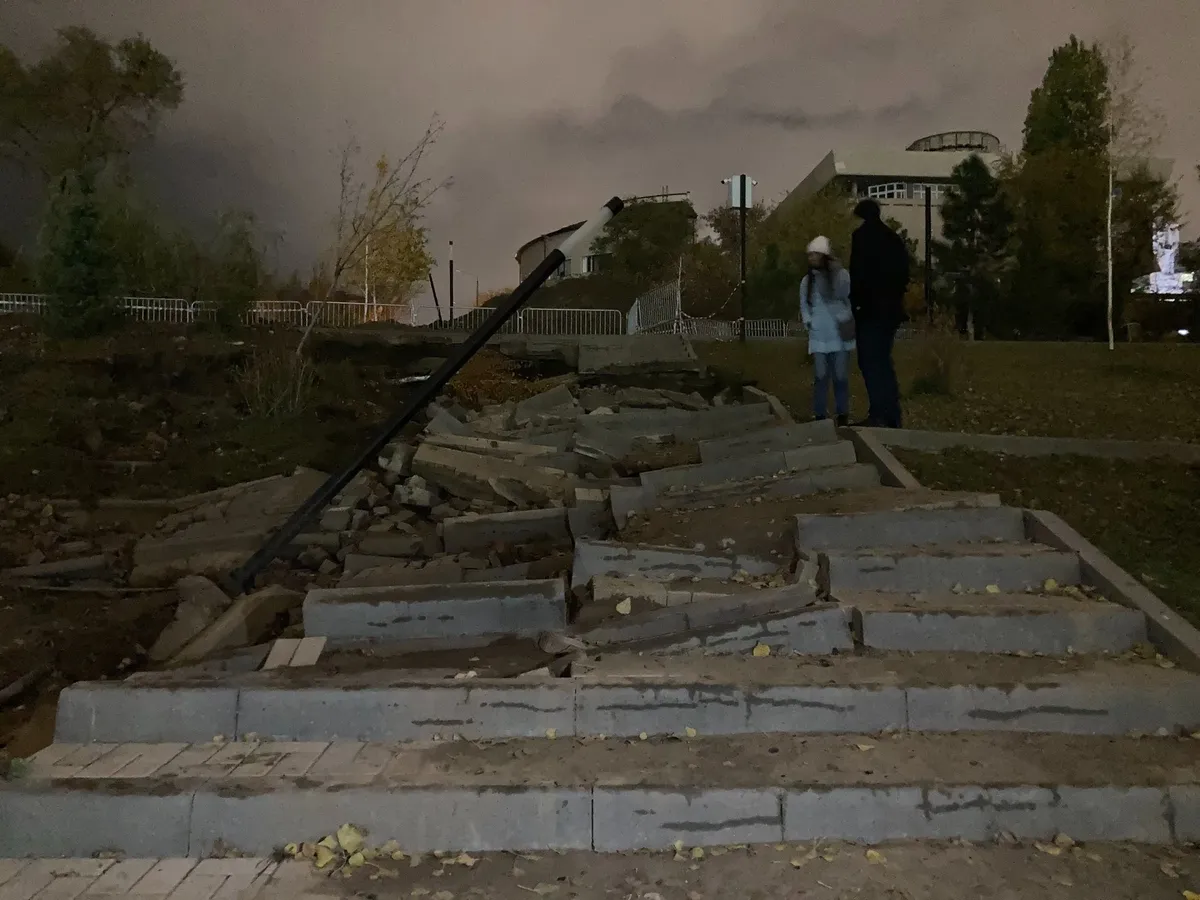
Now the ninth hour in the evening. It is already dark, but only at this time you can come close to the breakthrough site. From the striped ribbons with which it was fenced in the afternoon, scraps remained. The next morning I will see that the ribbons were pulled again. In the meantime, two lovers who accidentally passed along the path to this place and enthusiastic about each other, they risk breaking their legs or falling into smelly puddles. But I photograph, Sergey shines with a flashlight, so the couple notices the edge of the failure.
“This is the floodplain of the queen river,” Sergey wags the surroundings with his hand. - There is a museum “Russia is my story”.
Where we are now standing, there used to be a ravine, a river queen flowed along its bottom. Now the river is still flowing, but a plot of a couple of kilometers at the very mouth, where the queen flows into the Volga, was driven into a concrete tunnel in the 1970s, and now it is a collector of urban rainfall. Nearby are the pipes of a household collector taking drains from two areas of the city. Normally, feces fall through these pipes for treatment facilities, and then to the Volga.
For a long time there was just an overgrown ravine with landfill elements. Then improvement began with a frantic pace. In 2017, on the left slope and in the floodplain of the queen, the parks were defeated and built by the Volgograd part of the Museum “Russia is my story”. They did everything in record time. Three years ago, in 2019, they landed the right slope, now there the square named after composer Alexandra Pakhmutova, a native of Volgograd. The tunnel with the queen inside remained underground. The household manifold passes next to him, both of its threads burst on the night of October 27.
Two steel pipes of 1200 millimeters with diameter, as it turned out, simply rotted. The public closed the alarm in the evening of the 27th.
“At about nine in the evening, the parents of my friend walked around the park and smelled, then heard the murmur of water, and then they saw an incomprehensible stream that rushed through the park,” says Sergey. - They went to the slope and saw that he was blurring, the staircase was destroyed, in its place a failure. They started to call emergency services.
With emergency services, says Sergey, there is a problem in Volgograd: they either do not get through at all, or they answer there, but they ask to wait an indefinite time. And when the slope collapsed, according to Sergey, the same thing happened.
The entire system of water pipelines and sewers in Volgograd is managed on the basis of an agreement with the local authorities, a private company “Water supply concession”. She collects a fee from citizens and enterprises, she also is responsible for the state of entrusted state property. When Sergey’s acquaintances still phoned the dispatch “concessions”, they offered to wait there.
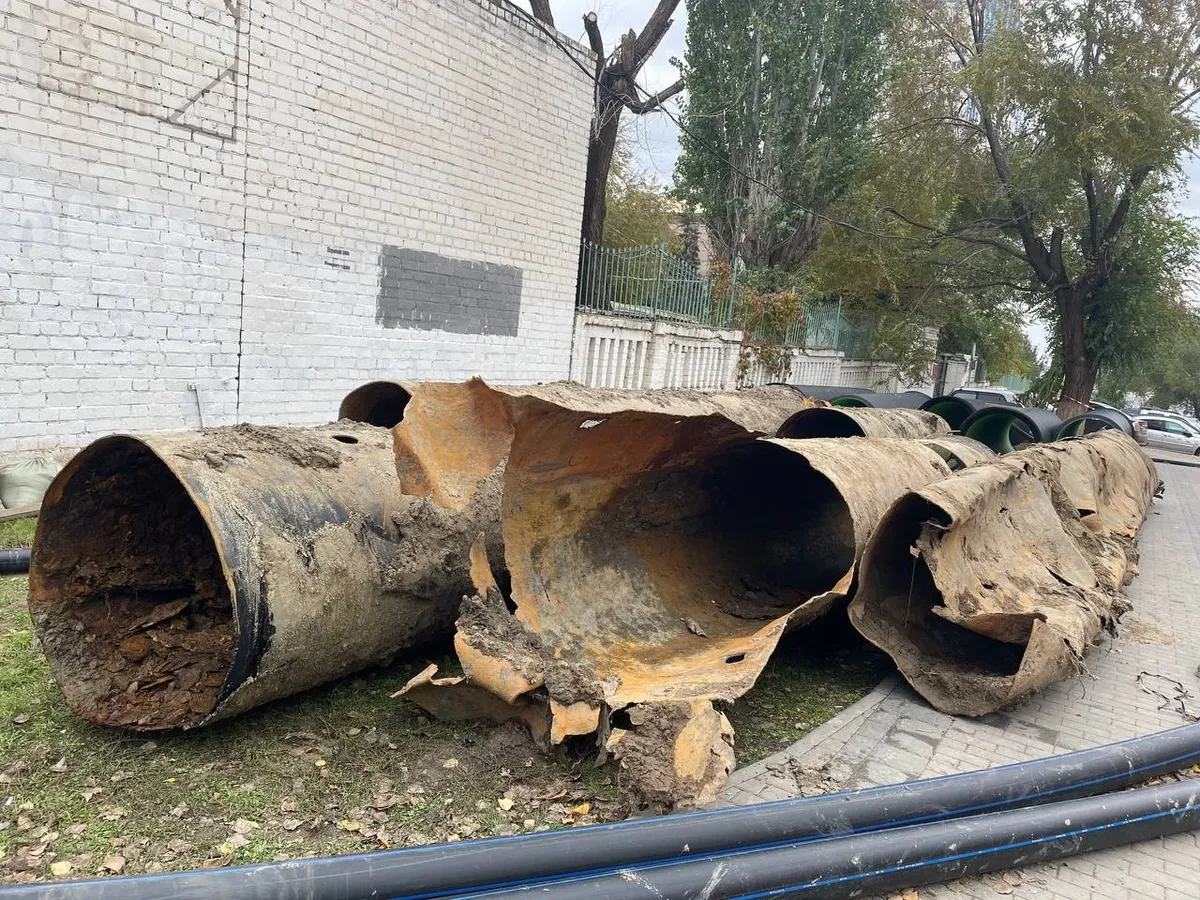
“They waited for the failure for two hours,” Sergey continues. - Then their daughter called me. I called a friend of the housing and communal services official, he asked to send the video. I sent. After eleven, they began to react in the city administration. Two deputy mayors advanced to this place. They pulled some ribbon and went to bed.
A stream of feces, meanwhile, flooded the square and then the street walking along the embankment. Cars swimming along the belly. Judging by the statement of the Investigative Committee, which will appear in three days, there was a breakthrough the day before it was noticed, on the night of October 26-27. Then the local authorities allowed the feces to drain into the Volga all night. Only on the morning of October 28, repair services arrived at the failure.
At the scene of the accident, the headquarters was defeated to eliminate it. He was headed by Governor Andrei Bocharov. He ordered the collector to earn no later than October 31. The Day of National Unity was approaching. Apparently, then it seemed to the governor that the celebration of the right volume could still be saved. Then he gave a press conference and announced: the state of sewage system was a complete surprise for everyone. It never occurred to anyone that pipes laid just 50 years ago may need repairs. Such a short service life greatly outraged the governor of Bocharov.
Concession and water supply
The company "Water supply concessions" accepted the whole household in the management in 2015. In theory, even then she was supposed to examine the wealth that she got.
“There was no examination,” says Yuri Chevtaev, a former head of the shopping center for sewage and tunnels of the Volgograd Vodokanal. - The first thing they did was reduced the crawls that were supposed to control the condition of the pipelines in the daily mode.
The data on whether there was actually some kind of survey of networks during their commissioning, something like a contract between the “water supply concessions” and the executor of work, I could not find in the database of public procurement.
Nevertheless, even then, experts of the “concessions” publicly evaluated the total wear of the sewage system in Volgograd at 70%. Per day, I had to eliminate 10-15 small accidents.
The company announced that “ starting upgrading ” all networks, in the next six months will lay 25 kilometers of new pipes instead of worn out, and in general for three years will replace 180 kilometers of pipelines, investing seven billion rubles in it. True, its first major achievement was not the repair of networks, but the construction of an artificial ice rink for 46 million rubles. The rink was opened in winter, he worked for three days and melted. They accused of this “ abnormally warm ” weather.
The “concession” somehow did not approach the pipe in the Voroshilovsky and Soviet regions. But they built a new pipeline in the neighboring central. He burst after three months.
In 2017, in the floodplain of the queen, we repeat, opened the park and the Museum “Russia is my story”. In 2019, it was decided to improve the right slope of the ravine, having built another square there. This was another moment when the sewer was supposed to be examined. If only because the construction of concrete stairs, laying paths, installing lamps, benches and other beauty can increase the load on what is under them. The square cost 142 million rubles. In the list of work done, an inspection of underground utilities is not listed. The builders only announced: everything is done so well that " you will not have to open the paving stones because of the leaked highways." Three years passed - and the water “opened” her herself.
The deputy of the Volgograd City Council Ilya Kravchenko believes that fecal drains flowed into the Volga not two days before they noticed, but much longer. For the first time, he tried to inform the authorities and utilities in 2019. If then they paid attention to this, the square, perhaps, would have to solemnly open a little later, but he would have lived longer without losses.
In 2019, Ilya says, the diggers went down to the River of the Tsaritsa River, to the area that became the collector of the rainfall, and found that fecal drains clearly get there. They could take from neighboring household sewage pipes. This was a signal to the fact that not everything is in order with the pipes. Diggers told the deputy. He went down to the collector himself, checked. From that moment, Kravchenko says, his correspondence with the authorities began - from the environmental prosecutor's office to the governor’s administration. He has accumulated a whole archive of their answers. Of these, the deputy found out that the rain -off collector does not have anyone on the balance sheet, no one is responsible for him at all, there is no one to check his information.
“The prosecutor’s office answered me that they could not go down there,” he grins. - Do they have no legs? Why could I go through this collector with a lantern, but they didn’t?
The new round of correspondence with these structures in Ilya Kravchenko began last summer. There were still several months before the breakthrough. The deputy to whom government agencies are obliged to respond to the last letter within a week did not have time to get an answer. The state of the sewer was clarified by itself.
Everything is rotten, not only the sewage
The bursting collector serves houses where they live, repeat, almost 200 thousand people. First, repair work was hoped to carry out without disconnecting the water. It is not clear, because if 200 thousand people, as well as enterprises, schools, kindergartens, hospitals use water, then she needs to drain somewhere. And the water was nevertheless turned off. But to start the repair immediately to the surprise of the communal workers did not work.
“People need to live somehow,” explains Sergey Ostrovsky. -In the taps, the water was turned off, but it had to be driven by cars. People used water - it flowed in the same sewer.
The situation was saved by the fact that with the transportation of water in Volgograd, too, it turned out to be not all glory to God. Ivan, living in the Soviet district, told me that his wife had to move to his parents for a while, because at first the waters were not brought at all, and then frantic queues lined up to her cars.
“I work with shifts, and my wife is pregnant, she cannot stand in line on the street and then drag the canister,” Ivan says.
The spouses Anna and Nikolai, who live on Tulak Street, did the same. By the time of our meeting of water and heating, they did not yet have. They went to wash to friends on the outskirts of Volgograd, and they were recruited in the spring. Thank God, Anna added that there is a car. Lyuba, who makes money that grows flowers for sale, rented a hotel room and from there drove home to water her plants.
But most Volgograd residents did not have the opportunity to move out of the apartment. At first, drinking water was daring in stores. According to Lyuba, five -liter eggplants have a three times, but they still could not be found next to the house. In theory, people knew that some orange tanks seemed to be driving drinking water throughout the city. But I was not able to find a person who would use such a tank at least once.
“The distribution points of drinking water remained unknown,” says deputy Kravchenko. -Our local publication was obtained by some list, but there were addresses for only one day, and as contacts-telephones of drivers. This did not carry any useful information, because the drivers changed. People called them to find out where the car is, and this driver is already in another transport.
Volgograd residents were promised to drive technical water with fire engines. They were urgently gathered in all neighboring areas and villages, how many were found. But there were no schedules of the machine. More precisely, there were two of them - from the "concessions of water supply" and from the city administration. Both did not correspond to the real graphics.
— К счастью, в эти дни в Волгограде шел дождь, — рассказывает Сергей Островский. — И кто успевал — подставлял ведро под водосточную трубу. Кто-то собирал капли с шиферных крыш гаражей. Кто-то набирал из луж хотя бы для унитаза.
Всё это волгоградцы снимали на видео и выкладывали в соцсетях. К большому ужасу местных властей. Сработали еще навыки, приобретенные людьми во время пандемии: они сплотились, быстро организовали группы, стали списываться в чатах и помогать друг другу. Кто-то всё-таки выцарапал у городских властей реальное расписание, оно появилось в дворовых чатах.
— И все равно водовозки работали не по графику, — замечает Сергей Островский. — Где-то машины попадали в расписание, где-то — нет. Но люди очень сплотились в беде, и это был очень положительный момент.
Дальше выяснилось, что водой, которую развозят от имени властей, не всегда можно пользоваться даже в туалете. В некоторых случаях лучше было из лужи набрать.
— Например — такую привозили, — показывает Сергей у себя в телефоне фото с грязно-коричневой жижей, словно набранной в той самой рванувшей канализации. — На вопрос, почему такая вода, людям отвечали: бочки такие. Такие бочки у пожарных машин, ничего не поделаешь.
Мало-мальски наладили поступление технической воды — усложнились ремонтные работы. На третий день в районах, пострадавших от аварии, объявили режим чрезвычайной ситуации. Но как-то героическими усилиями ремонтники справились. Губернатор пообещал, что вода в квартиры пойдет «тонкой струйкой». И тут выяснилось, что беда еще и с отоплением.
— Прогнило же всё, не только канализация, — машет рукой Сергей Островский. — Теплоснабжение города находится в аварийном состоянии. Специалисты квалифицируют его как аварийно-неуправляемые.
Задвижки, которые должны были удерживать теплоноситель (подготовленную воду) внутри системы отопления, пришли в негодность и не справлялись.
— Всё время и до аварии вода из батарей протекала в систему канализации, — продолжает Сергей. — Потому что запорная арматура в тепловых камерах тоже была настолько старая и гнилая, что вода постоянно текла. То-то мы видели зимой, как из-под земли постоянно парило. Раньше я просто видел этот пар, а теперь понимаю, что это было.
То есть для ремонта нужно было отключить и батареи. Температура воздуха в Волгограде как раз опустилась до нуля ночью. К двум районам, оставшимся без воды и с холодными батареями, подключился третий. Точнее, отключился.
— У нас в Краснооктябрьском районе что-то случилось с электричеством, короче, оно вырубилось, — рассказывает житель Волгограда Дмитрий. — Ну а из-за этого встала котельная, поэтому мы тоже сидели без тепла. То ли по этой же причине, из-за отключения электричества, то ли из-за того, что народ начал обогреваться духовками, нам вырубили еще и газ.
Героическими усилиями сотрудников коммунальных служб на шестой день после аварии, ко 2 ноября, лопнувшая труба была починена. Одна из двух, но это уже было достижением. На место починки снова прибыл губернатор Бочаров, чтобы торжественно объявить о пуске системы.
Он как раз говорил, что к празднику 4 ноября починено будет вообще всё, когда в трех метрах от него забил новый фонтан. Трубу прорвало в новом месте.
— Я в этот момент даже посочувствовал губернатору, — говорит Сергей Островский. — Но сами представьте: эти две трубы диаметром 1200 каждая — не основная и резервная, это, по сути, один коллектор, просто состоящий из двух ниток. Просто большего диаметра труб у нас не существует. А канализация — это как Ниагарский водопад, который засунули в трубу. И тут получилось, что в одну трубу пошел напор, который рассчитан был на две. И лопнуло, судя по видео, гнилое продолжение этой же трубы. По одной из версий, она не выдержала давления. Но есть другая версия — о том, что трубу задел ковшом экскаватор. Но как-то они и это починили, хотя как — не понимаю.
Постепенно в квартиры начали давать воду, как и обещал губернатор, «тонкими струйками». Но пока только техническую. О том, что она будет техническая, упомянули как-то вскользь. Пятеро суток Роспотребнадзор просто помалкивал, а потом разослал по районам письмо: он « предлагает … организовать информирование жителей» о том, что водопроводную воду, когда она поступит в квартиры, хорошо бы кипятить. Эту модальность управляющие компании аккуратно перенесли в объявления, расклеенные на подъездах: Роспотребнадзор, писали они, « предлагает использовать подаваемую воду после кипячения». Не настаивает, даже не рекомендует, а именно предлагает.
— Причем касалось письмо Роспотребнадзора только двух районов — Ворошиловского и Советского, которых авария коснулась непосредственно, — подчеркивает Сергей. — А водозабор из Волги, куда лились фекалии, идет еще в Кировском районе города, в Краснооктябрьском и в нескольких районах области, расположенных ниже по течению. Все они получают эту воду. А в Волгу все эти дни попадали не только фекалии, но и стоки из нескольких больниц, автомоек, химчисток и массы других предприятий.
Бомба под «Россией»
Тем временем своей жизнью продолжает жить коллектор ливневой канализации — река Царица, закованная в бетонный коридор диаметром 2,5 метра. Именно благодаря ему, повторю, еще в 2019 году депутат Илья Кравченко заподозрил неладное по части фекалий.
— Никто ведь так и не выяснил, почему в ливневку стекали фекалии, — замечает Илья. — Мне кажется, нужно посмотреть, стекают ли они сейчас. Если уже нет, то получатся, что все эти три года давали о себе знать трубы, которые теперь прорвало: их содержимое и просачивалось в ливневку. А если там течет по-прежнему, это означает, что где-то есть еще дыра в том же трубопроводе.
Если по карте смотреть на участок бытового коллектора, из которого что-то может просачиваться в ливневку, то над ним будет уже не сквер с лестницей и дорожками, а музей «Россия — моя история».
— Получится, что фекальная бомба заложена под «Россией», — добавляет Илья.
Чтобы выяснить, как поживает теперь ливневка, мы с ним спускаемся в коллектор. В тот самый, который прокуратура называла в ответах депутату недоступным. Он действительно не то чтобы доступен легко. Приятной прогулкой спуск в него не назовешь.
У Ильи за спиной огромный рюкзак. Он придирчиво смотрит на мое оснащение. Куртку находит пригодной. Ботинки вызывают у него смех. Он достает из рюкзака болотные сапоги высотой примерно с мой рост. Так мы заходим в коллектор.
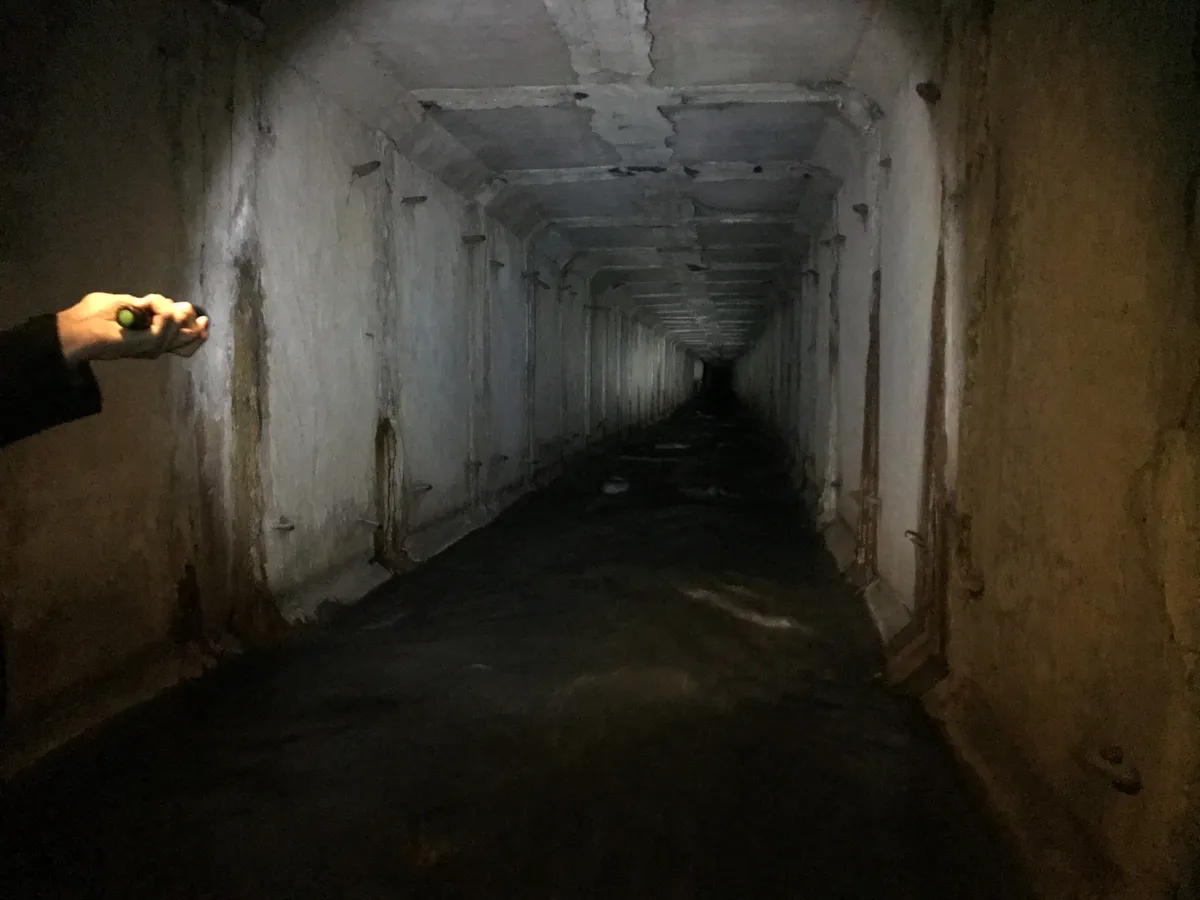
Река, скованная бетоном, довольно мелкая, самые глубокие места — чуть выше моего колена. Теченье очень сильное, но это я пойму на обратном пути, когда мы будем идти против него. Из-за этого сапоги уже не спасают, вы всё равно выходите по уши в содержимом коллектора. Дно забито мусором, очень легко споткнуться и грохнуться в воду.
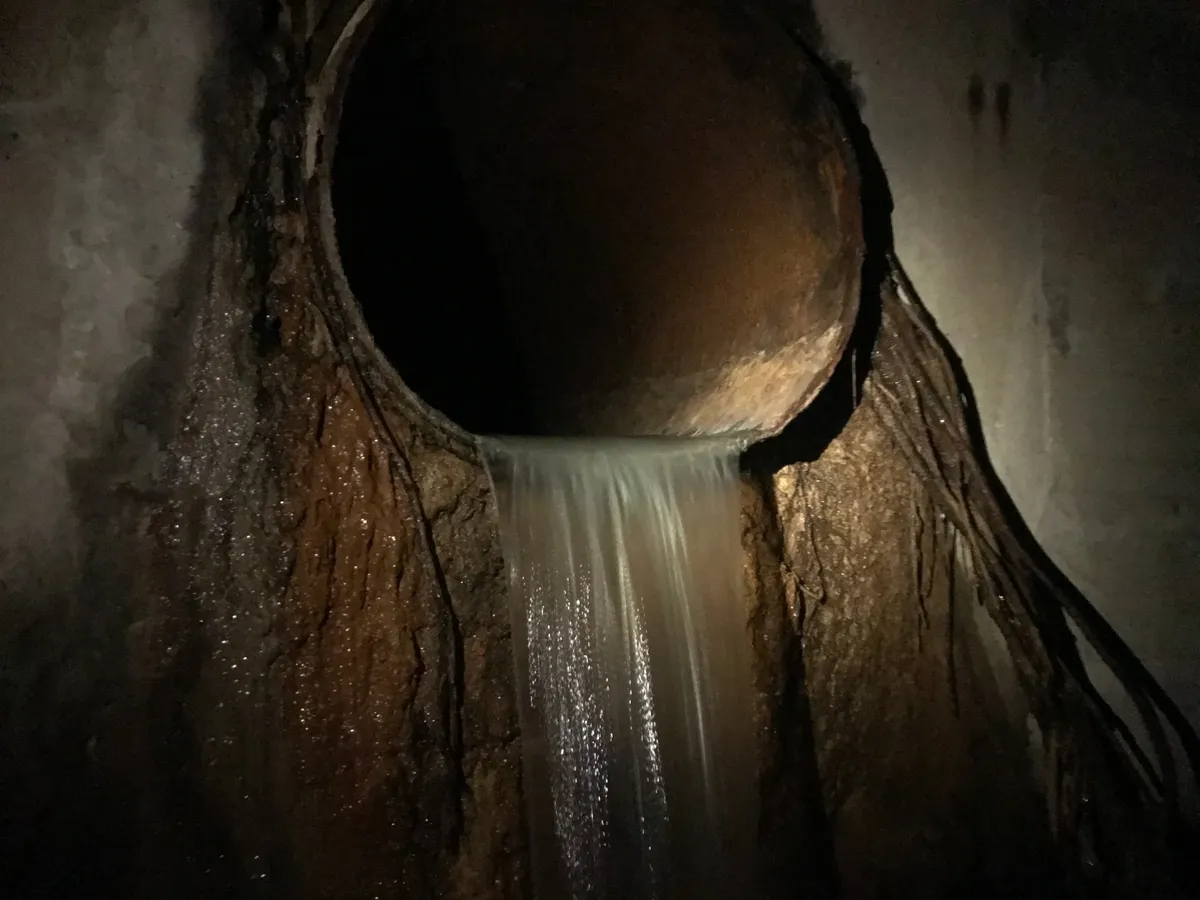
В бетонные стены коллектора врезаны металлические трубы, по ним сюда и стекает вода с городских улиц. Она почти прозрачная, если посветить фонариком, то можно рассмотреть дно. Дальше поток уходит в Волгу. Метров через пятьсот меняется запах: вот оно. Это и есть признак того, что фекальные воды сюда попадают.
— Нет, сейчас уже почти нормально, — качает головой Илья. — Раньше запах стоял такой, что люди тут почти сознание теряли.
Это мы дошли до источника запаха: по одной из труб в коллектор вливается уже не дождевая вода с улиц, а коричневая и вонючая. Дальше идти скользко. Правда, замечает Илья, выглядит это уже лучше, прозрачнее, чем в прошлую его ревизию — до аварии. Теоретически это может означать, что отремонтирована именно та труба, которая всё это время сливала дерьмо в Волгу, и со временем, если больше ничего не рванет, остаточные цвет и запах исчезнут. Но я, даже после такой прогулки, не эксперт по фекалиям. И депутат Кравченко тоже. Так что с фекальной бомбой под «Россией» еще не всё понятно.
Пока писался этот текст, на юге Волгограда случился еще один канализационный прорыв.