
Translated material
"Says Nemoskva." Russian regions through the eyes of independent media in the conditions of military censorship

After the start of the war, the Russian authorities actually introduced military censorship in the country. Almost all independent publications in Russia were blocked, many journalists who worked in them were forced to leave the country. However, even in such conditions, some editions continue its work, honestly describing what is happening in the Russian regions. And moreover, new unquestioned media appear that are not afraid to tell the truth.
Siberia. Realities talked with the creators of several media, starting work in fundamentally different conditions. Our new project " Such a different Russia" is a platform for such independent regional editions, opened on the sites of Siberia. Realia and the North Real; We will publish their most interesting materials on life in different parts of the country.
"We need to start a conversation about the future now"
"Says Nemoskva" is a project that began to work just a few days ago, on October 31.
The other day, the first text was released from the edition from the cycle "The Deadlock of Russia". He is about the village on the border of the Ryazan region. With a dozen empty huts with failed roofs, an unemployed store with a mirror on the facade, a broken taxophone and a polished tricolor on a log of shed - this is the Ryazan village of the dead end of the Yermishinsky district, in which the last 13 inhabitants live. This is the extreme settlement on the border with the Nizhny Novgorod region. For more than half a century, people here lived in two areas: in one they were listed, they went to the other along a narrow gauge training and other necessities. In the 1990s, everything went awry, there was no work, and the inhabitants of the dead end went where. The remaining are used to the Spartan conditions, harvest wood for the winter and are not going to leave anywhere.“Our project is an attempt to talk about local problems, about what is happening in the regions of Russia,” says the editor -in -chief “Says Nemoskva, Viktor Mushnik . - And we understand that many people in Russia are now infected with propaganda. It is perhaps useless to talk to them. They live absolutely in their own world, and you can change something in their heads only if they are removed from this "sect" and carry out the detoxification of their consciousness in the literal sense. But at the same time, in Russia there are many doubts, hesitating, who are trying to find objective information, are looking for it. And I have the feeling that the conventional "we" - people who are critical of the current regime in Russia - have not found before and not our communication language with these people. It seems to me that talking about local, local problems - environmental, economic, about local identity - this is an opportunity to build communication with these oscillating people living in different Russian regions.
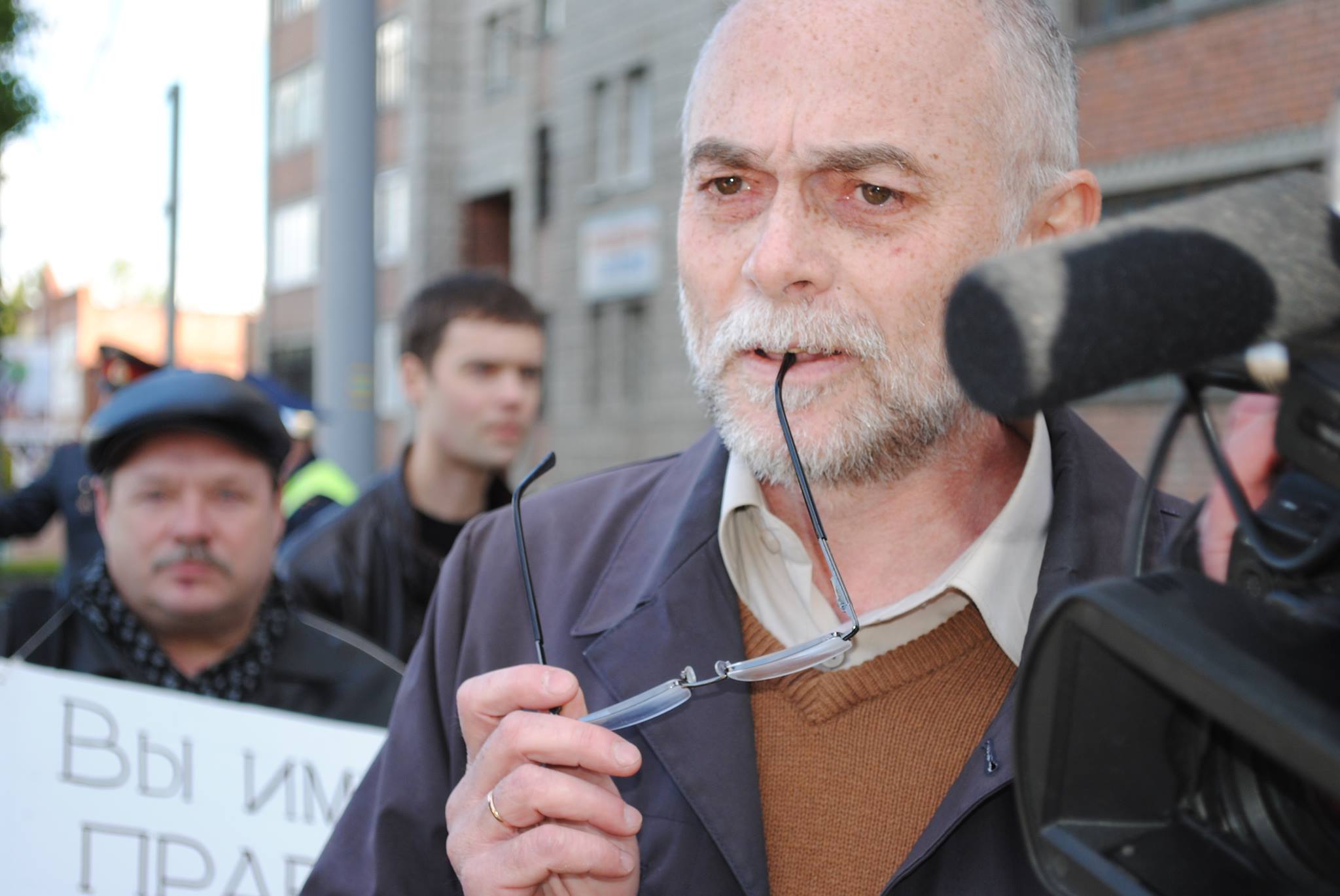
- For many years you headed the legendary Tomsk TV2 television company , and after the authorities achieved its closure, were the editor -in -chief of the TV2 news agency. You then managed to find a common language with such people?
- In Tomsk, we had the ability to talk with very different people, with a variety of views. And now my colleagues and I are trying to scale this understanding of the province in order to try through "Says Nemoskva" to establish a conversation with these people.
First of all, this, of course, is a conversation about the present. But no less important is an appeal to the experience of the past, to attempts to build the relationship of the region and the state differently than we have historically been in charge. In this sense, the experience of the Siberian regionalism and the very beloved Grigory Nikolaevich Potanin ( one of the ideologists and founders of the Siberian regionality. - approx. S.R. ) is important for me. But such figures and ideas - they were not only here, in Siberia. Find all this, talk about all this - this is an appeal to the experience of the past.
"Says Nemoskva" - this is also a conversation about the future. On one ninth part of the land after the collapse of the state of the Russian Federation, something new will be built in its current form. What will be built, what it will be - the conversation about this must be started now.
I am convinced that it will be possible to build this new one only from below. In Russia, any attempts to build from above end in the fact that Kalashnikov’s automatic machine comes out. It turns out the Radishchevskoye "monster - the Oblo, mischievous, enormous", who burned people. Empire, in a word. You still need to try to equip this one ninth part of the land from below. After all, the main advantage of this space is the enormous diversity, the ability of people - different, unlike - to build with each other not only negative communications, the ability to live together. If we all try to build a new society from below, maybe ultimately we have something more humane. The conversation about local problems, in my opinion, is just a necessary prerequisite for a big conversation about the future. We have to find answers to the questions who we are, local, what we are, what interests we have and how they need to be defended.
The task "speaks of the nonsense" is to replace a completely idiotic, imperial information agenda that goes from above, the other is local, normal. The trouble of our people is that a significant part is infected with all this abomination, which is pouring from above. They can discuss for hours about events in Syria or in Ukraine - it is very important for them, because it is just that it is pouring from the TV in a continuous stream - and at the same time, and at the same time, it is completely not known about how the state spends taxes that they pay. And it is necessary that people think about it!
- When many metropolitan journalists and bloggers talk about the “deep people”, it seems that they have no idea that people live behind the Urals. You are not afraid to repeat the same mistake, because with experience in Tomsk you may not know what is happening in Kamchatka or in the Buryat village?
- My Tomsk experience is important, you can’t get away from him. However, the Nemoskva "says" is an edition that unites different people from different regions of Russia with a general understanding of the profession and problems of the country. These are people from various places, as they say, from Kaliningrad to Vladivostok, united by a common idea. And our correspondents working in the field, as I suppose, feel and understand these places well. In addition, we have an agreement on cooperation and interaction with colleagues from various local media: we have long been familiar in the profession and with many. Therefore, I hope that our view of the situation will be wide enough.
- Both you and many journalists were forced to leave Russia after the outbreak of war. How much does it manage to stay in context, not lose touch with the regions?
- Work remotely, of course, is more difficult than if we were in place. But in a sense, it is easier, because, remaining in Russia, I, as an editor, would have to significantly adapt to the current Russian legal realities than I need it now. I feel free enough. Actually, I had not particularly constrained myself with Russian laws regarding the media, since they are crazy, and now I do not intend to do this.
As for our correspondents who remain in Russia, they will work anonymously. With each of them, we had a detailed conversation about measures that need to be taken to ensure our personal security from the state. We understand that there are risks, and we are very attentive to them. And all our correspondents are adults and soberly evaluate these risks.
- Many publications created to cover the life of the regions are most read in the capitals. Is there a danger that the nonsense says to also read mostly the inhabitants of the capital, and not people from the regions you are trying to speak with?
- I do not see anything bad in the fact that people in Moscow are trying to find out how people live in the regions. We also had a significant share of the Moscow audience on the TV2 website. If the Nemoskva says readers in Moscow will also appear - and the first Moscow reactions to our texts already have - I do not find anything wrong with this.
Generally speaking, Moscow is the same region, if you discard its capital, with its very interesting features. The only problem is that the information agenda was traditionally skewed to the capital's side. There was a very small period of time-the 90s, the very beginning of the zero, when the local theme became important, but then everything was again crumpled with a state rink. And I hope - we will make efforts to this - that the “Says Nemoskva” will be able to find its audience in the regions and speak with it an understandable and interesting language for it.
"Our whole life is saturated with violence"
Project "Damn" He launched on January 12, 2022, a month and a half before the start of the war.
Today's "editorial" "features" is a text about the wave of suicides that swept through Russia after the outbreak of war. Journalists of the publication talked with relatives of the victims and asked the experts if there was a risk that the number of suicides would grow.- At the beginning, the idea of the media was to describe violence in Russia in all its types, to study its causes, all forms and methods of manifestation, to understand how it can be reduced. We know that almost our whole life is permeated with violence: at birth, in kindergarten, school, university, at parties, at work, street, in closed institutions, in the family, etc. A separate species is a cop and in a broad sense state violence. I suppose that everyone has come across this or that type of violence during his life, ”says Ilya Panin, the founder and editor -in -chief of the line. - What to do about it? How to reduce it? To begin with, to call a spade a spade, describe how it happens, try to outline (sorry for the pun) the line between violence and non -power. How can you break out of the circle of violence, what to rely on, where to find help, why this is not the norm, even if we are used to it.
- How did the tasks of your publication change after the start of the war?
- In the morning of February 24, we realized that we cannot help but talk about the war, since this violence in its most hypertrophied form. We began to illuminate the war and continue to do it daily.
We do not climb into military analytics, do not show the movement of the fronts and do not analyze the performance of the military or politicians. We are about people. We tell their stories and give a voice to those to whom this war came, or to those who passed through it. Through personal experience, tragic, painful, we try to show that the war itself is a crime. She is monstrous in any form.
Perhaps someone, having read our material, will think: maybe do not go to fight, and maybe you should not support all this? If at least some think, then we are working not in vain. At least even before the blocking of our media in Russia, materials were very popular about how to refuse to participate in hostilities.
- You and the rest of the editors of the "features" had to leave Russia. Is it possible to write about what is happening in the country when you yourself are beyond its borders?
- We talk about this with colleagues daily, and it seems to me that in our case there is no problem in this. We all the time maintain a close connection with the remaining loved ones, acquaintances, always try to understand how the streets look, what people are talking about in lines, in the store, at the playground, etc. In addition, part of our freelance authors are still in Russia, they certainly have no connection with reality, although they work under huge pressure and risks. Most of them are published anonymously - this is a necessary basic protection now.
- There is a lot of regional agenda in the "line". What do you think is how important it is to show what is happening in the regions now?
- I am not entirely clear to the division into "regional" and "metropolitan" summons. We write about specific problems, and they are all over the country. So, we must write from a variety of points.
I hope that we see what is happening in the field by not capital's eyes, because we do this with the help of local correspondents who know their regions well, understand their features and nuances. I want to emphasize once again that our whole life is saturated with violence, this problem exists everywhere, and you can not focus on one thing.
"The Holy Faith in the Leader is a big and difficult -to -ruble trouble"
The Village Estate began to work on April 26, and on June 14 it was blocked in Russia.
These days, "Layout" illuminates the situation around the mobilized from the Voronezh region. The fact that many of them died near Makeevka in the Svatovsky district of the Luhansk region was told by one of the military personnel . Relatives of the mobilized recorded a video message to the authorities, in which the commanders abandoned their relatives on the battlefield.“We do not have a narrow audience, since we are engaged in a socio-political agenda, and after the start of the war, it began to touch everyone without exception,” says Lola Tagaeva , founder and editor-in-chief of the “layout”. - Now it has become completely clear that a passive position does not lead to anything good, and it is necessary to keep aware of what is happening in society, in politics. Therefore, I think that we have a wide range of readers - this is all we can reach now.
At the same time, I am aware that people who "used" propaganda for 20 years are to some extent similar to sectarians. And most of them will continue to faithfully believe that on TV they are told only the truth, even if they present them with numerous evidence of the opposite. This holy belief in the leader is a big and difficult -ruled trouble. But we must still work as a media and show that something is wrong with the country.
- However, you do not set the task of convincing "sectarians"?
- First of all, we speak with those who do not know, but want to know. It is these people that are as important for us. Because, if we reason from the point of view of journalism, we should not at all set ourselves the task of anyone to convince anything. We are engaged in informing. Another question is that against the background of what state propaganda does, any objective information looks like an attempt to convince people that they are told from official sources. Just calling a spade a spade today already means to confront state propaganda.
- How important is it in such a situation to say what is happening in the regions of Russia?
- Regions - this is Russia. Therefore, I do not see here some division that, they say, there are journalism about regions and journalism is not about regions. There are journalism about Russia. And although we have a small team, we try to dig up and show those topics that are in the regions of the country as far as possible. Actually, this is life and how war affects it.
-Do you think that the inhabitants of the capital and, say, some small Siberian town are worried about a few different problems?
- It seems to me that the trouble is now common, it is alone, global. I mean the existing political regime and what he does with our people. And we are talking about a common problem for everyone. But at the same time, of course, we understand that the difference in income and capabilities among residents of the capitals and regions is huge. However, the exception here is just the inhabitants of the capitals, not the inhabitants of the regions. It is rather a separate topic, and not vice versa.
- As you think, people from the regions realize that they have a different life?
- We can focus first of all about what our readers write to us in the comments. They say thank you for writing about us that you are illuminating our problems. And, of course, they distinguish the standard of living and the standard of problems. Muscovites who run away from mobilization have already been ridiculed many times and complain that they cannot find the same level of service in other countries as in Moscow. For most people from the regions, there is another task - just save their lives.
- How difficult is it now to find journalists who are ready to cooperate with an independent publication?
- We are not looking for people, they come to us ourselves. They come because they see that we work on the front line and make a good level. At the same time, I am aware of how dangerous it is for journalists - to stay in the regions and continue to work. There is no doubt here. But I see that people still continue to do their job.
Although, of course, many leave. However, today's realities are such that it cannot be said that regional journalism ends after leaving the country. The journalist has a lot of contacts, there are accumulated information channels, and communications can be organized through messengers.
- And what was your personal motivation to open a “layout” after the outbreak of war, when many decided to “sit out” and “wait out”?
- It seemed to me that journalism was killed at the very moment when it should speak the loudest and work the most in order to fix in this historical time what is happening in the country so that these events did not go anywhere, did not disappear. This is time. On the other hand, you need to continue to tell the truth, since the State Spopaganda, I think, works for the exhaustion of its spectators and readers. Chauvinistic moods, hatred of other nations appear - and all this, of course, is absolute evil. Sometimes it even seems to me that we, journalists, fight for the souls of people. Может, это слишком пафосно звучит, но я правда так думаю.
"Мы наблюдаем кризис российской либеральной журналистики"
Издание "Беда" запустилось 30 июня. Над ним работает команда журналистов, переводчиков, антропологов и исследователей, не раскрывающая своих имен .
Один из свежих текстов издания – интервью с башкирским политическим активистом Русланом Габбасовым. Он был одним из лидеров ныне запрещенной в России национальной общественной организации "Башкорт". Помимо акций в поддержку башкирского языка, культуры и республиканского суверенитета, члены организации выступали за сохранение природы и экологии Башкортостана, сыграв ключевую роль в защите шиханов Торатау и Куштау. В мае 2020 года организация была признана Верховным судом Республики Башкортостан экстремистской и запрещена.– "Беда" – это исследовательский журнал. Объектом изучения мы выбрали то, что называем "российским имперским проектом", – рассказывает один из создателей медиа. – В качестве синонима можно использовать "русский мир" – это идеологические и политические инструменты завоевания, контроля и насилия, которые использует российское государство в разных формах в течение всей своей истории. Нам интересно тщательно разобрать механизмы работы этих инструментов, их последствия, освещать существующие и только формирующиеся методы сопротивления.
Мы также хотели бы, чтобы наши материалы были доступными для широкой аудитории, поэтому стараемся снижать академичность языка, а там, где сделать это не получается, добавляем всплывающие подсказки с объяснениями терминов.
– Почему вы решили открыть медиа после начала войны, когда это стало совсем опасно?
– Полномасштабное вторжение России в Украину оголило российский колониализм и его геноцидальные стратегии, и нам было важно говорить о нем как о системном явлении, а не о волюнтаризме одного правителя. Мы решили собрать массив текстов, статей, информации на тему, которая в русскоязычном пространстве особо не проработана. Чтобы минимизировать риски, мы обратились к помощи юристов и специалистов по информационной безопасности и разработали специальные протоколы, которые стараемся соблюдать.
– Насколько сложно освещать региональную повестку, находясь вне страны? Удается ли оставаться в контексте происходящего?
– Нам не нравится сама идея "региона" – у тех же национальных республик есть собственная яркая идентичность, почему они должны быть каким-то регионом и вообще чьим регионом? Выстраивание "отношений" между "центром" и "периферией" – тот же самый инструмент контроля. От такого мировоззрения мы предлагаем потихоньку избавляться.
Отвечая на ваш вопрос, здесь есть важная деталь – работа "Беды" сильно отличается от работы новостного или репортерского издания. Нам не нужно постить ежедневные новости, у нас просто другой профиль. Часто мы работаем с архивами, которые доступны из любой точки мира. Когда пишем о каких-то географиях, по которым у нас нет экспертизы, всегда стараемся привлекать тех, у кого она есть.
При этом мы видим, что абсолютное большинство крупных медиа в России говорят из центра и воспроизводят все колониальные штампы и тропы – даже на уровне языка. И у всех этих людей есть огромные медийные ресурсы, несопоставимые, например, с возможностями этнических активистских сообществ, голоса которых часто теряются в потоке. Такая москвацентричность оправдывается идеями капитализма ("сперва добейтесь") и просвещения ("мы образованные и лучше разбираемся") – это что-то вроде опор российского имперского мышления. Эту ситуацию необходимо менять.
В целом нам кажется, что сейчас мы наблюдаем кризис российской либеральной журналистики – и он является отражением кризиса российской либеральной идеи в целом. Сейчас стало очевидно, что, к сожалению, мировоззрение многих политических и общественных деятелей, у которых есть обширные платформы для вещания, на самом деле во многом сходится с идеями "русского мира". Одни говорят, что русские и украинцы, по сути, все-таки один народ. Вторые что-то там кричат про "диких нерусских", которые якобы насилуют всех, кого видят. Третьи обрушиваются с высокомерной критикой на уровень обслуживания в чужой стране, не осознавая, что сами являются частью проблемы. And so on.
– Насколько велика разница между интересами метрополии и колоний, которыми, по факту, являются российские регионы?
– Не все "регионы" – колонии. Колонии – завоеванные, отнятые у коренных народов земли. За красивыми словами типа "освоения" Сибири либо обретения выхода к Черному или Балтийскому морю скрывается жестокая колониальная политика: подавление восстаний, русификация, христианизация, уничтожение культуры и истории, по сути, этноцид и геноцид. Это и есть настоящая колонизация, которую нужно вписать в учебники истории для будущих поколений.
Но также есть локальности в составе РФ (хоть их и гораздо меньше, чем колонизированных), которые не были завоеваны подобным путем и, тем не менее, страдают от токсичных и авторитарных отношений с Москвой. Искаженное представление Кремля о федеративности и гиперцентрализация – все это ненормально, и так быть не должно, но само по себе это не колонизация. За точным и неметафоричным использованием этих понятий важно следить и не допускать подмены понятий, иначе сама деколониальная борьба начнет превращаться в метафору, терять свой смысл и преобразовательный потенциал.
Историческая ответственность чрезвычайно важна: только зная свое прошлое и прошлое тех, кто живет с тобой в одной или соседних географиях, можно попытаться наладить действительно равный диалог.
Среди немногочисленных независимых изданий, освещающих региональную повестку, которые запустились незадолго до войны или вскоре после ее начала, – такие медиа, как "Новая вкладка", "Кедр" , "Люди Байкала" , а также телеграм-канал @Сибирьмедиа , объединивший в себе, как сказано в описании, "журналистов из Новосибирска, которые отказались от работы в редакциях ради независимого проекта".