
Translated material
Girl who overshadowed Che Guevara
Denis Peskov - about the heroine of the most famous comic book Latin America
In our country, the comics of Joaquin Salvador Lavado about Mafalda have not yet been widespread, but in their homeland, in Argentina, as well as in other countries and on other continents, this smart girl has long been more popular than Che Guevara or Evita Peron for years. Read about her in the material of Denis Peskov, the author of the telegram channel @knigsovet.Starting from February 24, 2022, we were all in the face of the advancing barbarism, violence and lies. In this situation, it is extremely important to preserve at least the remnants of culture and support the values of humanism - including for the sake of the future of Russia. Therefore, the editorial office of Gorky will continue to talk about books, reminding our readers that the world remains in the world and fiction.
In July of this year, Google released a screensaver that many were waiting for: the 90th anniversary of the Argentinean cartoonist of Hoacin, Salvador Lavado, better known under the pseudonym of Kiyno, was honored. The character of his most famous comic book - the girl Mafalda - was barely guessed on Dudla, but in the whole Iber American world this is one of the most famous heroines. Her popularity has long crossed the borders of the Spanish -speaking countries. In 2014, the Uruguayan writer and historian Isabella Cossa published a book-the study of the phenomenon: “Mafalda: Social and Political History” ( Mafalda: Historia Social Y Polítical) , on the basis of which this review was compiled .
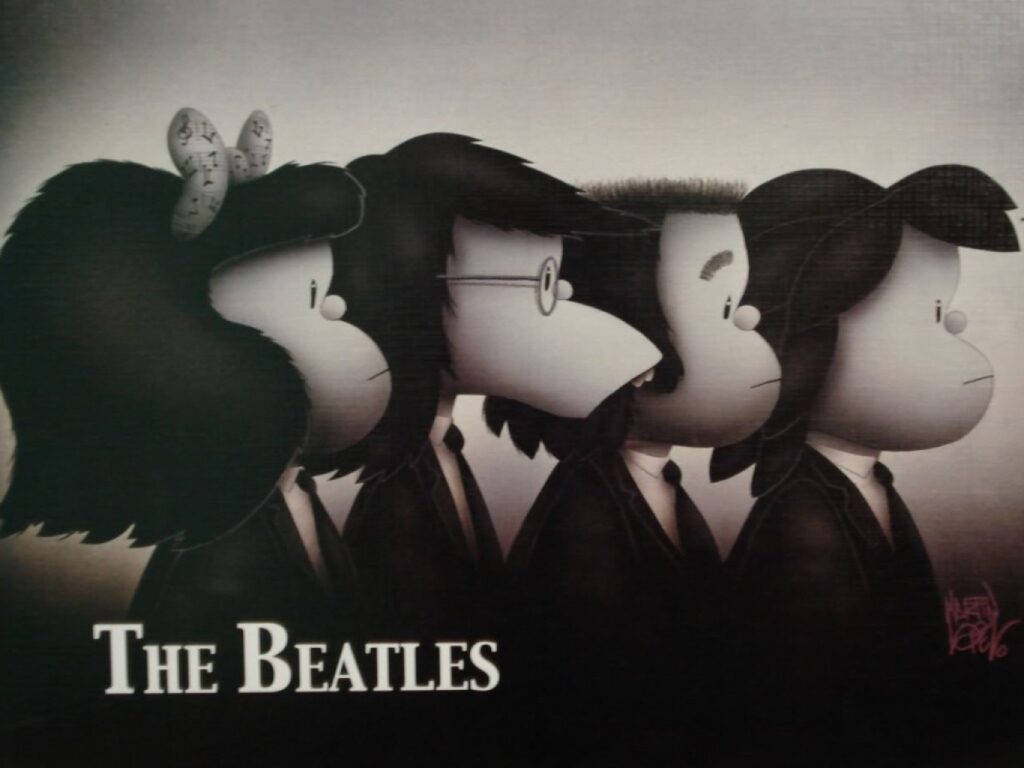 Mafalda, Felipe, Manolito, Migelito - Comic characters
In Buenos Aires, it is impossible not to meet Mafalda. She can be seen in the port where she welcomes arrivals. Tourists and local residents will also find it in the very center of the city sitting on a bench in San-Telmo Park surrounded by fans, and once again-at the most lively metro station, on a huge mural. Her image looks at you from T -shirts, mugs, magnets for the refrigerator and other trinkets sold in stores throughout Argentina, along with such national icons as Che Guevara, Evita and the Legend of Tango Carlos Gardel. No one is surprised by the fact that she is just a comic book character. Mafalda is the most popular Latin American comic book in the world. Readers from different countries located on different continents find social, political and personal meaning in it. Now the comic book has been translated into more than twenty languages and continues to conquer new markets and attract readers around the world, including in such places far from Buenos Aires as China, South Korea and Indonesia, and new circulations are still bought out everywhere. Mafalda has millions of subscribers on Facebook, and the creator of the comic book received letters from all over the world until the end of his life.
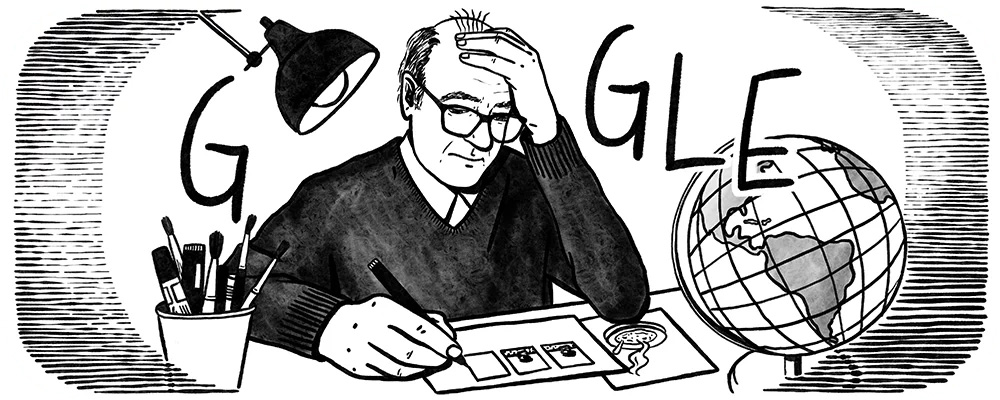 Google Speaker in honor of the 90th anniversary of the movie
Story
Mafalda was born more than 50 years ago. In 1964, Joaquin Salvador Lavado, the already famous caricaturist who worked under the pseudonym Kino, presented a new comic book on the pages of the political magazine. His main character Mafalda was a little girl from a family belonging to the middle class, wise for years as a rebel. The family lived in a small apartment in Buenos Aires-it was this city that became the center of the adventure of Mafalda. Possessing androgynic features, this smart fidget caused a lot of trouble to parents, constantly focusing them and challenging them. She constantly pissed her father to endless questions about politics and the state of affairs in the world, and frustrated her mother with feminist statements, sometimes bringing her to tears.
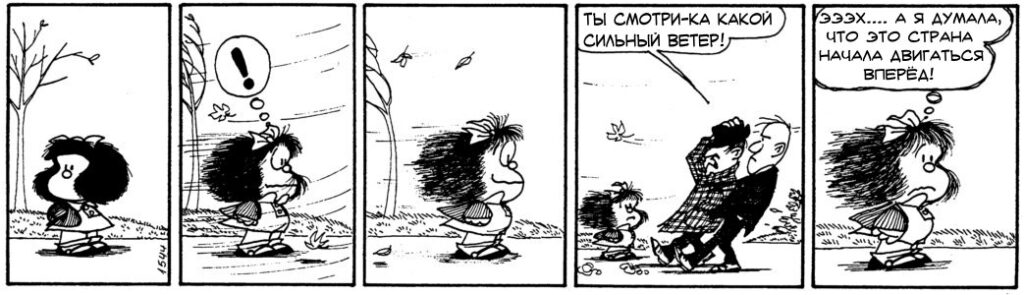 Translated from Spanish Alexei Yashunsky
Two years after the first appearance of Mafalda in the press, about two million people were read daily, and collections issued in a book format were sold in a few days. The popularity of the comic book quickly spread beyond Argentina. In 1969, the Italian publication with a preface written by Umberto Eco opened the doors of the European market. Meanwhile, in Latin America, the readership continued to grow, and by 1972 the comic was published in 60 newspapers and magazines. In the same years, it was released in the form of a book in Portugal (1970), Germany and Finland (1971), as well as in France (1973). But his fame was not limited to printed pages: the dolls depicting the comic book characters were produced and sold in several countries, their prints were printed (mainly without the author’s permission) literally everywhere - from T -shirts, advertisements and posters to wedding invitations. Mafalda became a social phenomenon. Her influence went beyond individual experience and entered the sphere of collective identity, political and social realities - both in Argentina and beyond.
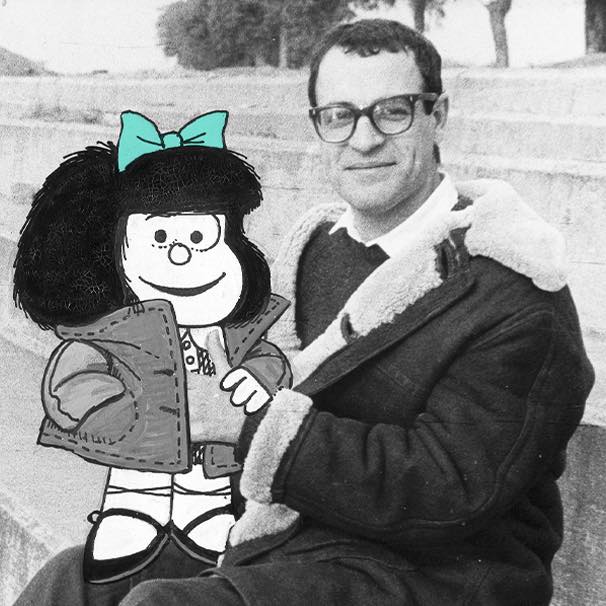 Cinema and Mafalda
It is interesting that the movie created Mafaldu at the request of an advertising agency, which was preparing to launch a new household appliance line from a large Argentinean manufacturer. The agency planned to bring the Mansfield brand to the market using a campaign, which included the creation of a comic book based on the history of a “typical family” as part of a husband, wife and two children. It was required to create something in the spirit of the modern at that time American comics, such as Peanuts and Blondie, and give each of its characters the name, starting with the letter “M” to match the brand name. Following these instructions, the movie included in his fictional family a little girl, whom he called Mafalda-a name borrowed from some film. As a result, the agency had to abandon the project, since he could not agree with the newspaper in which the comic book was supposed to publish, about the conditions for placing hidden advertising, and the brand was never launched for reasons not related to the campaign. The cinema, however, had already painted eight trial lanes, and next year three of them were published in Gregorio, a humorous application, which Miguel Bratsko, a friend and a colleague of the cinema, led for Leoplán magazine. Soon after this, the movie turned the original idea that it became his most famous caricature. In September 1964, Primera Plana began to publish Mafalda.
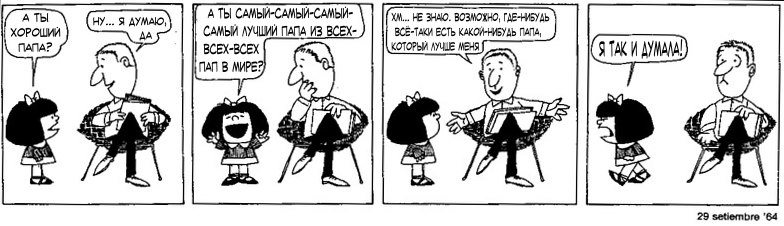
In the debut release, a little girl, inverting the usual relationship between her parents and children, asked her dad if he was good. Dad replied that he considers himself a good father, but perhaps there are better fathers. This modesty, based on reflection and the introduction, actually only confirmed Mafalda’s suspicions of the imperfection of the world: making sure that her dad was not “the most-most-most best of all of all-all-all dads in the world”, she disappointedly turned to her father with her back, and her cute, smiling face was distorted by anger. So the artist from the first lanes formed the character of his future heroine - implacable and uncompromising.
 Translated from Spanish Alexei Yashunsky
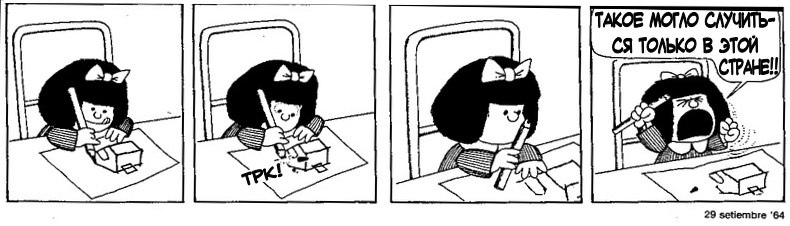
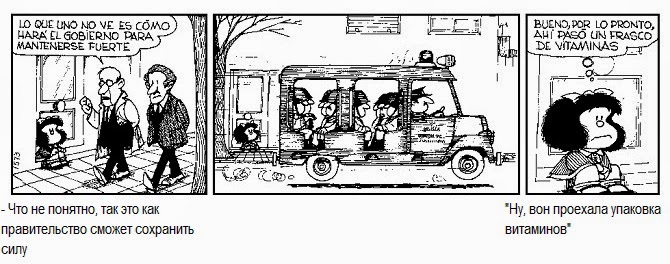
Since Primera Plana was mainly focused on politics, the movie from the very beginning included political motives in the comic book. So, already in the second issue we see how Mafalda draws the house, and when her drawing is almost ready, the pencil suddenly breaks. In a rage, she yells: "This is possible only in this country !!!"
After moving the publication to the newspaper El Mundo, Kino presented the readers of a new character. The Galician Manolito, the hand of the owner of a small shop, reproduced a widespread image of an uncouth immigrant. But the cinema turned the stereotype, based on fear of the visitors, upside down. Manolito, this stubborn son of a bachelor who personifies the spirit of small independent entrepreneurship, did not pay attention to anything, which was not related to commercial success, and dreamed of a cooperative network of supermarkets. Money and work - this is the basis of the morality that the boy adhered to, a copy of his father both externally and in mind.
 Translated from Spanish Alexei Yashunsky
Following the Manolito cinema, he introduced Susanita into the comic book - the opposite of Mafalda. The contrast was especially noticeable thanks to the girlfriends of earrings and the bright hair of the new heroine, as well as the doll, which she always carried with her. Susanita was a copy of her mother and embodied the traditional female image. Her interests and expectations revolved around marriage, motherhood and social status of a housewife - unlike the main character who expressed a generational conflict between new female aspirations for self -realization and traditional attitudes.
Finally, another character of the comic book, Felipe, was the most similar to Mafalda, because he shared her pessimistic views and released no less sarcastic than her comments about world events. He also attended Susanita, who did not find anything bad in the world, while people inhabiting him “can be either parents or children” - a statement that Argentine Catholic priests often resorted to during hot debates about contraceptive tablets. Susanita, in turn, conflict with Manolito, which reflected the split among representatives of the middle class of Argentina, consisting of both the indigenous residents of the country, proud of their origin and social privileges and from immigrants who managed to achieve economic prosperity thanks to hard work. As noted by the newspaper El Independiente from La Riokhi, "Mafalda and her friends are a indicative section of society."
Modernity
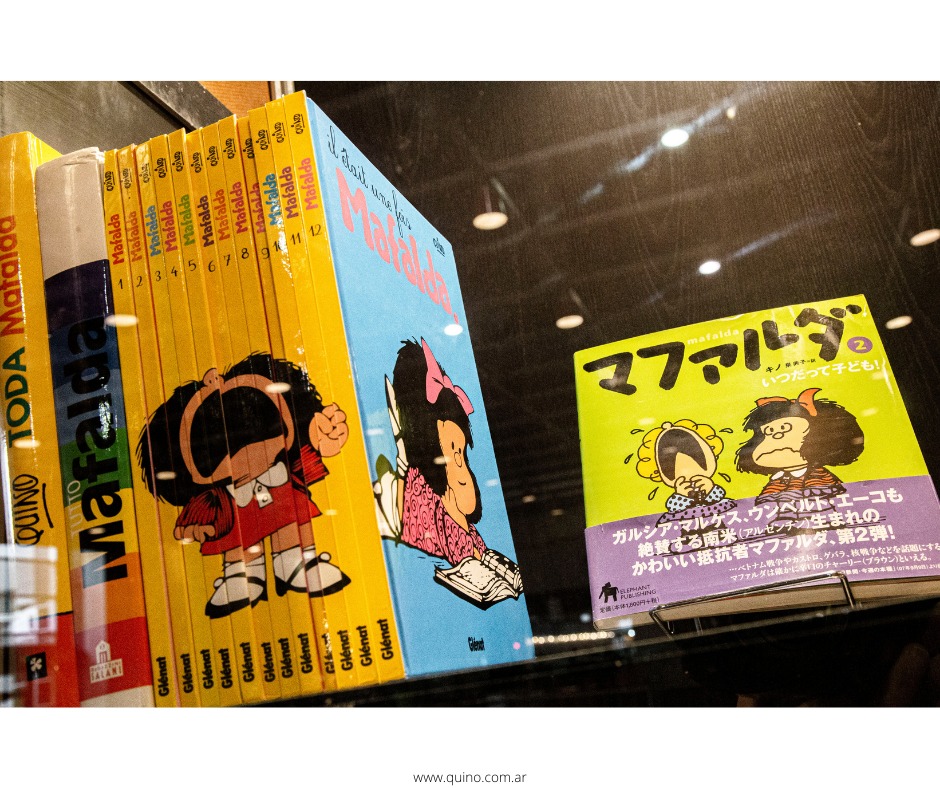
Now Mafalda is the best -selling comic book in Latin America and the most famous at the international level. It has been translated into more than 20 languages, including Danish, Japanese, Korean and Chinese. His characters are easily recognizable in many countries, they regularly appear on all objects - from T -shirts and mugs to magazines and posters. Mafalda has millions of Facebook subscribers.
In 2004, the Argentine publishing house of Ediciones de La Flor took an important step in the process of international expansion of Mafalda, releasing an English translation. According to its founder Daniel Divinski, publishers from the USA believed that the book was not suitable for children of their country (perhaps because Mafalda was originally intended for adults), and British publishers claimed that it was too similar to Peanuts. In addition, Andrew Graham-Yall, the Mafalda translator into English, in addition to the usual difficulties that arise when transferring the original humor (which largely relies on the game of words, allusions and insider codes) into a new language environment, faced the need to strictly maintain the fidelity of the comic book, as required by the movie. In this sense, it is symptomatic that among the few plots omitted in the American publication was the one in which Mafalda repeats gender stereotypes, claiming that a woman cannot be president, because women love to gossip. However, the translation included Mafalda's inconvenient questions about the war in Vietnam - the publishers were not afraid to put them in the mouth of a character of Latin American origin, although this could cause discontent in some of the Washington establishment. By the way, in 2007, Cinema transferred the rights to a full collection of comics (Todo Mafalda) to the Cuba government.
In Argentine schools, teachers have long been using Mafalda as a material for reading, and in 2007, the Ministry of Education and Culture of Argentina officially included it among a hundred literary works intended for schoolchildren. A comic book with his cheerful conversational vocabulary is also widely used in Spanish courses for foreign students both in Argentina itself and beyond.
In 2014, Mafalde turned fifty years old, and the comic book, along with his author, was awarded numerous awards and thanks. Thus, the movie received the Meduri Prince of Asturian in Spain, and both countries installed copies of the sculpture of Mafalda, which appeared on one of the squares of Buenos Aires. The fiftieth anniversary of the character was covered by leading media not only in Latin America and Europe, but also in places such far from his homeland as China.
Eternity
With the opening of Mafalda’s sculpture in the San-Telmo area in Buenos Aires in the fans of this character, his own Mecca finally appeared. The composition was installed in front of the building in which the movie itself lived and which he portrayed in the comic book as the house of Mafalda. As the sculptors expected, their creation has become a place of pilgrimage. Since then, Manolito and Susanit have joined Mafalda. The choice of additional characters is significant, since ideologically both are completely different from Mafald. So the authors wanted to emphasize that the Argentine middle class remains one, despite all its internal contradictions. However, on most items, postcards, books and souvenirs, which are sold in numerous stores that opened next to the sculip group, only Mafalda is depicted. It is she who was the main reason that this place became a tourist center and that visitors flood for seven days a week - people from all over the city, from all over the country and from all over the world, a kind of non -religious community.
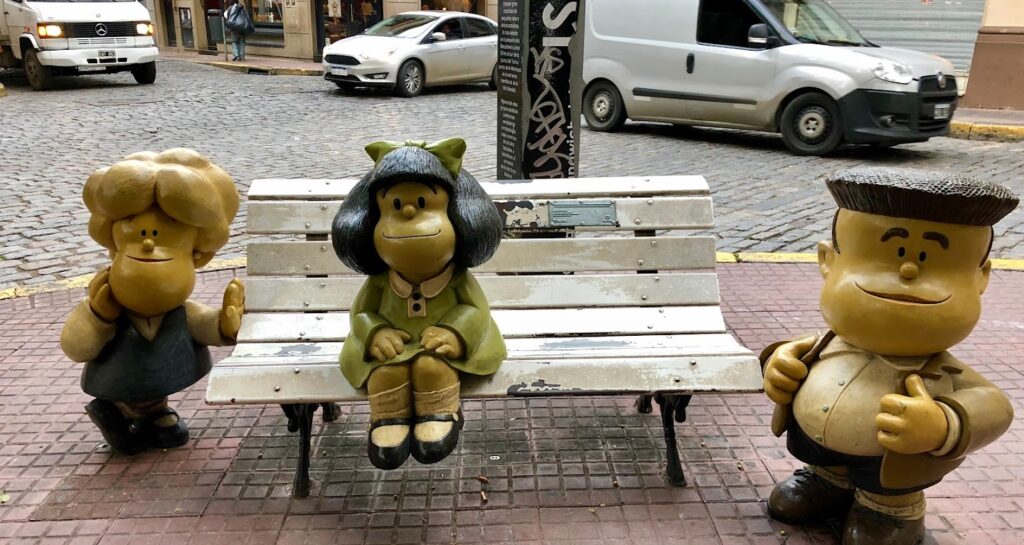 Susanita, Mafalda and Manolito
They do not bring gifts. Do not read prayers. They just hug Mafalda. Kiss it. They say and joke with her. They are divided by memories: how many years they were when they began to read a comic book. They say what he means to them. Posit for photos, one by one or groups. Some send their photo to a friend, brother or sister who could not come with them. It is noticeable that very few teenagers are here on their own. What is happening is more like a family assembly - there are many fathers and mothers with children or grandparents with their grandchildren - as well as for a walk with friends or even for part of the city tour. Of course, in San Telmo there are tourists who have no idea who Mafalda is, but they are attracted by the excitement around the sculpture, and they stop to take pictures next to it. However, the vast majority of visitors are not accidentally here. The residents of the district had their own relations with Mafalda. Some stroke her on the back, passing by, and the children stop and smack her on the cheek on the way to school. For them, it is alive. No other statue in Buenos Aires produces such an effect.
Cinema could draw her again - and actually painted, for special campaigns or as a gift to friends - but he never portrayed her adult. For him, Mafalda remained a little girl, not wise for years, with the same facial features and at the same age as in 1973, when he stopped drawing her.
When Mafalda was named one of the ten most influential Argentinean women of the twentieth century - along with Evo Poron, poetess and singer Maria Elena Walsh and Ebe de Bonafini, one of the leaders of the “mothers of the May of May,” - the movie exploded: “This is absurd! She is just a character. Little girl. Not even a woman. "
The vitality of the myth of Mafalda is visible in numerous allusions on the comic book, constant adaptations and new meanings that still find readers legions in the comic book. In 2009, the “intellectual girl” was accompanied by a march of one hundred thousand women of Italy against sexism Silvio Berlusconi. In 2011, the giant doll of Mafalda was installed in the center of May Square during the inauguration of Christina Kirschner. Her image could be seen at student protests in Valencia during the economic crisis in Spain, and in 2017-at demonstrations against Trump in New York. In general, Mafalda has become a global myth that can be assigned to various groups around the world, using its symbolic meaning in order to draw attention to its requirements.
 Blog Translation Mafaldochka.blogspot.com